The City of Sacramento Active Transportation Commission (SacATC) will meet this Thursday, March 12, starting at 5:30 PM. This is not the usual third Thursday, but the second. The meeting may be held in the old city hall, rather than council chambers, but the agenda is not clear about that.
The agenda is below (pdf). I have not had a chance to look at the four agenda items to make comments here, but will if I am able. The linked items contain both staff reports and presentations. I find it useful to separate these into two documents, but again, only if I have the time. All of these are review and comment items, not for decision.
The City of Sacramento Budget and Audit Committee will consider the recommendations of SacATC (Sacramento Active Transportation Commission tomorrow, Tuesday, March 10. The commission is asking that the city invest in implementing the recommendations of the report. Though Sacramento seeks grants to improve street safety, that process is slow and not always successful. The city’s new quick-build program is a first step forward, but not yet active. We cannot afford to wait while people die and are severely injured on our streets.
The email from Slow Down Sacramento/Isaac Gonzalez is included below, and has all the information you need.
On Tuesday at 11:00 a.m., the Sacramento City Council’s Budget and Audit Committee will consider recommendations from the Active Transportation Commission’s 2025 Annual Report. These recommendations focus on funding practical steps that would make Sacramento’s streets safer for people walking, biking, and rolling.
The commission is asking the City to invest in proven safety strategies, such as expanding traffic-calming tools, strengthening the city’s quick-build program, developing a citywide Safe Routes to School effort, and implementing safety improvements, such as Leading Pedestrian Intervals at traffic signals. These are not abstract ideas. They are practical tools that cities across the country are using to reduce serious injuries and save lives. Right now, none of these recommendations have identified funding attached to them. That means the Budget Committee will play an important role in deciding whether these ideas move forward or remain just another report sitting on a shelf.
If you care about safer streets in Sacramento, this is a moment where public voices matter.
Budget and Audit Committee Tuesday at 11:00 a.m. Sacramento City Hall 915 I Street
Even a brief statement reminding decision-makers that street safety matters to Sacramento residents can make a difference.
Why this matters Sacramento has declared a Vision Zero goal of eliminating traffic deaths, yet serious injuries and fatalities continue to rise. The Active Transportation Commission’s recommendations outline practical steps the City can take now to address dangerous streets and protect people who simply want to move through their neighborhoods safely. Plans alone do not save lives. Investment and action do.
If you are able, please submit a comment or come to City Hall on Tuesday and speak up for safer streets. Thank you for continuing to stand with us.
My previous posts on Vision Zero cover many topics related to it, and make some recommendations. A draft plan will be available in the spring, at which time I’ll no doubt have many comments. If you haven’t been following the Action Plan update process, this is a good chance to catch up.
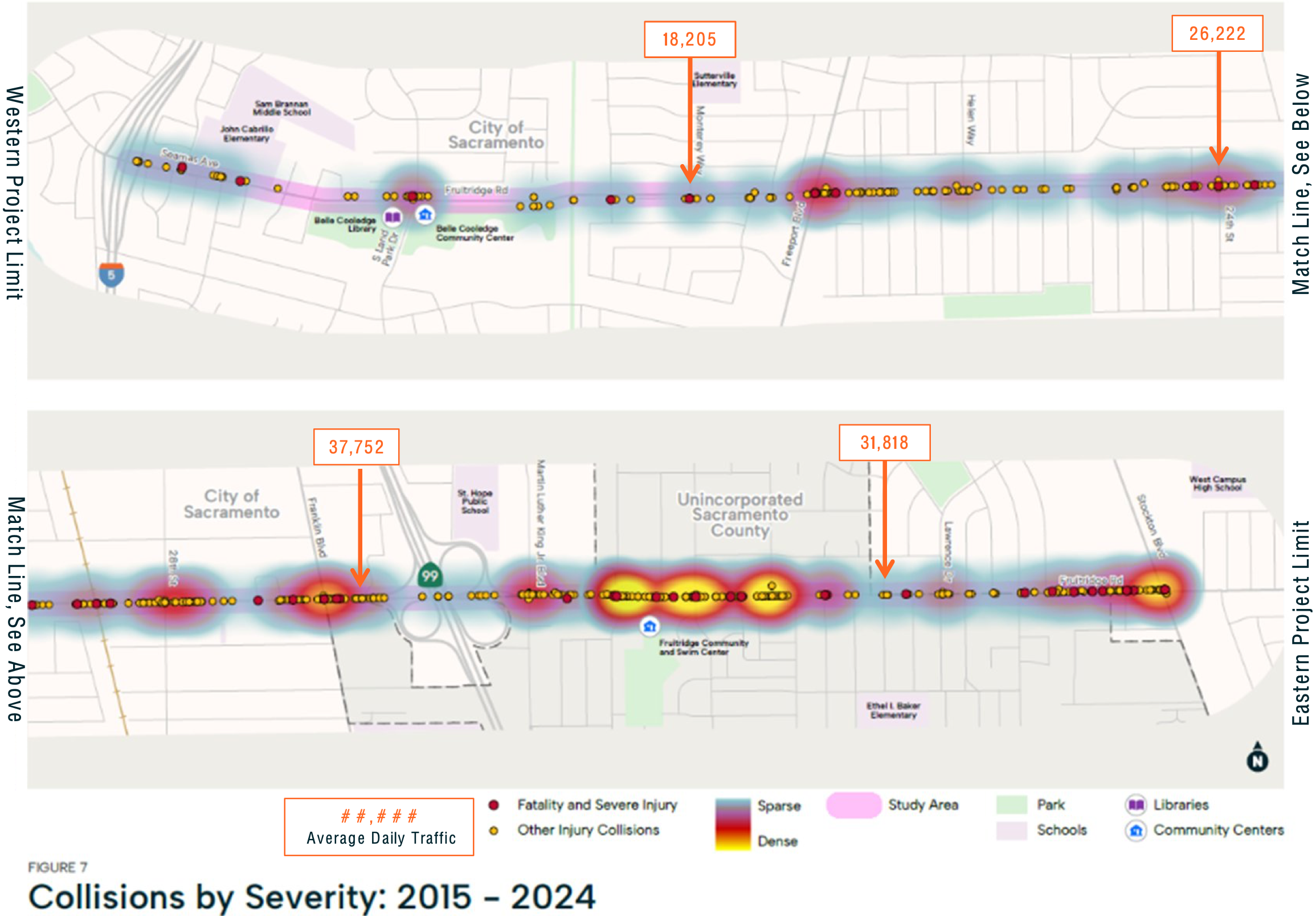
This is the first time preliminary plans for creating a safe bikeway on H Street, leading to and from Sacramento Valley Station, have been presented to the public. I will take a closer look and perhaps post again before Thursday.
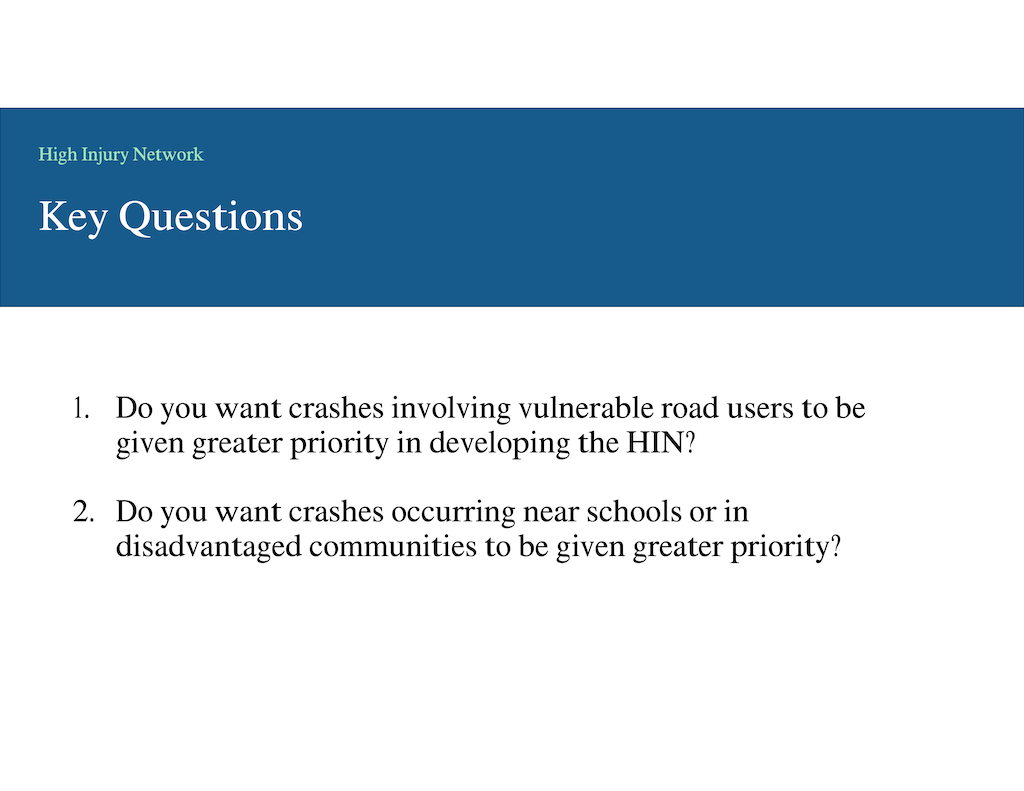
High Injury Network Key Questions, slide from Vision Zero Action Plan update presentation
The Sacramento Active Transportation Commission (SacATC) will meet Thursday, October 16, 2025, at 5:30 PM. The meeting will be at Sacramento City Hall, council chambers. The meeting is livestreamed from the Upcoming Meetings Materials page at the time of the meeting. Comments may be made in-person, or via eComment on the Upcoming Meetings Materials page up to the time of the meeting, but should be submitted well ahead of time if you wish the commission members to see the comment before the meeting. No comments are taken online.
Open Session Roll Call Land Acknowledgement Pledge of Allegiance Consent Calendar All items listed under the Consent Calendar are considered and acted upon by one Motion.
Approval of Active Transportation Commission Meeting Minutes
At last night’s Sacramento Active Transportation Commission (SacATC) meeting, the 9th Street Separated Bikeway was item 3 on the agenda. As is usual, I did not have a chance to review the item until shortly before the meeting, so did not post comments ahead of time, but did make comments during the meeting. I’ve broken the agenda item into staff report, plans, and presentation slides for easier access.
This was the preliminary presentation on this project, and it will be revised and come back to the commission at least once more.
My comments text, thought some particulars were left out due to the two-minute time limit:
I am glad to see the project, since it closes one of the gaps that makes the existing separated bikeways less useful.
Widths
The six-foot bikeway width does not meet NACTO recommendations (preferred width) of 8 feet or more for separated bikeways. Six feet does not allow for passing or wider bicycles, and is NOT a best practice.
I support bin/leaf zones, but the entire buffer should be wide enough to accommodate bins, as has been implemented on some blocks of P and Q streets. I am not sure how wide this is, but it is more than 3 feet.
In order to gain the necessary width for bicycles and buffers, the street right-of-way needs to be reallocated:
One of the two general purpose lanes should be 9 feet (the left lane), the other 10.5 feet (the right lane), which gains 2.5 feet. The wider lane would be used by buses on SacRT Route 51. The wider lane should be marked as such, with the width painted on the pavement at every intersection to inform drivers.
Similarly, one of the two parking lanes should be 7.5 feet, which gains 0.5 feet, and signed or marked as a narrower parking lane. The city does not need to accommodate car bloat on every street and every parking lane.
Bikeway Protection
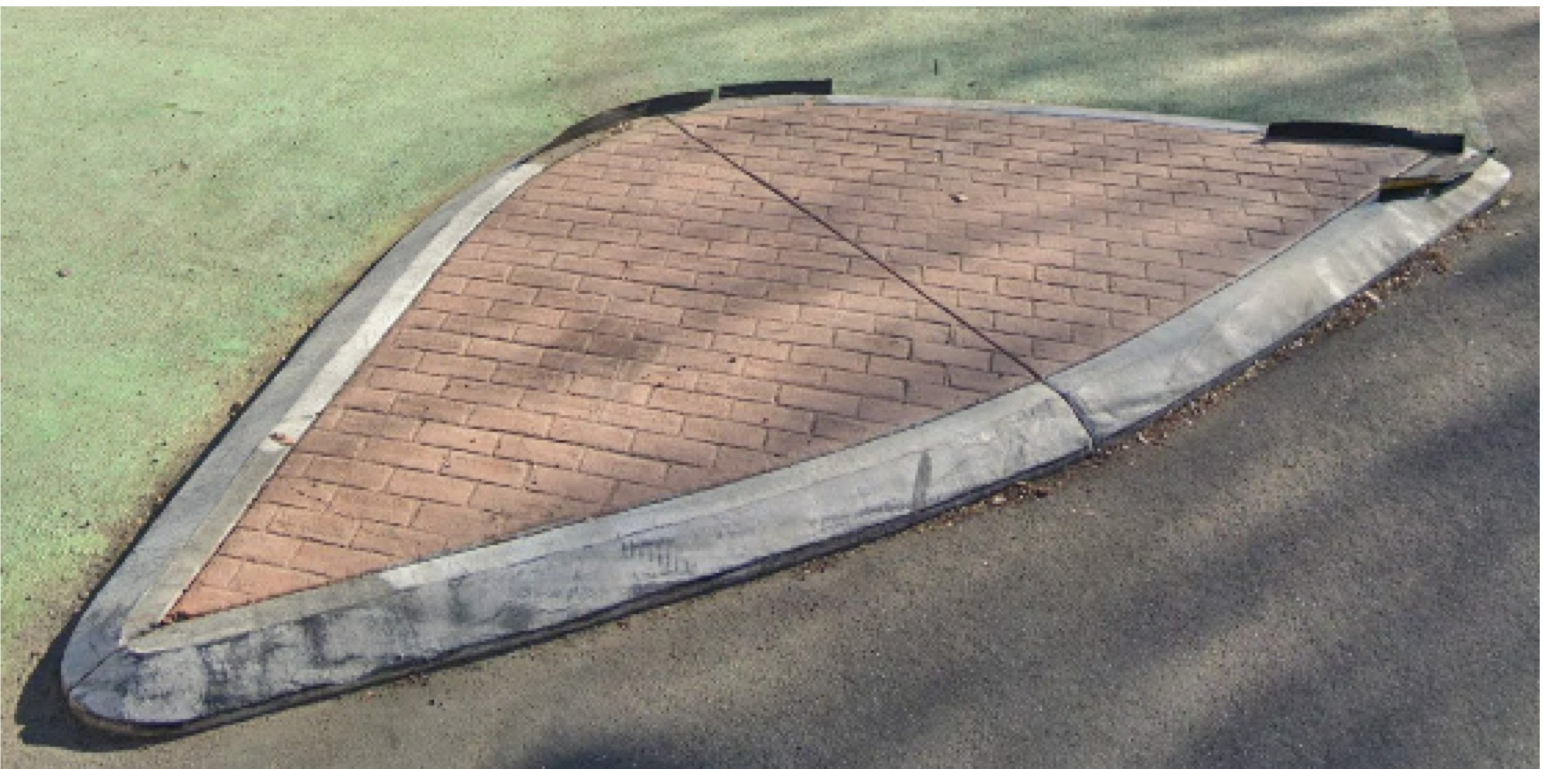
I support turn wedges, but they should be concrete, not solely paint and posts. Though the paint and post turn wedges provide some safety for bicyclists, and particularly for walkers, they are less safe than concrete, which the city calls ‘rolled curb turn wedge’.
SacCity photo of a rolled curb turn wedge
Any block with only an alley break in the separated bikeway should be protected by concrete curbs, not simply by paint and posts. Where driveways occur, it may be better to use paint and posts.
Marking
Whenever a bikeway crosses general purpose lanes, as it does approaching Broadway, the merge zone must be marked with green backed sharrows. Anything less is unsafe for bicyclists.
Any place where a bikeway transitions from one side to the other side is designed, there must be a bike signal to control motor vehicle traffic. In general, bicyclists need an exclusive bike phase, where no motor vehicles are turning. The side-to-side transitions on 19th Street (from left to right, just past W Street), and 21st Street (from right to left at W Street) are NOT safe for bicyclists, and as a result, there are many fewer bicyclists using these streets than was intended or is desirable. The city has resisted using bike signal faces, though the expense is a fraction of what the city routinely spends replacing functional signals and signal boxes.
Any time a bikeway is between two general purpose lanes, as it is approaching Broadway, the bikeway must be marked with continuous green paint. Somehow the plans dropped green paint between W Street and Broadway, the most confusing and potentially deadly part of the entire project.
Commissioners made a few comments:
Generally supportive of the project intent
Moore commented on green paint approaching Broadway, and asked if the transition could be earlier to reduce conflicts at the W intersection; staff response it that right-turning vehicles at W Street are the biggest conflict, other than X Street and Broadway
Hodel supported the red paint daylighting, and asked for green paint approaching Broadway
Apparently there were a large number of eComments on the agenda items, though I’m unsure how many related to this agenda item or the other three main items. When the meeting is over, all the eComments disappear, apparently into the ether. This is not just a problem for SacATC, but for all city meetings. Unless a citizen takes care to capture the eComments before the meeting ends, they will never know what others commented online.
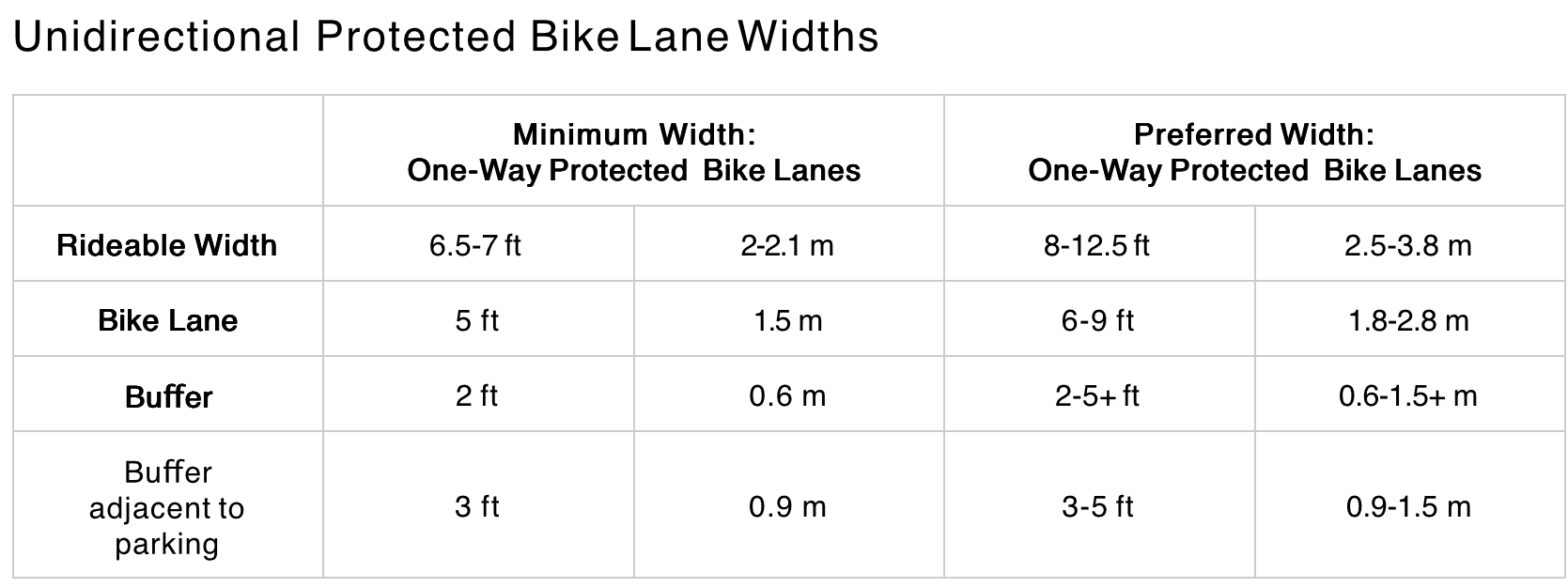
The NACTO Urban Bicycle Design Guide (3rd edition, 2024) includes the diagram below within the ‘Designing Protected Bike Lanes‘ section.
NACTO One-Way Protected Bike Lanes Design Guidance
The Sacramento Active Transportation Commission (SacATC) will meet Thursday, September 18, 2025, at 5:30 PM. The meeting will be at Sacramento City Hall, council chambers. The meeting is livestreamed from the Upcoming Meetings Materials page at the time of the meeting. Comments may be made in-person, or via eComment on the Upcoming Meetings Materials page up to the time of the meeting, but should be submitted well ahead of time if you wish the commission members to see the comment before the meeting. No comments are taken online.
The Sacramento Active Transportation Commission (SacATC) will meet Thursday, August 21, 2025, at 5:30 PM. The meeting will be at Sacramento City Hall, council chambers. The meeting is livestreamed from the Upcoming Meetings Materials page at the time of the meeting. Comments may be made in-person, or via eComment on the Upcoming Meetings Materials page up to the time of the meeting, but should be submitted well ahead of time if you wish the commission members to see the comment before the meeting. No comments are taken online.
This is a big meeting! I hope you can attend and comment, or use eComment. I have not yet reviewed the documents, but may add additions to this post if appropriate.
Tomorrow, Thursday, June 12, there will be at least three transportation-related public meetings:
SACOG (Sacramento Area Council of Governments) Board of Directors, 10:15 AM to about 12:00 PM, at Conzelmann Community Center, 2201 Cottage Way, Sacramento, CA 95814 (not at SACOG offices on L Street). agenda
Sacramento Transportation Authority (SacTA): 1:30 PM to about 3:00 PM, at the County Board of Supervisors Chambers, 700 H St, Ste 1450, Sacramento. agenda
Sacramento Active Transportation Commission (SacATC): 5:30 PM to about 7:30 PM, at City of Sacramento Council Chambers, 915 I Street, Sacramento. Note, SacATC usually meets on the third Thursday of the month, but the June meeting is on the second Thursday. agenda
Added comments on agenda 3 ‘Vision Zero School Safety Project’, below.
The Sacramento Active Transportation Commission (SacATC) will meet Thursday, May 15, 2025, at 5:30 PM. The meeting will be at Sacramento City Hall, council chambers, The meeting is livestreamed from the Upcoming Meetings Materials page. Comments may be made in-person, or via eComment on the Upcoming Meetings Materials page up to the time of the meeting, but should be submitted well ahead of time if you wish the commission members to see the comment before the meeting.
Agenda (pdf; the agenda below is abbreviated; consult the pdf agenda for details)
Consent Calendar
Approval of Active Transportation Commission Meeting Minutes
Nomination and Appointment of One Active Transportation Commission Member to the Secure Bike Parking Pilot Evaluation Panel
Commission Staff Report
Commissioner Comments – Ideas and Questions
Public Comments-Matters Not on the Agenda Adjournment
Agenda item 3 Vision Zero School Safety Project
I support this project. The focus on lower-income schools with existing safety issues, and use of relatively inexpensive measures such as high visibility crosswalks, and curb and bike lane paint, are good.
The diagrams, both in the staff report and the presentation, should include the posted speed limit of each street. RRFBs are inappropriate for speeds over 25 mph, due to driver non-compliance, so the posted speed is an important consideration.
APS (accessible pedestrian signal) ‘upgrades’ (West Campus, Natomas, Smythe, Kenney) should implement appropriate accessible messages, but SHOULD NOT implement required push buttons. Nothing in PROWAG requires that APS signals require button press for permission to cross. Required ‘beg buttons’ are inappropriate at these locations, and at all locations in the city.
Though permanent curb extensions are probably beyond the funding of these school projects, I was surprised to not see any temporary or quick-build curb extensions, which are one of the most effective measures for calming traffic.
The Sacramento Active Transportation Commission (SacATC) will meet Thursday, Aprll 17, 2025, at 5:30 PM. The meetings are held in city council chambers at 915 I St, Sacramento, CA 95814. The meeting can be viewed online via the link provided on the city Upcoming Meeting Materials page at the time of the meeting, but comments may only be made in person, or via eComment ahead of time.
I have concerns about the use of RRFBs (Rectangular Rapid Flashing Beacons) at unsignalized crosswalks. They may be better than crosswalks without, however, they may provide a false sende of security for walkers. I have noticed (anecdotal evidence only) that the rate of driver compliance with RRFBs is poor, only about 40%, which is not much better than unprotected crosswalks, and it has not improved at drivers have gotten used to the RRFB as they are installed in more locations. I would suggest that before the city install any additional RRFBs, there a literature survey to see if there are recent indications of driver non-compliance increasing hazard for people walking, and on-the-ground observation of at least two existing locations in the city. I know that compliance with the RRFB on J Street at 17th Street is poor. I have almost been hit in both the west and east crosswalks, both of which have RRFBs. I kinow not to trust drivers to yield, but what about people walking who do not know to not trust drivers. The other enhancements proposed seem good.
In Audible Signals Phase 1, a number of locations in the central city where pedestrian signals were on auto-recall were converted, or downgraded, to locations requiring the push of a button. These are called beg-buttons) because the pedestrian indicator will never come on unless the button is pushed, though with many of the locations, the pedestrian signal is set to auto-recall even though the button says it must be pressed. This is an unofficial city policy, that people walking will NOT be informed of the operation of the pedestrian signal, left to guess whether it is auto-recall or requiring a push. The recently installed ‘push or wave to cross’ signals do not overcome this issue. The staff report claims that all of the new locations already have push buttons, though it does not say whether any are on auto-recall.
The city is claiming as support for the past and proposed audible signals project that citizens are requesting beg buttons. They are not. What they are requesting is audible signals that communicate effective crossing information to visually impaired walkers (or rollers), to comply with current ProWAG requirements. The city is conflating audible signals with push buttons, but they do not need to go together. Audible signals can be installed at auto-recall intersections.

 Getting Around Sacramento