Emergency Streets

Listening to the Talking Headways podcast this morning, there was a brief reference to Emergency Streets and Kevin Krizek. I immediately went to the Emergency Streets website. I have to admit that it is immensely satisfying to me when I find a formal program similar to what I have posted about before: someone died here, close the intersection (2026-02).

“Emergency Streets inculcates a sense of urgency requiring a response by every driver on the road. Reframing the problem as a public health matter has potential to shock the system and foment change. Emergency Streets can help sidestep some of the existing bureaucratic and cultural barriers to slower, safer driving, without compromising other public priorities.”

Emergency Streets – Why

Emergency Streets is a developed program that consulted with academics and street safety staff and advocates. It is robust and innovative. I encourage you to look at the website, and I’ve linked two of the relevant documents: Emergency Streets Protocol and Emergency Streets White Paper.

The program is not dissimilar to the Strong Towns Crash Analysis Studio, but is a much quicker response. See Strong Towns: Safe & Productive Streets.

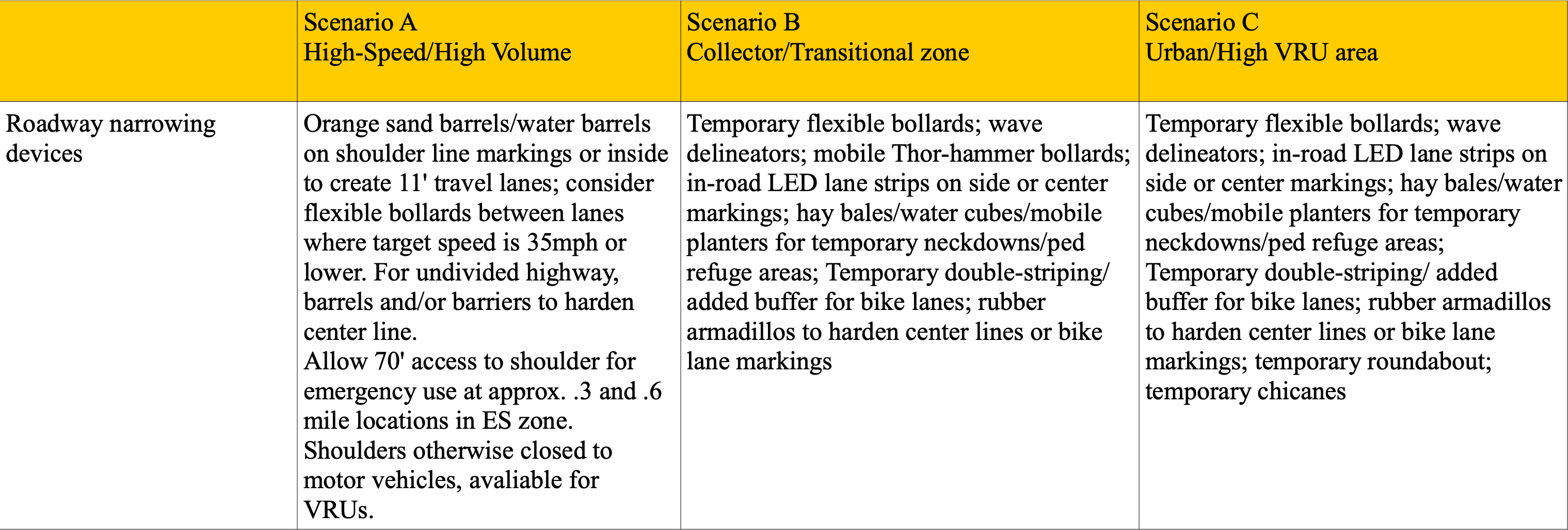
In most cases, Emergency Streets does not propose to close the intersection, except as briefly necessary to set up controls and communication, but it focuses on immediately slowing traffic, within 36 hours, and notifying the public of the fatality, on the ground and through media. Signage should be in place within five days. Changes of up to a half mile before the location are recommended, though I think that depends on the context. Arterial streets with few cross-streets and fewer safe crossings? Yes, a half mile. A street with many cross-streets and possibly safe crossings at other intersections, a shorter distance would work.

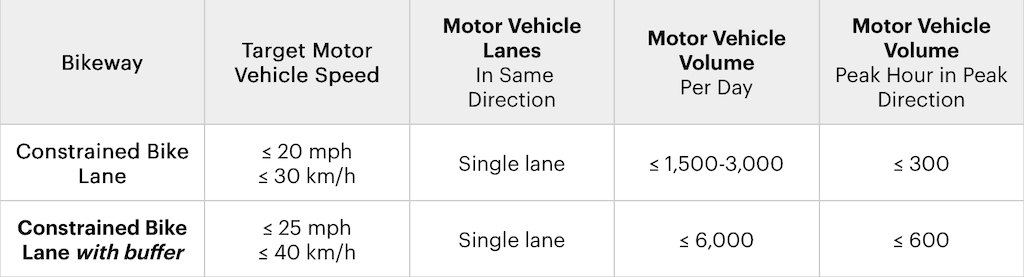
The table below provides an example of treatments, but please look at the entire Protocol document for more details.

The City of Sacramento Tactical Action Group (quick build program) has not been fully defined yet, but I recommend the city consider the Emergency Streets program for adoption. At this time, the best information is a TAG presentation given to Strong SacTown. (Note that I have not posted on the TAG/quick build since it was on city council agenda in March 2025. I will correct that.)

graphic of Emergency Streets logo
Emergency Streets logo

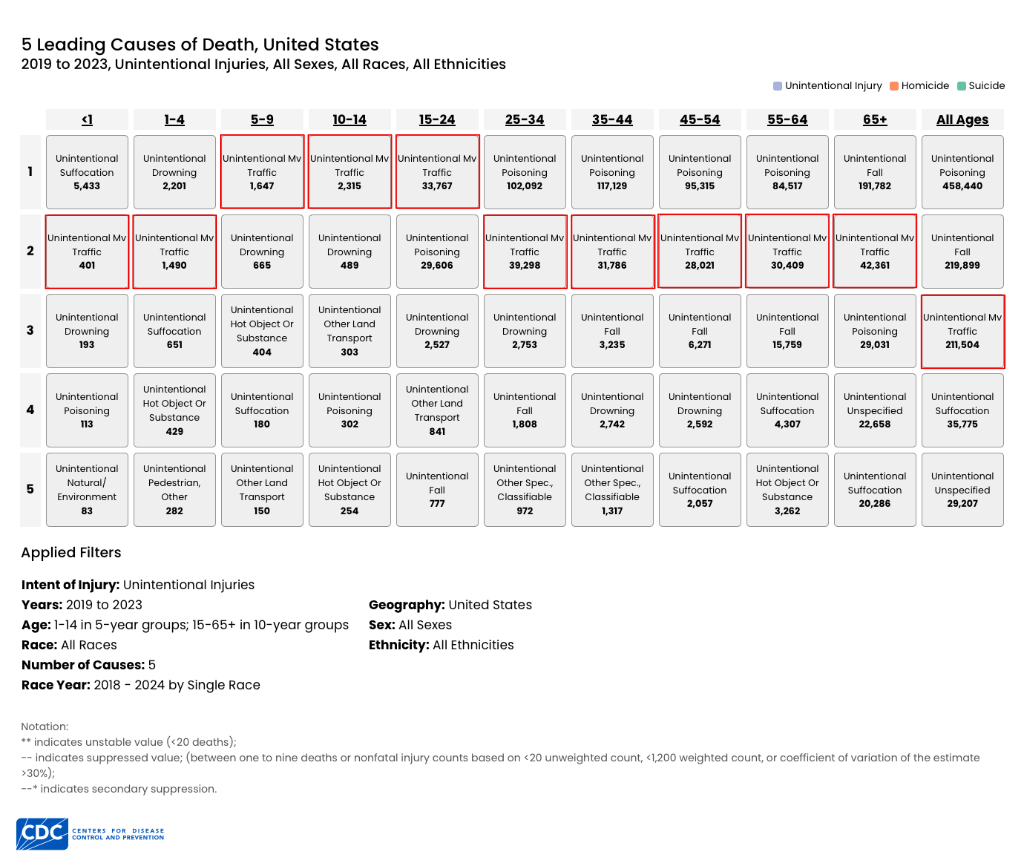
leading causes of death

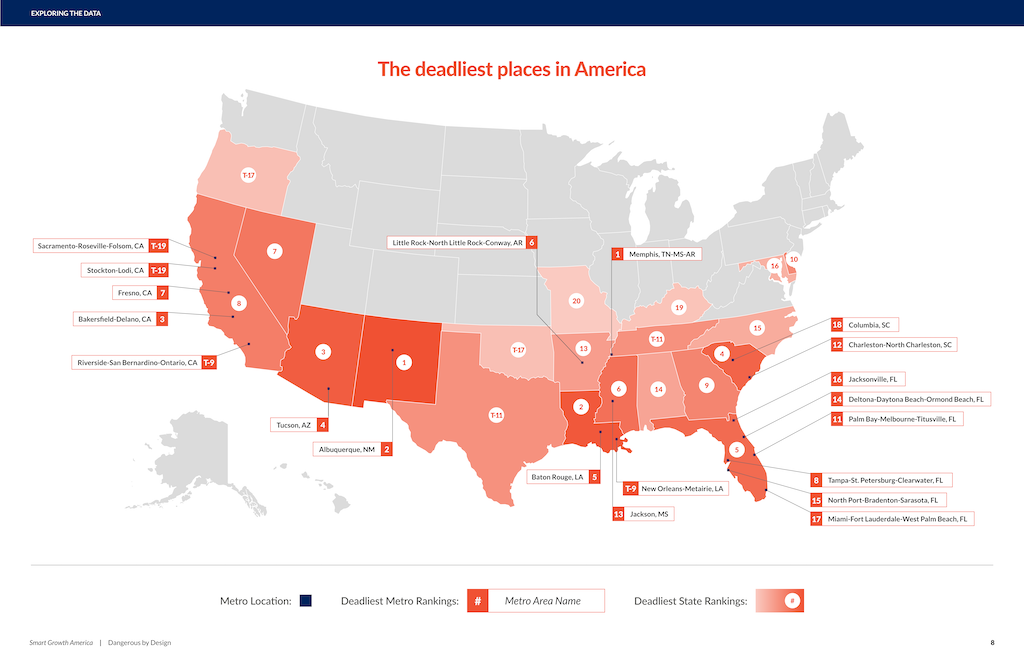
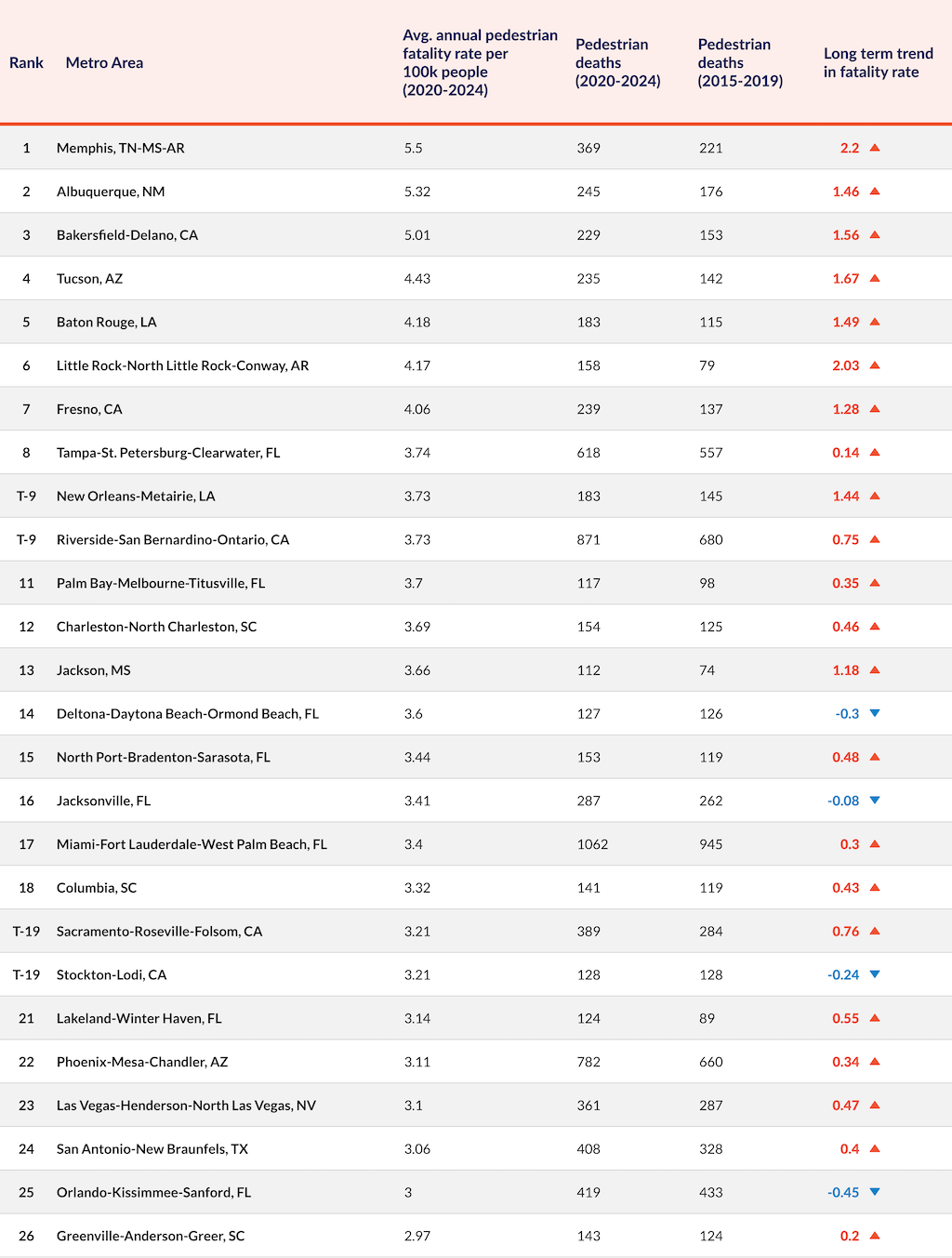
The chart below shows the leading causes of ‘unintentional’ death in the US, 2019 to 2023. The chart is from Centers for Disease Control (CDC) WISQARS Leading Causes of Death page. Change filters to see the ‘unintentional’ data. Ironically, one of the available filters is ‘Violence-Related Injuries’, but these ‘Unintentional MV (motor vehicle) Traffic’ datum are not in that category, though they are clearly violence. Traffic violence. And of course not all is ‘unintentional’. And as with all traffic violence data, it does not include crashes that occur on private property, people run over in parking lots and children killed in their own driveway.

I often see it stated that traffic violence is the leading or second leading category of preventable death, but I find this more detailed view worthwhile.

Credit to Emergency Streets for the idea, and the link to CDC WISQARS. My selection criteria is slightly different than theirs. I’ll write soon about Emergency Streets.

someone died here, close the intersection

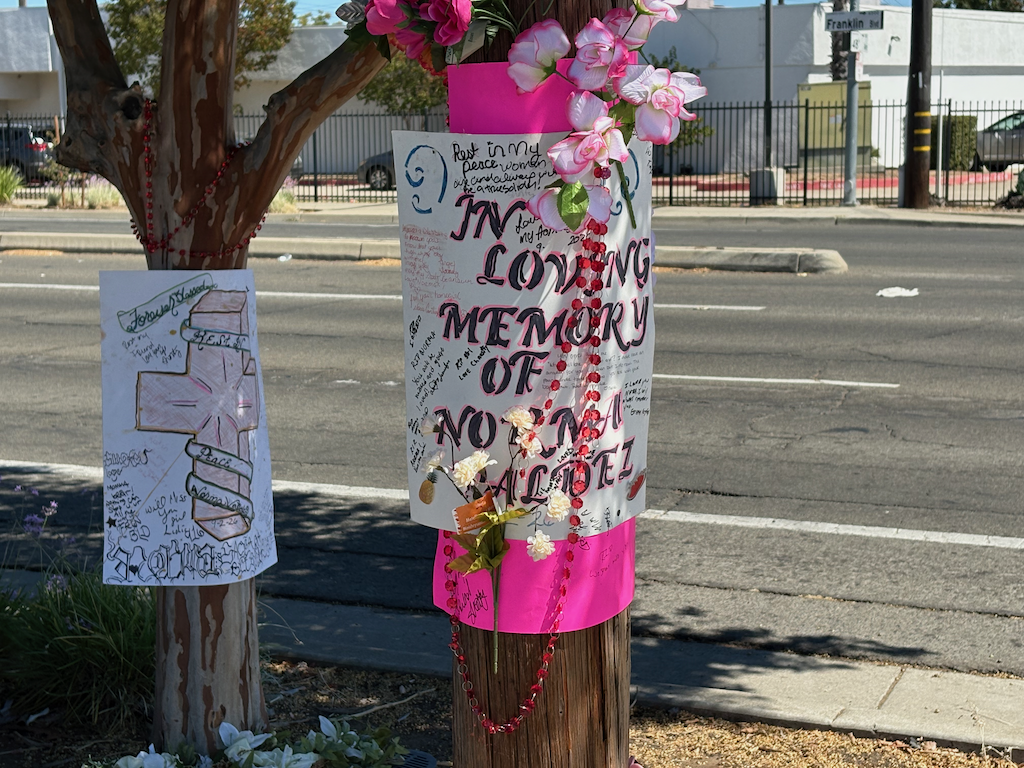
When a traffic crash results in a fatality, society mostly shrugs and moves on. Until Ariane Lange started writing in the SacBee about the victims of traffic, there wasn’t even a shrug. Sometimes all the evidence of someone dying is some small car parts pushed to the side, and maybe a small oil slick, easily ignored. There is nothing to say someone died here. The people who died might be drivers, passengers, walkers, bicyclists. Real people whose lives were cut short. It is likely for two reasons: roadway design that encourages speeding and reckless driver behavior, and human mistakes.

Rather than shrugging and moving on, we need to take notice. I think the best way is to close the intersection where the fatality occurred, and yes, it is quite often though not always, intersections. They are the locations with the most complex movement of motor vehicles, particularly turning movements, and walkers and bicyclists. The intersection should be closed until some action is taken to make the intersection safer.

Read More »

it’s not just transportation infrastructure

It has been increasingly common to refrain from blaming traffic violence on drivers, and instead to point to transportation infrastructure which encourages drivers to speed and to act in such a way as to create crashes. There is truth in this, and equity to some degree. But I think the pendulum has swung too far in that direction, and it is time to bring back driver responsibility.

We have invested trillions of dollars to create a transportation system that kills and mains countless people, with an emphasis on harming people who walk and bicycle. This was not an ‘accident’. Traffic engineers knew that their roadway designs would kill people, but absolved themselves of responsibility by pointing to the ‘standards’, which promote these designs, but are based on nothing but speculation and bias. It is always easier to blame crashes on driver behavior than to design safe roadways. Well, here we are. It will cost trillions to fix. We don’t have that money. That is not to say we should not be fixing what we can, with a priority on those designs and locations that have killed the most people, or seem most likely to.

Read More »

the worst drivers

I frequently travel to cities on the west coast and the intermountain west, and just recently traveled to several cities in the southern and eastern states. When I travel, I am always paying attention to transportation systems and driver behavior, in no small part because I get around by walking, bicycling and transit. From these experiences, I can state clearly that Sacramento has the worst drivers of any city I’ve visited. The incidence of aggressive and belligerent drivers is probably about average. What is so different, though, is the low skill level of drivers here. A brief list:

  • unawareness of traffic law (California Vehicle Code), both old and new
  • oblivious to what is going on around them, focused on their phone or car or daydreaming, not paying attention to others on and off the roadway
  • no understanding of taking turns at intersections with four-way stop signs; the most basic rule of intersections, first come – first served, is apparently not known by most drivers
  • uncertainty about where their vehicle is on the road; drifting into adjacent traffic lanes and bike lanes, stopping where they probably did not intend to stop; this is not just a problem of oversized trucks and SUVs where the driver cannot actually see the roadway, but for most drivers of most vehicles; the damage to vertical delineators, medians, traffic circles and roundabout, and curbs, attests that they don’t know where their vehicle is, or don’t care
  • unwillingness to stop (or yield, as the law states) for people walking across the street at intersections
  • failing to look when entering or exiting driveways for people on the sidewalk
  • running stop signs
  • running red lights

And most irritating to me, stopping for bicyclists when the driver has the right of way and the bicyclist does not. This teaches bicyclists to go when it is not legal for them to do so, and not safe. It also delays bicyclists. I once totaled up the amount of time I wasted waiting for drivers to take their legal right of way, and it was about 20 hours per year. Time that I will never get back.

I agree that really solving bad driver behavior requires correcting the roadways. But we have spent billions building unsafe roadways, and will have to spend billions making roadways safe again. When will we have that kind of money?

Again, Sacramento is sort of in the middle of cities making changes to their roadways. Much less than many cities (most notably the bay area), but significantly more than many cities. So the lack of safe roadways does not explain all of the bad driver behavior. Drivers here really are less skilled.

Why? I don’t know. But I’m certainly getting tired of it. Nearly every trip I take walking and bicycling, I am threatened by unskilled drivers, yes, and sometimes belligerent drivers. Sometimes many times on a single trip. I have a high level of skill in both walking and bicycling, watching out for and responding to unskilled driving. But what of everyone else who does not have that skill level? It is ironic that I, as a walker and bicyclist, need a high level of skill to navigate our transportation system, but the same expectation of drivers does not exist.

how to stop red light running

I’ve posted about the red light running epidemic: red light cameras and law enforcement; the end of red light enforcement; how do we get more red light cameras?; red light running consequences; SacCity red light cameras and crashes; Sac Vision Zero intersections & red light cameras; red light cameras; pandemic of red light running; and red-light-running bullies.

Of all the traffic violence occurring on our roadways, this is the one that concerns me the most. When one driver runs a red light and hits another driver going on the green light, the result is almost always serious injury and sometimes fatality. It is a particularly high impact crash because the driver running the red light is often accelerating into the intersection, because they have decided (consciously or not) that they are going to run the light, and want to get through as quickly as they can. T-bone crashes, which red light running crashes almost always are, are especially damaging.

The red light running epidemic started with the pandemic, in my observation, though it has always been present. I’ve seen multiple explantations of why this is, but the relative lack of cars on the road, and the resulting perception that the road belongs to the driver alone, is one common explanation. But as the pandemic has faded, red light running has not faded, it has increased month over month. If you observe any moderately busy intersection, you will see drivers run red lights on nearly every signal cycle. Other drivers, and people walking and bicycling, have responded to this lawlessness by not going on the green. People now expect someone to be running the red light, and pause until all the vehicles have stopped. Green lights and pedestrian signals were never a guarantee of safety, but now they are a guarantee of danger.

I have said before, and continue to strongly believe, that automated red light enforcement is the top solution to this behavior. I believe that most drivers would stop doing it if they were ticketed a few times. Some would not, or course, because there are drivers on the road for whom the cost of a ticket is meaningless, and their consideration of other people’s lives is nil. Such drivers will create a pattern of law breaking that can be identified and stopped by suspension of drivers license, and more importantly, confiscation of their vehicle. In my observation, most of the red light runners are driving high value cars. Tickets mean nothing, but loss of their expensive car will get their attention.

Red light running is the traffic violence issue probably least amendable to infrastructure solutions. It is a choice by drivers, and one not primarily induced by poorly designed roadways.

There are research papers from the 1990s through early 2010s that suggest changes to the signals to reduce red light running. Bigger and brighter signals. larger brighter reflective backplates around the signals (these have been common recently with the yellow reflective backplates). Changing the all-red interval to a longer period, or the yellow signal to a longer period, but drivers adjust to this and increase their risk behavior to compensate. Placing advance warning signing or flashing lights, more appropriate for rural situations than cities. I don’t believe that any of these have a significant impact. Horizontal rather than vertical placement of the signal heads may have some beneficial effect.

Moving signals to near-side locations of the intersection is the solution in many parts of the world. Near-side signal placing does reduce red light running because the driver is responding to the signal on the close side of the intersection, not the far side. Research supports this, but the US refuses to make this change.

And of course education, encouraging drivers to follow the law and to cease actions that endanger others. I’m pretty cynical about education. Education works when someone does not know the consequences of their behavior. But drivers do know the consequences of their red light running. They’ve gotten away with it so far, but I doubt that any of them think they will get away with it forever.

Redesigning roadways and intersections to create more friction, such as narrower lanes and curb extensions to slow drivers, reducing the energy of crashes, but neither prevent red light running. Protected intersections reduce the hazard for bicyclists and walkers, by better separating movements and shortening crossing distances, but they don’t prevent red light running.

Though research clearly supports daylighting for increasing visibility between drivers and walkers, it may also increase red light running because drivers do, or think they do, have a better view of the intersection and whether approaching vehicles are going to cause them problems. I’m all for daylighting, but this issue must be acknowledged.

I believe automated red light running enforcement is the most effective solution, but others should be considered in addition to, not in place of, automated enforcement.

I searched for but did not find any research or even preliminary information on red light running and solutions since the beginning of the pandemic. It is possible some is underway. It is not the sort of thing that would be funded in the current administration, but it might not be rescinded.

Howard Chan and traffic deaths emergency

Note: I have always thought it was part of my role to say the things that other people are afraid to say, for fear of rocking the boat or retribution. But this needs to be said.

On November 12, the city Law & Legislation Committee considered agenda item 6, Councilmember Proposal Request for Committee Consideration – Declaring a State of Emergency Regarding Traffic Deaths. This was introduced by Council Member/Vice Mayor Caity Maple and also sponsored by Mayor Darrell Steinberg and Mayor Pro-tem Karina Talamantes. The item was amended before the committee meeting to remove item 3, ‘Direct the City Manager to work with the Police Department to ramp up enforcement of traffic laws, especially around distracted driving, speed enforcement, and crosswalk violations’ which was opposed by most of the transportation advocacy community including Civic Thread and SABA, which led community discussion of the proposal and made recommendations for improvements. This is a sign of progress, though many have questioned whether it will make a difference, given that there is only support for and not specific funding tied to quick-build projects to make our streets safer, now.

How did we get to the point of emergency?

I believe City of Sacramento City Manager Howard Chan is the person most responsible for creating this emergency. Chan has opposed including any funds in the city budget for addressing the crisis. When the proposal from Sacramento Active Transportation Commission for $10M in funding to address the problem came before the council, he nixed it. Chan has a regressive understanding of public safety, which counts the number police officers and ignores other threats to the safety and lives of citizens. Chan is uninterested in public health. Chan has supervised the Department of Public Works, accepting and promoting the idea that roadways are for moving cars, and not community resources for access and life. Chan has created a city staff culture that avoids innovation and accountability, live in fear of getting sued or getting fired. Chan carries out projects and programs that he is interested in, and ignores everything else.

Read More »

SacCity pedestrian safety emergency: enforcement

The draft City of Sacramento emergency declaration on pedestrian safety: ‘Declaring a state of emergency regarding pedestrian safety in the City of Sacramento and calling for immediate action to address pedestrian injuries and fatalities’ is available (pdf of text, 2 pages, 68KB) (pdf of attachments, 28 pages, 26MB).

This post focuses on the enforcement item.

3. “The City Manager is further directed to work with the Sacramento Police Department to ramp up enforcement of traffic laws that protect pedestrians, including speed limit enforcement, crosswalk violations, and distracted driving. The City shall prioritize enforcement in high-injury corridors and areas with frequent pedestrian activity.”

Three advocacy organizations specifically commented about the draft that it must focus on ‘equity and mobility justice’, as did most of the people who spoke at the city council meeting.

I’ll be blunt. There is a deep and well justified mistrust of Sacramento Police Department (SacPD) among people of color and low-income, particularly among, but not limited to, blacks. SacPD has a history of oppressing black people, and has often used traffic stops as a pretext to harass people. Many of these have escalated into arrest, beatings, and even death. I have seen no real evidence that SacPD has changed their stripes. They are not people that I want interacting with the public about traffic law. And, apparently, they don’t want to either. SacPD has reduced its traffic officer group to almost nothing, and does little traffic enforcement by traffic officers or any officers. It is time to move past the idea that law enforcement has much to contribute to reducing traffic violence.

At the same time, no enforcement of any sort is not the answer. People are dying when drivers violate traffic law, and these deaths are unacceptable. Speed is a contributing factor to all traffic crashes, and is sometimes the primary factor. Driving too fast for conditions, and these conditions include walkers and bicyclists on and close to the roadway, is always wrong, even though road design encourages it.

Automated enforcement is a partial answer. It avoids the pretextual stops, avoids harassment of people of color and low-income by police, at least over traffic law, avoid the escalation that police engage in, and is much less expensive than police officers.

The three main traffic violence issues to be addressed, at least at this time, are:

red light running: Red light cameras and automatic ticket issue to the owner of the vehicle are a partial solution to red light running. Of course some drivers will always run red lights, will always endanger others, and will not be deterred by tickets. But most drivers will notice that tickets are being issued, and will change their behavior. Red light running does have infrastructure solutions, including changing from far-side signals to near-side signals, and raised crosswalks and raised intersections. But there are not easy or inexpensive fixes, so automated enforcement is a good interim solution. When the county ended its red light program, which operated the red light camera in the City of Sacramento, the city made no effort to replace that program, and at least some city staff celebrated it (the red light runners?). The city should create a red light camera program of its own. It should be administered by Public Works, not by SacPD. There are equity issues, since the wide, high speed arterials that most encourage red light running are in low-income communities. Two solutions are to distribute cameras across the city in locations where red light running might occur, and not just those locations with a history. The egregious violators, which are who we really want to target, will be receive tickets eventually. The second is to adjust violation fees (and court costs) to a factor related to income. It would be awkward and perhaps invasive to base it on income, but it could easily be based on vehicle value.

failure to yield to walkers: Drivers have been trained by roadway mis-design to not yield to people in crosswalks. The recent SacPD, OTS funded, sting on J Street demonstrated how common this is. But again, as drivers have been trained to do this, they can be untrained. There are options for automated enforcement of failure to yield, but it requires more complicated and less widely used technology. The city should be experimenting with this technology (they are not), but in the meanwhile, this may be one situation in which in-person enforcement, on a limit basis and with close attention to equity concerns, may be justified. Any in-person enforcement by SacPD raises issues of police violence and over-reaction, including high-speed chases of violators. One solution is to ban high-speed chases. With technology such as helicopters (which the police love) and drones, there is no reason to endanger the lives of violations, bystanders, or officers themselves with high speed chases. Too many cops have watched too many movies with the thrill of high-speed chases. The practice must end.

speeding: There is available and highly reliable technology for automated enforcement of speeding. There is a state-authorized pilot program of speed camera enforcement in six cities and part of Pacific Coast Highway. Sacramento is not among them. To its credit, City of Sacramento asked to be part of this pilot but was not included. The city should strongly lobby the next legislative session for inclusion, and should have a program designed and ready to go when authorized. Speeding is the most common concern of the public, and it is true that speed is a factor in every crash, I’m doubtful that it is the biggest concern. I’d rather see a focus on red light running and failure to yield.

I believe that item 3 should be deleted for its likely failure on equity and mobility justice.

I have not yet written about the other six items, and don’t know when I’ll be able to get to it. However, I will say now, in case you were wondering, that by far the most effective city response is temporary (quick build or tactical urbanism) and permanent changes to roadway design. And what it will take to accomplish those changes is funding, from the city general fund. The seeking of grants, and waiting years or decades for the funding to address traffic violence, is only part of the solution. If this is truly an emergency, and it is, the city must spend significant funding to act on it, and act now.

traffic violence emergency at Sac City Council

It is likely that council member Caity Maple, along with Mayor Darryl Steinberg and council member Karina Talamantes, will introduce an emergency declaration on traffic safety at the city council meeting tonight, starting at 5:00 PM. The item is not on the agenda, so I presume it will be introduced during the ‘Council Comments-Ideas, Questions’ part of the agenda, after all the numbered agenda items. Council members get their ‘matters not on the agenda’ time, just like the public does. None of the advocates I have asked have a clear picture of how emergency declarations work. I presume the idea will come back to council one to many times in the near future, but tonight is your first chance to hear what the council has to say and comment on the ideas.

Caity Maple has posted about the recent injury (now fatality) and the emergency response she wants the city to take:


I’m devastated to see yet another person critically injured after being struck by a vehicle on Sacramento’s roads. Even beyond our City’s commitments to eliminate traffic deaths through Vision Zero, we need to take immediate and urgent action. This coming Tuesday, alongside my colleagues Mayor Darrell Steinberg and Mayor Pro Tem Karina Talamantes, I will be introducing a proposal that:

  • Declares a state of emergency for the City of Sacramento regarding the road safety crisis
  • Directs the City Manager to identify funding for a public education campaign focused on driver education, pedestrian/ bicyclist awareness, and traffic safety
  • Directs the City Manager to work with SacPD to ramp up enforcement of traffic laws that protect pedestrians, including speed limit enforcement, crosswalk violations, and distracted driving, especially in high-injury corridors
  • Reaffirms our commitment to Vision Zero and directs staff to expedite safety projects

Read More »

SacCity fails to act on traffic violence

At the June 11 city council meeting at which the 2024-2025 budget was adopted, seven of the council members spoke strongly about the need to address safety on the city’s streets, acknowledging that the city leads California as the most deadly for roadway users. But no modification was made to the budget to reflect that priority, and the city manager refused to make any changes to the budget to fund street safety.

In the two months since that council meeting, nothing has shown up on the council agenda to move forward on street safety, nothing has shown up to allocate funds, except some minor grant applications.

The city has long had a policy that it does not fund street safety projects, except for the required grant matches. Other than grant matches, no city general funds are expended to make our streets safer. The city certainly has been successful in getting some grants, but also has not been competitive on many others.

The Sacramento Active Transportation Commission (SacATC) made a recommendation in their annual report to allocate $10M to safety projects. Council members spoke in support of the idea, but no action was taken to fund those ideas.

We have an epidemic of traffic violence in the city. Yet the city is doing almost nothing to address that. Walkers, bicyclists, drivers and passengers are all dying in horrible numbers. What is the city doing in response? Submitting grant applications and hoping for the best. This is unacceptable.

The council must take this public health crisis seriously, and allocate funds to start solving it. It must also stand up to the city manager, who does not believe in spending money on street safety. The city manager runs the city according to his own whims, and rarely follows the direction of council on anything. The council must either stand up to, or fire, the city manager. So long as he is in the position, the city will not move forward on saving the lives of vulnerable roadway users.