Vertical delineators have been used to calm traffic at many locations in the City of Sacramento and elsewhere. There are four primary settings: temporary curb extensions (SacCity curb extensions + daylighting, or not, and many others), separated bikeway markers (Separated bikeway demo on P St, and many others), lane channelization (Strong SacTown: Things that work: traffic posts, and others), and centerline hardening.
Lane channelization and centerline hardening are often confused with each other, but serve somewhat different purposes. There are good explanations of centerline hardening and benefits at: Centerline hardening” protects pedestrian from left-turning vehicles, State Smart Transportation Initiative, 2020-07, Simple infrastructure changes make left turns safer for pedestrians, Insurance Institute for Highway Safety/Highway Loss Data Institute, 2020-04, and the street design standards of many cities (but not Sacramento).
- Both use vertical delineators, which are often called bollards but are not. Bollards are vertical concrete or steel barriers.
- Both serve to calm traffic.
However
- lane channelization delineators are white, and often have gaps in between
- centerline hardening delineators are yellow, often have bases, and often are continuous
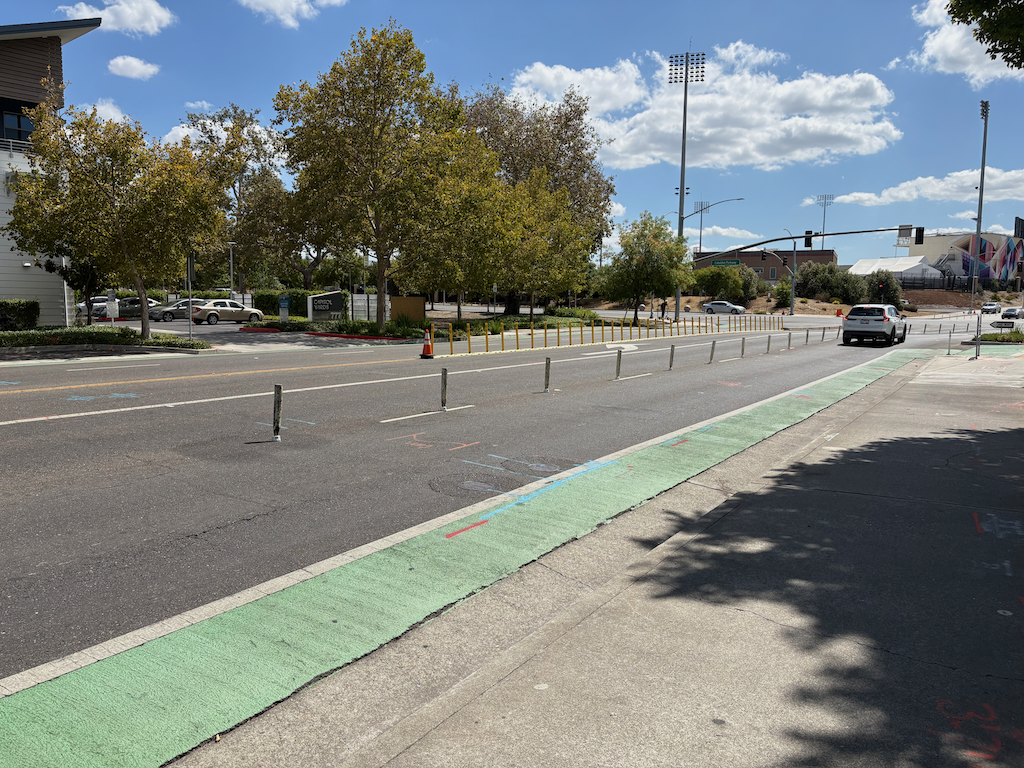
The photo below is a location on 5th Street in West Sacramento approaching Cabaldon Parkway, showing lane channelization delineators (white) and centerline hardening delineators (yellow). This is actually a very unsafe location, which I’ll get to in a future post, but it is the only one I have showing both types.
Lane channelization delineators prevent (or at least strongly discourage) lane changes approaching uncontrolled intersections. Uncontrolled means that at least one of the cross-streets does not have any traffic control such as a signal or stop sign. A significant portion of walker fatalities occur in crosswalks when one vehicle stops for the person crossing, and others do not. This is called the ‘multi-lane threat’, and is the main reason arterial streets (stroads) are so much more dangerous than other streets.
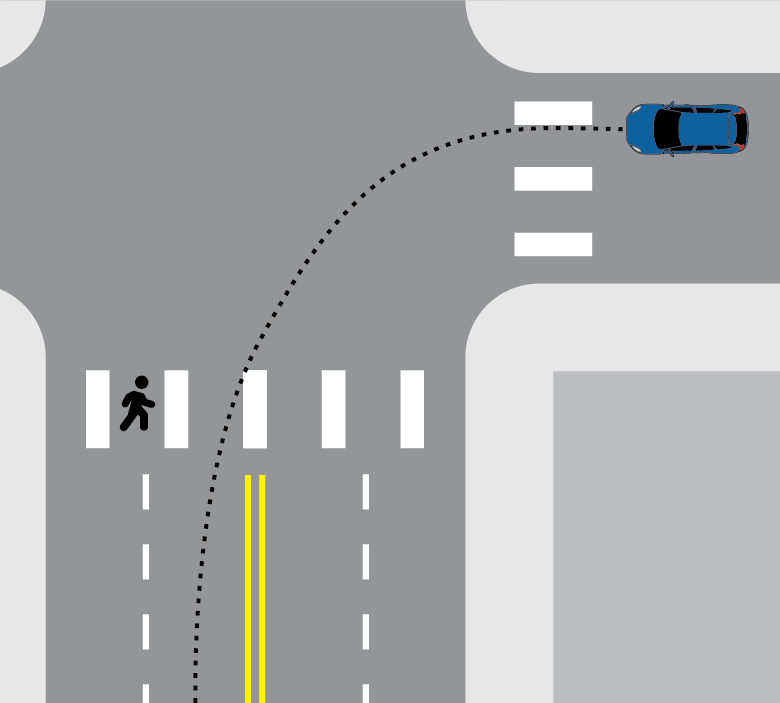
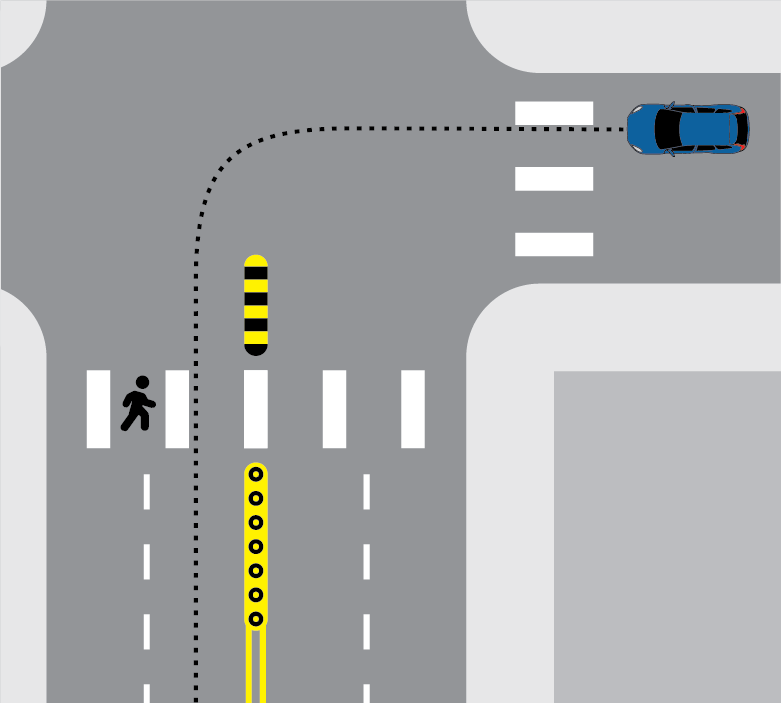
Centerline hardening delineators prevent (or at least strongly discourage) drivers from cutting the corner on left hand turns. This is another major source of walker fatalities. Centerline hardening is sometimes used to prevent turns to or from driveways or minor side streets.
The two diagrams below show why centerline hardening works. Not sure of the original source, but both of the posts linked above use the same diagrams.
In response to a reader comment, I went and looked at vertical delineators in the area of Sutter Health Park in West Sacramento. That will be the next post.

