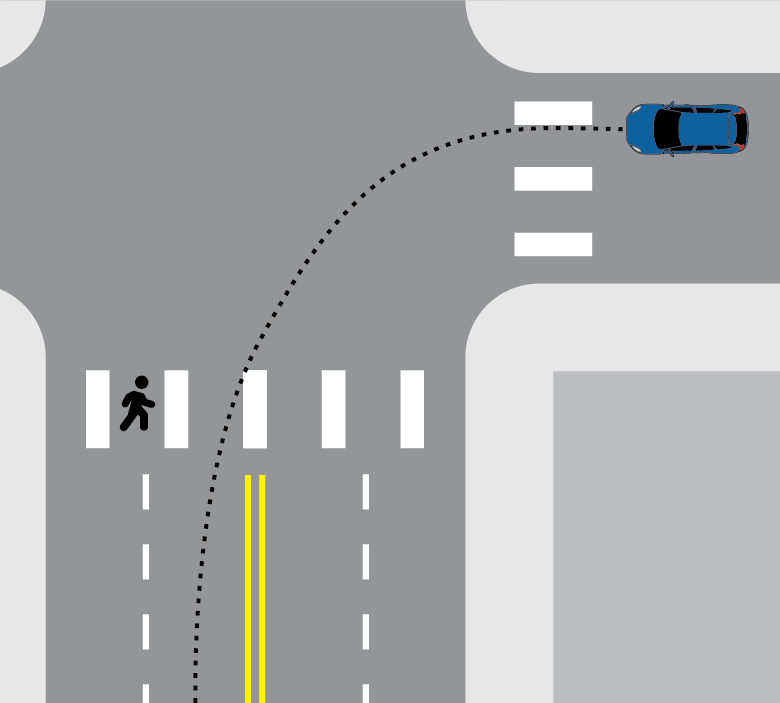
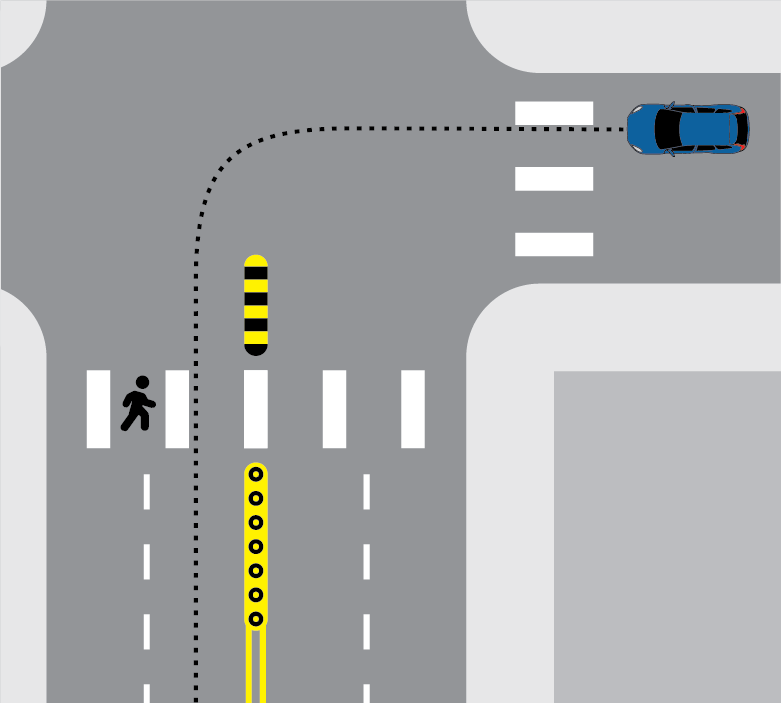
In response to a comment from a reader, I went to look at the area around Sutter Health Park, primarily the intersections of 5th Street and Cabaldon Parkway, and 3rd Street and Cabaldon Parkway. Note that Google Maps and Google Earth photos from July 2024 do not show the current configuration of these intersections with various traffic calming features, and vertical delineators often do not show up. If you want to see or experience it, you’ll need to go out there for yourself.
The city has kept adding vertical delineators to this entire area in an effort to regulate driver behavior around the ballpark. Things have improved but are still not safe. It is a comment on the drivers that pass though this area, and attend games, that so much has needed to be added, but is still insufficient. I can imagine the city saying “Well that didn’t work, lets add more of that”.
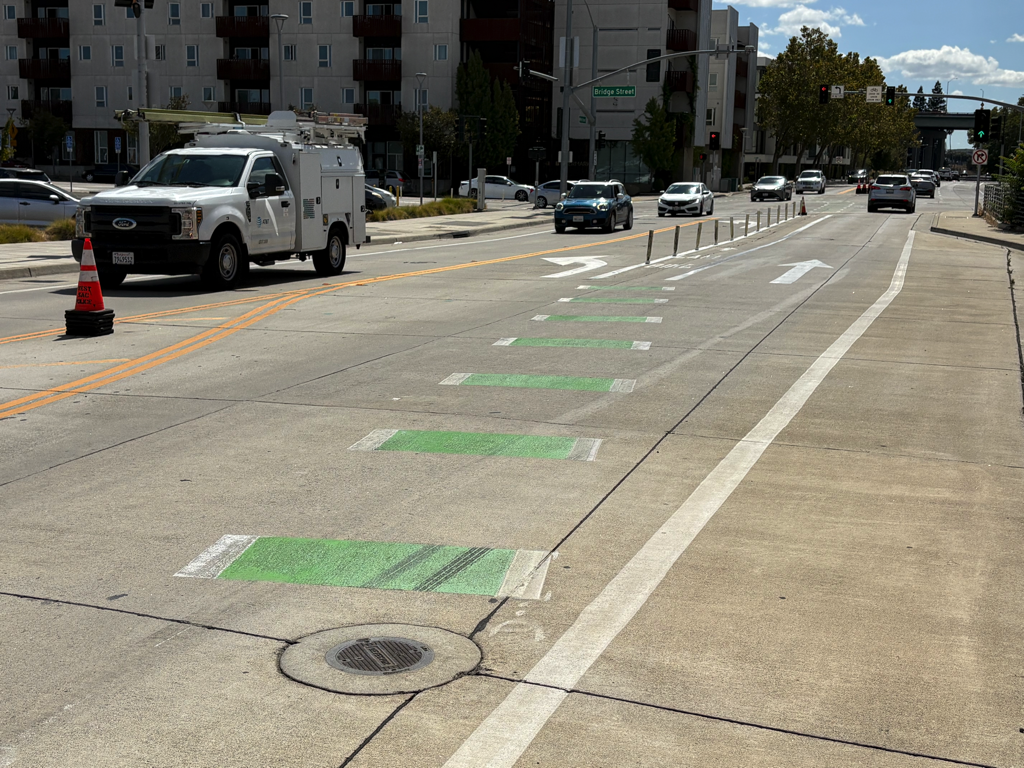
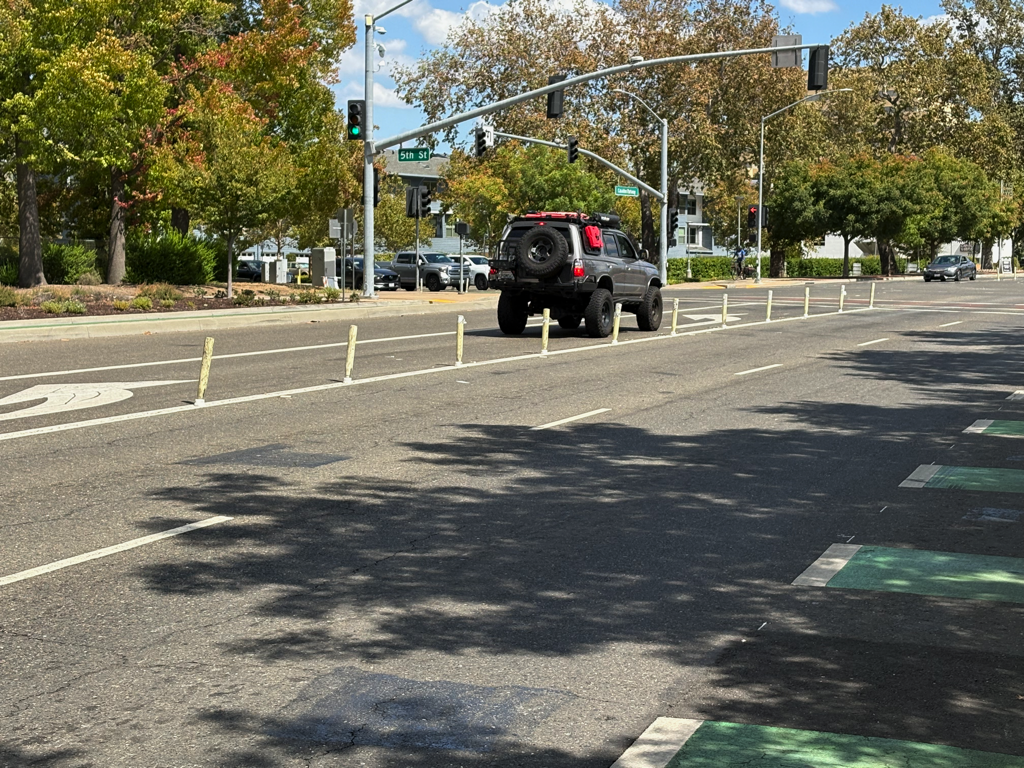
The photo below shows 5th Street southbound approaching Cabaldon Parkway. It is the only one that shows both lane delineators (white) and centerline hardening (yellow). The traffic lane adjacent to the bike lane is very narrow, and the bike lane is not protected in any way from this traffic lane. Much of the lane is in the gutter with a linear seam between the two. Which means it is not actually a legal bike lane, despite the message of green paint. This roadway need to be reconfigured to create a safe bikeway with at least a buffered separation, or ‘protected’ by vertical delineators, or best of all, a hard concrete curb. While riding this bike lane, I was passed by a large truck that drifted into the bike lane, forcing me to the curb.
This roadway design is completely UNSAFE for bicyclists, and must be corrected immediately by the City of West Sacramento.
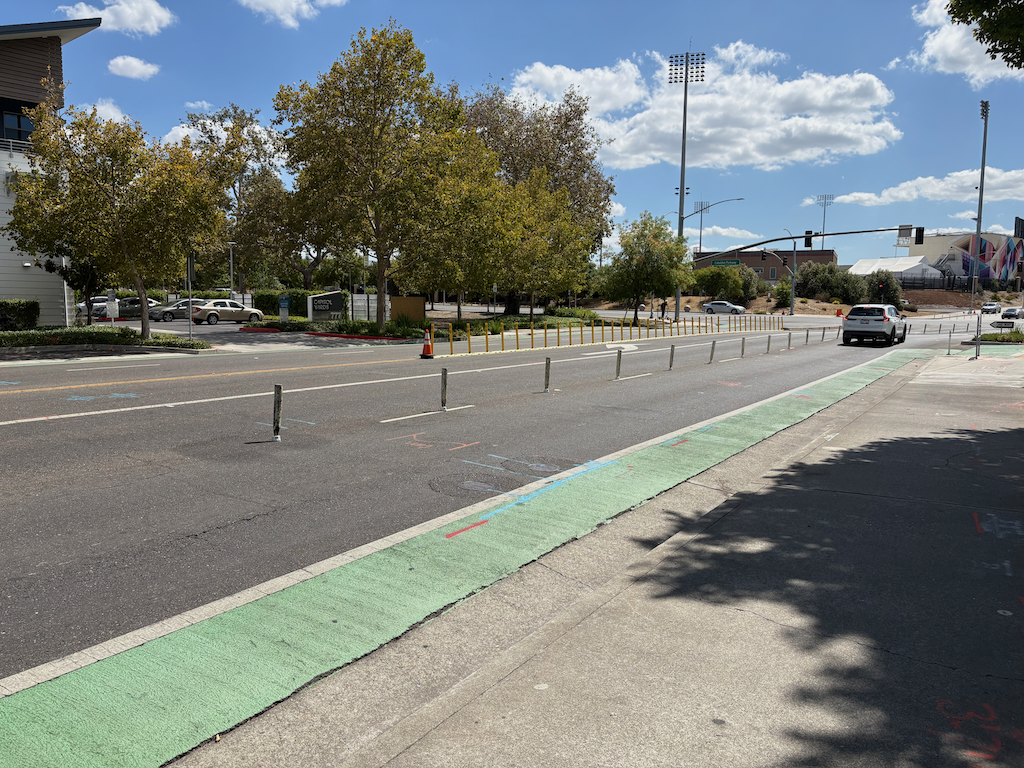
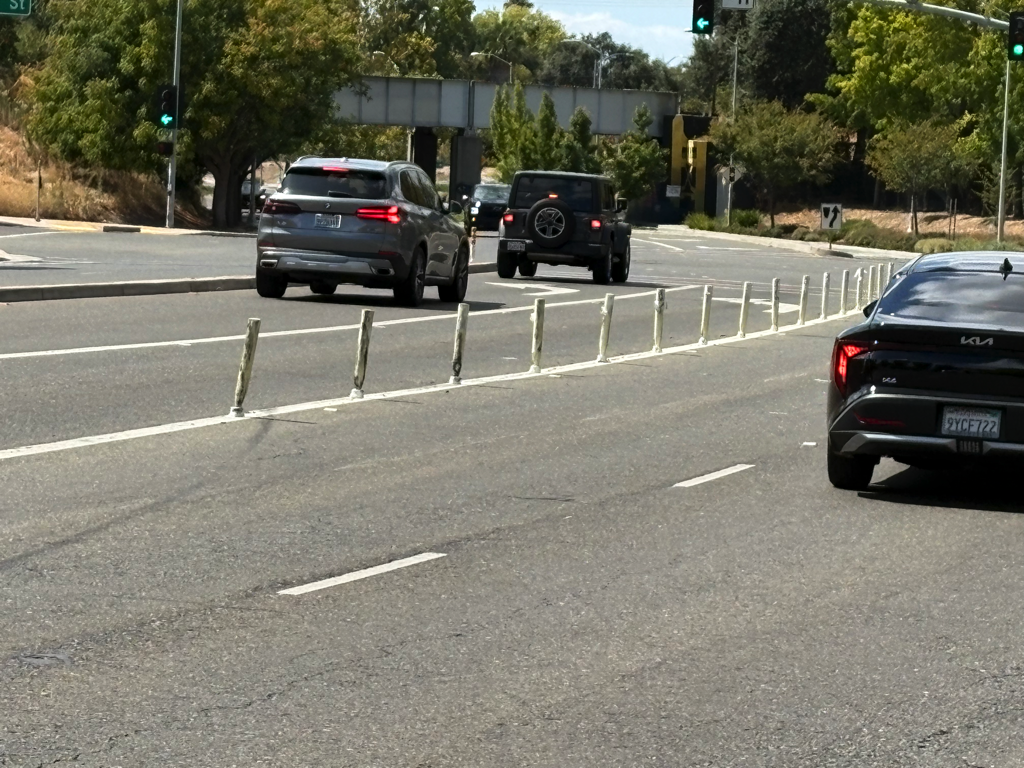
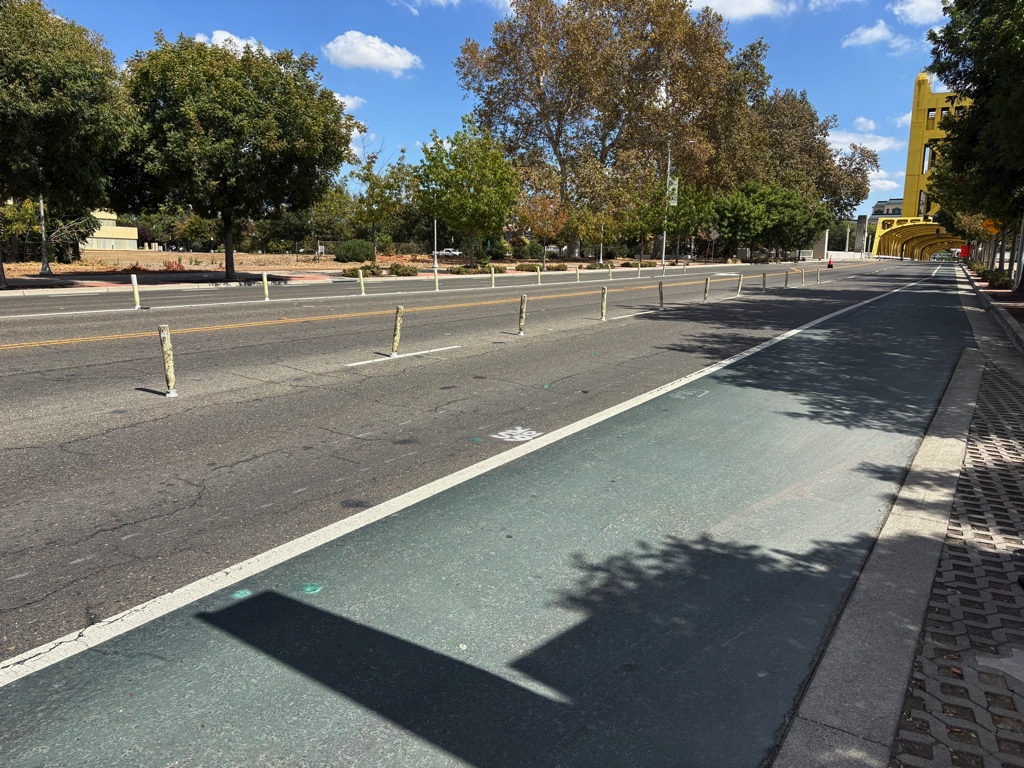
The next set shows lane channelization delineators (white). Note that they are no longer white and unbent, they have been run over by drivers multiple times. But they do have a traffic calming effect by discouraging drivers from changing lanes in unsafe locations or at intersections.
The reader commented that motor vehicles in lanes to the right of the delineators, westbound and eastbound on Cabaldon Parkway, drift to the right and into the bike lane. I did not observe this in my time there, and I did not feel unsafe, but I am not discounting the reader’s concern. I may have felt OK because these bike lanes are wider, not the barely legal lanes found many places, including the one above.
The longer stretches of bike lanes, particularly on Cabaldon Pkwy eastbound under the bridge, should be curb protected. Except for the bus stop at West Gateway Apartments, there are no driveways in this section.
A side note: the car in the left hand turn lane in Cabaldon at 3rd photo below sat through two signal cycles because it was not detected, and finally went on the red.
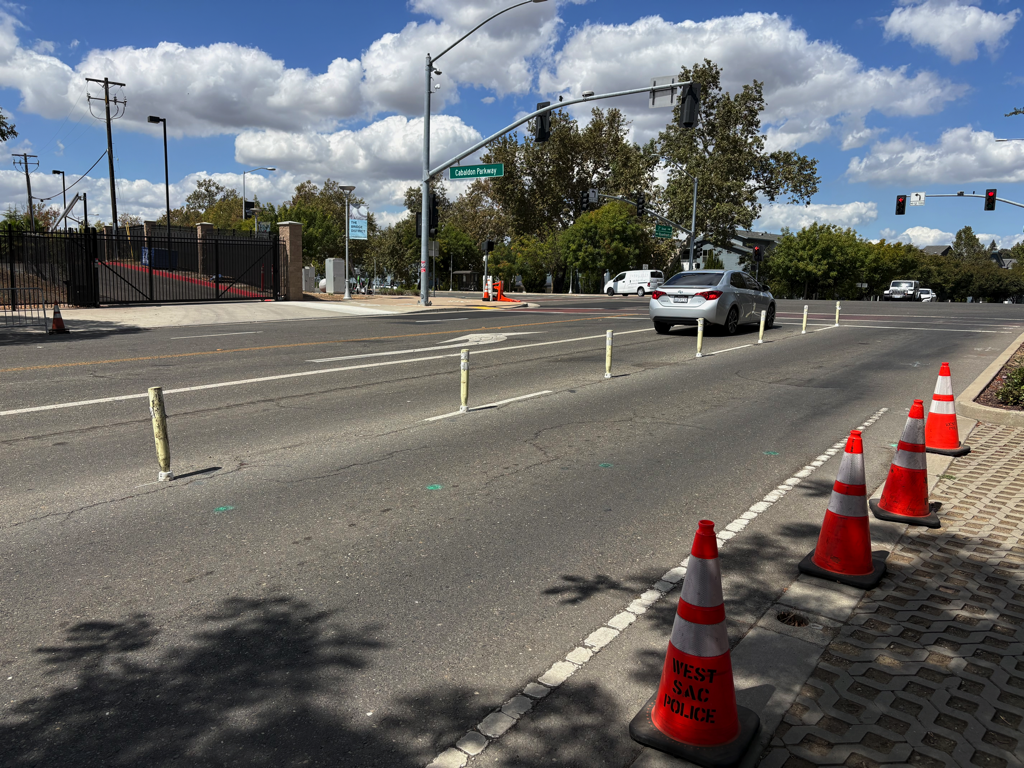
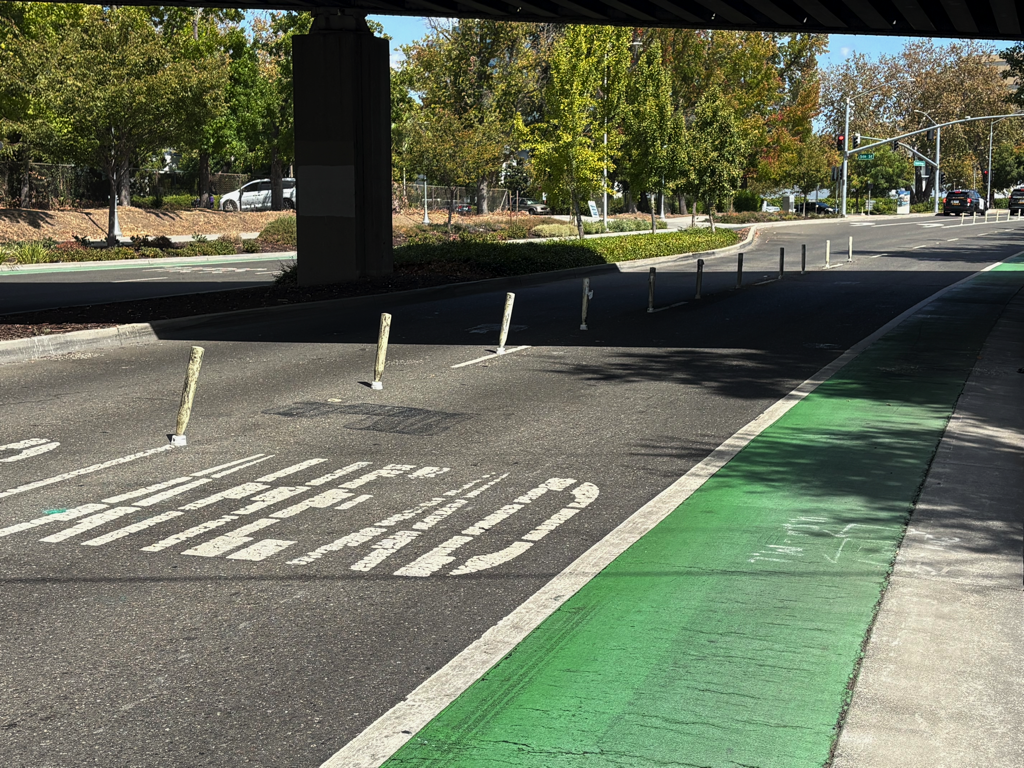
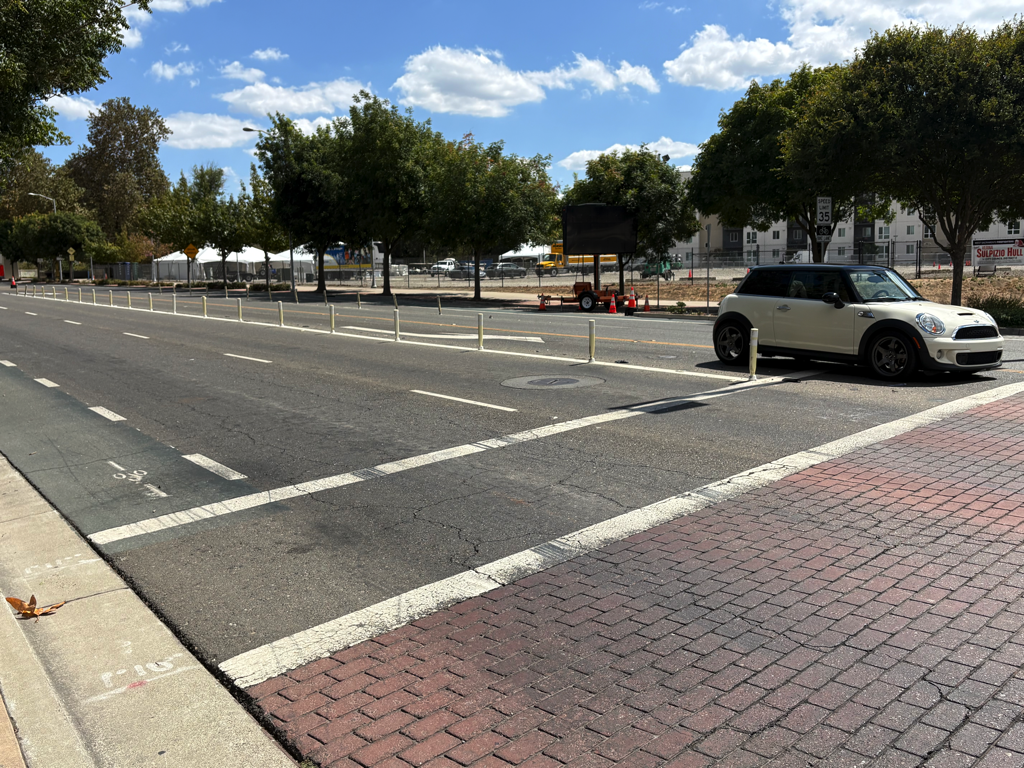
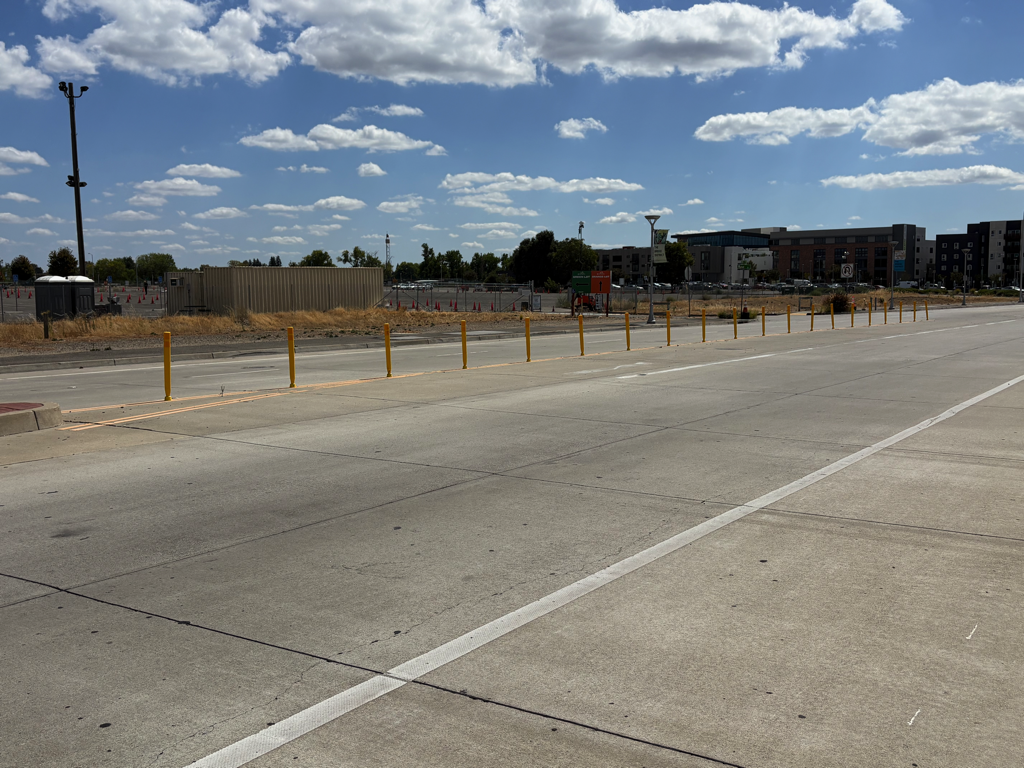
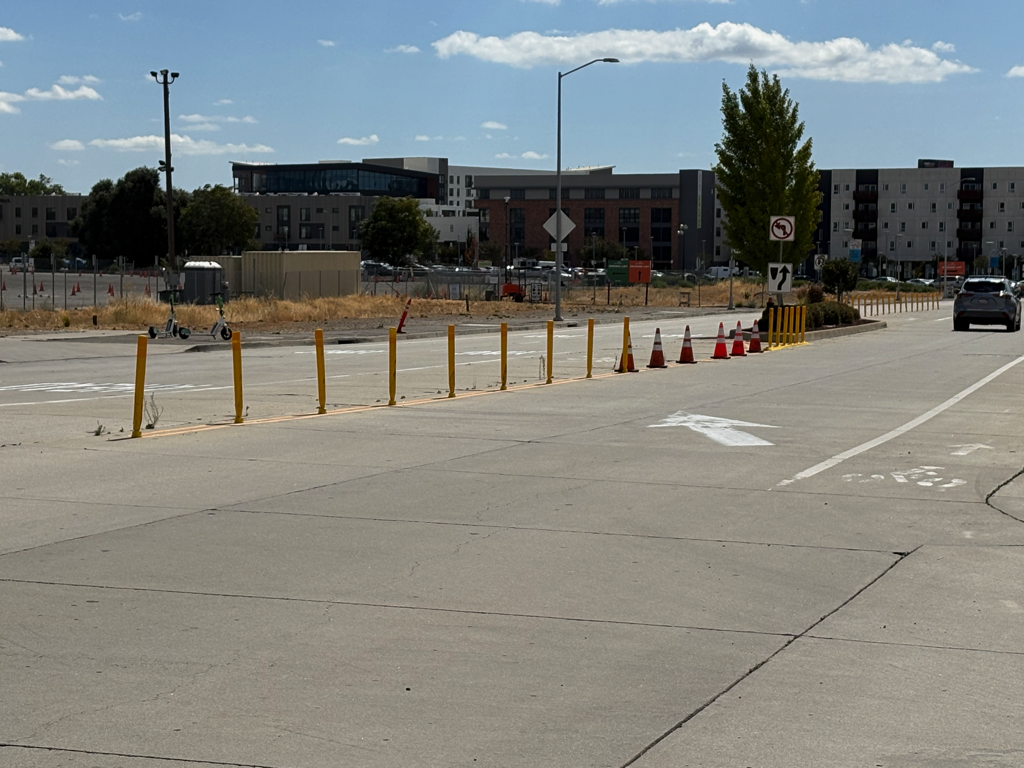
The next set shows centerline hardening (yellow). Most of these are more recent installations, so are mostly still yellow. These appear to be installed to keep drivers from turning into and out of the parking lot areas where they are not supposed to.
And lastly, the transition point on 5th Street southbound from the right-side traditional bike lane to the left-side two-way separated bikeway, often called a cycletrack. Note the very narrow bike lane between two lanes of motor vehicle traffic, ‘protected’ (not protected) by a line of lane channelizers on the left side of the bike lane. This is a horrible design. The bike lane should have been continued to the intersection, two-stage turn box, and an exclusive bicycle phase light.