Part of an ongoing series of posts to support better streets in the City of Sacramento during their 2023 update of Street Design Standards. New standards must be innovative, safe, and equitable, and it will take strong citizen involvement and advocacy to make them so.
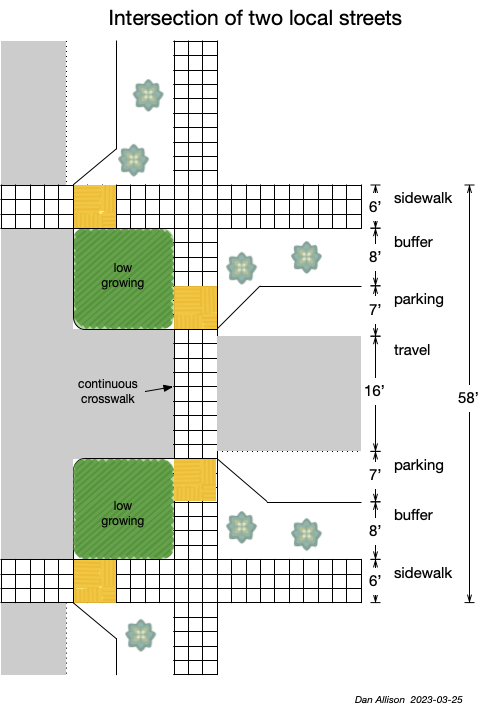
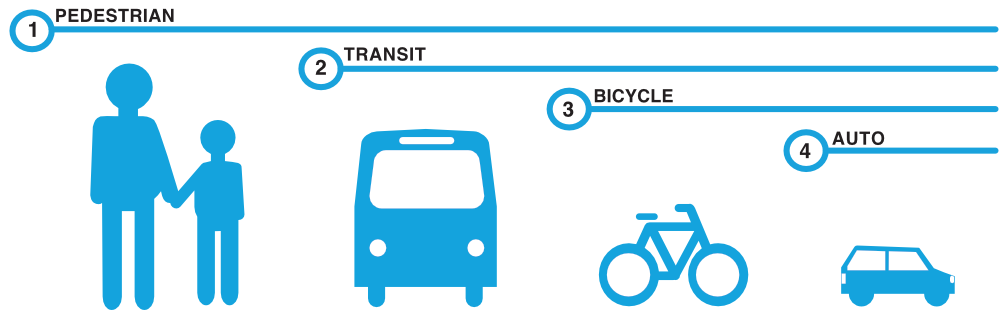
When two local streets intersect, the priority should be for people walking. I’ve created a diagram of what such an intersection might look like, and measure. Notice that the travelway, the area used by moving motor vehicles, is much narrower than is true on most existing streets. This is intentional. Drivers are slowed by their perception that there is a limited space to pass other motor vehicles, or bicyclists for that matter, and limited shy distance from parked cars. Not only does this make the street safer, it also makes it more pleasant for everyone. Drivers traveling any distance will leave these streets in favor of wider/faster streets. Bicyclists can mix with other traffic due to the slow speeds, and do not need a dedicated area. Design and posted speed (if posting is even needed) would be a maximum of 20 mph, and might be less.
Parking is present and welcome, both because it is probably needed, and because it slows motor vehicle traffic. Every corner has a curb extension to shorten the crossing distance for people walking, to increase visibility between walkers and drivers, and to further calm traffic.
Sidewalks of at least six feet, and sidewalk buffers of at least eight feet are included.
Most significantly, sidewalks are raised and extended, with concrete, across the intersection. This enforces the perception that this is a place for walkers, where drivers and motor vehicles are guests. And it is a place where kids could play in the street, as used to be the right of every kid before we let cars dominate our streets. There is still significant pavement for motor vehicles (and bicyclists), but it no longer dominates the neighborhood.
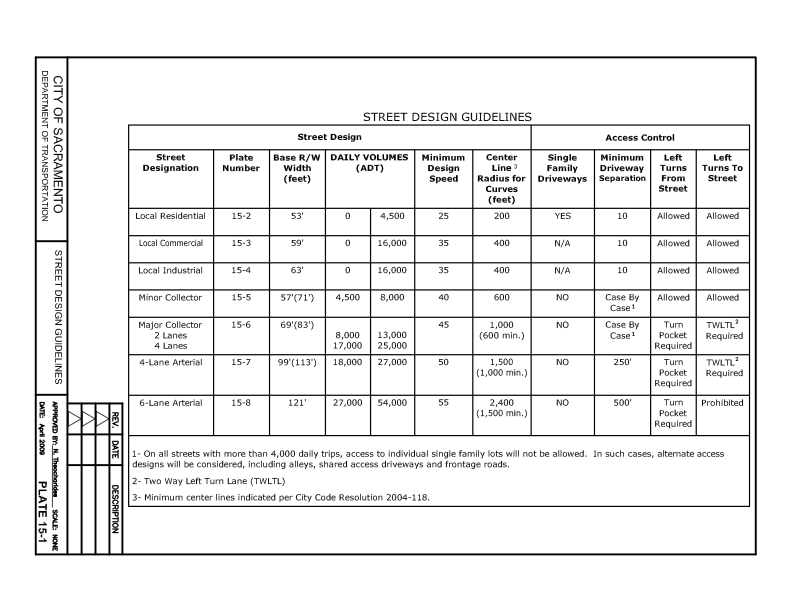
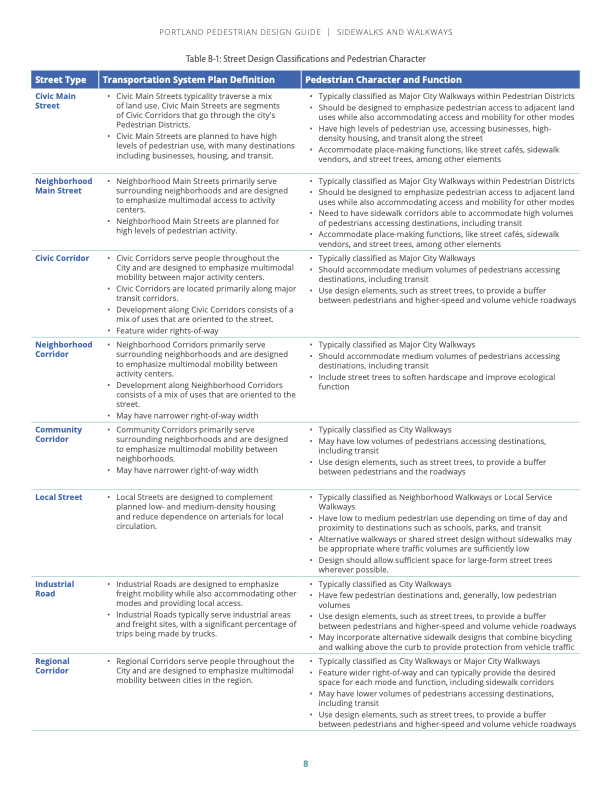
I will address what kinds of streets these are in the future, but what I envision for now is a street with about 80% or more residential, multi-family and single-family. Small businesses on single parcels would be allowed, particularly on corners, but there would be no large commercial or retail, and there would be no surface parking lots.






 Getting Around Sacramento