Several Sacramento area people have referenced the article “12 Strategies That Will Transform Your City’s Downtown” on the UrbanScale blog by John Karras. I’d like to look a little more closely at some of the strategies. If you have information or thoughts about any of these, please contribute.
#1 Turn one-way streets into two-way streets. Sacramento, and specifically downtown/midtown, has most of the one-way streets in the region. The city does have a policy to convert some of these streets, but the effort stalled, and no one seems to know why or be willing to admit why. Several streets have been resurfaced recently without being converted, though this would be the perfect time to do it. These include H, I, 9th, and 10th. There are some costs to conversion, turning signals around or installing new signals in some cases, the the reward in walkability and retail success is worth it. The post says “One-way streets are great if your only goal is to channel traffic through your downtown, but they are bad for pedestrian activity and retail opportunities. Two-way streets create a more comfortable pedestrian environment and have been shown to increase property values.” J Street in Sacramento is a classic example of how one-way streets reduce retail business. All those thousands of cars streaming by the most dense retail street in the region, and only small bubbles of successful retail to show for it. I’m glad Karras has this one on the top, because it is one of my strongest desires, with many blog posts: Two-waying streets in SF, New bike lanes, diets and sharrows downtown, street changes, more on conversion to two-way streets, and Choosing streets to walk.
dead zone on 1000 block of J Street, downtown Sacramento
Why do buildings and lots sit empty for years throughout downtown Sacramento and beyond? Because there is little consequence to the property owner of leaving them empty. They continue to pay property taxes while waiting for some development scheme that will make them so much money that the years of property tax are a drop in the bucket. Occasionally, a property is taken for non-payment of property taxes, but that is rare.
While the building or lot remains empty, the city (I’ll use “the city” for the cities and counties and utility providers) still has costs associated with the property. The cost of electrical, water, sewer, telephone, the street network, and transit in an area has more to do with the capacity of the system and the network passing by a property than the specific connection to the property, so the city still has costs even though they are receiving only a pittance of property tax. Fire and police services are actually higher for empty building and empty lots because they attract vandalism, crime, illegal occupancy. They drag down the property values of everything around them, and therefore the property tax income from everything around them. They are in large part the very definition of blight.
Ironically, many of the empty buildings and empty lots in downtown Sacramento are owned by the city itself. So the city is costing itself money by letting these sit, and of course that means that it is costing us taxpayers.
When the economy slowed, those big projects that would make a lot of money evaporated, and so more and more property sat unused. But it did not need to be unused. Smaller scale projects were always possible. I think one of the big differences between downtown and midtown in the downturn was that midtown had a large number of small properties owned by people with moderate dreams of development and redevelopment, while downtown had a few large properties owned by people with grandiose dreams. Those dreams crashed, and so did downtown. A number of successful businesses were dragged down by the failures around them. Midtown went through a slow time, but lost far fewer businesses, and is now picking up in a way that downtown has not.
So, what to do? As always, I have some outside-the-box (or off-the-wall, some would say) solutions to propose.
1. Assess property tax on all government entities. What purpose would this serve? Wouldn’t it just be moving money from one pocket to another? Yes, but it would make the cost of maintaining empty buildings and empty lots show up on the balance sheet as a direct expense. As with all things financial, we pay it no attention until it shows up on the balance sheet and affects the bottom line.
2. Assess empty lots at the value they would have if developed, based on typical properties surrounding it. Seems unfair? Not in my mind. The empty lot is costing the city, and all of us, directly in terms of services needed, and indirectly in creating blight that lowers property values and depresses economic activity. This higher level of property tax would encourage the owner to move forward with development. In a few instances, these empty lots could be converted to public purpose such as a park or farmers market location, but the number of those conversions would be small relative to the number of properties
3. Double property taxes every four years for both empty lots and empty buildings. This would give the owner a strong incentive to do something. While regular property taxes can largely be ignored, when it goes up 2X, then 4X, then 8X, then 16X, no property owner will leave the property unused.
I have no illusions that even these radical proposals would bring vibrancy back to downtown, but along with many other policies and actions, they would certainly help.
I think something needs to be done about surface parking lots, which are another unproductive use of land that costs us all money, but that is another topic for later.
I’ve uploaded a few photos to Flickr of abandoned downtown, along J and K streets. It would take days and thousands of photos to document it all.
Note: I am fairly sure that there was a pedestrian fatality in West Sacramento this week, but I’ve been unable to find any news item on it. There was a bicyclist – motor vehicle crash in Sacramento, but, again, no news item. This has made me realize that a lot of bicyclist and pedestrian fatalities and serious injuries are ignored by the local news media.
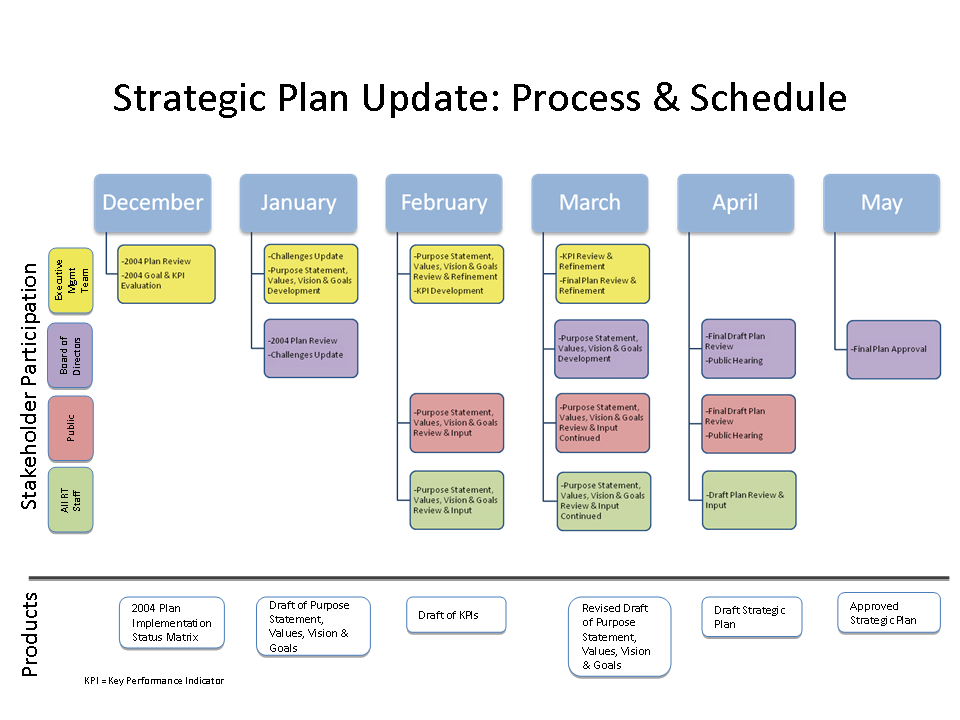
SacRT has started into the process of updating its strategic plan, which was last updated in 2004. There are information booths at several locations on specific dates and time, and online comments are being accepted (see RT Updates Strategic Plan page). The online survey asked users to rank a variety of options in two areas, and offers an open-ended comment field.
The SacRT system is going smoke free! The newly announced policy applies to all bus stops and light rail stations, though signing and enforcement is being phased in, with the busiest light rail stations (13th Street, 16th Street, 29th Street, Meadowview, Arden/Del Paso and Watt/I-80) already in effect. The fine for violation is $250.
I look forward to not having to wait for transit in a cloud of smoke and standing in a pile of butts. There are a lot of disgusting habits that adhere to the light rail stations, and this is one step towards eliminating these and making the system more user friendly and healthier. I suspect there will be less trash discarded on the ground around the stations, since trash generates trash, and butts are the trash that starts the cycle.
This new policy is the result of the work of The SOL Project, a local nonprofit that works to reduce exposure to second-hand smoke. Thank you!
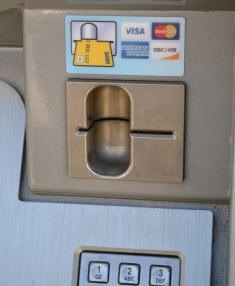
SacRT has joined the 20th century! There are now twelve fare vending machines that accept credit and debit cards for purchasing tickets. Though the machines are all located at light rail stations, the tickets can be used on SacRT buses as well. Most months I buy a monthly pass, but since in February I am gone about half the days, I decided to buy by the day, and it has been very convenient to have these machines. Though two of my most commonly used stations don’t have them. There are 52 stations on the light rail system, and each has one or more fare vending machines.
When I moved to Sacramento nearly three years ago, I was frustrated that the machines, which were clearly designed to accept cards, did not. Every other transit system I used in my travels did accept cards at some to all stations, and having a system that dealt only in cash was a disappointment.
the credit/debit card slot and stickers
There will eventually be a region-wide fare card, similar to the Clipper card used in the Bay Area, for Sacramento. I don’t know whether this capability will be added to the existing machines, or whether new machines will be installed.



 Getting Around Sacramento