sustainable transportation planning grants

The Caltrans Sustainable Transportation Planning Grants for 2025-2026 have been awarded.

Davis received a grant to develop an Active Transportation Plan, described as:

“The City of Davis proposes to develop a city-wide Active Transportation Plan (Plan) with the goal to increase the active mode share trips by 5% by 2040 with the development of innovative and data-proven successful projects, programs and policies that will reduce vehicle miles traveled and greenhouse gas (GHG) emissions (transportation accounts for 74% of GHG emissions in the City of Davis), improve access to transit stops, and enhance safety for all. The Plan will be informed by robust community outreach and the City will work with both our vocal and underrepresented community members and advocacy groups such as Cool Davis, Bike Davis, Strong Towns Davis, Davis Downtown Business Association, Davis Chamber of Commerce, Yolo Cares, Yolo County, the school district, church-based groups, SACOG, identity-based organizations, aging community organization and homelessness service providers to inventory the existing conditions, identify resident’s needs and desires, and identify projects, programs and policies and prioritize the outcomes. Major deliverables include an executive summary designed for decisionmakers and community members filled with graphics and easy to read maps and a technical document which includes recommended prioritized short- and long-term projects, programs and policies to increase active transportation mode share. The Plan will have a strong nexus with existing plans such as the City of Davis’ 2023 Climate Action and Adaptation Plan and 2023 Local Road Safety Plan; SACOG’s Metropolitan Transportation Plan/Sustainable Communities Strategy; and the California Transportation Plan 2050, thereby furthering California’s goal of creating a transportation system that is equitable, safe, sustainable, integrated, and efficient for all.”

SACOG received a grant for CARTA Regional Toll Equity Study, described as:

“Consistent with local and statewide plans, the Sacramento Region (Sacramento, Yolo, Placer, El Dorado, Yuba, and Sutter counties) is developing our first toll lanes to reduce greenhouse gas emissions, improve transit reliability, and manage freeway congestion in our growing region. To deliver an equitable toll lane system, the Sacramento Region needs to evaluate the impact of toll lanes on low-income, disadvantaged, and other equity-priority communities; reduce disparities in benefits and burdens for those communities; and enhance transportation access for all users. The CARTA Regional Toll Equity Study (Study) will fill this gap by reviewing toll equity best-practices, analyzing how toll lanes will impact travel for equity-priority communities, and providing a clear and actionable roadmap to deliver an equitable toll lane network in the Sacramento Region. The Study will be led by the Capital Area Regional Tolling Authority (CARTA), a joint power authority between SACOG, Caltrans District 3, and Yolo Transportation District (YoloTD) that is the new designated tolling authority for the Sacramento Region.”

City of West Sacramento received a grant for West Sac Forward Transit Priority Plan, described as:

“With West Sacramento experiencing some of the strongest growth in the region this century; planned Sacramento Regional Transit (SacRT) light rail transit construction into West Sacramento starting in 2026; public On-Demand Rideshare services growing in popularity; and existing Yolo County Transit District (YoloTD) bus and paratransit service changes anticipated – the City of West Sacramento in partnership with SacRT, YoloTD, and Via, with support from Sacramento Area Council of Governments (SACOG) proposes to develop the “West Sac Forward Transit Priority Plan”: an innovative sustainable public transit plan rooted in community feedback and collaborative public participation.

Using Sustainable Communities funding, our agencies will team-up to analyze existing systems targeting efficiency, effectiveness, and seamless integration of public bus, rail, rideshare, and planned rapid transit systems to better serve residents and local workforce through new policies, strategies, and recommended infrastructure improvements. Objectives include reducing transit delay, increasing reliability and resiliency, increasing ridership, improving access and mobility for equity priority communities and transit-dependent populations, reducing Greenhouse Gas (GHG) emissions, reducing congestion and Vehicle Miles Traveled (VMT), and improving traffic safety while balancing service cost and system performance.

The final deliverable: a transformative plan with recommended improvements that support healthy, diverse communities and strengthen the economy by implementing the City’s Strategic Plan and Mobility Action Plan, YoloTD’s Short Range Transit Plan, and the SACOG 2025 Blueprint Triple Bottom Line strategic goals of Equity, Economy, and Environment – which complement Caltrans’ six Strategic Plan Goals, meet grant objectives, and achieve CTP 2050 vision and Statewide Transit Strategic Plan objectives prioritizing cost-effective public transit services with improved mobility, social equity, and reduced GHG emissions.”

There are other grants in the region, which can be viewed on the Caltrans Sustainable Transportation Planning Grants page.

a trip to San Francisco

My last major trip for the Week Without Driving was a trip to San Francisco.

Friday, I walked from a transportation safety meeting to Sacramento Valley Station, and caught Capitol Corridor train to Richmond, then transferred to BART into San Francisco Embarcadero Station, and walked to Trader Joe’s and then to the Hostelling International hostel near Union Square. That evening I walked to San Francisco Playhouse to see The Play that Goes Wrong, only two blocks away, which is why I stay at that hostel when I’m seeing a play.

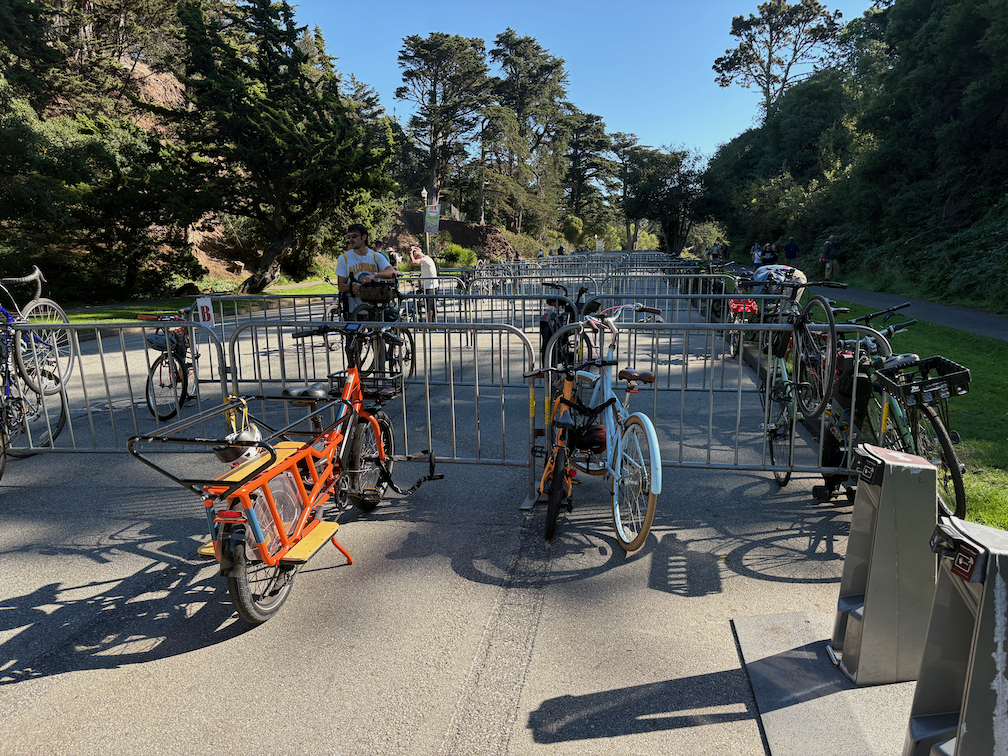
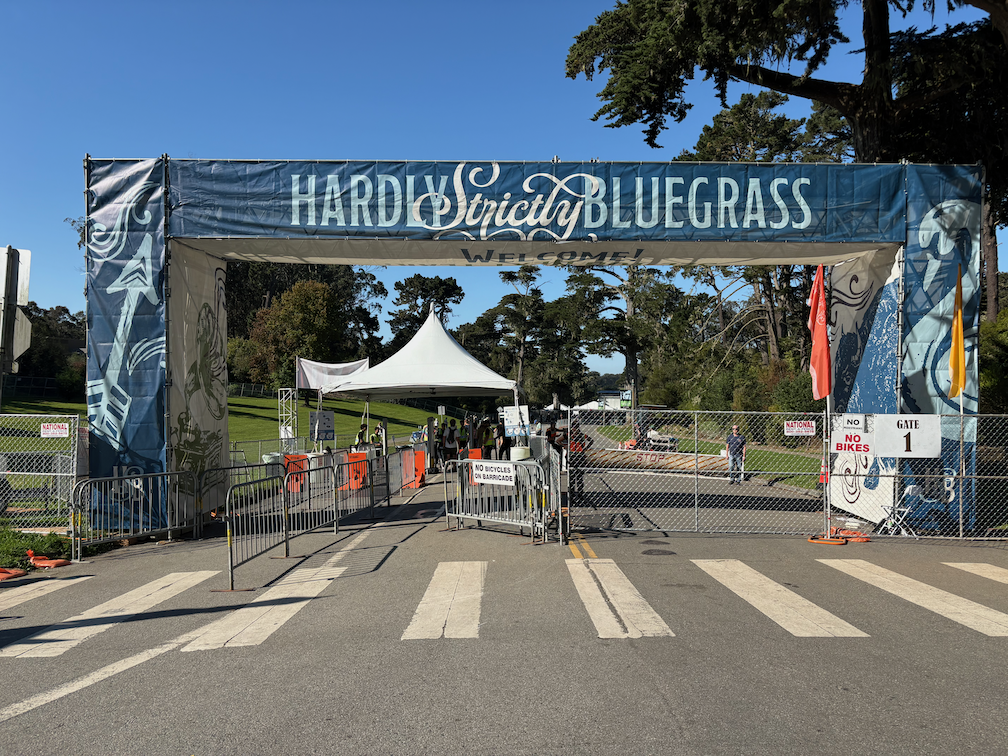
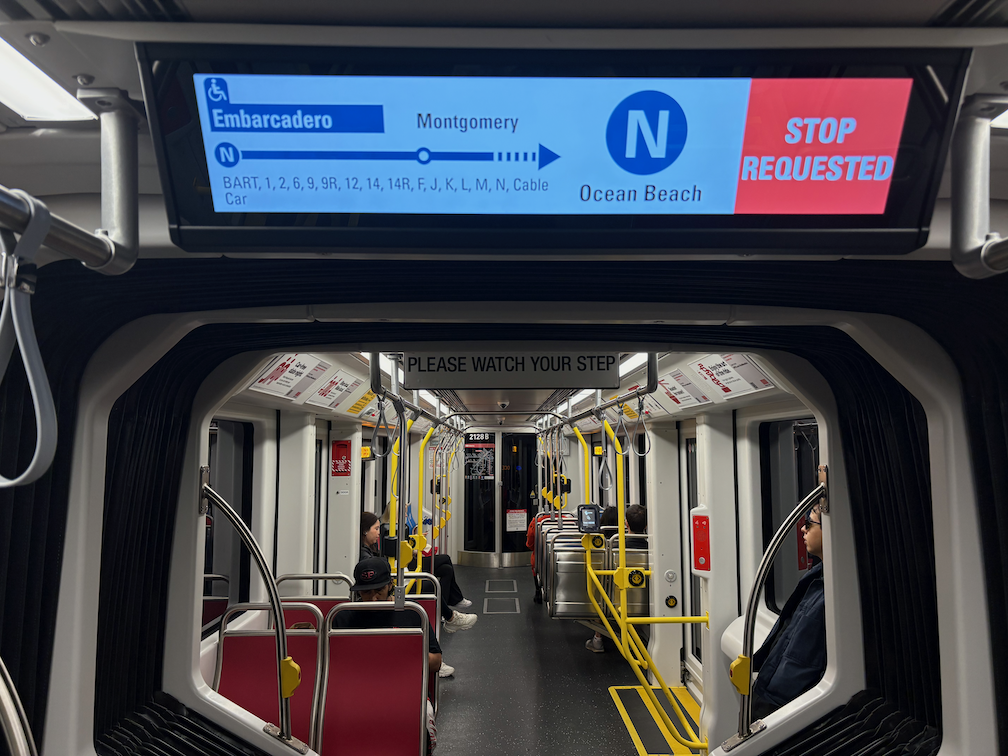
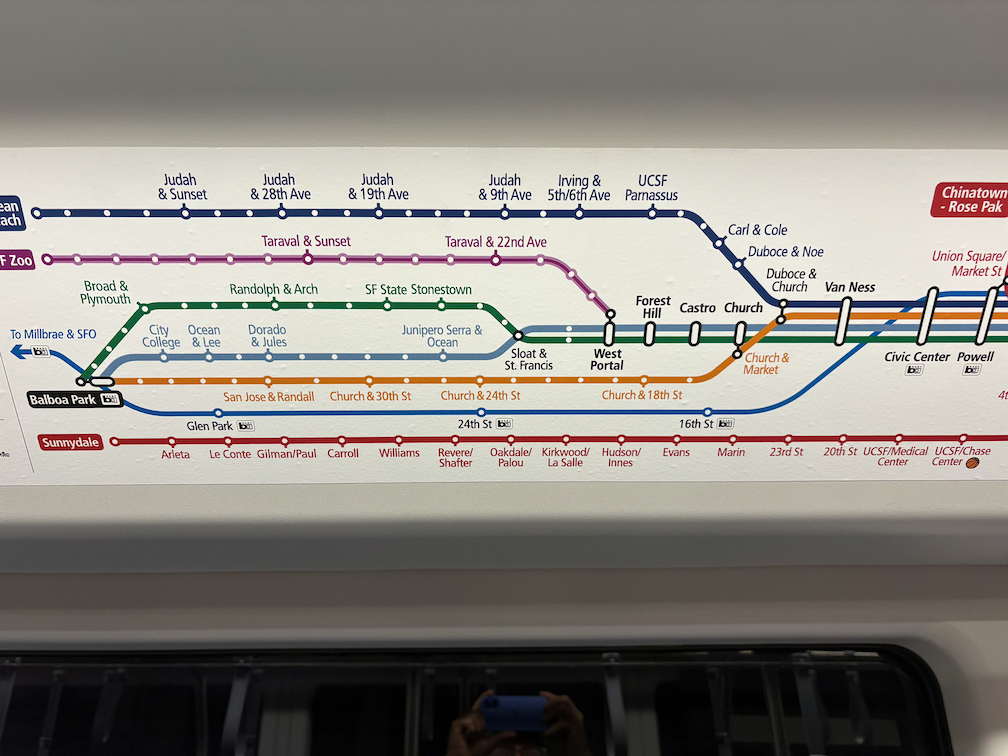
Saturday morning I walked to the Ferry Building farmers market to grab a few picnic items, then took Muni Metro N Judah light rail to 9th & Irving. From there I walked into Golden Gate Park and to Hardly Strictly Bluegrass (HSB), a three day free festival (I missed the first day due to the transportation meeting) that I’ve attended seven times since 2010 (the festival is 24 years old). I realized sitting on the grass that I really wanted a lightweight folding chair to Sunday, and other uses, so I took two Muni buses to Sports Basement in the Presidio, bought the chair, and then one bus back to Union Square area and the hostel.

Evening, I went to a contra dance in Oakland, Circle Left. Short walk to BART, BART from Powell Station to 19th St Oakland, walk to the dance center. I didn’t last the entire dance, because a hot day in the sun and dancing at the festival left me drained. Walk and BART and short walk back to the hostel.

Sunday I again took Muni Metro N Judah to 9th & Irving, and walked to the Japanese Tea Garden, my favorite part of Golden Gate Park (among many), spent some while just being, and then had Hojicha tea. From there, a walk along JFK Promenade to HSB. The promenade is a long now car-fee route in the park, one of the best outdoor spaces in the city. The day was slightly less hot, but no less sunny, so in between main stage performances, I wandered to shadier stages (six stages total). The closing act by Emmylou Harris draws the biggest crowd of the festival, and of course I joined the many dancers on the grass to the left of the stage. Everything over, I walked out of the park and caught N Judah back to Union Square to pick up my travel pack left at the hostel, then BART to Richmond.

I missed the Capitol Corridor train that I intended to catch, so had to wait for the last. For an unknown reason, this last train was scheduled for an hour later than normal. The last train is often delayed to accommodate people attending the 49er’s game, or other major sports events, but the game on Sunday was an afternoon game, so the delay made no sense. And then the train was late. The plus was that I met and talked with several people on the platform who had also attended HSB. The train got me home after midnight, and I walked back home (there is no light rail service after 11:00 PM).

I do tend to cram in as many activities as possible when I take trips to San Francisco and the Bay Area, and this weekend was no exception. A big part of what enables this is the great transit system in the Bay Area. Not perfect, but great. Could I have done all this with a car? No, because I’d have spent so much of my time looking for parking that I’d have missed other activities, and paid more for parking than I spent on the entire trip travel.

I plan almost all of the travel with the Transit App, and pay for all of my transit in the Bay Area with a Clipper Card (on my watch). Capitol Corridor travel I buy in the Amtrak app, which is now easier to use than the website.

These are my three big trips during the Week Without Driving (a trip to San Rafael, a trip to Fair Oaks). I did a lot of bicycling and walking as well. I am not a person who has to walk, bicycle and transit. I do it by choice. Though having a car would probably eat up so much of my income that I’d likely end up living in my car. That is not a joke. If you look at areas in Sacramento where unhoused people are living, you will often see high value cars. I suspect paying for those very expensive cars is what pushed many people over the edge into homelessness.

a trip to Fair Oaks

A shorter and less ambitious car-free trip, this time to Fair Oaks on Wednesday.

I rode my bike from home, along the American River Parkway, across the old Fair Oaks truss bridge, and up to Badfish Coffee in Fair Oaks Village. There are drinking fountains, bathrooms and picnic tables at a number of locations along the parkway, though not until Watt Avenue and east. Some reading and writing along with my tea, mostly transit back home.

I caught SacRT bus 21 from Fair Oaks to Mather Field/Mills light rail station, the SacRT Gold Line to 48th Street Station. A short bike ride to Trader Joe’s for a little grocery shopping. I do a number of trips to grocery stores and farmers markets each week, buying small amounts that fit in my bicycle bag, rather than doing a big trip that might require driving. Give it a try!

I then rode the rest of the way back home along Folsom Blvd and central city streets.

Today was California Clean Air Day, with SacRT offering free rides on transit for the day. I overheard a number of regular and low income riders talking about how excited they were to have a free fare day. The bus was crowded with riders, more than usual, though light rail was not.

I have a folding bike, so carry it on the bus (it does not fit securely on the front bike rack), but each bus has a front rack that can accommodate three bikes. Two riders traveled most of the way on the bus with their bikes on front. Light rail can accommodate several bikes, though it is hard to get them up and down the steep stairs. Unfortunately, SacRT seems to be running mostly old rail cars on the Gold Line, not the new low-floor cars that were promised.

SacATC February 15, includes Truxel Bridge

The monthly meeting of the Sacramento Active Transportation Commission (SacATC) will be this Thursday, February 15, 2024, starting at 5:30 PM in the city council chambers. The agenda includes five items. You can comment on these items, or on topics not on the agenda, ahead of time via eComment, or in person at the meeting. I encourage people to attend these commission meetings. There are usually very few members of the public in attendance, which means that your voice is important. Though eComments are valuable, in-person comments carry a lot more weight. The city’s planning staff is usually progressive and innovative, but Public Works in general is not, so it is important the citizens show up to push for progressive and innovative projects and policies. With some new appointments to the commission, and support of the public, the commission itself has been much more progressive than in past years.

Agenda item 3 is a presentation on the Truxel Bridge Concept and Feasibility Study. The Truxel crossing of the American River was originally proposed and approved by SacRT and the county as a transit-walking-bicycling bridge, carrying light rail from downtown to Natomas. The city is now proposing a motor vehicle-transit-walking-bicycling bridge. They are claiming that the bridge would reduce vehicle miles traveled (VMT) through the provision of alternative modes, and a shorter trip between downtown and Natomas, but has not presented data to justify this claim. New roadway capacity induces more motor vehicle trips, a well-established fact, so to claim otherwise requires proof. Walking and bicycling would be unlikely to be the major component of bridge users. Transit availability could reduce motor vehicle trips, but the Green Line to the Airport is probably decades away, and anything short of service to North Natomas would be unlikely to replace many car trips.

The city intends to go full speed ahead (pun intended) with the bridge, based on a 2013 city council approval, seeking public input only on the southern approach to the bridge and the bridge cross-section. Since 2013, the city has declared a climate emergency, the Mayors Commission on Climate Change goal is to achieve Carbon Zero by reducing VMT, the soon-to-be-adopted General Plan 2040 and Climate Action and Adaptation Plan aim for reducing VMT rather than increasing it, and SB 745 required VMT impacts as the primary criteria for judging projects. Most importantly, public awareness of the risk of motor vehicle induced climate change has emerged and strengthened.

Read More »

Truxel Bridge on STAR

STAR, Sacramento Transit Advocates and Riders, has created several posts on Truxel Bridge, the City of Sacramento effort to add a motor vehicle, transit, walking and bicycling bridge over the American River in alignment with Truxel Road. The STAR interest is that the original bridge proposal, approved by Sacramento County under the American River Parkway Plan and by SacRT, was for a bridge that carried light rail, walking and bicycling, not motor vehicles.

View these posts, and likely more to come in the future, on STAR at category ‘Truxel Bridge‘.

bus to the airport? out of the question

An article today in The Sacramento Bee:

Is it better to park or ride-share to Sacramento International Airport? Here’s the breakdown

This is a typical car-brained response to solve an issue. While it is true that a car trip to the airport has a fraction of the carbon impact that your flight has, nevertheless, it is possible to get to the airport without touching a car, your own or ride-hail.

SacRT has Route 142, once an hour, and Yolobus has Route 42A/42B, once an hour or better. Though the schedules are not fully integrated (yet), this results in about 30 minute service frequency to and from the airport. SacRT’s buses are electric, and take about 20 minutes for a trip from downtown to the airport, without stops, while Yolobus’s are fossil fuel, and take about 20 minutes for the trip, downtown Sacramento to the airport. The clockwise/counterclockwise loop buses also serve Davis and Woodland.

You can plan your trip with Google Maps or the Transit app (highly recommended).

How much does it cost? SacRT $2.50 per ride (and 90 minute transfer) or $1.25 discount, or free for K-12 students. Yolobus $2.25 or $1 discount. Compare that to parking at the airport, $2/30 minutes, with a maximum of $10/day up to $30/day. Ride-hail? $30 to $168, depending on time of day and surge pricing, according to the Bee article. Want to throw your money away for perceiving convenience? Go ahead.

So, get out of your car, or anyone’s car, and on to the bus. And leave your car-brain behind.

Walkable City book club next

The informal Walkable City book club had a good discussion on Wednesday evening. There were only four of us, but we filled up the time with thoughts and questions about parking in the city.

To the question of what is the next action that could be taken, answers were:

  • create red curb offsets at every intersection, reducing parking by one space or so, to increase visibility between walkers, bicyclists and drivers
  • change parking rates so that garages are utilized more, getting cars off street parking
  • adjust the hours and areas of metered parking so as to cover evenings and ensure parking turnover even after the workday

The next book club meeting will be Wednesday, June 14, 6:00PM, at Lefty’s Taproom, 5610 Elvas Ave, Sacramento, CA 95819. The patio area has some shade umbrellas and misters to cool us off. And cold beer, of course.

Discussion will be on Step 4: Let Transit Work (page 139 in the second edition). We hope you will join us!

celebration, and caution

Today is a day of celebration for housing and transportation in California, with the possibility of more to come in the next two days. Yay!

But I want to caution about the alignment of housing with transit. It seems like a no-brainer, right? As I’ve long said, you can’t have affordable housing without effective transit, and you can’t have effective transit without widely available affordable and other housing. The problem I’m concerned about is that most of our transit system is oriented to arterial roadways (the semi-high speed, many-lane roads that are also called stroads because they don’t function well as streets or roads, and also called traffic sewers). Or in the case of rail transit, often uses old railroad corridors or freeway medians that make housing development difficult and probably unwise.

Research indicates that people, particularly kids, who live near freeways and arterials have much higher rates of asthma, and many other health problems, and shorter lifespans. Is that where we want low income families and kids living?

Apart from freeways, most traffic crashes happen on arterial roadways, and particularly at intersections of arterial roadways, and freeway on-ramps an off-ramps. Is this the hazard we want for low income families and kids?

I don’t have an answer for this challenge, but I often think it would be better to upzone everywhere (the next increment of development), so that additional housing can be built in places with better air quality and lower traffic violence. Maybe we should be fixing the arterials first, before we build housing along them. Yes, that delays the benefit of easy transit access to housing, but good transit in a poor living environment is just not what I want to see.

Roseville is a car-centric hell

Due to a miscommunication with a person who gave me a ride from the end of my backpack trip in Foresthill, I ended up in the Galleria part of Roseville yesterday instead of old downtown, which was what I intended. What a hellscape!

Roseville Transit does not run on Sunday, or course not, why would a transit system serve people on Sunday? So there is no way to get from the Galleria area to any place else in Roseville, or to any place else in the world.

Being stubborn, I decided I needed to walk to the closest transit, which is the Louis/Orlando Transit Center just off Auburn Blvd/Riverside Drive in Citrus Heights. On my three mile walk between the Galleria area and old downtown Roseville, I saw two bicyclists and one walker. And thousands of cars, most of them high end SUVs (pedestrian killers). Galleria Blvd has sidewalks in some places, but rarely on both sides, so you have to cross back and forth. No warning ahead, no crosswalks, just cross when you come to the end.

If you wonder what people were doing on the Memorial Day weekend, they were shopping. And shopping. And shopping. Though there is a Roseville Transit line that serves the main mall area, Monday-Saturday, it is almost not possible to walk to or from there. Sidewalks come and go, and with all the freeway onramps and off-ramps surrounding, it does not feel safe to walk. Once on the mall property, there are no sidewalks, just the ones around the buildings.

If you want to see how bad the Galleria part of Roseville is, take a look at Google: https://goo.gl/maps/jGX7BrAJFyDUrwja9/. Follow a piece of sidewalk to see how far it goes, whether it actually connects to anything. Remember that the mall area itself is much more pedestrian friendly that any of the surrounding shopping areas.

I thought, well at least things will be better when I get to old downtown Roseville. In some ways, yes. It is not a place designed for the exclusive needs of cars. There are actual locally owned businesses instead of national chains. There are places to eat, drink, shop. But… it was late Sunday afternoon and the sidewalks had been rolled up. It is hard for local business to compete with the huge subsidies that the national chains and malls get. All that car infrastructure that supports the mall, the six to ten lane roadways, the freeways and interchanges, that all was paid for by you, not by the developers, and that is money out of not just your pocket, but the the pockets of local business owners trying to compete.

On to the transit center, at least some of the walk through quiet OLD residential neighborhoods, the original part of Roseville. Thankfully, SacRT saved the day, bus and then light rail, to home. Of course service is less frequent on Sunday, and other than light rail, it doesn’t run late, but it runs! It is a lifeline for people who can’t drive, who don’t want to drive, who don’t want to be a part of car-centric hell places like Roseville.

I was walking, not bicycling, but of course was also looking at bicycle facilities. There are bike lanes on most of the stroads in Roseville. And what welcoming bike lanes they are! The photo below is of the dashed bike lane on Galleria Blvd northbound, approaching Hwy 65. It runs for 900 feet! Between high speed traffic on the left and high speed traffic on the right (40 mph posted means the minimum speed, not the maximum, most drivers are going about 55). The right hand lane is the freeway access lane, so drivers are accelerating towards the entry, hoping to catch a green light and squeal tires onto the onramp. Yes, this is the behavior I observed. Roseville seems to be of the impression that painting lines on the roadway for bicyclists is all it takes, that and nothing more.

Galleria Blvd bike lane, northbound to Hwy 65

The one good thing about being in Roseville is that it reminds me of how lucky, and how privileged, I am to live in Sacramento central city.

value capture for transit funding

Common Ground California has produced a white paper Transit Value Capture for California, by Derek Sagehorn and Joshua Hawn. In my previous posts about funding transit and transportation (how to fund transit in Sac county, transportation funding ideas, no Measure A in 2020, Against Measure A, etc.), I had not really looked at this option because I didn’t understand it very well. But the white paper and additional research has given me a better understanding.

“Regressive consumption taxes instituted by local and state governments to fund public transit investment are approaching legal and political limits.”

Transit Value Capture for California, December 2020, Derek Sagehorn & Joshua Hawn, Common Ground California

The first of the tax options is a Land Gain Tax, basically a capital gains tax on sales of property, applied through the capital gains section of California’s personal income tax. The paper presents some models, based on the distance from rail stations and major bus hubs, with Transit Value Capture Districts, and the type of property (commercial or owner-occupied). This tax would be implemented at the state rather than local level, because it is an income tax which counties and cities in California are not permitted to levy, so the funds would be redistributed to the transit agencies. This option would require some legislation, but not anything on the level of a constitutional amendment.

The second option is a Regional Real Estate Transfer Tax, a tax on the transactions like a county or city level tax, but intended to fund large infrastructure projects of regional significance. For the Sacramento region, that might be enhancements to Capitol Corridor and San Joaquins train service, and bringing high speed rail to Sacramento. This option would also require some legislation.

…windfall gains due to increased development potential to affected landowners.

Transit Value Capture for California, December 2020, Derek Sagehorn & Joshua Hawn, Common Ground California

Several other options are mentioned in the paper. Regular real estate transfer tax (RETT), implemented at the county or city level in some but not all locations (City of Sacramento is one), though the percentages are generally low except in a few cases. But counties can set their levels, and could allocate the increase to transit. It is not clear to me whether any transit agencies have the authority to levy this tax, but of course funds could still be used for transit. The state documentary transfer tax is an insignificant source of income, and it appears to go into the general fund.

2020 Proposition 15 would have removed the Proposition 13 property tax reductions for commercial property, resulting in $billions of dollars in state income, much of which would have gone to education but some to other uses such as transit. It did not pass, but it will be back on the ballot in the future.

Mello Roos community facilities taxation districts can be established around specific projects, as was attempted for the Sacramento Riverfront Streetcar. I don’t know enough about these to say whether they are useful or appropriate.

The other major mechanism the paper presents is development value capture, where the transit agency is directly involved in development, the profits of which can go to transit capital and operations. Since in the Sacramento region almost all transit agency owned property is associated with SacRT’s light rail system, the use of existing properties would be limited to those properties that are excess or are currently used for underutilized parking lots. SacRT has preferred to sell off properties, which has a one-time income impact, but can’t lead to ongoing income. They have been encouraged to become involved as leads or partners in development, but have so far resisted. The transit agency most involved in development in California has been BART in the bay area. Legislation has allowed them more flexibility and types of involvement than most transit agencies have, though even they have some unfortunate restrictions. To be effective, additional legislation would be required.

Of these options, the one over which people at the local level have significant control is the Real Estate Transfer Tax. But having transit agencies, cities and counties getting behind legislation necessary to ease or implement the other value capture ideas would be very worthwhile.

As with all my posts on transit and transportation funding, I am not presenting myself as an expert. If you have corrections to fact or implication, please let me know.