SacATC meeting 2025-01-16

SacATC (City of Sacramento Active Transportation Commission) will meet this Thursday, starting 5:30 PM, in city council chambers at 915 I Street, Sacramento. Comments may be made in person or via eComment ahead of time. Note that there are two commission meetings scheduled at the same time, so it is possible that this meeting will be in another location in city hall.

The agenda includes:

3. Selection of Chair and Vice Chair for Calendar Year 2025

4. Caltrans American River Bridge Rehabilitation Project: This project includes the addition of a shared use path (walking and bicycling) to the State Route 51 (Capitol City Freeway) bridge over the American River.

5. Alternative Recommendation: Truxel Bridge Concept and Feasibility Study: See the STAR blog post for this topic, which includes all the agenda document parts.

6. Streets for People: Neighborhood Connections Draft Final Plan: staff report and Neighborhood Connections Plan

The Neighborhood Connections Plan is largely unchanged from the 2024-10 draft. As such, I support it. It is important to remember that this plan only addresses residential and minor collector streets, which are important for encouraging walking and bicycling, but rarely are the location of fatalities and severe injuries. Those occur on major collector and arterial roadways, which are the subject of a separate Streets for People document, coming sometime later this year.

On page 19 the following info from the last round of public outreach is added:


PHASE THREE: PUBLIC DRAFT PLAN

  • Project Funding and Prioritization: How the plan will be moved forward into implementation, prioritization, and funding was a common theme. Community members requested clarification on the next steps for project implementation.
  • Speeding Implementation: Some workshop participants called for faster implementation of the recommended network via “quick build” projects.
  • Equity Considerations: Community members asked how equity would be considered for implementation, particularly where fewer active transportation facilities currently exists.
  • Youth Safety: School area improvements and other projects focused on addressing youth transportation needs was a theme in the virtual workshops.

The ‘Funding and Ways to Get the Network Built’ (page 123) is unfortunately unchanged. The city still does not identify even the possibility of using general funds for implementing this plan.

SacATC 2024-11-21

The City of Sacramento Active Transportation Commission (SacATC) will meet this Thursday, November 21, 2024, starting at 5:30 PM. The meeting is held at city council chambers, 915 I Street, and can be viewed online via the link available when the meeting starts, on the city’s Upcoming Meetings page. People may comment in person (preferred) or make an eComment on the city’s Upcoming Meetings page. Though all eComments become part of the public record, only those submitted before noon of the meeting date will be seen by the commissioners.

The agenda is full, with the following items:

I have not had the time to review these documents, so have no comments at the moment, beyond my earlier posts on the Parking Strategy (05) which is OK for what it says, but is not OK for what it neglects, and Neighborhood Connections (04).

SacATC 2024-10-17

The City of Sacramento Active Transportation Commission (SacATC) will meet this Thursday, October 17, 2024, starting at 5:30 PM. The meeting is held at city council chambers, 915 I Street, and can be viewed online via the link available when the meeting starts, on the city’s Upcoming Meetings page. People may comment in person (preferred) or make an eComment on the city’s Upcoming Meetings page. Though all eComments become part of the public record, only those submitted before noon of the meeting date will be seen by the commissioners. The agenda includes three discussion items, below, and is available as pdf.

  1. Fiscal Year (FY) 2025/26 Caltrans Sustainable Transportation Planning Grant
  2. Assembly Bill (AB) 43 Project (speed limits)
  3. Active Transportation Commission 2024 Draft Annual Report

At the last meeting, the commission decided to reduce the list of recommendations to those directly impacting street safety. In the updated draft annual report, these six are:

  1. Increase Funding for Active Transportation Infrastructure Projects
  2. Expand Speed Management Programs
  3. Create a Sacramento Quick- Build Bikeways Program
  4. Re-Establish Slow & Active Streets
  5. Develop a Citywide Safe Routes to School Program
  6. Finalize the Construction Detour Policy

They are listed in inverse order of funding. with #1 requesting the highest level of funding, $3M per year.

It is important for the community to support the annual report with its focus on priority safety actions, to support the report when it goes to city council, and to support the city prioritizing these funds in the mid-year budget revision and in next year’s budget.

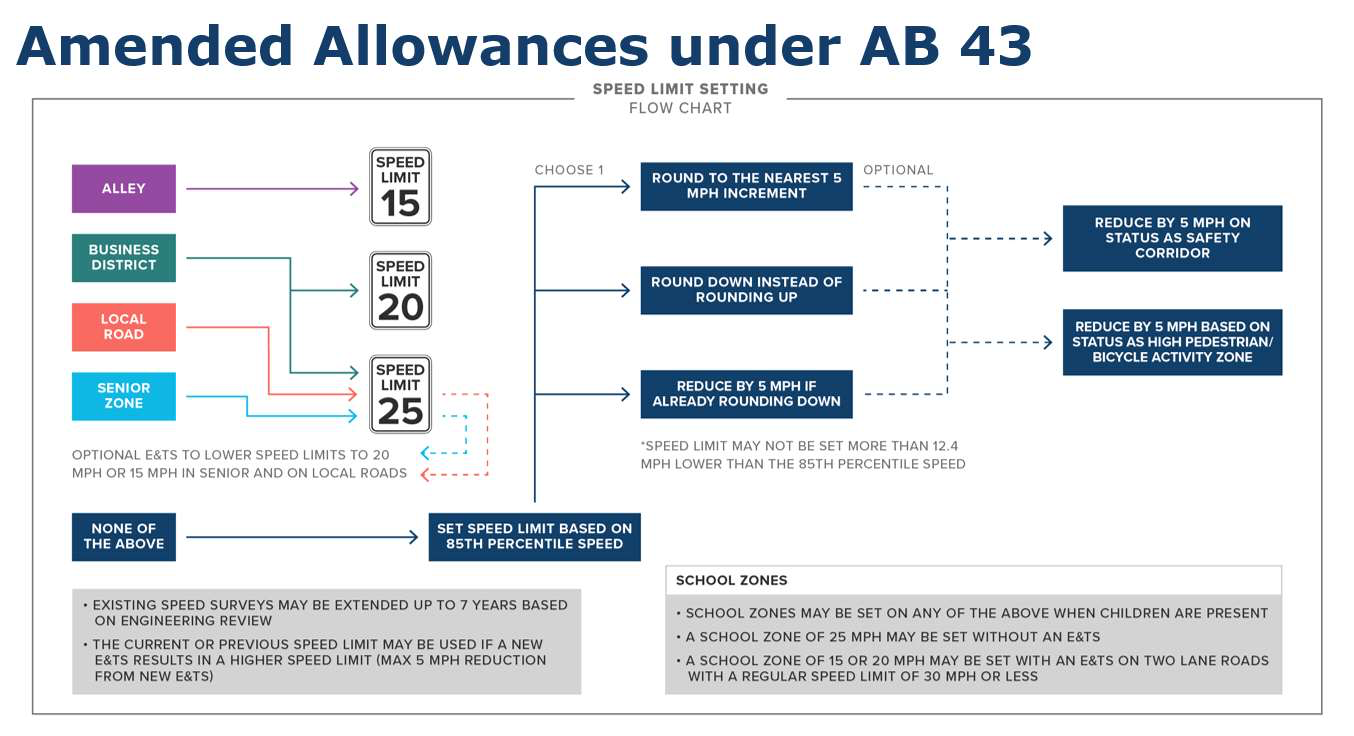
The city reduced speed limits in many school zones several years ago, and recently reduced speed limits on a few streets, and is gradually working to reduce speed limits on more streets, including alleys, business districts, local roads, and senior zones. The graphic below shows the approach. The presentation will bring the commission up to date on the project.

graphic of speed limit setting flow chart

City staff is asking the commission to recommend two grant applications under Caltran’s Sustainable Communities Planning Grants for Transit Needs in Sacramento to meet Climate, Equity and Mobility Goals; and the Walking, Bicycling and Transit Access Wayfinding Project.

The city’s Department of Public Works Transportation Planning Newsletter has more information on these topics and others. I recommend you sign up if you aren’t already getting the email newsletter, which comes out once a month.

report on SacATC 2024-08-15

Several transportation advocates attended the SacATC meeting in person, several people made eComments online, and hopefully others watched via Zoom.

3. Two Rivers Trail Phase III

This project is in the selection of alternatives and preliminary design phase. It will connect the existing trail segments of the Two Rivers Trail (the one on the south side of the American River, matching the American River Parkway Trail on the north side), except for crossings of the two UPRR (Union Pacific Railroad) tracks across the river, which are under discussion but without resolution. An additional crossing is Hwy 160, with uncertainty due to there being no active project design to replace one or both sides of the bridge, which are substandard, and will need to be replaced. Commission members asked a number of questions about the alternative alignments, particularly around the old city landfill. The project will report back when alternatives are selected.

4. Street Design Standards Amendment

This was just an update on the project, which is in early stage with some meetings held but several others yet to go (stakeholders, technical advisory, and public). Actual designs were not discussed, though public comment requested that the designs be innovative and cutting edge, and that outmoded or unsafe designs in the 2009 version be eliminated completely from the amendment.

5. Active Transportation Commission 2024 Annual Report

The presentation was on the 2023 report, with some questions about formatting, but the major questions having to do with whether to carry the 2023 recommendations, which sadly have not been acted on by city council or staff, into the 2024 report, or to modify them. The consensus seems to be there there should be a list of recommendations focused on safety issues, with safety for walkers and bicyclists being a higher priority than promotion of walking and bicycling (or course, they can’t really be separated). Recommendations that do not end up on the safety list might be on a separate list, not as prominent, but not lost. There was also discussion about organizing things by short-term and longer-term, but no consensus.

Recommendation 1: Increase Funding for Active Transportation Infrastructure Projects was agreed as the top priority on any list. Recommendation 6: Create a Sacramento Quick-Build Bikeways Program, also received a lot of support, however, not universal agreement.

Discussions will continue at the September and October, and perhaps November, SacATC meetings. A number of members of the SacATC were absent, quorum just barely made, but there seemed to be agreement that the conversation would continue from this point and not go back to the beginning, and the returning members would catch up on their own.

Of course the elephant in the room is that the city council accepted the report and recommendations, but has made no policy or funding decisions to implement the recommendations. The request to add funding to the 2024-2025 city budget for any of the recommendations was rejected by the city manager. Staff has moved forward in minor ways on some of the recommendations, using existing funding and staffing.

My favorite, Recommendation 9: Finalize the Construction Detour Policy, is stalled out in Public Works, and it is not clear when or if it will ever see the light of day. Adherence to best practices for ADA accommodation and meeting PROWAG guidelines is not popular in the regressive Public Works Department.

SacATC 2024-08-15 (Active Transportation Commission)

The Sacramento Active Transportation Commission (SacATC) meets today, August 15, 2024 at 5:30 PM. in city council chambers, 915 I St. It can be viewed online by going to the city meetings page, selecting SacATC livestream. Comments are only available in-person, via the meetings page eComment, or ahead of time to the city clerk, if eComment is not working. In-person comments are the most effective.

The agenda includes three main items:

  1. Two Rivers Trail Phase III (T15225400)
  2. Street Design Standards Amendment
  3. Active Transportation Commission 2024 Annual Report

I encourage everyone to attend in person, or watch online, and to submit comments. Recently, public participation has increased, but far too few citizens are engaged. Though the commission is not powerful, it is one of the few ways the public has of engaging the city on the public health crisis that is the epidemic of traffic violence in the city.

SacATC 2024-06-20 on Streets for People

The City of Sacramento Active Transportation Commission (SacATC) will meet today, June 20, 2024, 5:30PM in city council chambers, 915 I Street. 

The main agenda item is: 

  1. Streets for People Active Transportation Plan

This is a discussion and feedback item, not for decision.

The attachments to the staff report are available separately on the Streets for People webpage. Hopefully this will solve issues with the very large and likely corrupted combined document.

You can comment via eComment at the city’s meeting page, http://sacramento.granicus.com/ViewPublisher.php?view_id=21, before the meeting starts, or in person. Of course in-person is more powerful, but eComments are valuable and the only method many people can use. eComments submitted well ahead of time can be viewed by commissioners, while last-minute ones will go into the record but not be viewed before the meeting.

If you are frustrated by my posting the meeting on the day of the meeting, please view or subscribe to the calendar hosted by STAR, at https://star-transit.org/events/, which has this event and many others of interest to transportation advocates.

SacATC 2024-05-16

The City of Sacramento Active Transportation Commission (SacATC) will meet today, May 16, 2024, 5:30PM in city council chambers, 915 I Street.

The main agenda items are:

  1. Folsom Boulevard Safety Improvements Project
  2. Envision Broadway in Oak Park Project
  3. Broadway Vision Zero Project
  4. Draft Sacramento Urban Forest Plan Public Release

These are all discussion and feedback items, not for decisions.

The first item looks like a good project. For each segment, option 2, with buffered bike lanes, is the best option. Wider bike lanes have an advantage in that they accommodate more kinds of bicycles, but most bicyclists appreciate the visual if not actual protection of buffers and vertical delineators.

This project is the result of community pressure on the city to respond to the fatality that occurred at Phoebe Hearst Elementary, and the generally hazardous and hostile environment for walkers and bicyclists.

Folsom Blvd cross-section, 53rd St to 63rd St, option two buffered bike lanes

For all three complete street projects, I feel that center turn lanes are given way too much prominence, while in many segments they are unneeded because there are few driveways and few turning movements too/from cross streets. As always, the problem with with planning streets from the inside out, whereby motor vehicle space is set aside before anything else. Planning from outside in ensures that sidewalks and bicycle facilities are taken care of and of high quality, and then driving and parking needs are taken care of secondarily.

You can comment via eComment at the city’s meeting page, http://sacramento.granicus.com/ViewPublisher.php?view_id=21, before the meeting starts, or in person. Of course in-person is more powerful, but eComments are valuable and the only method many people can use.

SacATC April 18 notes

These are my notes from the April 18 meeting of the Sacramento Active Transportation Commission (SacATC). The official minutes are not available until the agenda for the next meeting is released, about three days before the meeting.

City staff announced that due to hiring a consultant and the project timeline, the updated Vision Zero Action Plan would not be available until sometime in 2025, not this year.

Agenda 4: Kastanis Shared Use Path. This is a wonderful project, connecting two ends of a dead-end street for walkers and bicyclists. It received my support and the full commission. Commissioners asked about lighting and trees, but as a sidewalk infill project from a very limited program, those could not be included.

Agenda 5: Grand Avenue Sidewalk Infill. Another wonderful project, adding sidewalks on Grand Aveue adjacent to the Sacramento Northern Trail for better neighborhood access included ADA ramps on all corners. A SacRT bus stop location will also be improved. Again, my support and the full commission. Commissioner Harris, who represents District 2, spoke about the lack of sidewalks throughout much of the district, and the benefit of any infill projects.

I spoke on items ‘not on the agenda’, asking that the slide presentations be made available before the commission meeting whenever possible. There is often information in the presentations not available in the staff report, which can make a project look better, or worse. I also suggested that the commission ask for a presentation on how the city views its responsibility for bus stops, since this came up many times in discussion of the Grand Avenue project.

I hope that more people will attend the SacATC meetings and comment on projects (on online via eComment). This is the only real chance for public input on projects, other than going to your council member. Most Public Works projects are a black box without public input, so when there is the chance, it is time to speak up for safer and innovative solutions.

And now on to the more complex project, which took up the majority of the meeting time.

Agenda 3: Traffic Signal Safety Program. There was a staff presentation with a slide deck that was not available to the public (this is an ongoing problem, see below). Though the diagrams in the presentation were much more detailed than the ones in the staff report, they still left out a lot about the context of the intersection. What is it close to? Are there already a lot of walkers? How far is it to the next safe crossing? Is a traffic signal the best solution? It was clear from answers to commissioner questions that a lot of information was missing. Apparently this project is the result of a SACOG grant made to the city in 2017. Presumably there was a resulting document on the project, but that was not made available. The staff person said site selection was based on traffic warrants, but then exhibited a lack of knowledge about warrants. The question came up about whether the city could install a signal of any type that didn’t meet designs in the CA-MUTCD (California version of the federal Manual for Uniform Traffic Control Devices). The initial answer was no, but this was revised to yes, however a grant would be unlikely to be obtained that included non-MUTCD designs.

Overall, the entire traffic signal project is disappointing. The traffic engineering section of Public Works seems to have a very simple view of the world, to wit, a street with an unsafe design > a traffic signal. Changing the street design? Nah. Calming traffic to make the crossing safer? Nah. Shortening the crossing distance? Nah.

Traffic signals are expensive! Though no budget detail was provided, it is reasonable to assume from the overall $7.9M budget, which includes four full traffic signals, three pedestrian signals, and two RRFB (rectangular rapid flashing beacon) that full traffic signals cost about $1M each. That kind of money could fund a lot of traffic calming with lane reductions and curb extensions. Please take a look at my agenda post, and a comment from Sean Rogers that provides a much lower cost alternative for the Monroe Street and Latham Drive intersection.

Traffic signals do not necessarily create safer streets. Certainly, they don’t promote safety in between signals, as drivers accelerate to previous, often egregious, speeds as soon as the light turns green. With rampant red-light running, stop signs are probably much safer than signals. Though drivers also run stop signs, they do so at much slower speeds, whereas drivers running red lights often accelerate into the red light, ensuring the death of anyone in their path. If there are no gaps in traffic on a roadway, then it is necessary to create gaps with some sort of control, but a traffic signal is often the dumbest and most expensive way of doing that.

California has two years from the adoption of the federal MUTCD, which was December 2023, to either submit its own version, or the federal version will be the version for California.

The federal MUTCD (2023) has some interesting text (Section 4B.03 Alternatives to Traffic Control Signals): “Since road user delay and the frequency of some types of crashes are sometimes higher under traffic signal control than under STOP sign control, consideration should be given to providing alternatives to traffic control signals even if one or more of the signal warrants (see Chapter 4C) has been satisfied”, followed by 14 alternatives to traffic signals.

Section 4C.01 Studies and Factors for Justifying Traffic Control Signals provides a list of nine possible warrants to justify a traffic signal:

Warrant 1, Eight-Hour Vehicular Volume
Warrant 2, Four-Hour Vehicular Volume
Warrant 3, Peak Hour
Warrant 4, Pedestrian Volume
Warrant 5, School Crossing
Warrant 6, Coordinated Signal System
Warrant 7, Crash Experience
Warrant 8, Roadway Network
Warrant 9, Intersection Near a Grade Crossing

It is unknown which of, or any of, these were used to justify the signal locations. There are very detailed (and hard to understand) explanations of each of these warrant types.

My comments on the project, which I did not quite finish (two minutes is a short time), included:

  • Signals are not necessarily a safety feature for people walking, unless there are no gaps in traffic, the more important issue is to calm traffic on the approaching streets
  • We already have a lot of unneeded signals, where the traffic volume and context of the intersection does not justify a full traffic signal, perhaps 60 of them just in the central city
  • 16th & D: traffic on 16th St needs to be calmed, signal will probably not shorten wait time for crossing
  • Rio Linda at Roanoke: lacks a connection to Sacramento Northern Trail, which would make it a great deal more useful, posted speed 40 mph is too high for an RRFB
  • Monroe and Latham: traffic calming through lane reduction and curb extensions would be as effective as a signal (Sean Rogers comment)
  • At about $1M for a full traffic signal, there are much less expensive alternatives, and much better ways of spending limited funds

SacATC April 18

The monthly meeting of the Sacramento Active Transportation Commission (SacATC) will be this Thursday, April 18, 2024, starting at 5:30 PM in the city council chambers. You can comment on these items, or on topics not on the agenda, ahead of time via eComment, or in person at the meeting. I encourage people to attend these commission meetings. There are usually very few members of the public in attendance, which means that your voice is important. Though eComments are valuable, in-person comments carry a lot more weight. The city’s planning staff is usually progressive and innovative, but Public Works in general is not, so it is important the citizens show up to push for progressive and innovative projects and policies. With some new appointments to the commission, and support of the public, the commission itself has been much more progressive than in past years.


The agenda includes three discussion items:

  1. Traffic Signal Safety Project
  2. Kastanis Way Shared Use Path
  3. Grand Avenue Sidewalk Infill

Kastanis Way Shared Use Path looks like a great project, connecting two dead-end streets for walkers and bicyclists, but not motor vehicles. These are the kinds of projects that should be implemented everywhere the opportunity exists.

diagram of Kastanis Way shared use path
Kastanis Way shared use path

Grand Avenue Sidewalk Infill also looks good, providing improvements to the crossing Grand Avenue by the Sacramento Northern multi-use path.

diagram of Grand Avenue Sidewalk Infill project
Grand Avenue Sidewalk Infill project

The Traffic Signal Safety project is questionable. There are nine locations:

  1. 16th Street at D Street (Traffic Signal)
  2. Franklin Boulevard at 36th Avenue (Traffic Signal)
  3. Freeport Boulevard at Kitchner Road (Traffic Signal)
  4. Fruitridge Road at 60th Street (Pedestrian Signal)
  5. Rio Linda Boulevard at Harris Avenue (Rectangular Rapid Flashing Beacon)
  6. Stockton Boulevard at 11th Avenue (Pedestrian Signal)
  7. 24th Street at 25th Street (Pedestrian Signal)
  8. Munroe Street at Latham Drive (Traffic Signal)
  9. Rio Linda Boulevard at Roanoke Avenue (Rectangular Rapid Flashing Beacon)

I haven’t had a chance to look at each of these proposals, though I will note that the city traffic engineers love to install traffic signals. At $100K to $500K per intersection, these are major investments. Many of the new signals the city has installed, for example on 5th Street and S Street, are unneeded, and waste of money. They have also converted a number of pedestrian signals from auto-recall (the pedestrian signal comes on at every signal cycle) to beg buttons (the person walking or rolling must activate the sensor, or the pedestrians signal will never come on). The city has a number of unnecessary signals, 60 in the central city alone. Maybe a one-for-one program is called for, install a new signal, take out an existing signal.

I don’t trust city traffic engineers. They label projects as safety projects for walkers and bicyclist, when they are really motor vehicle infrastructure projects. So-called pedestrian and bicyclist safety projects are often motor vehicle enhancements in disguise.

I cross 16th Street at D Street several times a week on bicycle, and occasionally walking, most often to access the American River bike trail via Sacramento Northern path over the river. Yes, I have to wait for a gap in traffic on 16th Street, which sometimes takes a while. But rarely longer than I would have to wait for a traffic signal, given that the arterial street (16th Street) always has a long green and the cross street (D Street) has a short green. I think that funds would be better spent slowing motor vehicle traffic on 16th Street, or adding bike facilities to 16th Street, or reducing the travel lanes on 16th Street, which is a four-lane traffic sewer. Traffic signals do not calm traffic. They irritate drivers, and cause them to quickly accelerate out of the signal to make up for time lost at the signal. They may allow for safer pedestrian crossing, or at least would if red light running were not an epidemic in Sacramento. The fact is, many drivers do not stop for red lights, and certainly don’t stop for people walking in crosswalks. Measures other than traffic signals are necessary to solve the issue.

diagram of traffic signal at 16th St & D St
traffic signal at 16th St & D St

The proposal for an RRFB (Rectangular Rapid Flashing Beacon) for Rio Linda Blvd at Roanoke Avenue is inappropriate. The posted speed limit in this section of Rio Linda Blvd is 40 mph, meaning that actual speeds are more like 50 mph. This is too fast for an RRFB to have any effect on drivers. Even at slower speeds drivers often ignore RRFBs. If there is to be a safe crossing at Roanoke, there must be a HAWK signal, or a full traffic signal. Again, funds would be better expended slowing traffic on Rio Linda. At this time, there is no connection between Roanoke Avenue and the Sacramento Northern Bike Trail, so it isn’t clear why this location has been picked for a signal.

diagram for RRFB for Rio Linda Blvd & Roanoke Ave
RRFB for Rio Linda Blvd & Roanoke Ave

I will leave it to others to examine the other seven locations. Are signals needed? Are they the right kind of signal for the context, particularly the speed and volume of motor vehicle traffic? Are there projects that would improve safety for walkers and bicyclists more than expensive traffic signals? Are these the best locations, the ones that best serve routes of travel for walkers and bicyclists? I have doubts that these questions were considered.

Note: Readers Sean Rogers has suggested a better, and less expensive, solution for Monroe and Latham, in comments. The solution may be calming traffic, not just installing a signal.