improving SacRT

The condition and future of Sacramento Regional Transit (SacRT), particularly the light rail system, has been much in the news recently:

Everyone these days seems to want a better transit system. The problem is that no one wants to pay for a better transit system. The business leaders who suddenly want a modern, appealing, well-maintained light rail are the same ones that have worked over the years to suppress efforts at increasing the tax base for operation of the system.

Read More »

Sacramento region transit projects in 2015

Jonah Freemark on The Transit Politic has detailed transit projects in Openings and Construction Starts Planned for 2015. For Sacramento, it will be the end of work on extension of the SacRT light rail Blue Line to Consumnes River College, and the start of planning for the Sacramento/West Sacramento streetcar. It is good that these projects are happening, but in comparison to many other urban areas, Sacramento is falling further behind. We spend most of our money on expanding the freeways, building new freeways such as the Southeast Connector, and upgrading arterial roadways. Almost all of this work furthers suburban commuting and sprawl, and very little if any of it leads to true economic vitality.

Projects I’d like to see joining the list for next year are:

  • Green line extension to Natomas. Not necessarily the airport, and I’m not sure that pencils out as a beneficial project.
  • Blue line extension to Elk Grove. Though I don’t like the suburban wasteland that is Elk Grove, it is nevertheless true that there are a huge number of commuters from there to downtown Sacramento, who could be pried out of their cars if we spent money on light rail instead of highway and roadway expansion. Just the interchanges on Interstate 5, largely purposed to serve the commuter crowd, cost more than the entire light rail system.
  • Blue line extension to American River College, and eventually to Roseville. The college is a huge trip generator, and this part of the county is very underserved by transit. Though the Capitol Corridor third track will take some of some of the demand, light rail with its more frequent service would be a great complement.
  • Bus rapid transit (BRT). I’m not sure where the best location would to pilot bus rapid transit in the Sacramento region, but the fact that we are not even really experimenting with it (other than the tiny Watt Ave over US 50 bridge) does not bode well. Bus rapid transit could be an even more important solution for the region, particularly because much of the region lacks the density to make light rail successful.

Here’s to seeing more Sacramento projects on the 2016 list.

Free holiday parking? Why not free transit?

The City of Sacramento has announced free holiday parking (on the Downtown Sacramento Partnership website), stretching from Old Sacramento through midtown, to attract shoppers. This is done in order to attract people who might otherwise shop at suburban big box stores and malls that offer acres of free parking, as this free parking in the suburbs puts downtown businesses at a disadvantage. (There is, of course, no such thing as free parking, someone has to pay, but that is another argument for another day.)

However, why no benefits for people who use transit to reach downtown, either by choice or necessity? I think there should be free transit tickets for people who shop downtown during the same times and places as the free parking is in effect. Businesses would give out a SacRT single ticket (normally $2.50) to each shopper for the trip back home. There might be a minimum purchase requirement, just to prevent someone from accumulating a large number of tickets by making small purchases at several businesses. However, since one free ticket doesn’t cover the trip to the business, nor trips requiring a transfer, nor family members, I think overall it would be more than fair to the city.

The free tickets would cost the city money, since they’d have to be purchased from SacRT. I’m sure a volume discount could be worked out, but there would still be real costs. The free parking offer means that the city is foregoing a considerable amount of parking revenue in order to support local business. Whether the increase in sales tax revenue from holiday shopping balances the lost parking revenue, I don’t know, but the city obviously considers it an overall benefit whether the balance sheet works or not. The same benefit could be obtained through free transit tickets.

Fare is fair! Let’s see free transit tickets!

We need more of this… dedicated bus lanes

dedicated bus lane, Capitol Mall, Sacramento

The recent relocation of bus service from L Street to the Capitol Mall for demolition of the mall and later construction of the arena has resulting in an interesting change: the first dedicated bus lane (that I’m aware of) in the Sacramento region. There are some dedicated light rail lanes.

True, the bus lane is only one block long, between 8th Street and 7th Street (this photo is taken from 8th Street looking westbound).

Prior to the bus stops being moved, asphalt was replaced with concrete, which is the only material that can stand up well to frequent bus traffic.

So why am I excited about a one-block long dedicated bus lane? Because it is a local example of something that is happening in many cities, but you don’t have to travel to see it. It also represents a reallocation of street space that increases the utility of bus systems and better balances different modes of transportation. Buses spend much of their time at critical times of the day waiting on motor vehicle traffic congestion. Dedicated bus lanes remove some of this conflict and create, for the first time, the possibility of buses being a faster mode of transport than private cars.

This one-block location show a good balance of modes. There is a wide sidewalk for pedestrians, a dedicated bus lane, a dedicated bicycle lane, and a travel lane for motor vehicles. Many more of our streets should look like this. Any street that carries bus traffic at a frequency of once every ten minutes or better (whether from a high-frequency single route or from multiple routes), at any time of day, should have dedicated bus lanes.

There are six SacRT routes that ran on L Street and are temporarily running on Capitol Mall. In addition, four Yolobus routes and several from other transit providers run along these streets.

So what are we going to do when the arena is finished and some or all of the bus traffic moves back to L Street? I think that L Street should have a dedicated bus lane from 15th Street, where it becomes three lanes westbound (and four lanes at 6th Street), all the way to 3rd St. SABA has suggested a protected bike lane on the south side for the portion between 7th Street and 3rd Street, and I think that is a good idea as well. I am not sure if SacRT has proposed anything. Wide sidewalks, dedicated bus lanes, protected bike lanes, and a somewhat reduced capacity for private motor vehicles would make for a more welcoming and efficient street. The arena developers and city have resisted making any transformative changes to circulation downtown, but significant public pressure could bring the improvements.

The NACTO Urban Street Design Guide has diagrams and details about dedicated bus lanes.

drunk driving in midtown

Thanks, Chris Daugherty, for linking to this CityLab article (What If the Best Way to End Drunk Driving Is to End Driving?) from Facebook. This is not a new article, but one worth thinking about.

In midtown, there are always drunk drivers on Friday and Saturday nights, sometimes other times. While vehicles don’t carry a label indicating what part of town they are from, I strongly suspect from the streets they are using and the directions they are heading that the drivers are from the suburbs. And if I’m in a bar, I notice that the most drunk people are the people talking about suburban places. None of this is to say that midtown people don’t drink, or that some of them don’t drive drunk, but the big problem, in my perception, is suburban drunk drivers.

Though I certainly don’t mean to discount the risk, the slower speed streets in midtown are probably not the big problem, where most crashes occur at lower speeds and result in injuries rather than fatalities. But for these people to get home, they are driving on the freeways and arterials, and that is where the fatalities occur. In my weekly news summary, I only keep track of pedestrian and bicyclist-involved crashes, but if I kept track of alcohol-caused or exacerbated crashes, the posts would be at least three times as long.

So why are these people coming to midtown to get drunk? Well, the places to get drunk in the suburbs are few and not very interesting. The cool places are in midtown. I don’t just say that because I live here, but because these people are voting their preferences by coming to midtown, and driving, at considerable risk to themselves and others.

So, the article. It suggests that we could largely eliminate drunk driving by providing public transportation alternatives. To some degree, we have alternatives. There are two issues, though: public transportation is not considered cool by the suburban population, or even in Sacramento in general. This is not true in some other places, where it is cool. The second problem is the “last mile,” getting from the light rail station or bus stop to home. The transit network is not dense enough in the suburbs to get people most of the way home. In fact, in the suburbs of the Sacramento region, it is not usually the “last mile” but “the last five miles.”

When drunk drivers (and here I’m not just thinking of the legal definition, but of a person who has had enough to drink that they shouldn’t be operating a motor vehicle) are stopped in midtown, some get warnings, some get citations. But none of them gets told to use public transportation instead of driving.

So here is an idea. If a person gets stopped but is not enough over the limit to get a ticket, they would receive a one-month suspension of drivers license and a free one-month pass on SacRT. Yes, this would cost some money, but if it converts drunk drivers to public transportation riders, the investment is worthwhile. This relatively mild consequence, one month of a changed life, would I think also encourage law enforcement to confront more drivers. Only a tiny fraction of the Friday and Saturday night drunks get stopped. When if we stopped them all, and got them onto public transit, or at least into Lyft, Uber, and taxis?

In the long run, some of these people who are stopped, suspended, and moved to public transit would start to realize that living in the suburbs when most of the interesting night life is in midtown, is a pretty crazy idea that can be solved not only by using public transit, but by moving to midtown and walking home from the bar. Nah, these are not my favorite people, but they’d be much closer to acceptable if they were simply drunk instead of drunk drivers.
Sacramento transit use ranks 81st

The blog FiveThirtyEight posted last Thursday an analysis of transit trips per capita for major and medium cities, How Your City’s Public Transit Stacks Up. They combined National Transit Database trip counts with American Community Survey population. For the Sacramento region:

  • Davis, ranked 16 out of 290, 52.2 trips per capita
  • Sacramento, ranked 82, 17.8 trips
  • Yuba City, ranked 141, 10.7 trips

The blog mentioned that some small cities did not report, so there might be other places in the Sacramento region that are not on the list. I am surprised at the ranking of Davis. I think of it as a bicycling city, and not a transit city, but perhaps the UC Davis operated Unitrans bus system is what makes the difference. The blog mentions that Athens GA at number 4 is influenced by the University of Georgia, so Davis may be as well. Sacramento at 82 is not bad, and not good, which matches my subjective judgement. The post points out the strong relationship between ranking and total population and population density. Sacramento at 1,767,000 population is similar to many medium sized cities that end up in the top half of the rankings. San Francisco, at 3,369,000 population, is only twice Sacramento, yet ranks 2 and has 131.5 trips per capita. What is the difference? Density! Sacramento is probably too spread out to ever rank very high in transit use, but as it does inevitably densify, it will probably do better. The density affect certainly determines the number one ranking of New York, and New York is about eleven times the size of Sacramento. As I look down the list with my personal bias, I see a very general relationship between livability and transit use, but there are a number of places that don’t rank where I’d expect them to.

SacRT updates strategic plan

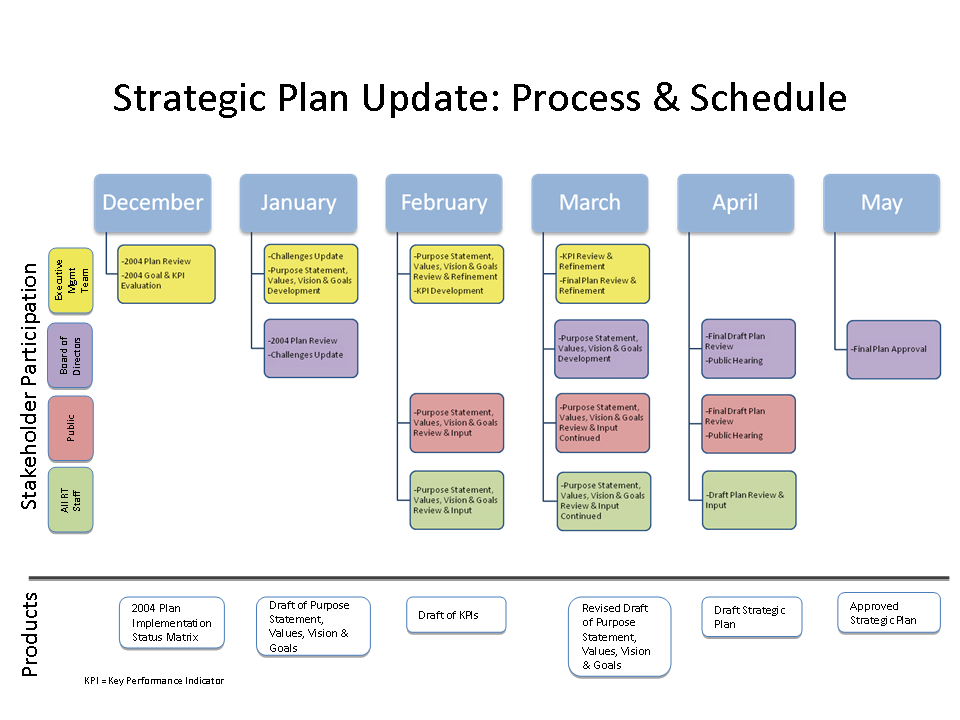
SacRT Strategic Plan timeline

SacRT has started into the process of updating its strategic plan, which was last updated in 2004. There are information booths at several locations on specific dates and time, and online comments are being accepted (see RT Updates Strategic Plan page). The online survey asked users to rank a variety of options in two areas, and offers an open-ended comment field.

Sacramento RT looking for new ways to serve future riders (Sacramento Business Journal 2014-02-14)

SacRT smoke free!

SacRT no smoking sign

The SacRT system is going smoke free! The newly announced policy applies to all bus stops and light rail stations, though signing and enforcement is being phased in, with the busiest light rail stations (13th Street, 16th Street, 29th Street, Meadowview, Arden/Del Paso and Watt/I-80) already in effect. The fine for violation is $250.

I look forward to not having to wait for transit in a cloud of smoke and standing in a pile of butts. There are a lot of disgusting habits that adhere to the light rail stations, and this is one step towards eliminating these and making the system more user friendly and healthier. I suspect there will be less trash discarded on the ground around the stations, since trash generates trash, and butts are the trash that starts the cycle.

This new policy is the result of the work of The SOL Project, a local nonprofit that works to reduce exposure to second-hand smoke. Thank you!

SacRT machines accept cards

20140212-071219.jpg
sign for new fare vending machines

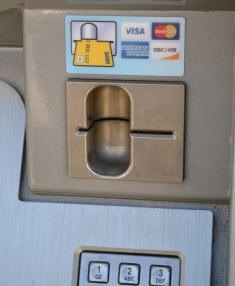
SacRT has joined the 20th century! There are now twelve fare vending machines that accept credit and debit cards for purchasing tickets. Though the machines are all located at light rail stations, the tickets can be used on SacRT buses as well. Most months I buy a monthly pass, but since in February I am gone about half the days, I decided to buy by the day, and it has been very convenient to have these machines. Though two of my most commonly used stations don’t have them. There are 52 stations on the light rail system, and each has one or more fare vending machines.

When I moved to Sacramento nearly three years ago, I was frustrated that the machines, which were clearly designed to accept cards, did not. Every other transit system I used in my travels did accept cards at some to all stations, and having a system that dealt only in cash was a disappointment.

20140212-072431.jpg
the credit/debit card slot and stickers

There will eventually be a region-wide fare card, similar to the Clipper card used in the Bay Area, for Sacramento. I don’t know whether this capability will be added to the existing machines, or whether new machines will be installed.