SacCity pedestrian safety emergency: enforcement

The draft City of Sacramento emergency declaration on pedestrian safety: ‘Declaring a state of emergency regarding pedestrian safety in the City of Sacramento and calling for immediate action to address pedestrian injuries and fatalities’ is available (pdf of text, 2 pages, 68KB) (pdf of attachments, 28 pages, 26MB).

This post focuses on the enforcement item.

3. “The City Manager is further directed to work with the Sacramento Police Department to ramp up enforcement of traffic laws that protect pedestrians, including speed limit enforcement, crosswalk violations, and distracted driving. The City shall prioritize enforcement in high-injury corridors and areas with frequent pedestrian activity.”

Three advocacy organizations specifically commented about the draft that it must focus on ‘equity and mobility justice’, as did most of the people who spoke at the city council meeting.

I’ll be blunt. There is a deep and well justified mistrust of Sacramento Police Department (SacPD) among people of color and low-income, particularly among, but not limited to, blacks. SacPD has a history of oppressing black people, and has often used traffic stops as a pretext to harass people. Many of these have escalated into arrest, beatings, and even death. I have seen no real evidence that SacPD has changed their stripes. They are not people that I want interacting with the public about traffic law. And, apparently, they don’t want to either. SacPD has reduced its traffic officer group to almost nothing, and does little traffic enforcement by traffic officers or any officers. It is time to move past the idea that law enforcement has much to contribute to reducing traffic violence.

At the same time, no enforcement of any sort is not the answer. People are dying when drivers violate traffic law, and these deaths are unacceptable. Speed is a contributing factor to all traffic crashes, and is sometimes the primary factor. Driving too fast for conditions, and these conditions include walkers and bicyclists on and close to the roadway, is always wrong, even though road design encourages it.

Automated enforcement is a partial answer. It avoids the pretextual stops, avoids harassment of people of color and low-income by police, at least over traffic law, avoid the escalation that police engage in, and is much less expensive than police officers.

The three main traffic violence issues to be addressed, at least at this time, are:

red light running: Red light cameras and automatic ticket issue to the owner of the vehicle are a partial solution to red light running. Of course some drivers will always run red lights, will always endanger others, and will not be deterred by tickets. But most drivers will notice that tickets are being issued, and will change their behavior. Red light running does have infrastructure solutions, including changing from far-side signals to near-side signals, and raised crosswalks and raised intersections. But there are not easy or inexpensive fixes, so automated enforcement is a good interim solution. When the county ended its red light program, which operated the red light camera in the City of Sacramento, the city made no effort to replace that program, and at least some city staff celebrated it (the red light runners?). The city should create a red light camera program of its own. It should be administered by Public Works, not by SacPD. There are equity issues, since the wide, high speed arterials that most encourage red light running are in low-income communities. Two solutions are to distribute cameras across the city in locations where red light running might occur, and not just those locations with a history. The egregious violators, which are who we really want to target, will be receive tickets eventually. The second is to adjust violation fees (and court costs) to a factor related to income. It would be awkward and perhaps invasive to base it on income, but it could easily be based on vehicle value.
failure to yield to walkers: Drivers have been trained by roadway mis-design to not yield to people in crosswalks. The recent SacPD, OTS funded, sting on J Street demonstrated how common this is. But again, as drivers have been trained to do this, they can be untrained. There are options for automated enforcement of failure to yield, but it requires more complicated and less widely used technology. The city should be experimenting with this technology (they are not), but in the meanwhile, this may be one situation in which in-person enforcement, on a limit basis and with close attention to equity concerns, may be justified. Any in-person enforcement by SacPD raises issues of police violence and over-reaction, including high-speed chases of violators. One solution is to ban high-speed chases. With technology such as helicopters (which the police love) and drones, there is no reason to endanger the lives of violations, bystanders, or officers themselves with high speed chases. Too many cops have watched too many movies with the thrill of high-speed chases. The practice must end.

speeding: There is available and highly reliable technology for automated enforcement of speeding. There is a state-authorized pilot program of speed camera enforcement in six cities and part of Pacific Coast Highway. Sacramento is not among them. To its credit, City of Sacramento asked to be part of this pilot but was not included. The city should strongly lobby the next legislative session for inclusion, and should have a program designed and ready to go when authorized. Speeding is the most common concern of the public, and it is true that speed is a factor in every crash, I’m doubtful that it is the biggest concern. I’d rather see a focus on red light running and failure to yield.

I believe that item 3 should be deleted for its likely failure on equity and mobility justice.

I have not yet written about the other six items, and don’t know when I’ll be able to get to it. However, I will say now, in case you were wondering, that by far the most effective city response is temporary (quick build or tactical urbanism) and permanent changes to roadway design. And what it will take to accomplish those changes is funding, from the city general fund. The seeking of grants, and waiting years or decades for the funding to address traffic violence, is only part of the solution. If this is truly an emergency, and it is, the city must spend significant funding to act on it, and act now.

SacCity pedestrian safety emergency: education

The draft City of Sacramento emergency declaration on pedestrian safety: ‘Declaring a state of emergency regarding pedestrian safety in the City of Sacramento and calling for immediate action to address pedestrian injuries and fatalities’ is available (pdf of text, 2 pages, 68KB) (pdf of attachments, 28 pages, 26MB).

This post focuses on the education item, a public awareness campaign.

2. “The City Manager is directed to identify funds for a public awareness campaign, to educate drivers, cyclists, and pedestrians about traffic safety, with a focus on reducing speeding, improving crosswalk use, and ensuring safer interactions at intersections.”

Public awareness campaigns, or education campaigns, are not an effective response. Despite spending hundreds of millions of dollars on these campaigns, the National Highway Transportation Safety Administration (NHTSA) and the California Office of Traffic Safety (OTS) do not seem to have any research documenting the effectiveness of such programs. But the basic concept of such campaigns is that most crashes are caused by driver, or walker, or bicyclist error, continuing the implication of the rescinded and widely ridiculed ‘94% of all crashes are caused by human error’ (‘It Ain’t 94 Percent’: NTSB Chair Jennifer Homendy Discusses the Role of Human Error in Car Crashes). We just need to educate roadway users, and these crashes won’t happen anymore. Ha!

Many of the public awareness campaigns from NHTSA and OTS are actually victim-blaming campaigns. If only you had been wearing a reflective vest and carrying a light, if only you didn’t cross the street or ride your bike on the street (but don’t ride it on the sidewalk!), if only you hadn’t assumed that our roadways were safe to use, if only you ran faster, if only you weren’t in a wheelchair, if only you’d been willing to walk the half mile to a safe crossing, you’d still be alive. The classic pedestrian safety campaign that shows tire tracks across the face of walkers serves as an example. Do I trust the city to come up with more constructive ‘education’. No, I don’t. I’m afraid that they would just copy and perpetuate existing programs, spending a lot of money and not changing behavior.

Almost drivers know the law, California Vehicle Code, at least the major and not recently changed parts. They know they are supposed to stop at stop signs. They know they are not supposed to run red lights. They know they are supposed to drive the speed limit. They know they are supposed to yield to walkers in the crosswalk (painted or not). They know they are not supposed to enter the intersection unless they can clear it. They know there are clear rules about taking turns at stop sign controlled intersections. So why do they so often do the wrong thing? Why do they kill and severely injure people walking and bicycling, not to mention people in other motor vehicles, their own passengers, and themselves? Because the mis-design of our roadways encourages them to do so. The design says drive fast, consider yourself to be the privileged user of the roadway, and that people walking and bicycling should get out of the way. That kind of education is actually quite effective. It is true that most drivers do not know about recent changes in traffic law, because the state agency responsible for educating them about changes, the Department of Motor Vehicles, does not do so, and is not interested in doing so.

What would be the point of an education program telling people what they already know? None.

I have been involved professionally in walker (pedestrian) and bicyclist education for 22 years. Every program that I have worked in, and designed, included information about the law and how to stay safe, and then, most importantly, practice of that knowledge and those skills. Without practice, education is of very little value. Would the city somehow implement supervised practice for drivers, walkers, bicyclists? I can’t imagine that. The one thing that the city might productively do is educate about traffic laws that have changed during the last legislative session. But I’ve never seen a government agency do that. Walking and bicycling advocacy organizations (CalBike and Walk San Francisco among them) do, but not cities, not counties, not the state.

I believe that item 2 should be deleted as being ineffective.

a trip to Fair Oaks

A shorter and less ambitious car-free trip, this time to Fair Oaks on Wednesday.

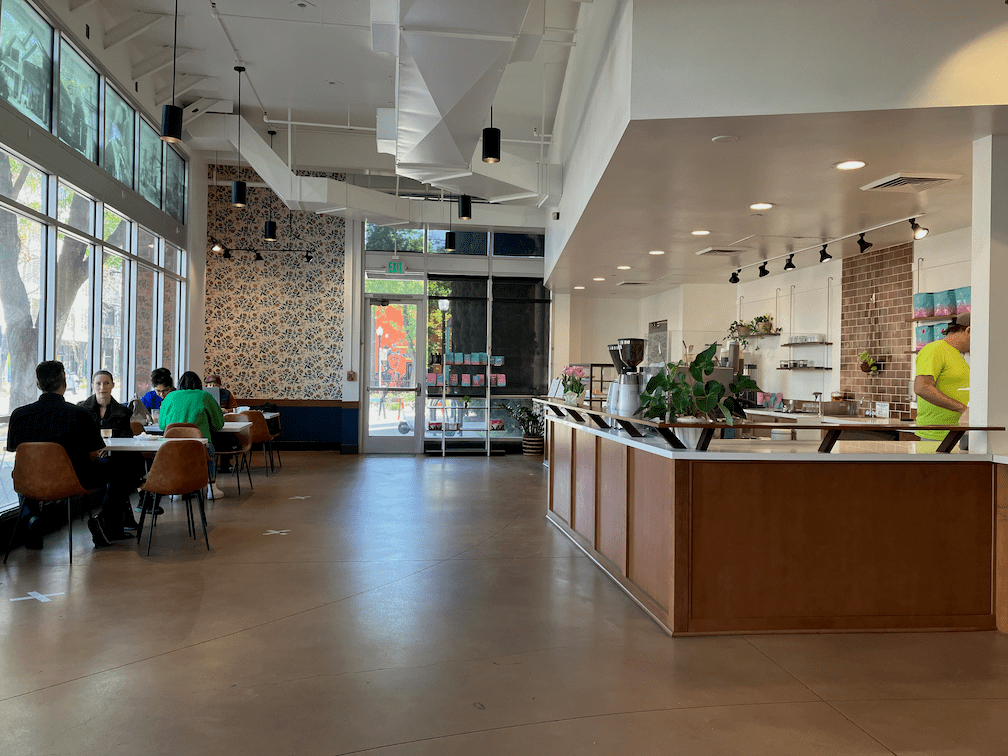
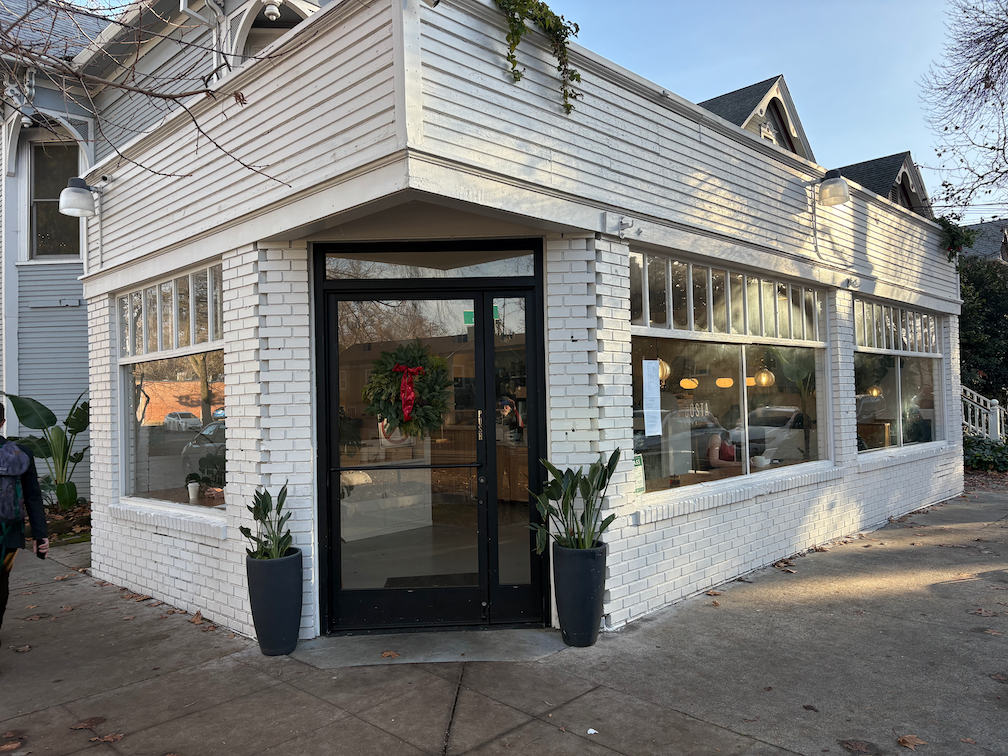
I rode my bike from home, along the American River Parkway, across the old Fair Oaks truss bridge, and up to Badfish Coffee in Fair Oaks Village. There are drinking fountains, bathrooms and picnic tables at a number of locations along the parkway, though not until Watt Avenue and east. Some reading and writing along with my tea, mostly transit back home.

I caught SacRT bus 21 from Fair Oaks to Mather Field/Mills light rail station, the SacRT Gold Line to 48th Street Station. A short bike ride to Trader Joe’s for a little grocery shopping. I do a number of trips to grocery stores and farmers markets each week, buying small amounts that fit in my bicycle bag, rather than doing a big trip that might require driving. Give it a try!

I then rode the rest of the way back home along Folsom Blvd and central city streets.

Today was California Clean Air Day, with SacRT offering free rides on transit for the day. I overheard a number of regular and low income riders talking about how excited they were to have a free fare day. The bus was crowded with riders, more than usual, though light rail was not.

I have a folding bike, so carry it on the bus (it does not fit securely on the front bike rack), but each bus has a front rack that can accommodate three bikes. Two riders traveled most of the way on the bus with their bikes on front. Light rail can accommodate several bikes, though it is hard to get them up and down the steep stairs. Unfortunately, SacRT seems to be running mostly old rail cars on the Gold Line, not the new low-floor cars that were promised.

a trip to San Rafael

Dan Allison, author of this blog, took a trip to San Rafael, California, in north bay Marin County, on Monday of Week Without Driving. To be transparent, I have been car-free for over 13 years, and car-light for about 7 years before that, so a trip on bicycle and public transportation is just the way I live life, not an exploration of the challenge that people who can’t drive face. My income is lower middle income, so I have enough money to travel, at least locally. I went to San Rafael to retrieve my phone charger and battery pack that I’d left on a Marin Transit bus last Wednesday. It took three days for Marin Transit to find the item and get it to lost and found. It was entertaining, and sad, to watch the included AirTag travel around on multiple bus routes. AirTags are bluetooth, so only report when they are close to a modern iPhone, but they do keep showing up in new locations.

So, the Monday trip:

  • bicycle from home to Sacramento Valley Station
  • Capitol Corridor train from Sacramento Valley Station to Richmond Station, $22.95
  • BART from Richmond to El Cerrito del Norte, $0.85
  • Golden Gate Transit bus 580 from El Cerrito del Norte to San Rafael Transit Center, $3.50
  • bicycle to a local coffee shop, where I worked on Week Without Driving communication
  • bicycle to Sprouts Farmers Market for lunch supplies
  • bicycle to Larkspur Ferry
  • Golden Gate Larkspur Ferry to San Francisco, $7
  • bicycle to San Francisco Bay Ferry gate G1
  • San Francisco Bay Ferry to Oakland Ferry, $2.30
  • bicycle to Oakland Jack London Station
  • Capitol Corridor from Oakland to Sacramento, $24.65
  • bicycle from Sacramento Valley Station to home

All of the public transportation was using my senior Clipper Card, on my watch. Capitol Corridor train travel was pre-purchased tickets through the app. The total was $61.25, which is rather expensive for a none day trip, but is quite a bit less than I would have spent driving. At about 83 miles there, and about 105 miles back, using the IRS rate of $0.67 per mile, driving would have cost $126. Plus $17.25 for Golden Gate Bridge and Carquinez Bridge tolls. Most people think only about gas costs, or charging costs, and forget about depreciation, insurance, maintenance, parking, and tolls.

Travel time is hard to compare, since I made so many stops along the way, and did not travel by the most direct route. Looking at the simpler Sacramento to San Rafael trip, driving would be 1 hour 20 minutes, whereas I spent about 2 hours 20 minutes on public transportation.

This is a trip that I’ve taken many times, so there was very little planning involved, and in fact I changed my plans for the leg back home several times on the fly, without problems. Less familiar trips would take more planning.

A few photos from my trip are below, but many parts are missing. I’m not used to documenting my public transportation travels, and even less for selfies.

SB 960 complete streets signed

Governor Newsom has signed SB 960, the complete streets bill (SB-960 Transportation: planning: complete streets facilities: transit priority facilities.), authored by Scott Wiener. That’s the good news. It is certain that the Caltrans districts will resist this law, but with oversight by CalBike and the public, things will gradually shift.

Week Without Driving now!

Week Without Driving 2024 starts today, lasting the seven days, Monday, September 30 through Sunday, October 6.

For more information and to participate, see:

Week Without Driving Sacramento does not have social media accounts beyond Instagram, but you may use the same hashtags on any social media. Help spread the word!

traffic circles

For National Roundabouts Week, here are sample of some traffic circles. True roundabouts have significant horizontal deflection to slow motor vehicles, and do not have any traffic control devices such as stop signs. I do not consider multi-lane roundabout-like structures to be roundabouts, but unfortunately have not come up with a term to distinguish them.

Traffic circles are not roundabouts, at least not as implemented here in the Sacramento region. They are sometimes called mini-roundabouts, which is OK, but they should never be called roundabouts without a modifier. The eight photos below of traffic circles in the Sacramento region, most in the northeast portion of the central city, show some of the settings, and the wide variation in diameter. If the traffic circle is large enough, occupying a significant portion of the intersection, they do cause significant horizontal deflection and therefore slow traffic. Some of the traffic circles are too small, and do not force horizontal deflection and slowing. All of these examples have stop signs on one of the cross streets, so they do not meet the criteria of a true roundabout.

The safety of these structures is somewhere between a true roundabout (high safety) and a regular perpendicular intersection (low safety). Regular intersections are the location of most crashes, whether they are controlled by 2-way stops, 4-way stops, or signals.

See traffic calming measures for additional information on roundabouts and other traffic calming devices.

I have many. fewer photos of true roundabouts, in part because there are many fewer in the region, but I will post on those shortly.

Yuba City sales tax for transportation+

SacBee: Yuba City voters will decide on an unorthodox sales tax. How will it work, what does it pay for?

Yuba City will be placing on the November ballot Measure D sales tax that includes ‘Roads – tackling the $150 million in deferred maintenance on our local roads’. It is a general purpose sales tax measure, so the city can change how funds are allocated after it passes (as happened with some of the City of Sacramento Measure U funds), but it is interesting that a small city in the Sacramento region is taking the initiative to fix its roads, when others are not.

Elk Grove passed Measure E, a one-cent sales tax measure, also a general measure, which includes ‘Maintaining Streets and Improving Traffic’. Rancho Cordova passed Measures R and H to ‘to improve city streets’ among other general purposes. There may be others. Sacramento County has been unable to pass a sales tax measure for transportation since 2009’s Measure A, which is in effect through 2039, though there may be a ballot measure in 2026. The City of Sacramento has not passed a sales tax measure for transportation. Measure U did not include a call-out for transportation, though as a general measure, funds could be used for transportation.

Yuba City chart on the increasing cots of deferred roadway maintenance
Yuba City chart on the increasing costs of deferred roadway maintenance

National Roundabouts Week

September 16 to 20, 2024, is National Roundabouts Week, sponsored by Federal Highway Administration (FHWA). Two graphics from FHWA below. I hope to have most posts this week on local examples of true roundabouts, traffic circles, and multi-lane roundabouts. I hate that multi-lane roundabouts are called roundabouts at all, since I believe they are no safer than regular intersections and lose the tremendous benefits of single-lane roundabouts.

Strong SacTown Street Design: Active Street Typology

Active Street Typology is the seventh post by Strong SacTown to improve and promote the City of Sacramento update to its Street Design Standards. Other posts at tag: street design standards.

“Active Streets are similar to Local Streets, but with additional features to encourage and prioritize active transportation including biking, rolling, and walking. Well-planned Active Streets form a cohesive network of safe, convenient, and direct connections to local destinations and between neighborhoods. Low vehicle volumes and speeds are an essential characteristic of Active Streets, and the typology shares many facets of the bicycle boulevard or neighborhood greenway street types found in other jurisdictions.”