CalBike is supporting SB 960, the Complete Streets bill (Senator Scott Wiener). See their post below. An earlier post here has some information about the Speeding and Fatality Emergency Reduction (SAFER) on California Streets package: Senator Wiener introduces road safety bills.
Category: transportation
convert HOV lanes to Express Lanes
With the establishment of the regional tolling authority, Capitol Area Regional Tolling Authority (CARTA), a joint powers authority (JPA), the opportunity exists for existing HOV (high occupancy vehicle) lanes to tolled lanes, specifically Express Lanes. HOV lanes had their time, but that time is past. HOV lanes are routinely violated. If you stand on an overpass and look down at vehicles in the HOV lane, you will see that many of them are single occupant vehicles, not high occupancy. You could also do the same while driving, but I’d rather you kept your eye on the road. The HOV 2+, used in the Sacramento region, which requires two occupants, is a pretty low bar, but even that is not achieved by many drivers. HOV lanes, being free, also generate no funds to maintain the lanes.
The SACOG region current has about 144 lane-miles of HOV lanes. It has no HOT (high occupancy toll) lanes, and no Express Lanes (all vehicles tolled, though toll may vary with occupancy or time of day). The map below (pdf) shows the existing HOV lanes (blue), and the HOV lane now being constructed as part of the Fix50 project. I have seen a SACOG map of the intended Managed Lane Network, but am unable to find it at the moment.

While the Yolo 80 project initiated the current tolling effort, SACOG in the 2020 MTP/SCS, identified managed lanes as a key component of both managing traffic and paying for maintenance of the system.
Read More »the long awaited death of ‘share the road’
The ‘share the road’ sign, which has been very popular with traffic engineers, is NOT in the 2023 MUTCD. So this sign is dead, and a well deserved death. The ‘share the road’ sign was often interpreted by drivers to mean, bicyclists must share the road with motor vehicles, or in less polite terms, “get out of my way, the sign says so”. The share the road diamond shaped sign was never a legal MUTCD sign, though they were and are quite common.
W16-1P sign, which used to say ‘share the road’ now says ‘in road’, as in, bicycles in roadway. The left sign is common, the middle sign can be used, and the right sign is for temporary traffic control (TTC). Since this new sign content replaces the old with the same sign designation, I take it to mean that the old sign may no longer be used at all, and must be replaced by the new sign.


The plaque is not used by itself, but with the W11-1 bicycle sign, below. Though the yellow version of the W11-1/W16-1P assembly is permitted, this sign would more likely be used at TTC in a construction zone.

Outside of construction zones, the preferable sign would be MUTCD R9-20 ‘bikes allowed use of full lane’, below, and this sign can also be used in construction zones. This sign is similar to the old MUTCD R4-11 sign, which is no longer in the MUTCD.

Only in a few cases does the MUTCD require replacement of existing signs, but does require that the current sign be used in any new installation.
The new MUTCD recognizes the green painted bicycle lanes and green dotted bicycle lanes (often called skip marking) through conflict areas such as merges and intersections. Unfortunately, it did not drop recognition of the ‘sharrow’ shared lane marking. Though the sharrow can be legitimately used to show a bicyclist path in confusing locations, it has generally been used to bias roadways against bicyclists and to encourage motorists to fail to yield to bicyclists in the roadway. Maybe next time!
The MUTCD now has an entire chapter devoted to bicycles, Part 9: Traffic Control for Bicycle Facilities. This is progress, even if less than desired.
MUTCD released
The 11th edition of the Manual for Uniform Traffic Control Devices (MUTCD) was released in December by FHWA (Federal Highway Administration), so is the 2023 version. The update included solicited comments from the public for the first time, as previously it had been solely the work of traffic engineer insiders. As a result, it is better than the previous version, but still has many unsafe practices included. Though it is supposed to be only about signs and pavement markings, it grades into roadway design, with an emphasis on high speed freeways. Much of it should be limited to highways, but it is regularly applied, or mis-applied, to local streets.
I have been focused on Part 6: Temporary Traffic Control, because it relates to the City of Sacramento work zone policy update. The diagrams are much easier to digest than the text, but the text is also critical. Most of the text and diagrams relate to freeways and expressways, where sidewalks and bike facilities are absent, but it does have some information that affects walking and bicycling. The document uses the phrase ‘shall’ to indicate that a practice must be followed, however, the entire document is prefaced with allowance and encouragement to use engineering judgement. Other terms such as guidance and support are used, for ‘good ideas’ but not requirements. It is very unlikely that I will ever read the entire document; it is 1,150 pages!
NACTO (National Association of City Traffic Officials, a much more progressive organization than FHWA) has done a preliminary review of the new MUTCD: NACTO Statement on the Release of the 11th Edition of the MUTCD, Which Governs How Nearly Every Street in the U.S. Is Designed. NACTO has promised a more though review.
California has in the past adopted its own version of the federal MUTCD, the CA-MUTCD. The current California version is 2014, and it took the state five years to develop this version and get it approved. Hopefully it will take far less time this go-round. The California version deletes some text and diagrams from the federal, adds some diagrams, and adds quite a bit of text. In most case, the California version specifies clearer or safer information, but not always. In some cases the California version has been included in the new federal version, so does not need to vary. I have not seen any announcement from Caltrans about a state update.

tolling authority at SacTA
At the Sacramento Transportation Authority (SacTA) board meeting today, SACOG gave a presentation on the tolling authority and governance, as part of agenda 9, Receive Information on the creation of the Capital Area Regional Tolling Authority (CARTA) and the Yolo 80 Managed Lane Project and provide direction as appropriate. The two presentations, one by SACOG staff and the other by Executive Director Kevin Bewsey on possible SacTA role, are available: SACOG, SacTA role. SACOG estimated in the current MTP/SCS (not the update being worked on) that about 70% of the expected tolled lanes will be in Sacramento County. See map at bottom.
In my public comment, I spoke on these points, similar to the points I’d also made at the SACOG Transportation Committee meeting:
- Support creation of regional tolling JPA
- Support governance options with one Caltrans voting member, but not two
- Support inclusion of Sacramento Transportation Authority as the Sac county agency
- Tolling advances user pays concept, which transportation advocates support
- If the JPA had been in place, Fix50 project would have had toll lanes rather than HOV: HOV lanes don’t work for management because they are routinely violated
- Support does not indicate that I support adding lanes in Yolo, but if lanes are added, they should be tolled
- Questions about JPA membership, board members and voting are probably best answered by proportional representation based on tolled lane miles rather than county representation, which is more consistent with citizen representation; this would also entice counties to add or convert tolled lanes so they could be part of the process and benefits
- Conversion of HOV lanes and general purpose lanes to tolled lanes will be required in the future to maintain our very expensive highway system, so this is a start
Brian Abbanat of YoloTD also spoke.
Several board members spoke, and to summarize and paraphrase their comments:
- Rich Desmond and Eric Guerra supported a lanes miles voting idea
- Karina Talamantes expressed concern but seemed satisfied by the answers
- Bret Daniels expressed the standard ‘I don’t want to pay anything’ and tolling is for rich Tesla people
- Phil Serna asked about safety of adjacent lanes, SACOG responded that safety can be part of the infrastructure and/or tolling design; I don’t think the idea of separation on the causeway has come up before; also asked about detection and enforcement
- Eric Guerra said benefit or presentation is raising awareness
- Patrick Hume actually said that eventually we will need to toll not just lanes but entire facilities
Overall, the concerns of the board were mainly that Sacramento County be treated equitably in terms of tolled projects, design of tolls, and distribution of toll revenue; several people also commented that the focus on excess revenue may be premature since it isn’t clear that there will be excess revenue, and some of it is already dedicated to mitigation measures.
Kevin Bewsey presented on SacTA’s role in the JPA, including how votes would be handled.
Though no motion was made on the issue, nor any vote taken, the consensus of the board seems to be:
- Support for creation of the JPA
- Support for creating tolled lanes in Sacramento County
- Yes to SacTA being the agency for Sacramento County
- Yes to appointing members of the SacTA board to the JPA board, probably with one county representative and one city representative (under the staff recommended governance structure, SACOG would appoint another from its own board, and from Sacramento County or a city within)
- Concern about the governance model treatment of Sacramento County, and concern about a voting methodology that is equitable for Sacramento County, but willingness to allow some uncertainty here for the time being (the voting document created by SACOG was not presented, but was discussed since several SacTA board members are also SACOG board members)

Note: I am unsure of the source of this map. It was referred to as being in the 2020 SCS, but I don’t find it there. Apologies for the low resolution, it was extracted from the SACOG presentation today, not from an original source.
For additional posts on managed lanes in general, this regional tolling authority, and the Yolo 80 project, see category ‘managed lanes‘.
tolling authority at SACOG Transportation
The proposal for a tolling authority JPA for the Sacramento region came before a special meeting the SACOG Transportation Committee yesterday. Agenda item 2 was to recommend to the SACOG Board that the JPA effort move forward, and that was passed after a whole lot of information and even more discussion. The reason for it coming back is that several options for governance membership are now included, which were not available in December. The tolling authority would be called Capital Area Regional Tolling Authority (CARTA). The meeting can be viewed on YouTube, and the supporting documents are available from SACOG.

For reasons that were not clear to me, SACOG staff added an addendum to the item at the last minute, Evaluation of Voting Options, about how votes might be allocated on use of excess revenue. At least one-third of the meeting time was taken up by discussing this issue, though it was not to be voted on, and is not even relevant in the near future. It will be years before there is any excess revenue to be spent, there will not likely be a large amount of excess revenue, and there is already a long list of mitigations to be funded by excess revenue that are part of the Yolo 80 project. Just when the committee was ready to move on from this topic, SACOG staff brought it up again. Argh!
It is typical of government councils or boards, when composed of more than one government agency, to spend an absurd amount of time haggling over membership. The situation is created when these boards adopt a one-member/one-vote policy, where the vote of each member weighs equally with each other. This sounds like representative government, analogous to one-person/one-vote that our democracy is founded on (with the exception of the US Senate, of course). But it is NOT analogous, and it is NOT representative. Smaller agencies have an outsized affect on the outcome, which is the case of transportation related boards means that smaller cities and rural areas have a much larger voice than they would have if voting were population weighted. We recognize this in creating city council districts, supervisor district, legislative districts, and US House of Representative districts, where each district has an approximately equal number of people. And it is why we do redistricting, so that this balance is maintained over time as population shifts. But for some reason, when it comes to transportation, the usual solution is to give each entity the same voice. I believe this is wrong. In most cases, voting should be population weighted.
In the case of the tolling authority, however, I believe that membership and voting should be weighted by tolled lane miles. This means that initially, only Yolo County, through YoloTD, would have that voice, and other counties would gain that voice over time as they added tolled lane miles. It would make sense to add membership and voting rights at the beginning of construction, not at opening of the toll facility, since decisions about tolling amounts, discounts or exceptions, and hours would start to be made at that point. Since Sacramento County has the largest number of freeways likely to be eventually tolled, it would end up with the highest membership and weighted voting, but not at this time.
Caltrans spend an inordinate amount of time in the meeting defending their right to one or two voting memberships. They had a long list of expertise they could provide, though when challenged to put a dollar value on in-kind or contracted work, was flummoxed. Though both Caltrans District 3 denied it, it was pretty clear to me that they had their eye on excess revenue for future capacity expansion projects. Caltrans has never really had to justify its work or existence to anyone, and when challenged to do so, is quite inept at it.
I spoke at the meeting, the only member of the public to do so. My points were:
- Support creation of regional tolling JPA
- Support governance options with one Caltrans voting member, not two
- Support inclusion of Sacramento Transportation Authority as Sac county agency
- Voting options for excess revenue can be deferred because there likely won’t be any for a while
- Tolling advances user pays concept, which transportation advocates support
- HOV lanes don’t work for management because they are routinely violated
- Support does not indicate that I support adding lanes in Yolo, but if lanes are added, they should be tolled
For additional posts on managed lanes in general, this regional tolling authority, and the Yolo 80 project, see category ‘managed lanes‘.
Yolo 80 and managed lanes
These are my posts on Yolo 80 Managed Lanes Project, or related and relevant. The category ‘managed lanes‘ will surface most of these posts, and future ones if there are any. My main purpose is to inform the public so we will be better informed for the next project (and there will be a next project). The only thing that might stop the Yolo 80 project is a lawsuit or lack of funds. Public opinion will not stop it.
I now will get back to other issues that I’ve been neglecting while focused on Yolo 80 and managed lanes.
all-lanes tolling (freeways are not free)
All-lanes tolling means that all lanes of a freeway or bridge are tolled, or priced. Freeways and bridges are incredibly expensive to build and maintain, even if they are not way over budget as most bridges and many freeways are. Gas tax or road charge (road charge) will never be enough to pay for these infrastructure projects and maintenance. Therefore, more than half of the cost is shifted onto taxpayers who use less of these facilities, or don’t use them at all. In the future, either more and more taxpayer funds will go to keeping these facilities in state of good repair, or they will deteriorate, which is already happening in many places. The solution is to have the users of such facilities pay the full price of such facilities.
Caltrans approach to transportation is to continually build more and to under-maintain what they already have. Anyone who says the era of big, expensive bridge and freeway projects is at an end doesn’t know Caltrans. Caltrans is like the heroin addict who needs ‘just one more hit, and then I’ll quit’. The only solution is to have Caltrans go ‘cold turkey’, ceasing all freeway expansions and focusing on maintenance. Of course most Caltrans engineers would be suddenly superfluous, and that it the real issue, that freeway and bridge building is just an employment program for engineers, having little to do with meeting the needs of the traveling public.
Read More »road charge
A road charge is a per mile charge for operating a motor vehicle on the public roads. It is intended to be a replacement for the gas tax, as gas tax revenues decline with the shift to electric motor vehicles (CalMatters: California gas tax revenue will drop by $6 billion, threatening roads). The state website is California Road Charge.
Road charge is not a tolling system. It charges per mile driven, no matter what the classification of roads (freeway, arterial, collector, local). The California gas tax funds maintenance of mostly large infrastructure, bridges and freeways, but to a lesser degree surface arterials, collectors and local roads. In every place in California, the gas tax, as well as motor vehicle fees, pays for only about half of the cost of roadways. The rest is paid for at the county and city level, by all taxpayers regardless of how much they drive, or even if they drive. As such, transportation funding is in part a subsidy to motor vehicle drivers by people who don’t drive. The same is true at the federal level, where gas tax accounts for less than half of the highway trust fund. The inflation adjusted yield of federal gas tax has been declining since 1994.
A road charge, which drivers pay when they actually use the roadways, is an equitable system because every driver can choose, to some degree, to drive more or less. Though many low income people live in locations where access to jobs and other destinations is difficult without a car, there is always some choice involved. That doesn’t mean there are no equity implications, but a road charge is definitely more equitable than the gas tax because high income people can afford higher gas mileage or electric vehicles, whereas low income people cannot.
Many road charge proposals charge all vehicles the same per-mile rate. This is not equitable. The damage to pavement, and the pollution generated by tire and brake wear, is directly related to the weight of the vehicle. Big rig trucks cause many times more damage to roadways, and produce many time more tire and brake dust, than passenger vehicles. And large SUVs, so popular these days, also produce much more roadway wear and tear and tire and brake dust. And of course since electric vehicles weight considerably more than fossil fuel vehicles, they also produce more. Therefore, road charges should be ‘weighted’ by the weight of the vehicle. This information is available for every vehicle, as it is required when registering; yes, people can modify to create heavier weight, but the initial weight is close enough. Caltrans claims that all vehicles under 10,000 lbs GVW cause the same amount of road damage, even the elephantine electric Hummer, but this doesn’t pass the smell test. The standard calculation is that road wear goes up as the square (conservatively; fourth power is well documented for heavy trucks) of the weight. So the Hummer (9500 lbs) causes about 100 times the damage of a Prius (3000 lbs). Even at the conservative second power, it causes 10 times as much damage. Heavier vehicles of course also require that bridges be built for heavier loads, increasing their built cost as well as maintenance.
California has carried out one road charge pilot, a demonstration for different charging mechanisms, and is soon to start another pilot. It is hard to say when a road change might be implemented across the state. It has a lot of opposition from drivers who think the roadways should be free and that others should pay instead, or that gas tax covers infrastructure needs, which is only partially does.
San Diego County (SANDAG MPO) was slated to start a road charge for that county, but the board chickened out and removed it from the regional transportation plan draft. However, it is unlikely the plan will be accepted by the state unless it is either returned, or a viable alternative is proposed (KPBS: SANDAG board nixes ‘road usage charge’ from transportation plan).
It is a universal truth that drivers don’t want to pay the true cost of their driving. An appropriately designed road charge comes closer to the true cost than anything else.
A reminder: A road change is different from tolling/pricing. The road charge applies to all roadways at all times. Tolling applies to high cost infrastructure such as bridges and freeways, and may vary with time or other criteria.

Yolo 80 thoughts
I often take Capitol Corridor to and from the bay area, and sometimes back from Davis (riding my bike there, usually). My observation is that I-80 is indeed congested at times, never more so than on Friday afternoons with traffic heading to Lake Tahoe area, but to some degree at AM and PM commute times. And of course when there are crashes that slow or stop traffic, which seems to happen pretty regularly. Though transportation agencies and most drivers see this section of I-80 as a bottleneck, and want the congestion solved, I see this section as a control valve on the whole system between the bay area and Nevada. Some people will make a choice to travel at a different time, or to avoid the trip completely, or to use other modes of travel. But many will just sit in traffic and cuss the government for allowing congestion. As the say goes, “You are not stuck in traffic, you ARE traffic”. In that sense, the three lanes each way segment of I-80 through Yolo County serves as the pressure valve on the cooker of motor vehicle traffic. If the bottleneck is removed, traffic will expand to fill the available space, just as the steam does when I turn the valve to release my pressure cooker. Caltrans does not deny that the project will induce more VMT, so it has a list of mitigations for that induced VMT.
Earlier posts on Yolo and related managed lanes issues: Tolling for I-80 managed lanes, no HOV lanes, Yolo 80 teach-in. For existing and future posts, see category ‘managed lanes‘. I’ll have more to say about managed lanes.
There are more or less two views on the Yolo 80 project: Alan Hirsch/Yolo Mobility (and others) believe that we should not expand the freeway or remove the bottleneck. Instead we should better fund transit and rail to provide an alternative to freeway travel. The others, such as YoloTD and Caltrans, believe that expanding transit and rail is important, but we can only fund that with the income from managed lanes. They also want to ‘solve’ the ‘congestion problem’.
HOV lanes should be removed from consideration, as they do not work. Alternatives 2 and 7 in the draft EIR include HOV lanes. I don’t support alternative 6 to add a transit only lane (part-time of full-time) because under this scenario, no source of sufficient funding to run frequent bus service is available, and if no frequent service, a bus lane is a waste of space, whether it is a new lane or an existing lane. This is not to discount the value of transit lanes, but to say they must make sense under current or near term service plans. Alternatives 3 and 4 add HOT (high occupancy toll) lanes, 3 is 2+ occupants, and 4 is 3+ occupants. I don’t know enough to distinguish between these, though I do know that 2+ is common in the bay area and 3+ is common in southern California. However, I don’t think that HOT lanes are the best tolling solution because they allow vehicles with the requisite occupants to avoid tolls completely. They do have some congestion reduction benefits and some VMT reduction benefits, but the research available indicates they don’t have significant benefits, and there are equity implications since it may be mostly higher income commuters and travelers that can arrange for higher occupancy over long distances.
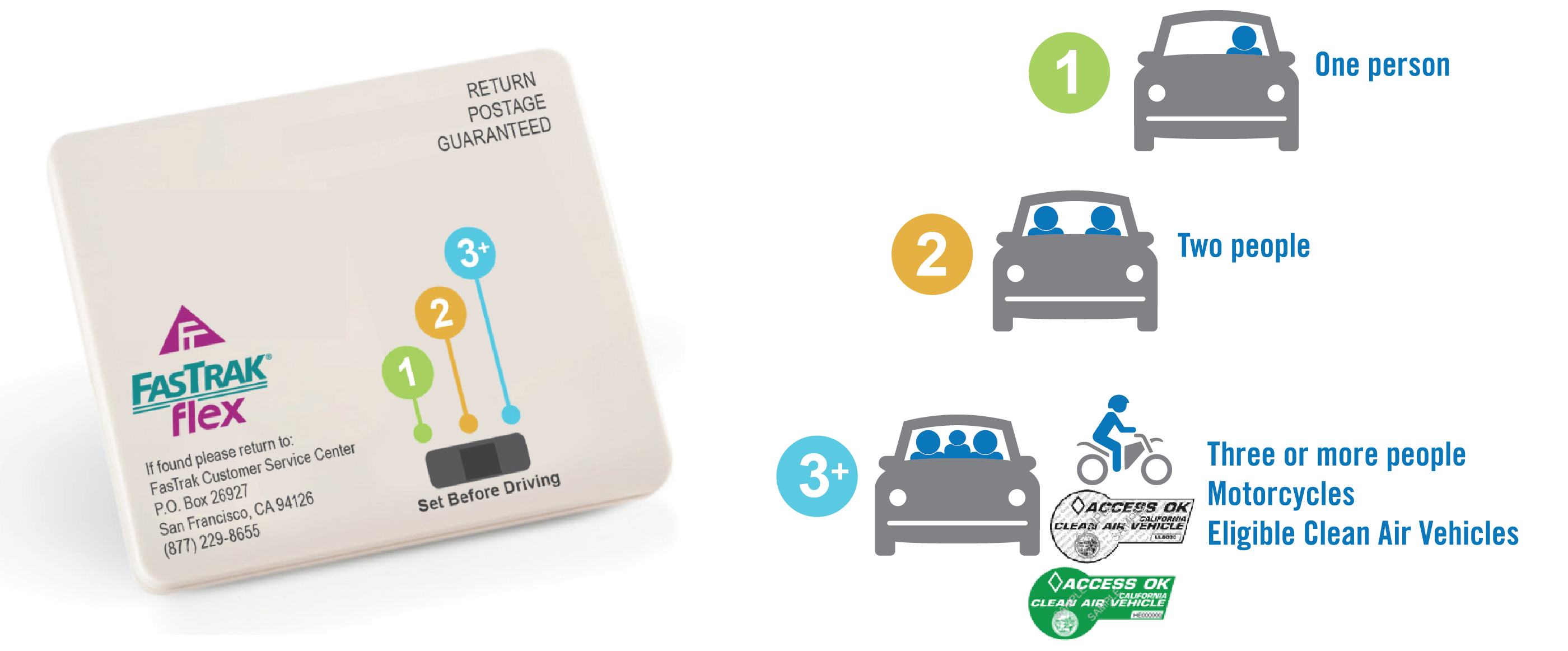
If the corridor is to be widened at all, I believe alternative 5, express lane tolling, is best. It should be designed so that every vehicle (except transit) pays for every trip. There would be discounts for lower income people, probably using the CalFresh or other program discount of 50%. There would be discounts for the number of occupants for users of the FasTrak Flex transponder that can be set to 1, 2, or 3+ occupants. Caltrans is also exploring technology that would allow sensing of number of occupants without this particular transponder. The could be and probably should be discounts for travel during non-congested times when all lanes of the freeway are mostly free-flowing. But every vehicle should be paying something at all times. There is a clear equity advantage to express lane tolling in that all users are paying into the system so that tolls per use can be set lower. People talking about Yolo 80 tolling, including those opposed to any tolling at all, have bandied about charges of $10 to $40, but I believe that express lane tolling would set full price tolling at no more than $5, and likely less. A detailed operations and charges plan would await creation of the tolling authority, so nothing is known for certain about tolls at this time. I have not been able to find any projection of tolls in Caltrans or YoloTD documents, though certainly it may exist.
My preferred alternative is 1, no build. I want the Yolo bottleneck to remain a bottleneck so that it sets a ceiling on VMT in the entire I-80 corridor from Nevada to San Francisco. We don’t need, now or ever, more motor vehicle capacity. We need travel mode alternatives. The best alternative, I believe, is higher frequency for Capitol Corridor between Roseville and San Jose. Other actions such as better bus service, both local and regional, better walking and bicycling facilities, e-bike subsidies, and effective bike share systems are all part of the solution. More lanes, of whatever type, is not the solution.

