JUMP count update 2018-08-04

There are clearly more bikes on the street now than at last count posting, but I’m not sure how many. The rumor was 100 more bikes in this last week, and 100 more in the week before, but so far I’ve not been able to get anyone to confirm or deny those numbers. If true, that would make a total of 500 bikes in the region. Since the total possible is not known, we can’t say what the availability percentage is. When there were 300 bikes possible, the percentage available ranged up to 56%, but I think that staffing is now catching up with demand and the percentage available may be ranging up to 74%.

I am curious about whether there is an industry standard for the availability of bikes. Since I am pretty sure that JUMP has the vast majority of electric assist bikes in service, and none of the electric bike share systems are very old, I have not been able to find any information. It is worth remembering that electric assist bike share did not even exist in 2016, and the NACTO 2017 bike share report does not mention electric assist bikes at all. This report was released May 2018, so the next report is months away. Of the bike share systems, the only ones with electric assist, so far as I know, are JUMP (dock-optional), Motivate (which operates most of the dock systems in the US), and LimeBike (dockless). I have seen a few Ford GoBike (a Motivate system) electrics in SF, but have not had the opportunity yet to ride one.

There are a number of people returning bikes to the drop zone (green) hubs, either for the 50 cent credit or out of the goodness of their hearts, and I think that is helping keep more bikes out on the streets because it makes it easier for JUMP staff to find and load these for West Sacramento to be charged. It is more likely now that hubs will actually have bikes available because charged bikes are being returned to hubs more frequently.

I was out last night returning low battery bikes to hubs (in between beers), and I saw about 80 bikes in use in various parts of the central city. I also saw ‘in repair’ (low battery) bikes being picked up by JUMP staff at the 17th & R drop zone, at about 10:00 at night, so there is real effort now to keep up with charging.

A caveat about all counts: These counts are done by hand by Dan, and Matt who is now helping, and of course they will not be 100% accurate. In fact, in the time it takes to count the bikes in the app, the numbers have changed, particularly at those times of day when a lot of bikes are in motion, commute hours and going out in the evening hours.

2018-08-04 10:00AM

  • Sacramento: 207 bikes, 94 in hub and 113 out of hub
  • West Sacramento: 57 bikes, 35 in hub and 22 out of hub
  • Davis: 50 bikes, 21 in hub and 29 out of hub
  • Total: 316 bikes

2018-08-02 6:46AM

  • Sacramento: 248 bikes, 125 in hub and 123 out of hub
  • West Sacramento: 59 bikes, 29 in hub, 30 out of hub
  • Davis: 58 bikes, 20 in hub, 38 out of hub
  • Total: 369 bikes (this is the largest number available that we have seen to date)

2018-07-31 6:22AM

  • Sacramento: 187 bikes, 94 in hub and 93 out of hub
  • West Sacramento: 50 bikes, 33 in hub and 17 out of hub
  • Davis: 67 bikes, 26 in hub and 41 out of hub
  • Total: 304 bikes

2018-07-30 1:41PM

  • Sacramento: 108 bikes, 46 in hub and 62 out of hub
  • West Sacramento: 33 bikes, 23 in hub and 10 out of hub
  • Davis: 52 bikes, 17 in hub and 35 out of hub
  • Total: 193 bikes (this afternoon low probably indicates both bikes in motion and ones that are ‘in repair’ low battery)

2018-07-30 6:17AM

  • Sacramento: 127 bikes, 76 in hub and 51 out of hub
  • West Sacramento: 32 bikes, 15 in hub and 17 out of hub
  • Davis: 55 bikes, 21 in hub and 34 out of hub
  • Total: 215 bikes

2018-07-28 6:30AM

  • Sacramento: 162 bikes, 62 in hub and 100 out of hub
  • West Sacramento: 37 bikes, 19 in hub and 18 out of hub
  • Davis: 30 bikes, 17 in hub and 13 out of hub
  • Total: 229 bikes

2018-07-27 6:30AM

  • Sacramento: 155 bikes, 75 in hub and 80 out of hub
  • West Sacramento: 35 bikes, 16 in hub and 19 out of hub
  • Davis: 45 bikes, 11 in hub and 34 out of hub
  • Total: 240 bikes (this is the first count that I think indicates the total bikes are now above 300)
JUMP drop zones in San Francisco

I was in San Francisco the last two days, and used the JUMP system to familiarize myself with the drop zones there, the ones marked as a green lightning bolt. First, the only drop zone with charging racks is at the Bluxome Street warehouse location, as it was before. The other eight drop zones are just regular bike racks, meant to accumulate bikes that have low batteries and are about to go into repair mode, so that they can be picked up more easily for recharging. A person at the Bluxome warehouse confirmed that the other drop zone hubs were not charging hubs, said they were planned to be eventually, but didn’t know when.

The credit for returning a low battery bike (with $ icon) to a drop zone is offered as ‘up to’ $6, and the two bikes I returned both earned that $6 credit. I’m rich! Well, rich in bike share credits.

And, to repeat what I’ve already said, the difference between 20 mph (SF) and 15 mph (Sacramento) is significant. At 20 mph, I can keep up with traffic on most streets. Of course having bike lanes and separated bikeways that are present on more and more streets in downtown, and lane splitting when necessary to avoid congestion, makes a huge difference as well. In afternoon rush hour traffic yesterday, I rode to two destinations that would have taken me about five times as long in a car, because the traffic was crawling, and sometimes not even that, and I was zooming. Bikes, and bike share!

I also did a single bike count, 3:00PM on Tuesday, and there were 162 bikes out of a possible 250 bikes available in San Francisco, an availability rate of 65%. It would be interesting to do more counts, but I don’t have the time.

It is hard to come back to Sacramento heat after two days in San Francisco cool.

JUMP drop zones for Sacramento

New in the JUMP app within the last few days (thanks Matt for noticing) are drop zones, marked with a green lightning bolt icon. I thought these might be charging hubs, promised for ‘some day’, but they are drop zones, just regular JUMP system racks (exclusive JUMP racks and other racks that were part of the SoBi system). I checked three of the 12 racks on the Sacramento side, and none are charging racks. This makes me question the assumption I made that the green hubs in San Francisco are charging hubs; they may also be just drop zones. I’ll be in SF tomorrow and will report.

The purpose of the drop zone hubs is to accumulate bikes that need charging so that it is easier for JUMP staff to locate them and return them to the West Sacramento warehouse for charging. The city hall hub had five ‘in repair’ (very low battery) bikes parked there this afternoon, so the idea is working to at least some degree.

in repair (very low battery) bikes at city hall hub

JUMP is offering an incentive of 50 cents for returning a low battery bike (shown as a $ icon) to a drop zone hub. I did this twice this afternoon, and got the promised 50 cent credit on my account. If you tap on the drop zone hub, it says “Bring a bike with a ‘$’ icon to this drop-off zone. The trip will be free and you will get up to $6.00 in credit.” If you tap on a $ bike, it only offers $0.50, so I assume that is the default and only value for the JUMP Sacramento region, at least at this time.

I finally got a clarification of why I was seeing $ icons in my app, and other people were not. I am a member of both the San Francisco and Sacramento systems, so my membership in the SF system causes these $ to show up. Of course now everyone should be seeing the $ icons and drop zone icons in their app, even if they only have a Sacramento membership.


JUMP count

July 19, 11:30PM (picked as a time when most bikes are parked, not traveling):

  • Sacramento, 68 bikes out of hub, 18 bikes in hubs, 5 bikes out of service area, total 91 bikes in service.
  • Davis, 37 bikes out of hub, 7 bikes in hubs (2 hubs), 1 bike out of service area, total 45 bikes
  • West Sacramento, 19 bikes out of hub, 2 bikes in hub, 0 bikes out of service area, total 21 bikes
  • total 157 bikes

July 20, 7:30AM (picked as a time when recharged bikes may have been distributed, though bikes will be traveling)

  • Sacramento, 63 bikes out of hub, 22 bikes in hubs, 5 bikes out of service area, total 90 bikes
  • Davis, 33 bikes out of hub, 7 bikes in hub, 1 bike out of service area, total 41 bikes
  • West Sacramento, 18 bikes out of hub, 2 bikes in hub, 1 bike out of service area
  • total 152 bikes

July 20, 11:00AM (picked as after the commute rush and before the lunch rush, though there are certainly bikes traveling)

  • Sacramento, 61 bikes out of hub, 10 bikes in hubs, 5 bikes out of service area, total 76 bikes
  • Davis, 36 bikes out of hub, 7 bikes in hub, 1 bike our of service area, total 41 bikes
  • West Sacramento, 5 bikes out of hub, 5 bikes in hubs, zero bikes out of service area, total 10 bikes
  • total 130 bikes

I am not able to compile these kind of statistics on a regular basis, but perhaps we (the users) could pick a few times of day and crowd-source the data.

Charging hubs in San Francisco

The JUMP San Francisco system now has nine charging hubs scattered around the service area, as shown on the map below, with the green lightning bolt icons being the charging hubs. I had previously written about the original charging hub at the Bluxome St warehouse, and wondered when there would be more. I have not been following closely, so don’t know when these showed up. Nothing in Sacramento, yet.

JUMP hub count

JUMP is gradually adding hubs to the system. As of today, the counts I see are:

  • Davis: 3
  • West Sacramento: 7
  • Sacramento: 60

In Sacramento, the number of hubs exceeds the number of bikes available. at least at certain times of day. The city requirement was two rack spaces, not the JUMP ‘wave’ racks only, but also regular racks, per bike. The hubs have between four and twelve bike spaces, at least the ones I’ve visited. The number of available bikes as of this moment (8:30PM, 2018-07-02) is 51, but I’m sure there are bikes in motion. I saw five bikes being ridden while out on my evening walk.

People have been asking me questions about the bike share system, and pointing out that I have mixed feelings. Yes, that is true. I think it has the power to transform transportation in Sacramento, but is falling short at the moment. I am traveling and backpacking this summer, only occasionally in town, so it probably will not be until mid-August that I’ll have much to say about the system.

Remember, you can always comment on my posts (if you have commented before and been accepted, you comment will automatically get added, if not, I approve, or very rarely disapprove, as soon as I can). If you have written something, you can submit a link to that. Of, if you have more ambition, you can write your own posts for consideration for Getting Around Sacramento. I don’t want my voice to the the only voice.


when the battery runs out

Several people have asked me what happens with a JUMP bike if the battery runs out before you get to your destination. Now I know. It isn’t too bad. I have been picking up low battery bikes and returning them to hubs where they are more easily picked up by the field crew for charging, and if the battery goes completely dead and they disappear from the system, they are in a known spot where they can be found. Last night I picked up a bike that showed in the app as having a low battery (one red bar on the battery indicator, see the screen capture at right for an example), and it was so low that it did not provide any detectable pedal assist. It did have enough battery to power the headlights and taillights, but the pedaling was all mine.

The bikes are heavy, and so getting started from a stop requires some muscle. But once moving, the bikes are not hard to pedal, and the electric motor does not cause any significant drag. I would not want to go up a hill, but there aren’t any real hills in the current service area, and pedaling into a strong headwind would probably not be pleasant. People with handicaps or less strong muscles should probably avoid low battery bikes, just to make sure.

The bikes that show up in the app with a $ bike icon (not fixed yet), I call ‘low battery’, These still have considerably life in them, as long as you aren’t doing a long ride. The ones that show with a single red bar, I call ‘low-low battery’. These may get you to a nearly location, but you wouldn’t pick one for a longer trip.

Most of the time when I take a low-low battery bike to a hub, it puts itself into ‘repair’ mode a minute or so after I lock it up, which is what it should do.

Bike share is booming

I had a mindset for the last three weeks that the problem with the JUMP system was that bikes were not being used because they were not being charged and re-balanced. But my observations this weekend show that I had things flipped. The system is getting used so much that the bikes are running out of battery. Everywhere I went in the central city, I saw people riding them. I’d see a bike parked, and ten minutes later it was gone, in use by someone else. I don’t know when JUMP will provide rides-per-bike data to the partners, but I think it will indicate that, at least on weekends, each bike is getting many trips per day.

The app map this morning showed almost no bikes in the central city, and what there were were in low-battery status. On my walk, I saw five bikes in very low battery ‘in repair’ status, all within a few blocks of my home. Another had a dead GPS battery, which I think happens when they stay in ‘in repair’ mode for a long time. The bikes are still in the central city, but they are out of juice because they have been used so many times.

Two things users could do to help:

  • If you find a dead GPS battery bike, with the display blank and the keypad unresponsive, email JUMP at support@jumpbikes.com to let them know the location, street and cross-street. Include that it is in Sacramento, or West Sacramento, or Davis, as the bike numbers alone don’t pin down which city the bike is in.
  • If your destination is within a block, or perhaps two, of a hub, park at the hub. That not only makes it easier for the next person to find it, but makes it easier for the JUMP field crew to find it, particularly if it eventually goes to dead battery and drops off the system.

No hub or rack near your destination? You can submit location requests to JUMP at the same support@jumpbikes.com email address. There are a number of locations which have been identified for hubs but not yet installed. Some of them in repurposed parking spaces, marked with thick white lines and two delineators. But it doesn’t hurt to submit an already planned location, so go ahead. SACOG has promised a map of future hub locations, but I’ve not seen it. Presumably it will show up on the SACOG Bike Share page: https://www.sacog.org/bike-share.

a day in the life… of bike share

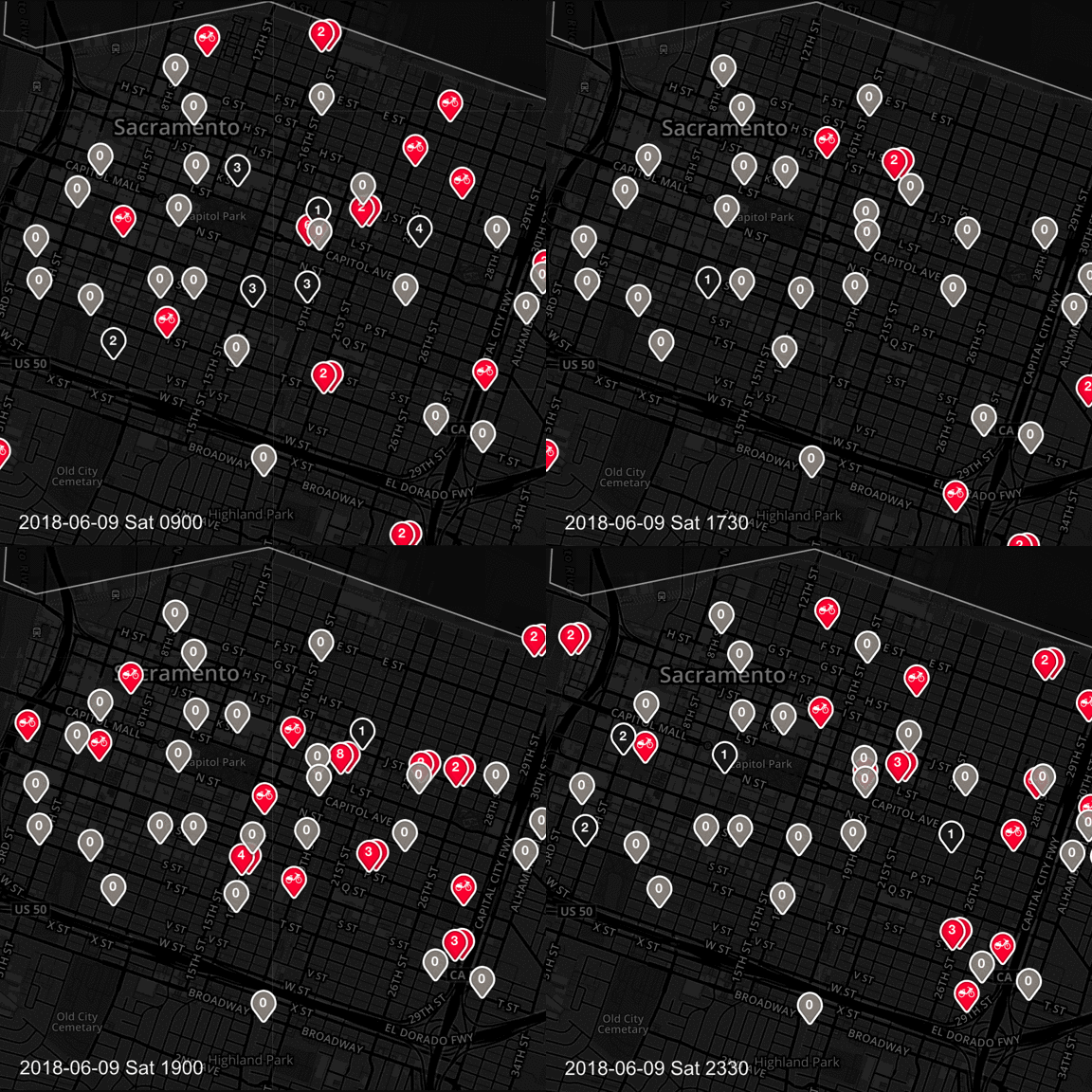
I saw a cool graphic of the flow of JUMP bike share bikes in San Francisco, and thought is would be interesting to do the same for Sacramento. The effect is not so dramatic, but it is interesting. I have zeroed in on the central city, which of course only tells part of the story, but this is the level at which bike and hub icons show, whereas the next zoom out only shows them as dots. I’d like to do this for a weekday as well, but probably won’t have the chance for several weeks, as I’m out of town.

The first one is Saturday, at a few points in time, the second one is Sunday, at three hour intervals. Maybe like watching paint dry, maybe better.

JUMP_Sac-map_2018-06-09

JUMP SF and Sac bikes

There are at least two San Francisco bikes in Sacramento, and I’ve come across them and ridden them. The most obvious, though subtle, difference is that the SF bikes have eight gears and the Sacramento bikes three, as befits the terrain. The shifting direction is reversed.

Since I rode these bikes on the same day that I rode Sacramento bikes, I could compare them directly, and the feeling I’d had when I’d ridden them several days apart turned out to be accurate. The bikes accelerate the same, but once reaching top speed of 15 mph for Sacramento bikes and 20 mph for San Francisco, the Sacramento bikes drop out of assist roughly, and continue to go in and out of it, surging and bogging down. The San Francisco bikes have a smooth transition, noticeable, but much smoother, going from assist to not in a comfortable manner.

The Sacramento bikes make a lot more noise than the San Francisco bikes. Sometimes people turn their head to look. Though I don’t know for sure, I suspect this is the result of whatever was implemented to limit the Sacramento bikes to 15 mph, which is not their design speed but a limitation imposed by the City of Sacramento. I’m concerned that the bikes may actually be damaged by this. I do know that when mechanical devices make a lot of noise, it is not a good sign.

I continue to believe that the 15 mph limitation was unnecessary and inappropriate.