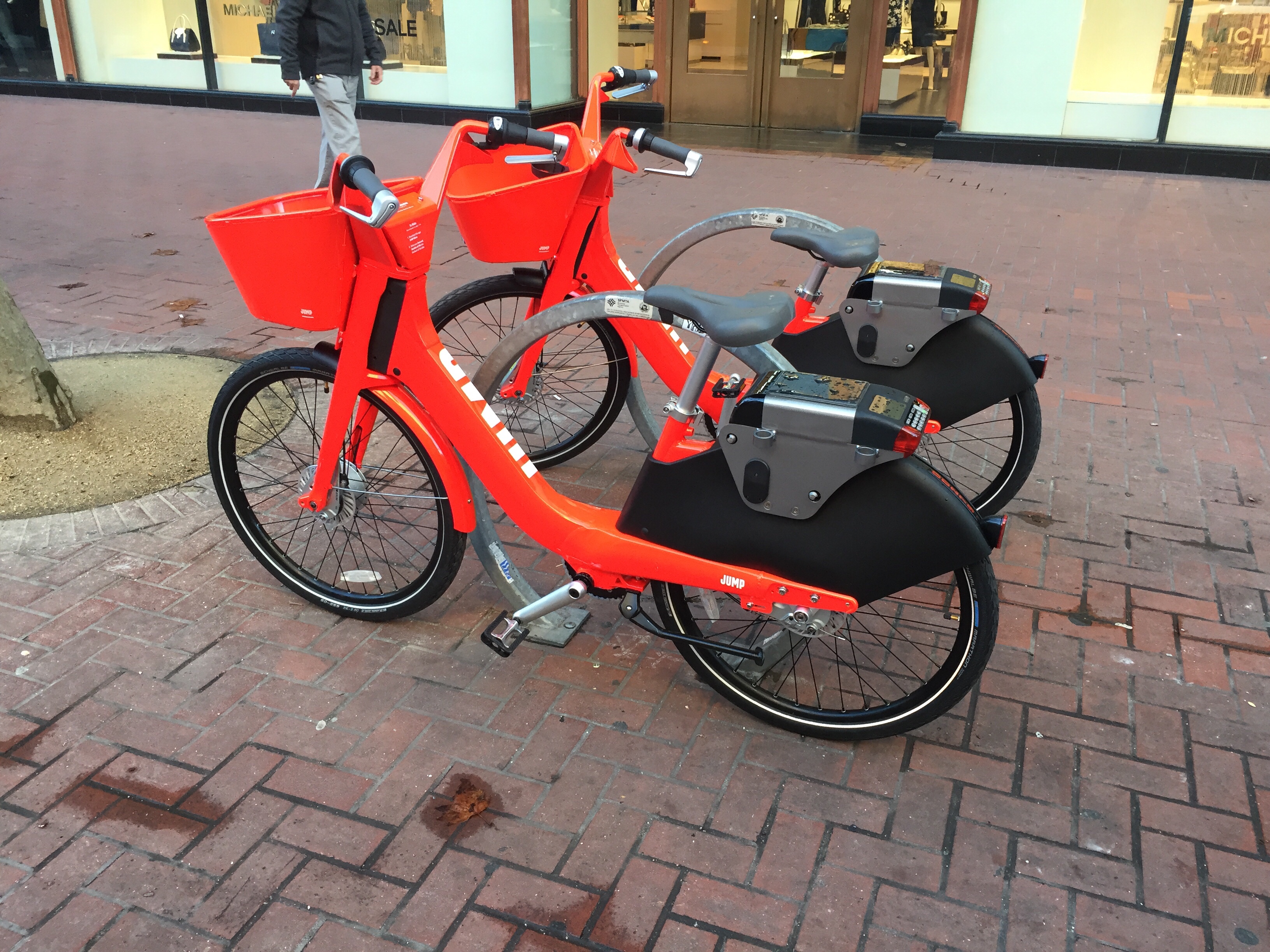
 I rode a Jump e-bike in San Francisco yesterday. This was the first day that the program was open to the public, though there had been a low-income pilot going on for several months previously. The bright red (vermillion) bikes are pedal-assist. If you don’t pedal, they don’t go anywhere. But if you do, they really jump out. Though I haven’t ridden any really steep SF hills yet, the bike handled moderate hills with ease. I did ride most of the way across SF and back, and a chose a somewhat more hilly route than I normally would have.
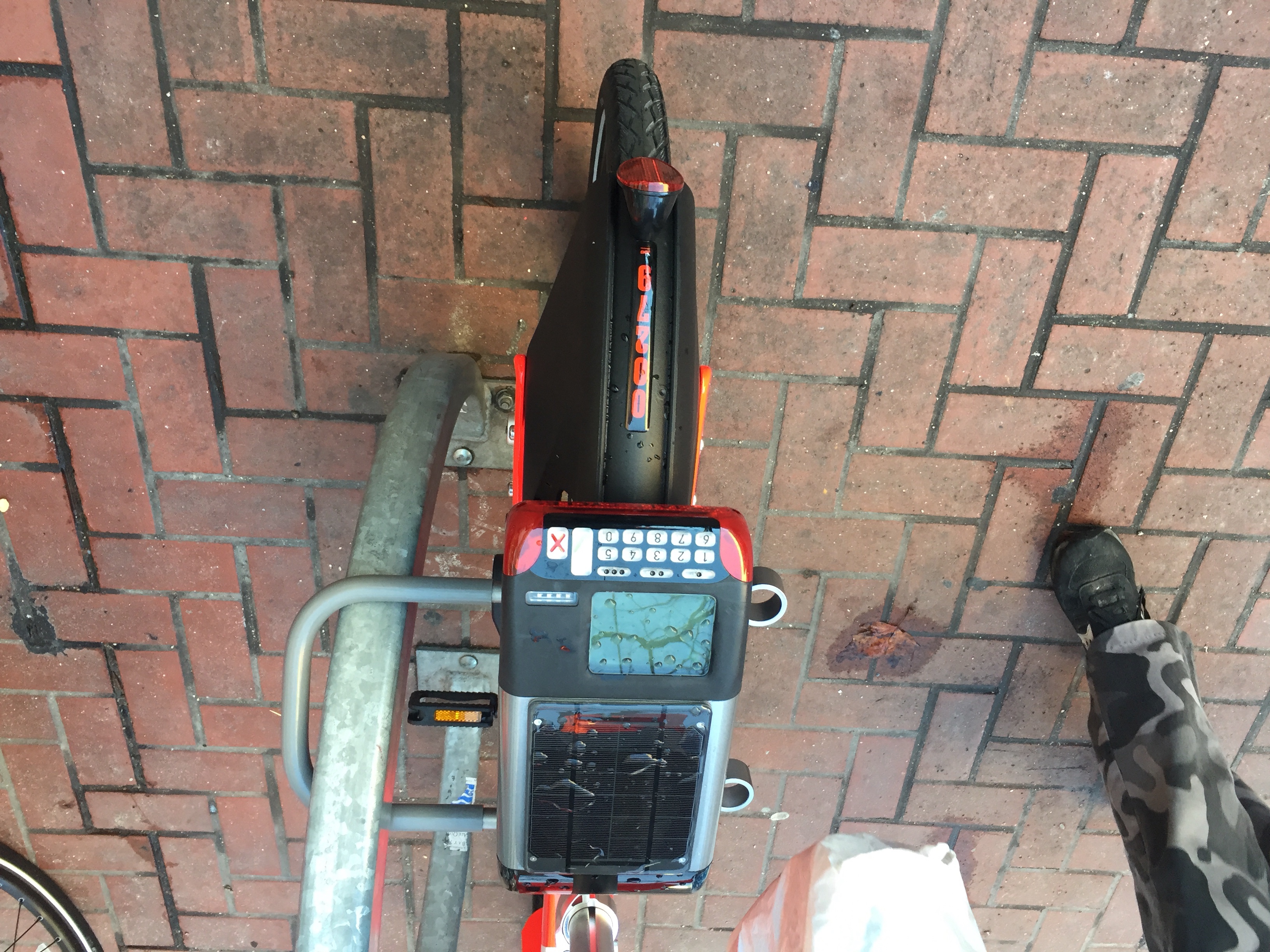
 Jump is operated by the company formerly known as Social Bicycles, so the GPS units and locking bar will be familiar to anyone that has used the Tower Bridge Preview bikes in Sacramento. The brakes are different, much stronger, as they should be for a bike that will go 25 mph. There are “gears,” but theses feel different with the pedal assist. The Jump system in SF is truly dockless, unlike the existing Sacramento system which is dock optional. There are no hubs or stations, the bikes can be locked at any bike rack within the system area. On the first day, the bikes were in clusters, with large areas uncovered, but they may become more dispersed over time. The coverage includes two of the lower income neighborhoods in SF, Bayview and Mission, so the user profile may be different than in Sacramento and for the existing Ford GoBike dock system in SF. There is a good article about Jump on SFgate: Jump rolls out San Francisco’s first stationless e-bike system.
The bikes must be recharged every few days, depending on use, and there are no charging stations at least so far, so rebalancing will probably be done as part of recharging. The company reported to me that they are considering hubs, but haven’t located any yet, pending data about use patterns. There seems to be a charging port on the right side of the bike below the handlebars, but it doesn’t look to me as though it was designed for docking/charging stations.
So, back to Sacramento. SACOG and partners have announced that the expanded system in the Sacramento region will use Jump e-bikes rather than the pedal bikes in the Tower Bridge pilot. It is not clear in the announcement whether the Sacramento system will be dockless or dock-optional. I think I prefer dock optional as more of the bikes will be in known locations, but with active rebalancing and recharging, dockless probably works.
The additional hubs (racks with geofences) that we were promised back in September are still not online yet, though most or all of the locations are installed. The most prominent lack is that there is still no hub at Sacramento Valley Station, even though that is the most common non-hub location where bikes get parked. With a May 15 promised opening of the different Jump system, I’m wondering if these other hubs will ever be online.
The 50 additional bikes arrived, though. They have black fenders and baskets. Unfortunately, the practical effect of the additional bikes has not been large. Before the new bikes, the Sacramento side had 20-25 bikes, and it now has 25-30 bikes, though it should have about 50. The bikes are often out of service, mostly due to gearing problems. If you have ridden the bikes, you’ve noticed that the gears slip on many of them. Sometimes this is just irritating, but sometimes it makes the bike unridable. Though this might be a maintenance issue, I suspect it is a design flaw.
The email I got when I joined Jump SF is below:
Hi Dan,
Thanks for joining JUMP SF!
Your account is now active!
Your account number is XXXXXX. Please store this number in a safe place as you will use it to access our e-bikes.
IMPORTANT SAFETY INFORMATION
JUMP is bike share–electrified. When riding the e-bike, start slowly to get familiar with its boost. You’ll feel motor assistance as you pedal. The harder you pedal the more boost you’ll feel. Be sure to try out the brakes to get a feel for stopping.
• JUMP brakes are powerful! Brake early – brake gradually.
• Ride slowly down steep hills.
• Use both brakes together at all times.
• Do not bike one-handed! Do not text while biking!
• Braking hard while riding one-handed is dangerous.
• If you are a heavier rider, ride cautiously down steep or long hills and keep your speed low. Weight limit: 210lbs.
STARTING YOUR RIDE
When you’re ready to take your first ride, enter your account number and PIN using the keypad on the back of the bike. Remove the gray U-bar and place it in the holster loops on the back left of the bike. Adjust the seat height and test your brakes.
PAYING FOR YOUR RIDE
JUMP bike rides cost $2 for the first 30 minutes and just $0.07/minute after that (plus applicable taxes). Your ride begins when you book a bike and ends when you lock a bike.
ENDING YOUR RIDE
At the end of your ride, lock the bike to a public bicycle rack within the designated system area. Bikes should always be visible from the street, and never parked on private property, in parking garages, or in parks. Improper bike locking fees may apply. If you’re ever unsure, check the system area map. Locking the bike outside of the SF system area will result in a $25 fee.
OUR BOOST
On a full charge our bikes can travel around 30 miles with pedal assist. While we do have teams regularly servicing our fleet, please understand that the bike you rent might not be at full charge. If you are riding a bike and the pedal assist runs out, please press the repair button on the bike’s keypad when ending your rental, and lock the bike to a bicycle rack. We will take care of it from there.
Please do not travel outside of the system area unless you are comfortable pedaling without the electric assist should the battery run out. Fees for retrieval of bikes due to low battery outside the system area may still apply.
RESERVING YOUR RIDE
You can walk up to a bike and check it out, or reserve one through the app. The clock starts ticking once the reservation is made. Bikes reserved in advance can be held for up to 10 minutes. Reservations will be canceled automatically if the bike is not unlocked within that time.
HOLD FEATURE
Need to make a short stop on your trip? The HOLD function guarantees that the e-bike is yours for up to 60 minutes. Press the “HOLD” button and lock the bike to a rack. Please note that reservation and hold time count toward your total minutes of riding time.
LINK CLIPPER CARD
You can link your Clipper card after unlocking the bike for the first time. Once unlocked, click Menu > Link Card > Start. Now hold the card directly up against the keypad buttons and wait for the screen to say “Success.” Next time you want to rent the bike, hold the card to the keypad to reserve.
For riding tips and safety information, please see our FAQ. We encourage all JUMP members to wear a helmet while riding. Don’t have one? Visit one of San Francisco’s many bike shops to pick one up, and if you’re a San Francisco Bicycle Coalition member, you can get 10-15% off!
You can learn more about our system and policies by reading our Rental Policy
Thank you again for joining. We think you will enjoy JUMP!
The JUMP SF Team
support@jumpbikes.com

 Getting Around Sacramento