The Strong SacTown Street Design Standards Team has posted on Modal Filters, which are probably the most effective tool we have for calming and slowing traffic. But there are a number of others than can be used, sometimes more effective depending on the context of the street being redesigned. The traffic calming features below are listed in approximate order of effectiveness, following modal filters of course, but each street to be redesigned for traffic calming is unique, so the best solutions will vary.
The city has a parallel project, the Streets for People Active Transportation Plan. The Neighborhood Connections storymap Traffic Calming tab (scroll the menu bar right if you don’t see this tab) has great examples of many of the traffic calming features. I am using some of those in the recommendations below.
Note: A recently release study of traffic speed reductions engendered by complete streets elements in Minnesota identified roundabouts as the most effective as slowing drivers. Crossroads: Measuring the Effects of Road Features on Driving Speeds, 2024-09-11.
Marked Crosswalks
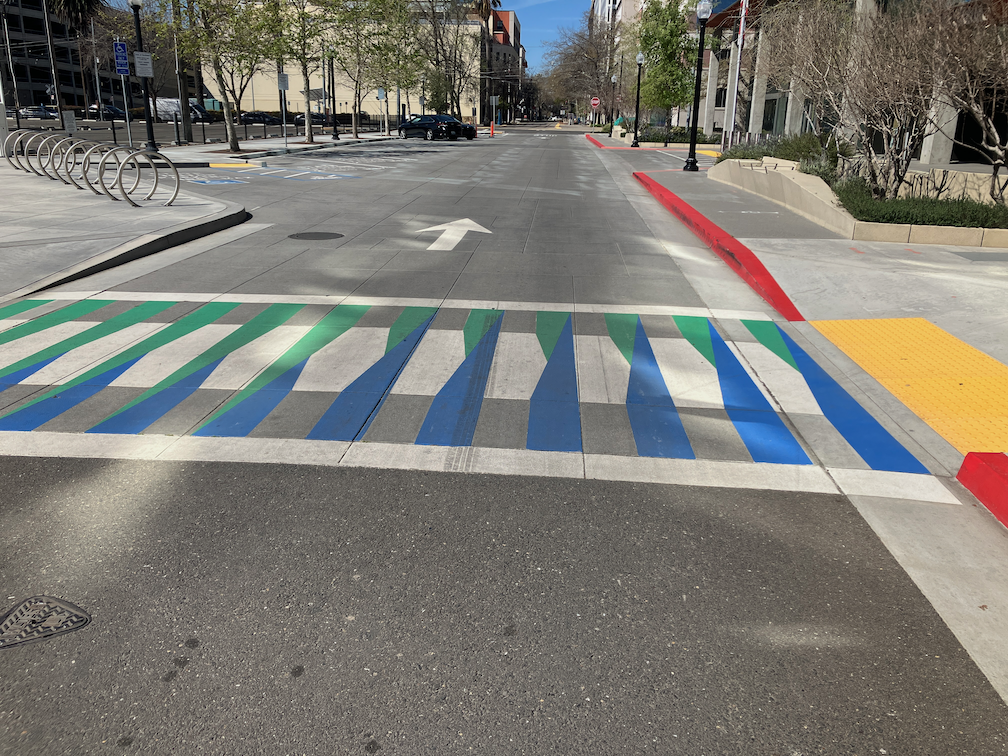
Though state law recognizes that there is a legal crosswalk on every side of every intersection, unless signed against, many drivers do not understand that they must yield to walkers crossing, whether the crosswalk is marked (painted) or not. The crosswalk at every side of every intersection should be painted, though low volume low speed streets may not require marked crosswalks. Decorative designs within the crosswalk further increase visibility.
Curb Extensions
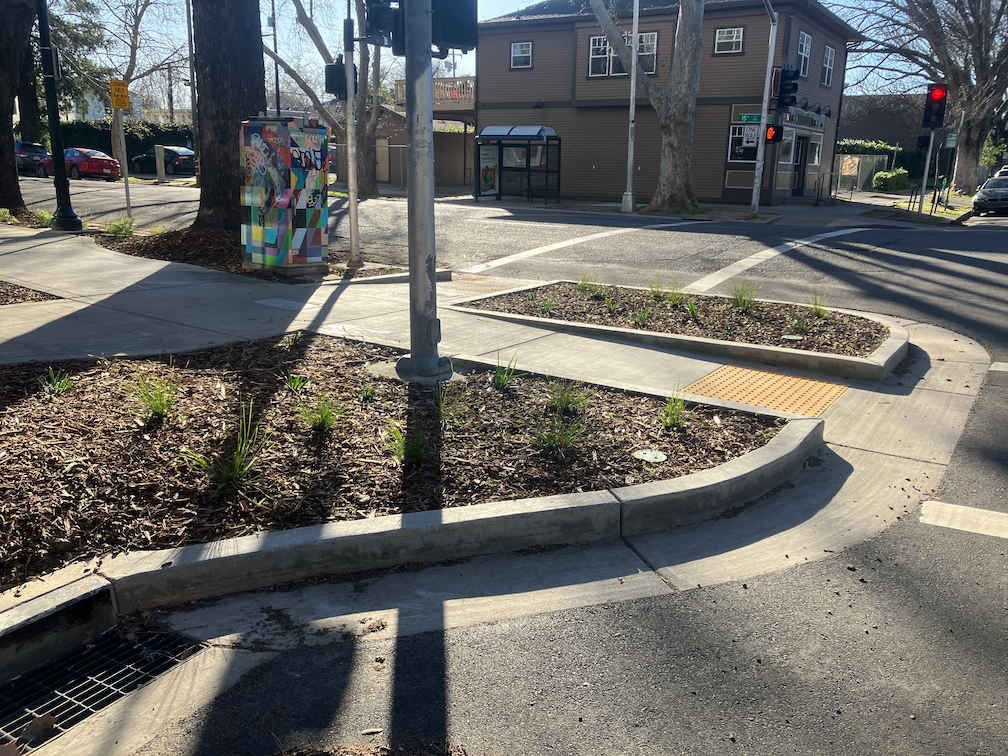
Curb extensions shorten the crossing distance at crosswalks, and narrow the roadway to slow vehicles. They also increase visibility between walkers and drivers, making it safer for both. Extensions can be temporary, and inexpensive, using paint and posts, or can be permanent with physical curbs. Permanent extensions may raise drainage issues, but these can be solved.

Raised Crosswalk
A raised crosswalk places the crosswalk on top of a table raised above the street level. It calms traffic in the same way that speed lumps to, but more importantly raises walkers to a position more visible to drivers. They also provide flat sidewalks without curb ramps, though detectable warning strips are still used. Raised crosswalks can be used at intersections or mid-block.

Street Trees
Trees provide a sense of enclosure, slowing drivers, provide shade for all street users, and significantly reduce the heat island effect of dark pavement. The disinvested areas of Sacramento, particularly south and north Sacramento, have far too few trees, and this must be corrected by planting trees wherever possible, including in parking lanes where no other good locations are available.

Lane Narrowing
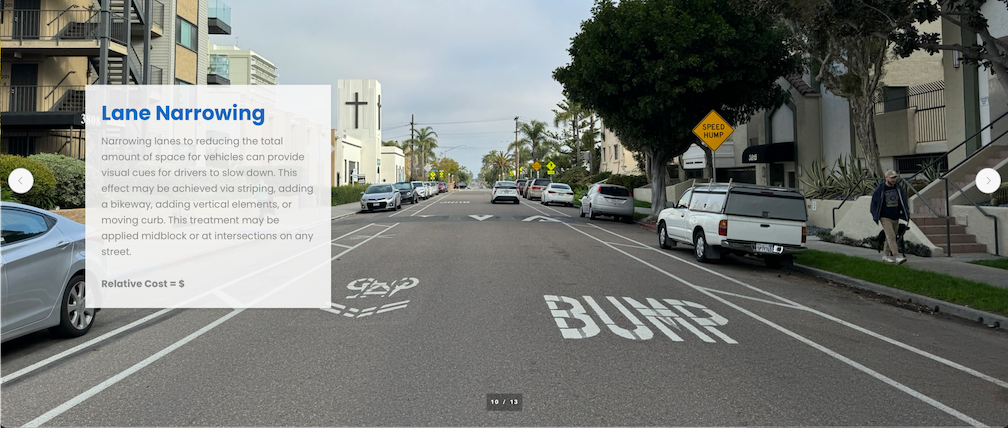
Wide travel lanes encourage high speeds which are dangerous for all street users – speed kills! Many streets in the city have lane widths of 12 feet or more. If lanes are narrowed to 9 feet, with exceptions for transit and freight routes, the sense of friction and risk will cause drivers to slow significantly. The example shows the addition of a painted buffer to narrow the travel lane. Lane Widths are also addressed in an earlier Strong SacTown post.
Speed Lumps
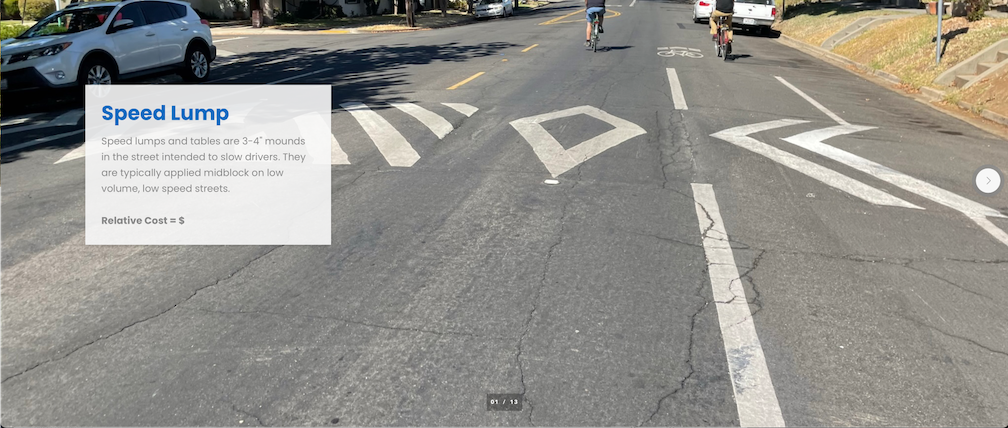
These are also called speed humps, speed tables, or pillows. When properly designed, they have cut-throughs for emergency equipment and bicyclists. These are NOT speed bumps of the type found in parking lots, which are illegal on public streets.
Lane Channelization
Sacramento has calmed traffic on two one-way three-lane streets, 15th Street and 16th Street, approaching crosswalks at four locations. Thin painted buffers and posts (vertical delineators) were installed. The visual friction of the posts discourages lane changes approaching crosswalks. Many pedestrian fatalities are due to the multi-lane threat, when one car stops but others go around and do not stop, killing people walking. These calming features should be installed at all locations with multiple lanes in a direction and frequently used crosswalks.

Median Island
These provide a refuge for people walking on longer crossings. To meet PROWAG (Public Right-Of-Way Access Guidelines), the island must be a minimum of 6 feet wide, but many existing ones in Sacramento do not meet this standard. On very long crossings at signalized intersections, there must be automated pedestrian detection or an activation button at the island.

Traffic Circle/Roundabout
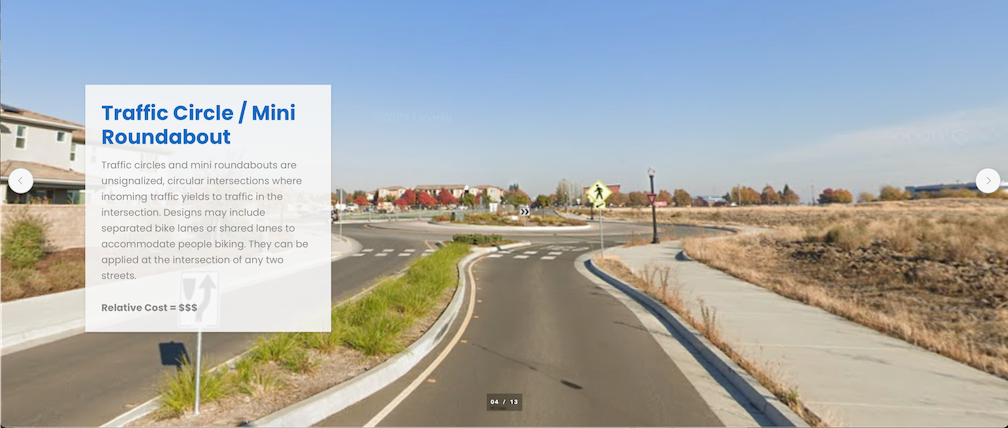
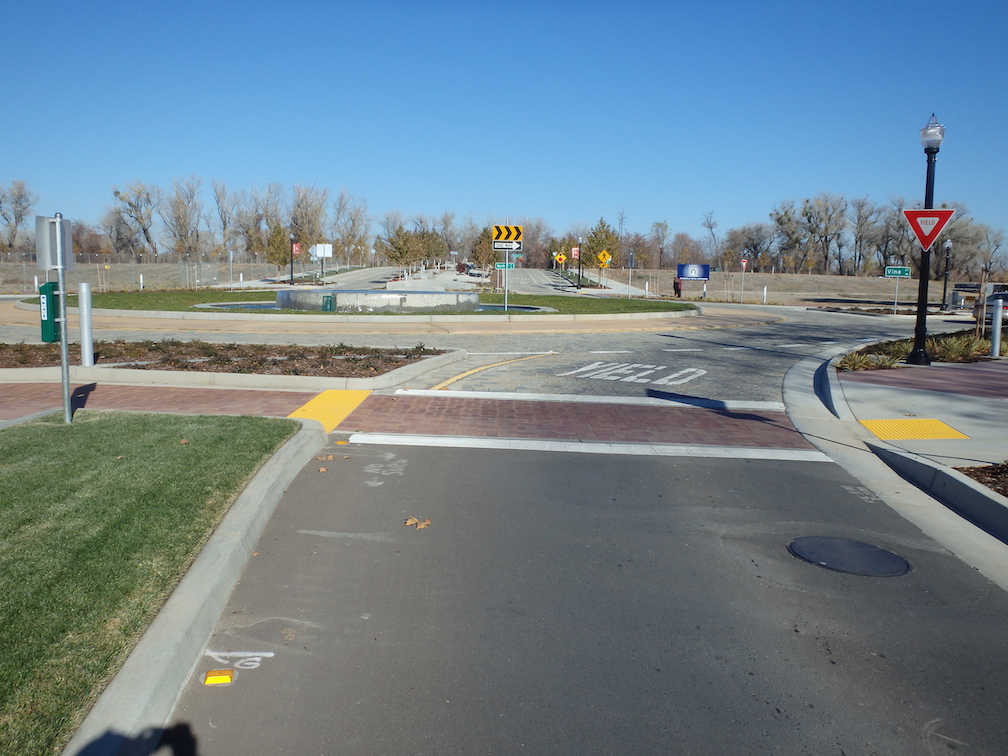
Traffic circles and roundabouts have horizontal deflection at intersections, which slows motor vehicle drivers. True roundabouts have significant horizontal deflections sufficient to really slow vehicles, and they do not have regulatory signs such as stop or yield signs. The rule of roundabouts is that entering traffic yields to traffic already in the roundabout, but otherwise does not stop. Traffic circles are often smaller, provide less deflection and therefore calming, and often have stop signs in two directions. Most of the existing features in Sacramento are traffic circles, though there are a few roundabouts. Some existing traffic circles can be converted to roundabouts. Multi-lane roundabouts create unnecessary confusion and conflicts points, and should not be called roundabouts. They are no safer than regular intersections.

Chicanes
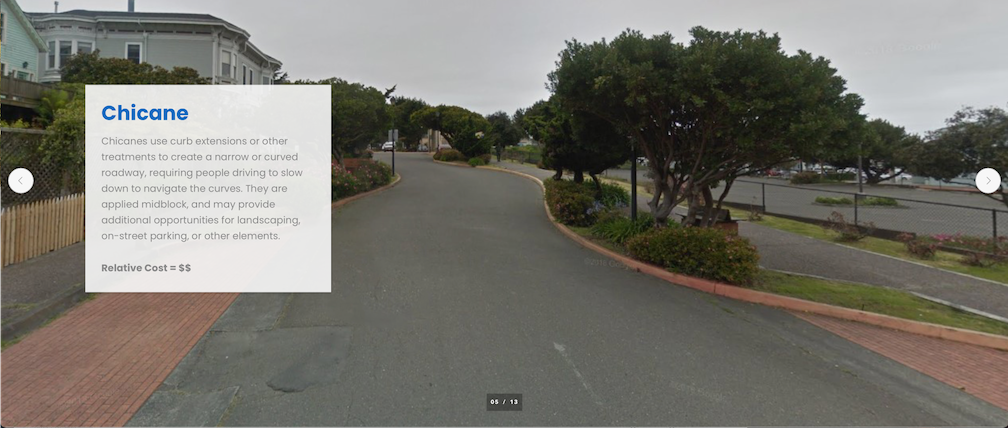
Chicanes provide horizontal deflection in order to slow motor vehicle traffic by extending from the curb into the street. Chicanes often alternate from side to side so that there is no straight-away for drivers. If there is an extension from both sides at the same point, it is called a pinch-point which is another of the Traffic Calming examples.
Raised Intersection
Raised intersections bring the entire intersection up closer to eye level for drivers, and communicate that the intersection is not a place to speed through, but to pay attention to all other users of the intersection. Along with raised crosswalks, they also provide a flat surface for walkers (and rollers) to use, removing the need for curb ramps, though detectable warning strips are still used.

On Street Parking
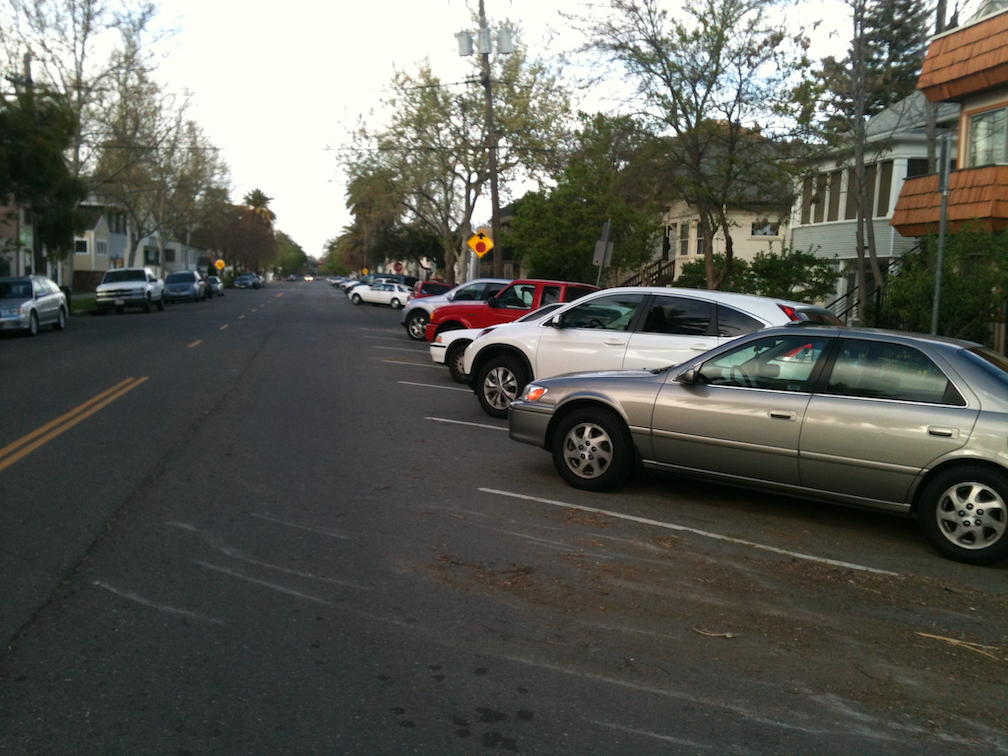
Most streets in the city already have parking, but where it is not present, adding it creates visual friction for drivers that slows their speed. Diagonal parking, on one or both sides, has been used to great effect on many overly-wide streets in the central city. Proper parking design and management can be a critical part of a well-designed street. However, removal of parking in favor of bicycle facilities and other uses can also increase livability and street safety.
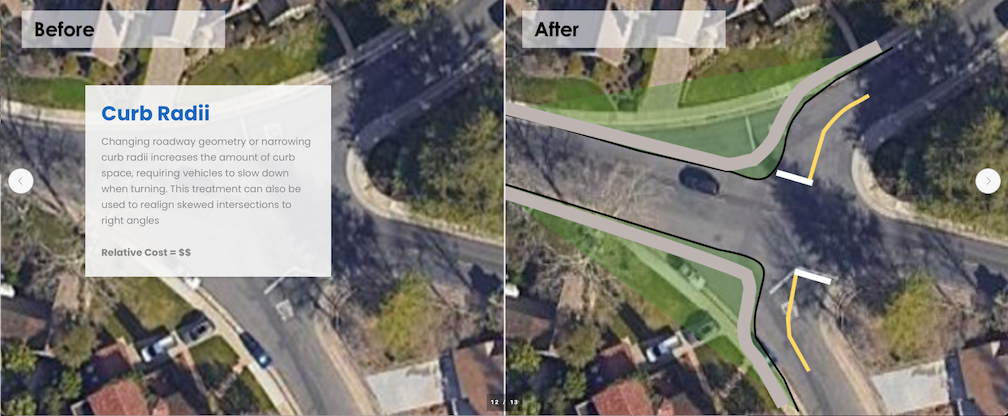
Curb Radii
Wide curb radii encourage drivers to take turns at high speeds, while small radii encourage slower and safer turns. A number of intersections in the city have very wide radii, designed to allow very large vehicles such as freight trucks to take turns at very high speeds. These must be reduced. Somewhat higher radii on designated freight routes may make sense, but should never be installed or allowed to remain on other streets. Street designs should never include slip lanes, which encourage high speed uncontrolled turns by drivers.
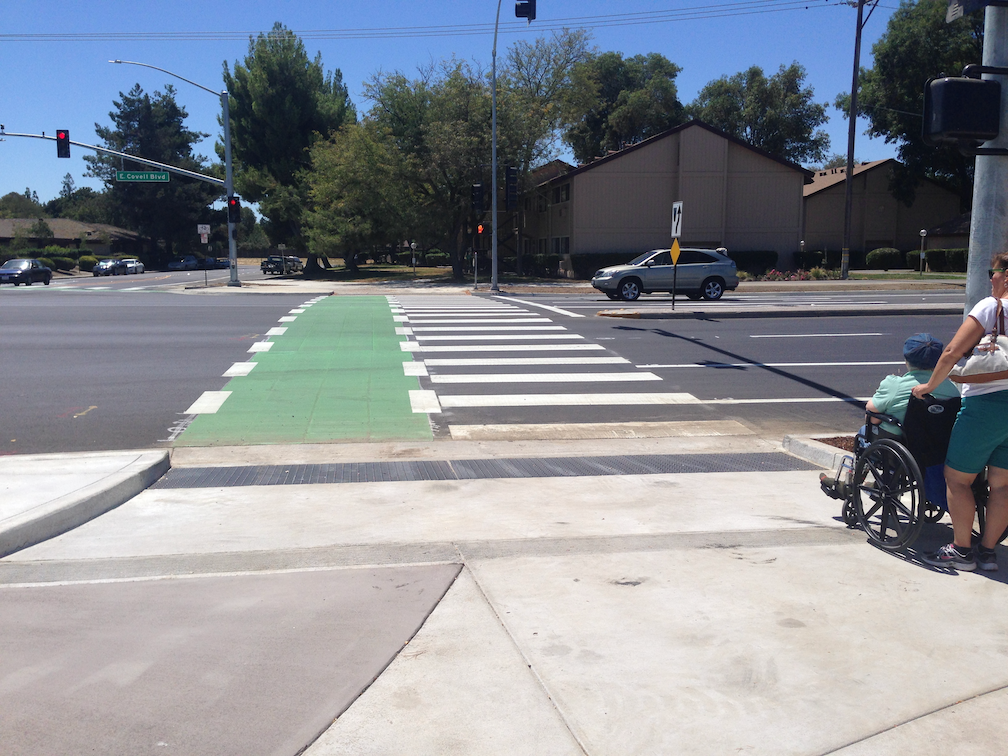
Protected Intersections
Protected intersections are designed to keep walkers, bicyclists, and motor vehicles separate and visible as they travel through the intersection. The city does not have any examples of these, but they are found in the region including Davis. The turn wedges installed for the parking protected separated bikeways in the central city are essentially a quarter of a protected intersection, and they do work to slow turning drivers and make walkers and bicyclists more visible. Because they completely revise the intersection, they can be more expensive than other traffic calming features.
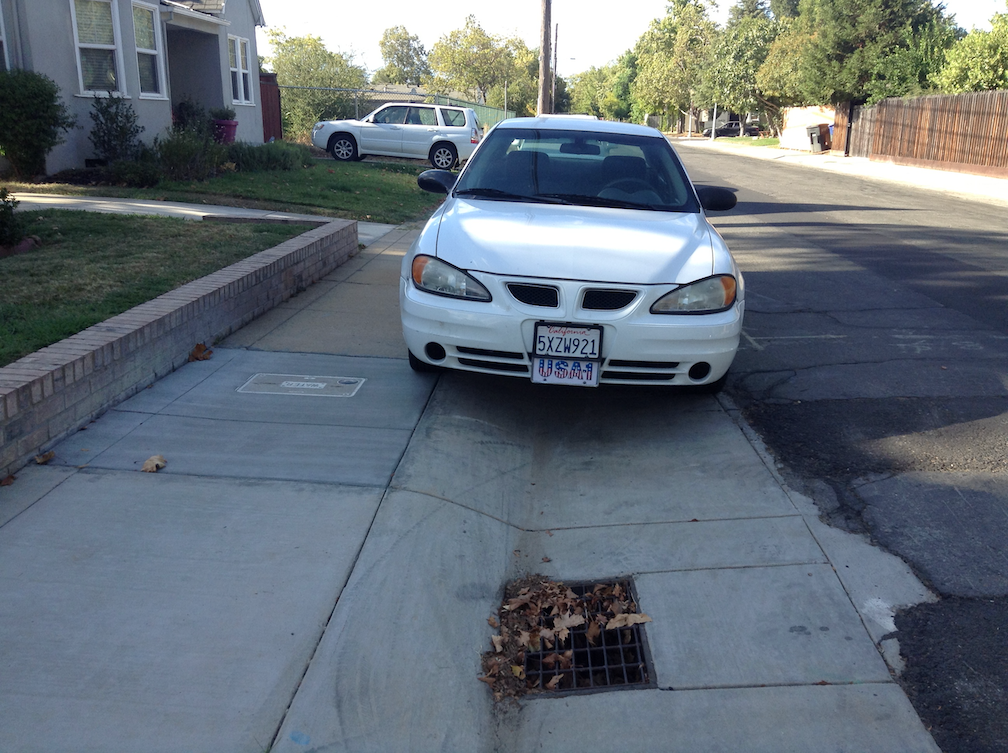
Vertical Curbs
Vertical curbs, where curbs are present, shall be the default for all street designs. Rolled curbs, which were popular in some areas in the past, and unacceptable because they encourage drivers to park partially on the sidewalk, reducing access for people walking and rolling.
Note that stop signs and traffic signals may or may not calm traffic, and are not included in these recommendations.
Additional features that make streets safer include leading pedestrian interval signals, turn on red prohibitions, enforcement of the state daylighting law, automated enforcement of red light running and speeding, school streets closed during arrival and dismissal, and very low speed design for school zones, however, these are not street design elements.
 Getting Around Sacramento
[…] traffic calming measures for additional information on roundabouts and other traffic calming […]
LikeLike
[…] Plan. The Traffic Calming Toolkit is a different formatting of the traffic calming measures in the Neighborhood Connections story map, which I’ve previously written about. As I said, these measures are progressive and […]
LikeLike
[…] Active Transportation Plan, Neighborhood Connections, Street Design Standards, and particularly traffic calming measures. The Neighborhood Connections Draft Final Plan (2025-01) is also available, if you have time to […]
LikeLike