My previous posts on Vision Zero cover many topics related to it, and make some recommendations. A draft plan will be available in the spring, at which time I’ll no doubt have many comments. If you haven’t been following the Action Plan update process, this is a good chance to catch up.
This is the first time preliminary plans for creating a safe bikeway on H Street, leading to and from Sacramento Valley Station, have been presented to the public. I will take a closer look and perhaps post again before Thursday.
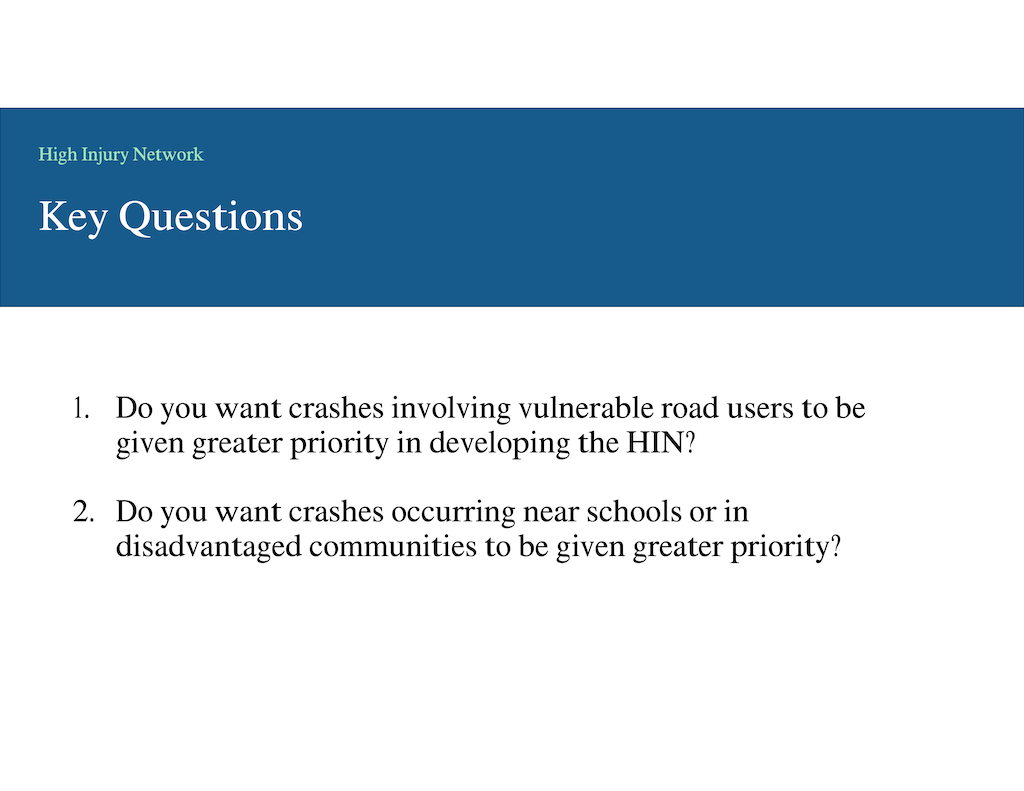
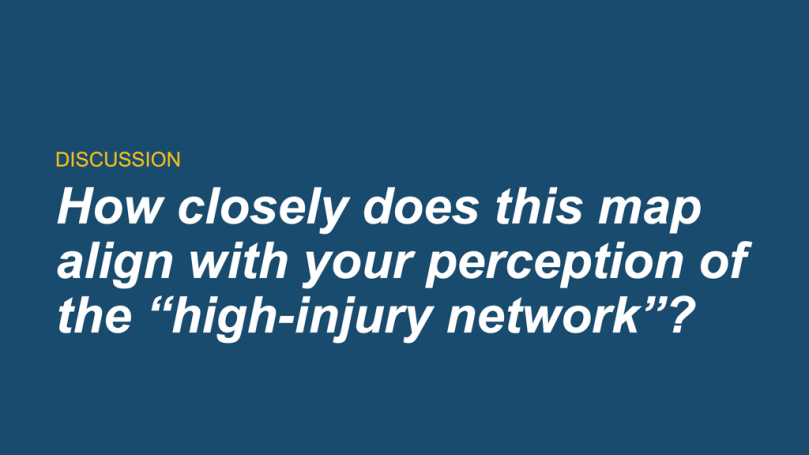
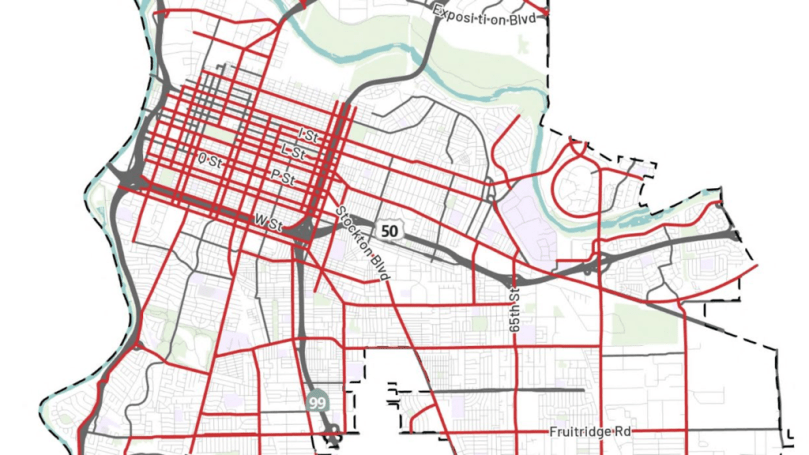
High Injury Network Key Questions, slide from Vision Zero Action Plan update presentation
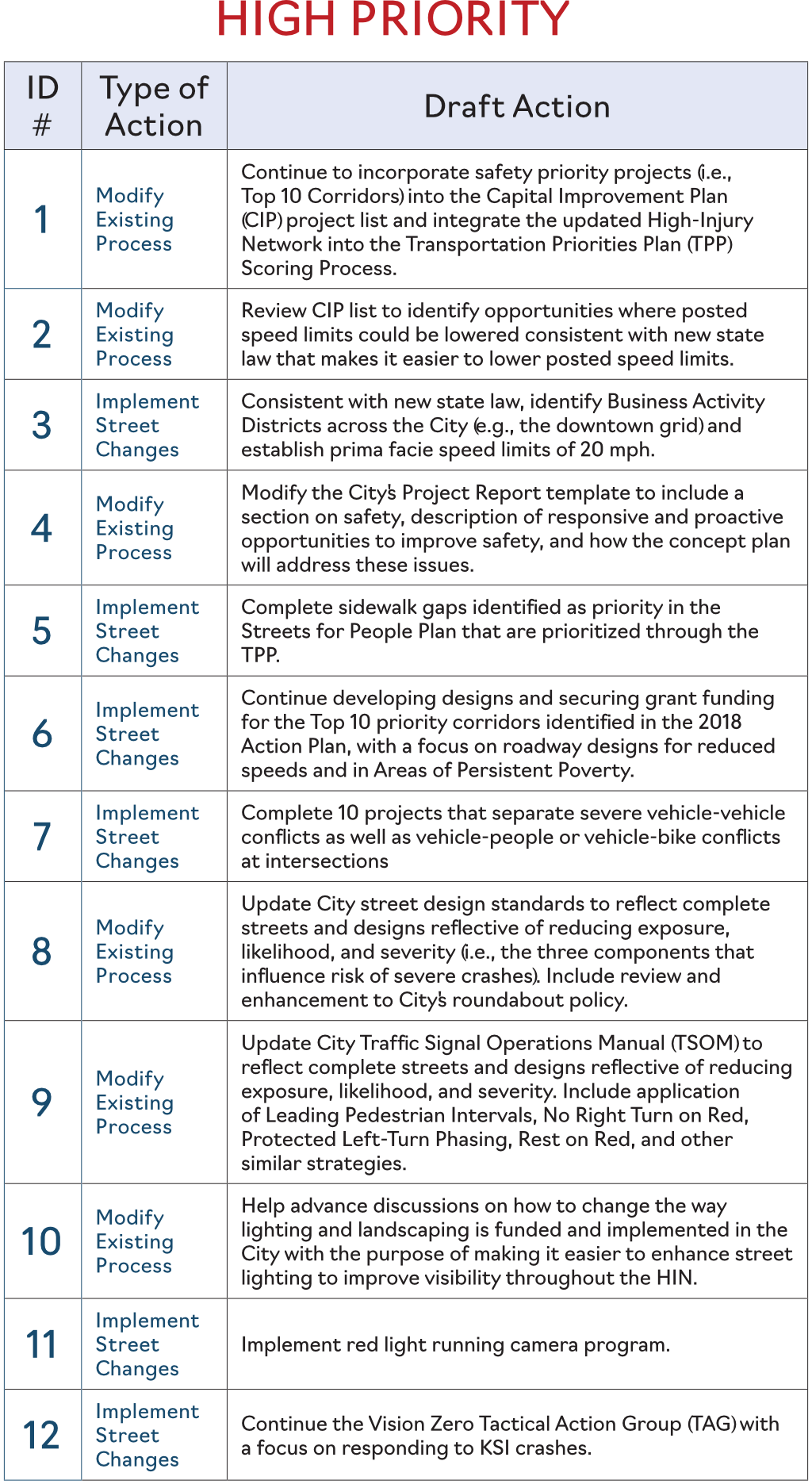
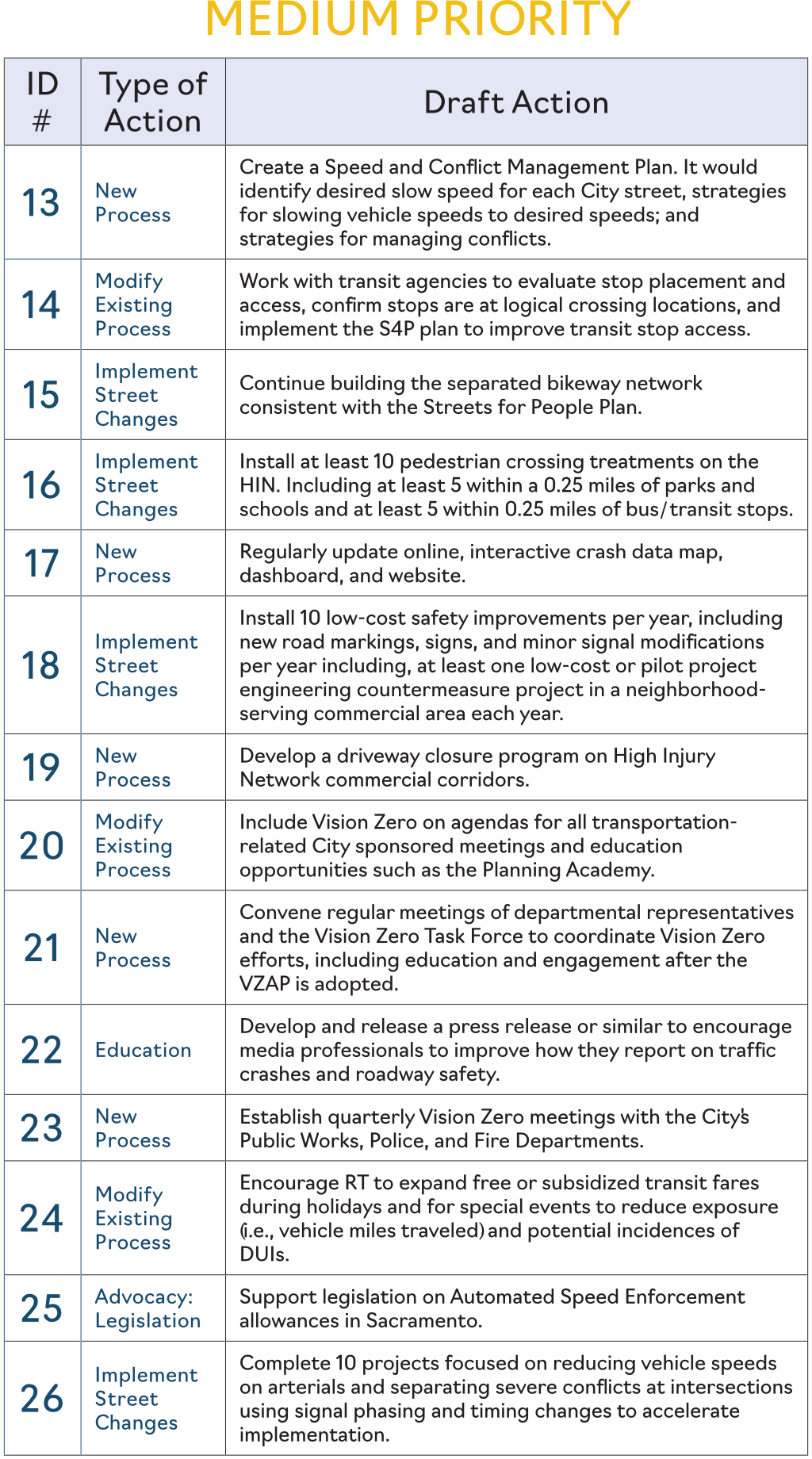
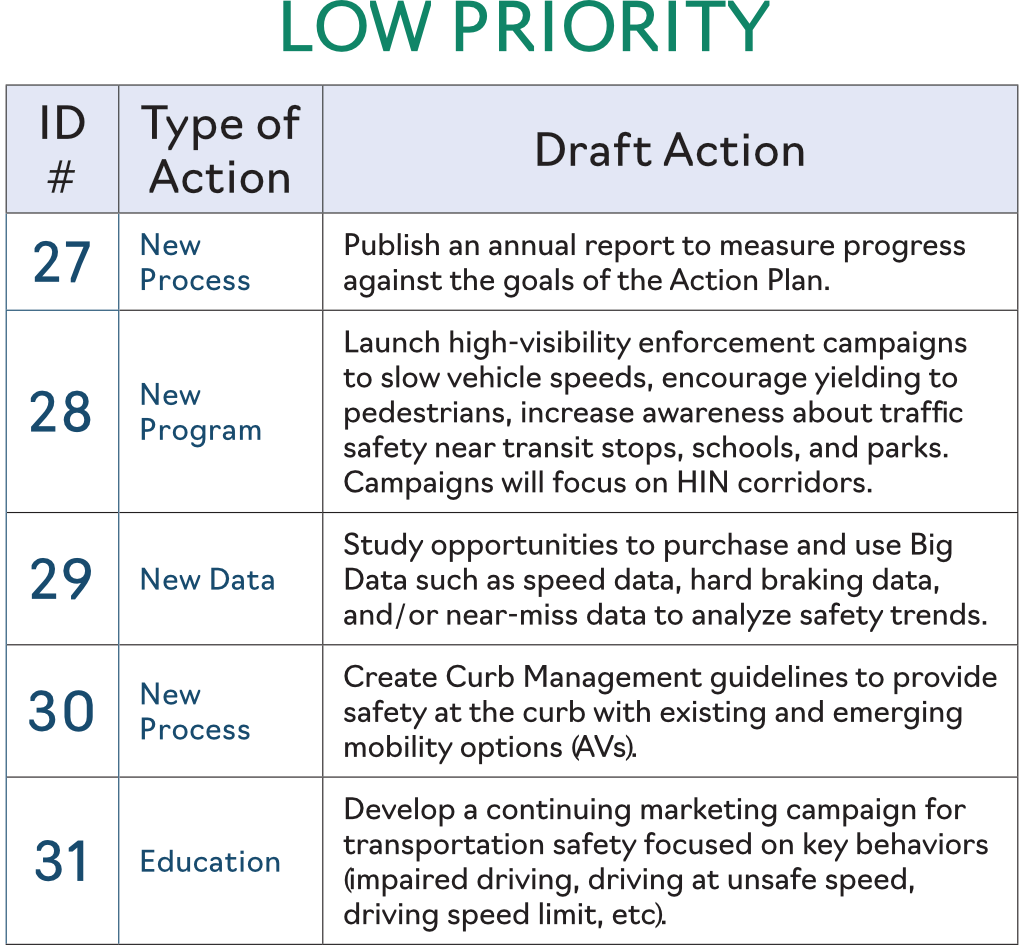
On the Draft Actions sheet, the numbers in the left hand column just reference elements, they do not indicate any priority. The only priorities, on which feedback was being sought, are the three ‘buckets’ of high, medium, and low priority.
The updated plan is intended to cover a span of five years. Where a number of actions are specified within an element, those are over a period of five years, not necessarily evenly distributed.
No information is yet available on prioritization within each bucket.
No information is yet available on sequencing of action elements. Some can be completed in a short time, some will be ongoing throughout the plan time period, and some will not start until later.
The Draft Actions sheet mentions ‘new laws’ in two elements (#2 and #3). References to the legislative bills or state code should be made available.
Element #7 adds intersections to the program, which is great, since the original plan largely ignored intersections in favor of corridors. However, it is not clear what criteria might be used to identify these intersections. The draft High Injury Network continued the focus on corridors, so this intersection element indicates some progress towards considering intersections, which are the location of most crashes.
Crossing guidelines are not part of the plan so far, but could be the location for prohibiting RRFBs (Rapid Rectangular Flashing Beacons), which have proven ineffective in Sacramento. There is an existing Pedestrian Crossing Guidelines document (2021-04), but it isn’t clear how the two documents will relate to each other.
Questions were raised about repaving and pavement condition index (PCI), which is deteriorating in Sacramento (and nearly everywhere). The answer was that there is no clear nexus between pavement and crashes, though obviously there are instances.
Questions were raised about the elements that mention law enforcement (#25 & #28). There is consensus among the stakeholders that in-person law enforcement is too subject to law enforcement bias and escalation, and that automated enforcement must be very carefully implemented to prevent racial, geographic, or income bias.
I asked that an item #32 be added, to make the sidewalk inventory publicly accessible. It is not available on the city’s GIS Open Data Portal, and another person’s PRA (Public Records Act) for sidewalk data did not produce anything useful. See previous post where the streets have no… sidewalks.
The recent City of Sacramento meetings on the Vision Zero Action Plan update, both virtual and in-person, included slides with draft recommendations for the Action Plan. This same information is also available as a chart (pdf). The three categories, high priority, medium priority, and low priority, are presented below.
Each of these items deserves discussion, and possible movement from one category to another. The one item that I would add to the high priority list, consistent with item 11, is ‘implement speed camera program’ when authorized by state law. I feel strongly, and hopefully, that the state will include Sacramento in the pilot program, and will authorize a permanent program within the span of the Action Plan.
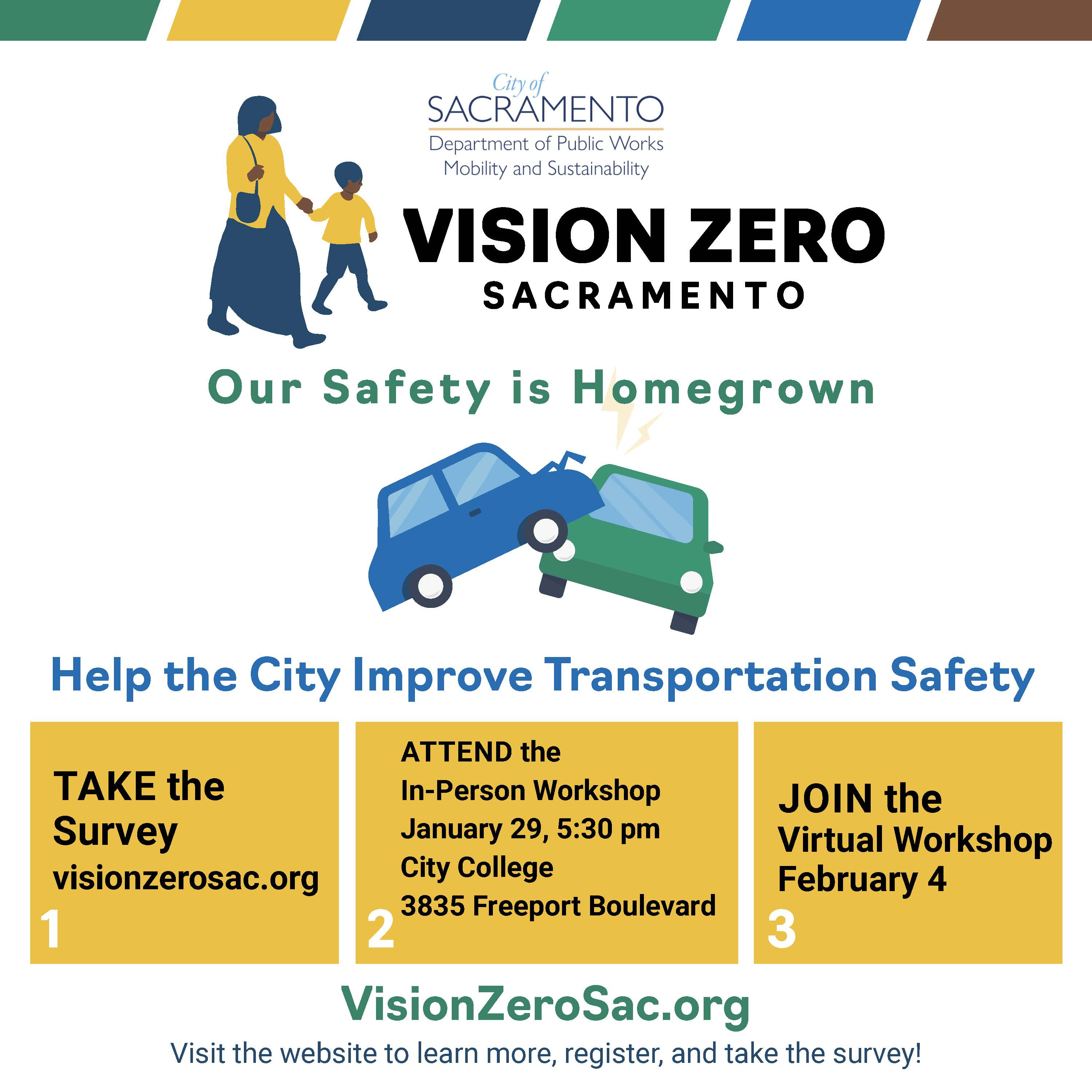
The City of Sacramento is updating its Vision Zero Action Plan. Both the in-person and online meetings have passed, but the survey is still open through Sunday, February 22. See SacCity Vision Zero Update for my comments on the survey, as well as other posts on vision zero (category: Vision Zero).
I believe that the most effective short term approach for reducing fatalities is quick-build projects at locations which have seen fatalities, or are likely to have fatalities based on poor roadway design and driver behavior. The city has implemented a quick build program, with a transportation safety team and some funding. Still no webpage that I have been able to find.
This is not to say that other elements should not be included in the action plan, but I believe that 80% of the funding, and 80% of staff time, should be devoted to quick-build.
What should not be included is education and in-person law enforcement. However, given that we have an epidemic of fatality-inducing red light running and failure to yield to people in crosswalks in the city (and the county, and the region, and the state), a limited period of in-person enforcement of these violations, with strict guardrails to prevent pretextual stops and law enforcement bias, may be appropriate. Research has proven that education is ineffective, though a favorite of people who don’t really want to solve problems.
I am not sure what the other elements of the action plan should be. Therefore, I’d want to see a commitment to minor updates to the plan on a frequency of about every two years, to reflect lessons learned and evolving legislation about what cities are permitted or required to do to reduce fatalities and address traffic violence.
The City of Sacramento is updating its Vision Zero Action Plan. I believe that the focus of the plan should be quick-build fixes to locations where fatalities have occurred or are likely to occur. These locations are primarily intersections of arterial streets. Local streets, and to some degree collector streets, if they were not designed for more traffic and higher speeds, are mostly not the location of crashes, and even less likely fatalities because motor vehicle speeds are lower. Arterials are the problem to be solved.
That said, I want to speak up again for an infrastructure fix that has the greatest potential for reducing motor vehicle traffic. Traffic diverters would usually be on local streets, sometimes on collector streets. As such, they don’t prevent serious crashes. But they do discourage driving, and so would indirectly reduce crashes on arterials, as there would be fewer motor vehicles on all roadways. Anything that can be done to reduce the number of, and length of, car trips, will reduce fatalities.
The diagram below is the the City of Sacramento Neighborhood Connections Plan, which includes the first photo. Though permanent traffic diverters, with concrete curbs and planting, are the desired state, quick-build temporary diverters have most of the safety and traffic calming effect at a fraction of the cost. Constraints: Since quick-build placement can be easily removed if they don’t work, a traffic study is NOT required. Emergency vehicles can easily and safely go around the diverter. Cost: The cost shown is for a permanent installation. A quick-build installation could probably be installed for $1000-2000.
Traffic Diverter diagram from City of Sacramento Neighborhood Connections
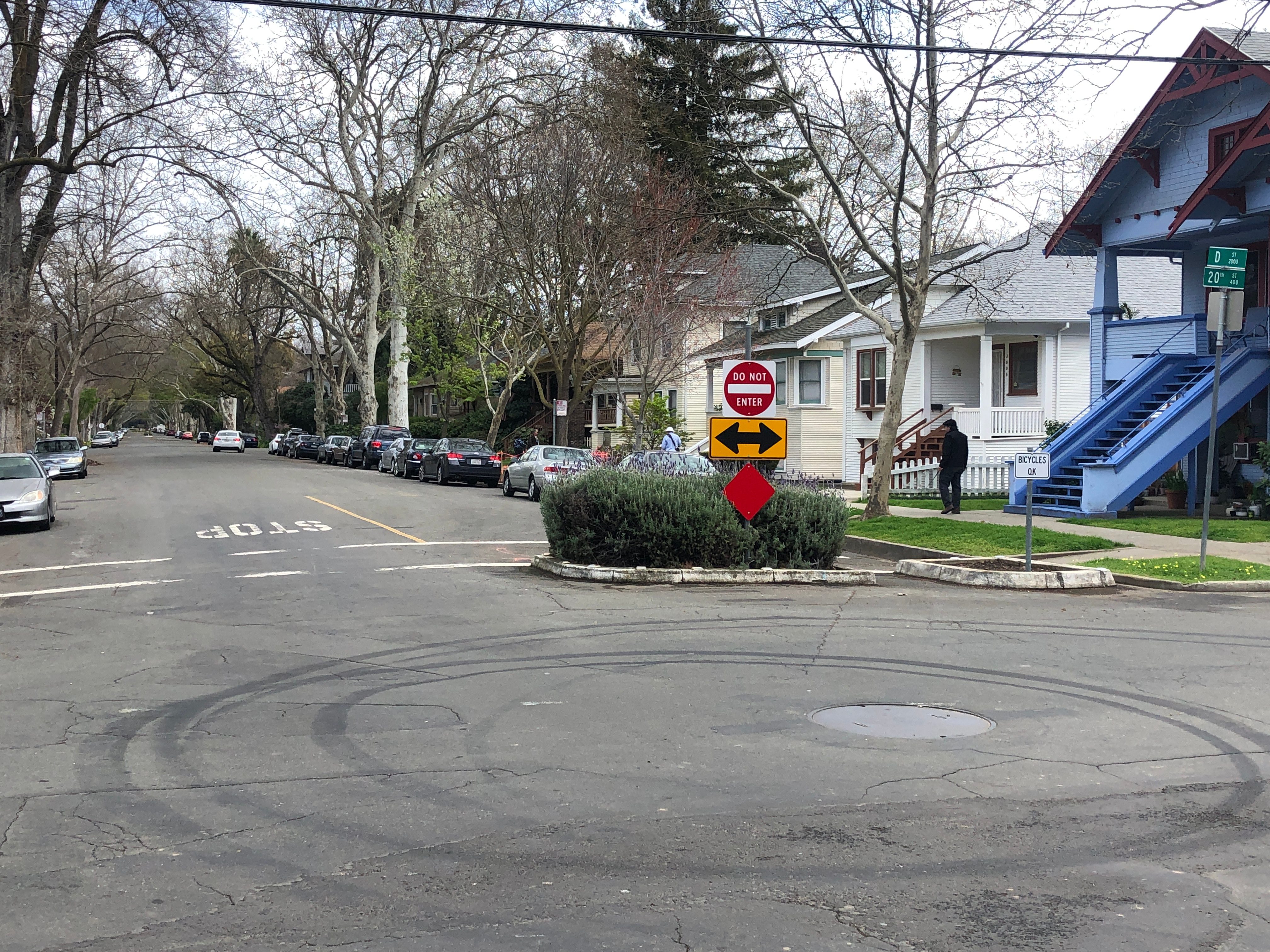
The second photo is of a traffic diverter in the northeast section of the central city, on D Street at 20th Street. The diverter allows bicyclists to pass through, which is why it is also called a modal filter. Note that it doesn’t prevent reckless driver behavior in the intersection (donuts), but it does filter reckless drivers out of D Street.
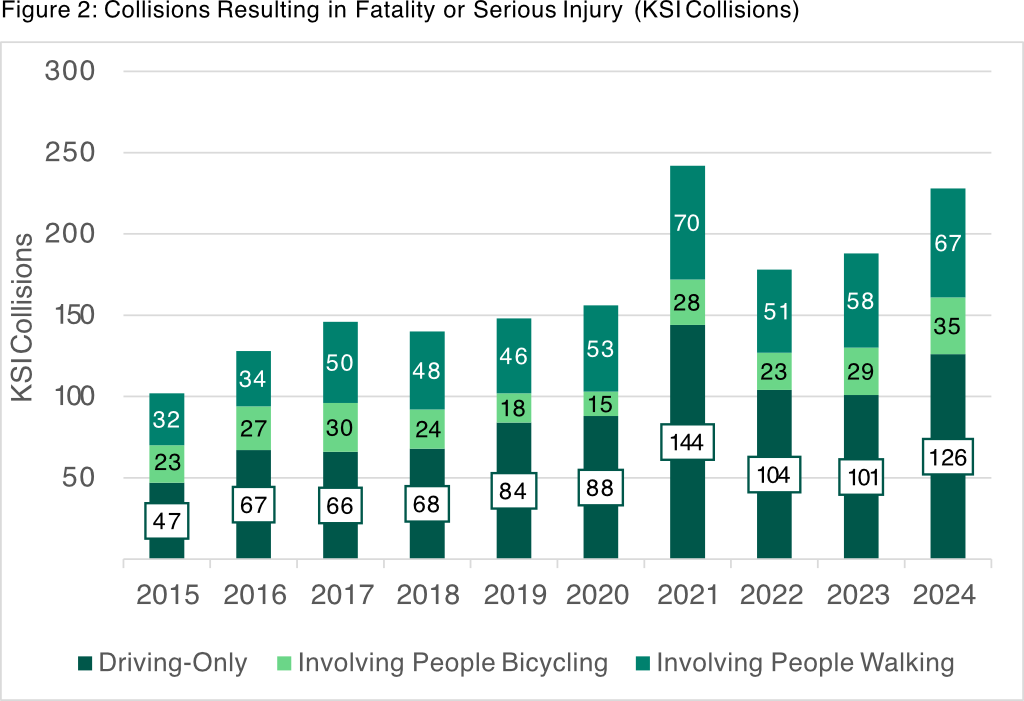
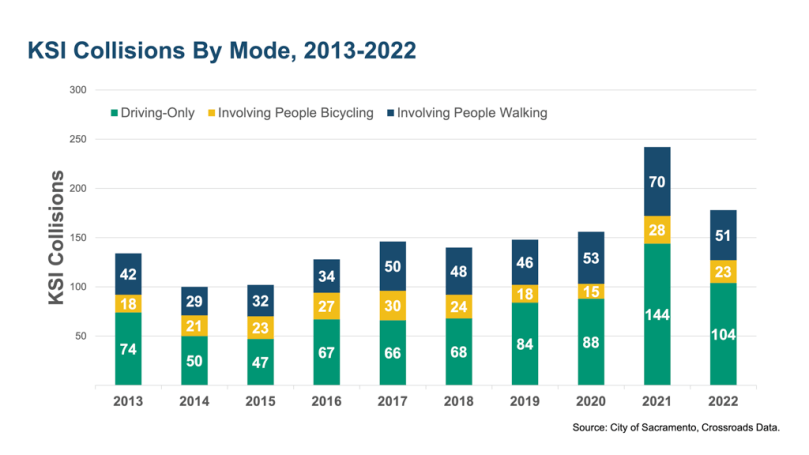
One of the City of Sacramento Vision Zero Action Plan Update documents, Collision Landscape Summary and Collision Profiles, on page 4, uses a stacked bar chart to graph ‘Driving-only’, ‘Involving People Bicycling’, and ‘Involving People Walking’ data. The chart obscures rather than illuminates the data. The chart from the document is below. It shows the overall trends for KSI (killed or serioiusly injured). Useful, but hides trends for each category. Though dozens of charts follow in the document, not a single one breaks out the basic data by category alone.
Below is a graphic with the data, and each category separated out. This is what should have been in the report. This is not in particular a criticism of this report or the report authors, but of the use of stacked bar charts in general. See Stacked Bars Are the Worst and many other posts on the weakness of stacked bar charts.
I think the charts below are actually useful to understanding collision trends.
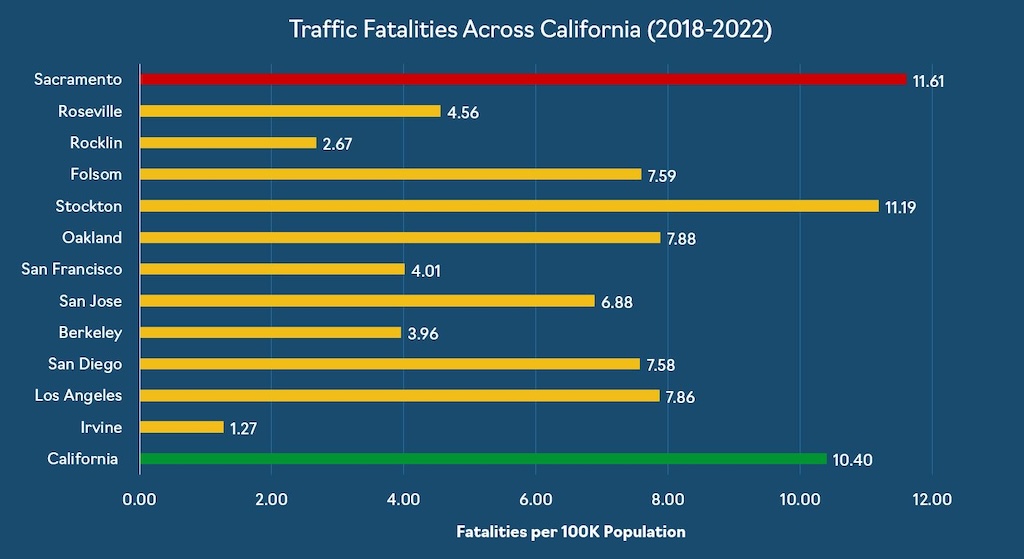
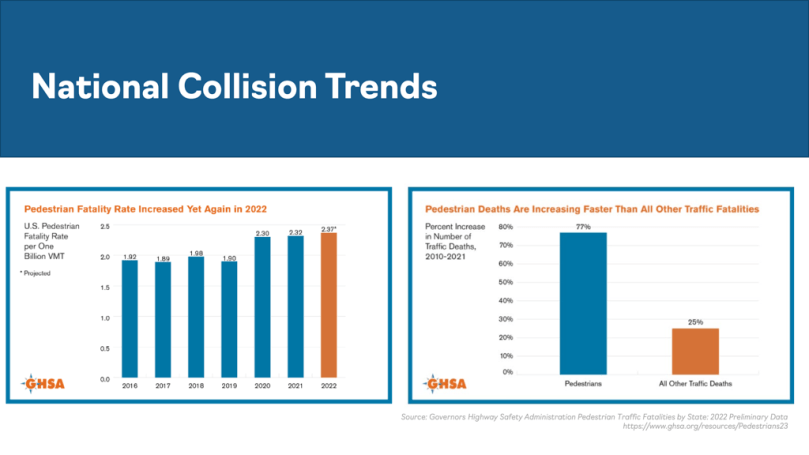
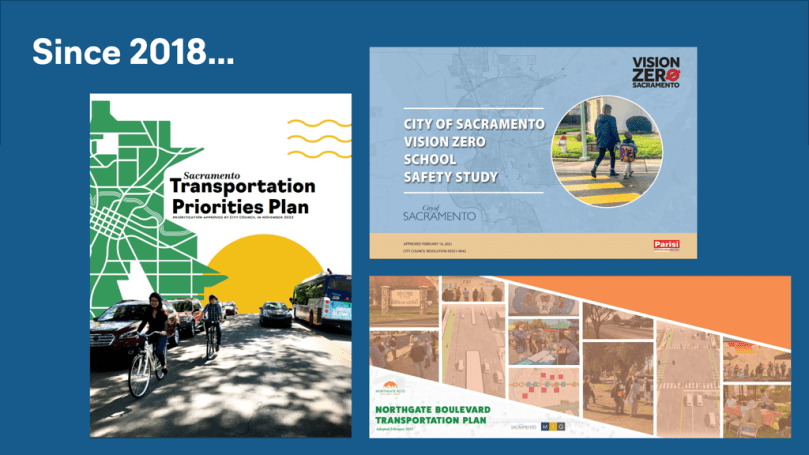
It is apparent that the City of Sacramento’s Vision Zero Action Plan has overall been a failure. Traffic fatalities in the city have increased, and Sacramento remains among the most unsafe cities in the state. I have written recently about the action plan update process (SacCity Vision Zero Update) and longer ago all the way back to the inception of the program (category: Vision Zero).
I believe that the failure is in large part due to the focus on improving corridors rather than specific points of concern which are mostly intersections, and a reliance on getting grants from federal, state or regional (SACOG) sources to accomplish these projects. The assumption was, and is for all transportation projects, that outside grants rather than the city’s general budget, will be the source for transportation infrastructure. The city spends very little of its own budget on transportation, beyond some basic maintenance and required grant matches. The recent quick-build program is the first time significant money has been dedicated to traffic calming and safety.
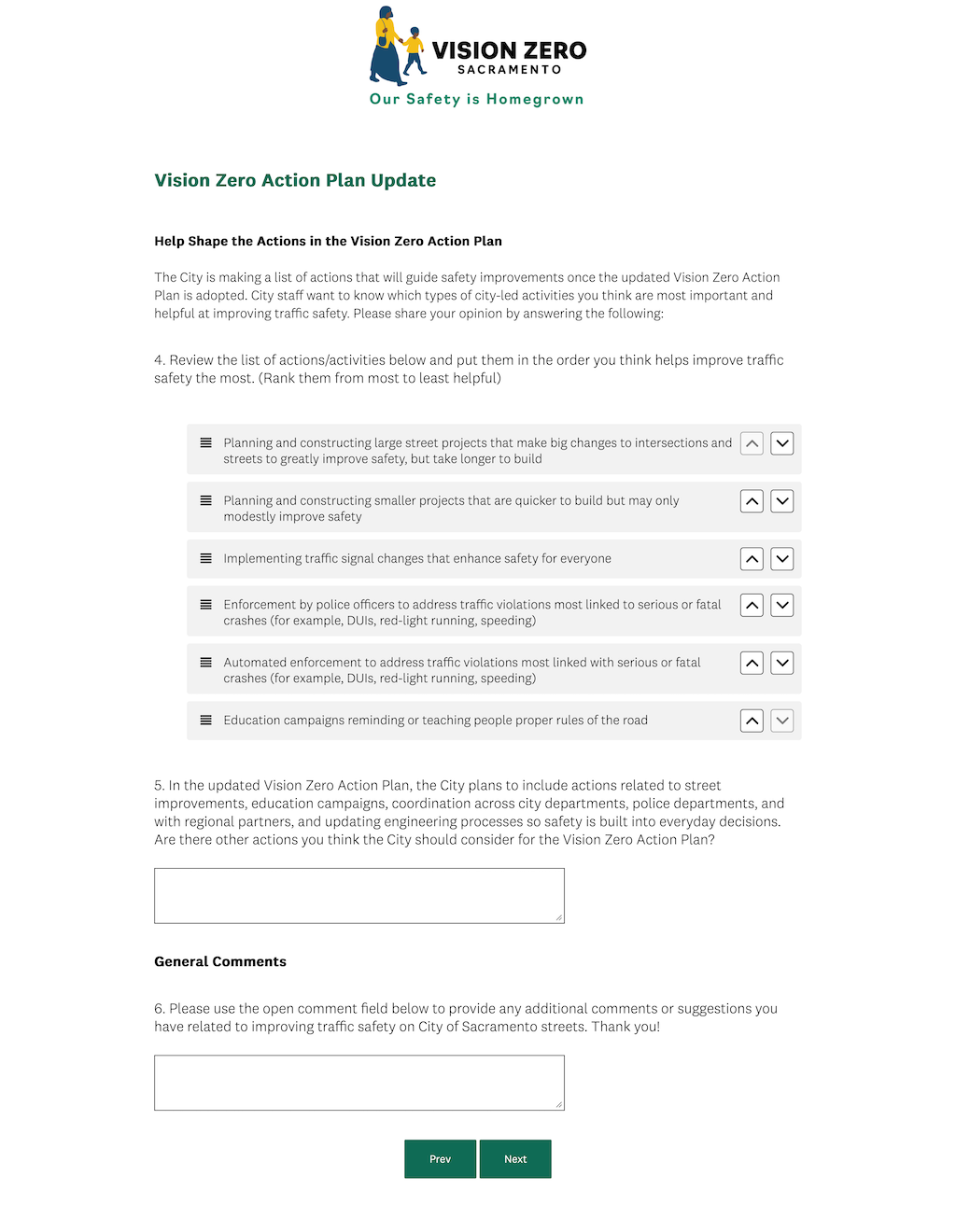
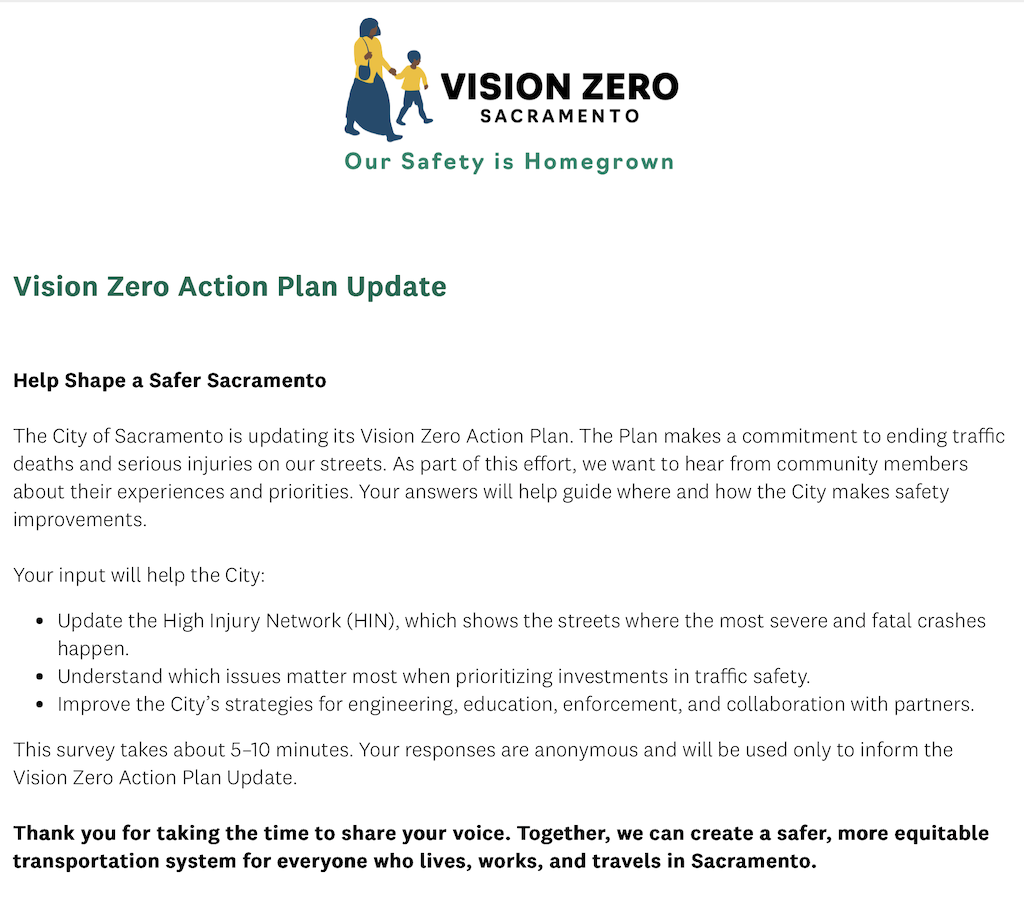
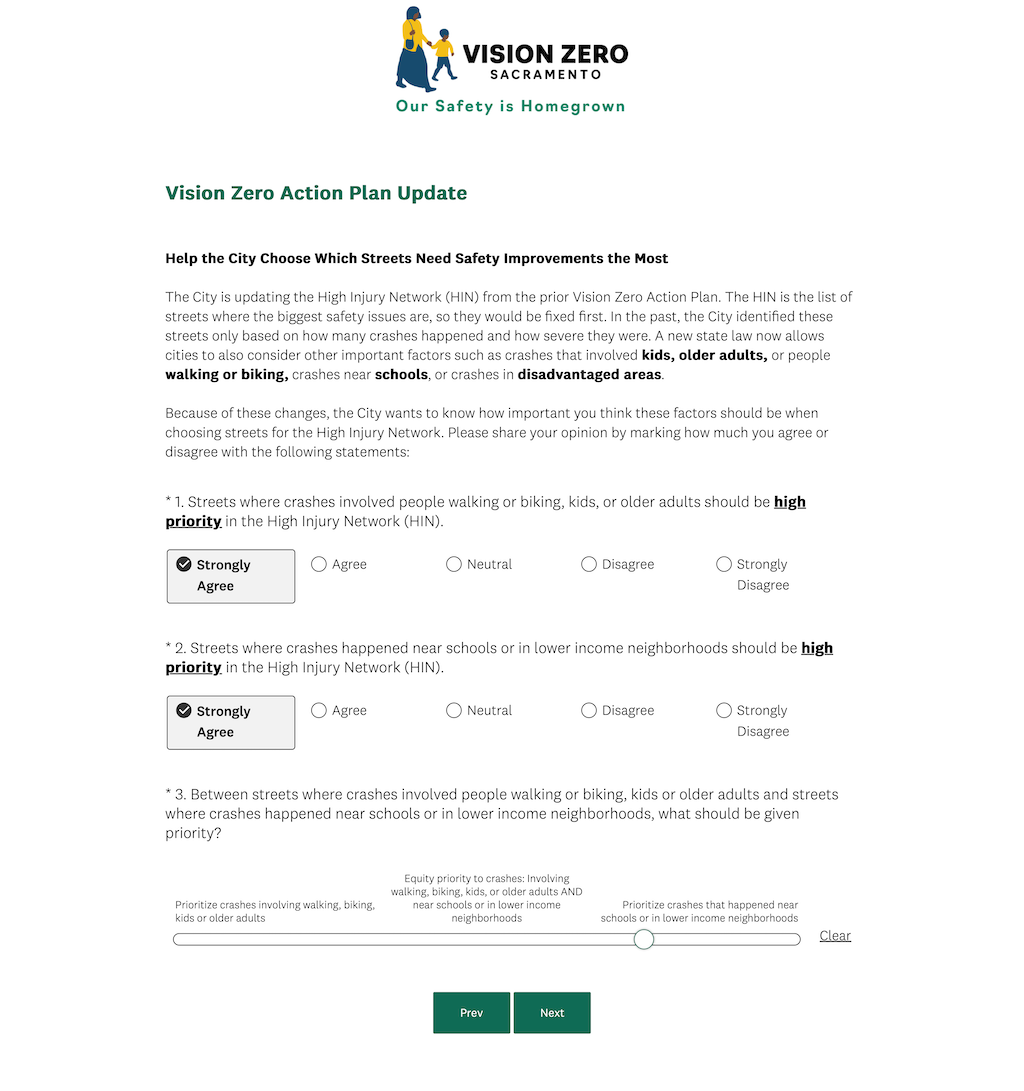
The city is offering a survey to gather community input on the action plan update, open through February 22. I just took the survey, and some screen captures are below, but I want to focus on the third page (the others are below). The top of this page offers a chance to rearrange actions in order of importance. Since these are screen captures, the six items in text are:
Planning and constructing large street projects that make big changes to intersections and streets to greatly improve safety, but take longer to build
Planning and constructing smaller projects that are quicker to build but may only modestly improve safety
Implementing traffic signal changes that enhance safety for everyone
Enforcement by police officers to address traffic violations most linked to serious or fatal crashes (for example, DUIs, red-light running, speeding)
Automated enforcement to address traffic violations most linked with serious or fatal crashes (for example, DUIs, red-light running, speeding)
Education campaigns reminding or teaching people proper rules of the road
My ranking of these is:
Planning and constructing smaller projects that are quicker to build but may only modestly improve safety
Automated enforcement to address traffic violations most linked with serious or fatal crashes (for example, DUIs, red-light running, speeding)
Implementing traffic signal changes that enhance safety for everyone
Education campaigns reminding or teaching people proper rules of the road
Enforcement by police officers to address traffic violations most linked to serious or fatal crashes (for example, DUIs, red-light running, speeding)
Planning and constructing large street projects that make big changes to intersections and streets to greatly improve safety, but take longer to build
Why?
These small projects are in line with the city’s new Traffic Safety Initiative (quick-build) program. Though there does not seem to be a webpage for this program yet, an article in City Express summarizes the program. It is still not fully staffed and fully active. This kind of program has proven to be effective in many cities, including ones that have achieved vision zero no fatalities or greatly reduced fatalities.
Automated enforcement is the best solution for speeding and red light running. Red light running is particularly epidemic in Sacramento, though a problem everywhere. There are no widely available methods for automated enforcement of failure to yield to pedestrians (people walking in the crosswalk), but this is something that could be piloted and implemented.
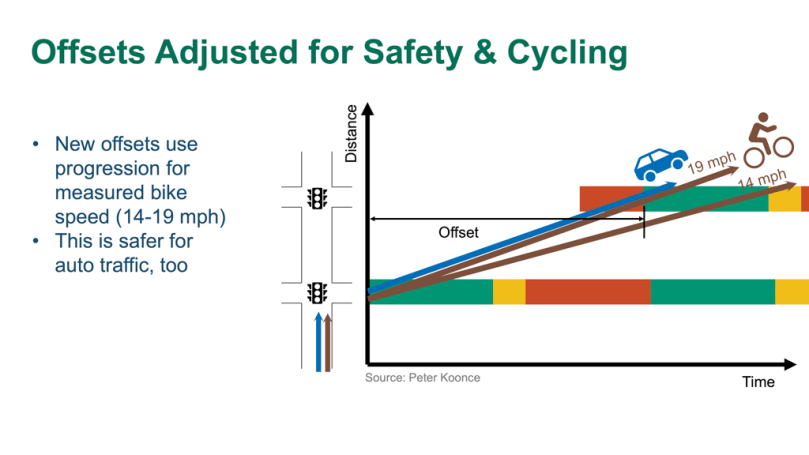
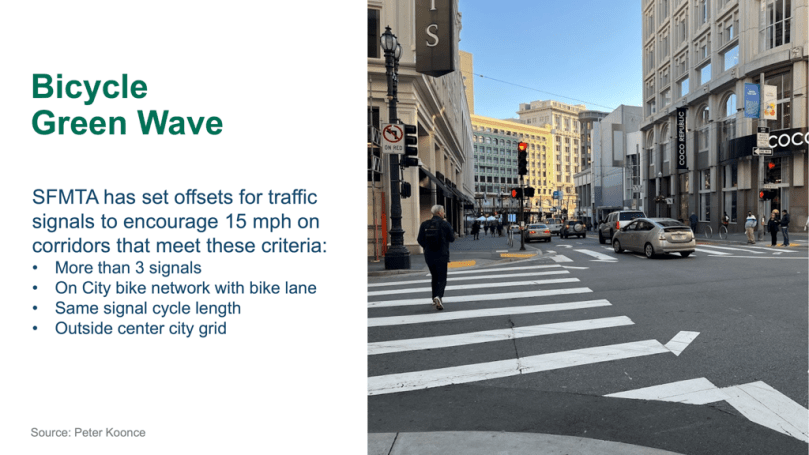
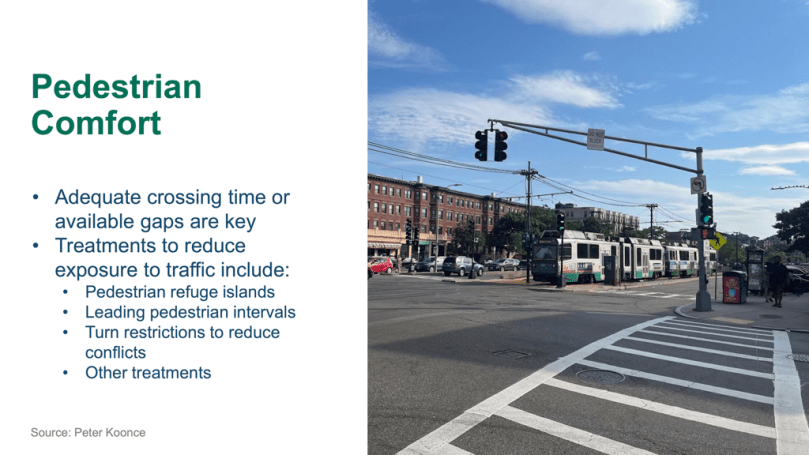
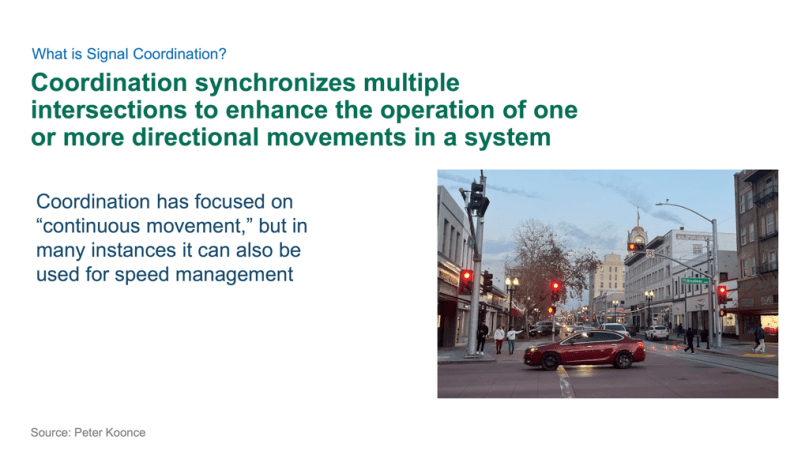
On roadways with frequent traffic signals, traffic can be significantly slowed by setting signal timing to award safe speeds and make unsafe speeds awkward. It can even be set to a ‘green wave’ where the signals are timed to the speed of bicyclists, about 12 mph. This would be higher on my list except that the city has, to this point, demonstrated that they use signal improvements not to improve safety for walkers, but to ease traffic flow. They are claim that the entire intersection must be upgraded, at a cost approaching $1 million per intersection. That is a complete waste of taxpayer dollars.
Education does not work. Of the millions of dollars spent on ‘education’ programs, there are almost no studies indicating that these programs are effective. They are feel good, but worthless.
Law enforcement bias, which in integral to officers and very very slow to change, makes this an unacceptable solution in nearly all cases. In-person enforcement is as likely to result in officer escalation and harm as to preventing unsafe driver behavior. Particularly in the past, but true today, many ‘safety’ enforcements have actually been stings targeting people walking and bicycling rather than driver behavior. There may be situations in which enforcement is the last but only solution, but it should definitely not be part of the program design.
Large projects are what the city has been doing, and it hasn’t worked. The city has a backlog of poorly designed and unsafe arterial roadways that will take decades (or more) and hundreds of millions of dollars (or more) to fix. We can’t wait that long, or until we find the money, to save lives. That is why small projects are the answer. Of course the projects are nice when complete, and the city has done as well as most cities its size in getting grants for these big projects, but we need to save lives tomorrow, not ten years from now. Writing grants for large projects takes an inordinate amount of staff time.
The city seems to be OK with a focus on small short-term projects, and these have been promoted by the city’s consultant (Fehr & Peers). But the public will need to support this approach, particularly against pushback from the cars-first lobby and individuals.
If you have the time and inclination, reviewing the seven documents on the city’s Vision Zero Action Plan Update page will deepen your understanding of the issue and possible solutions. If you have time for only one, the Safety Strategies (2025.06.18) is probably the most valuable.
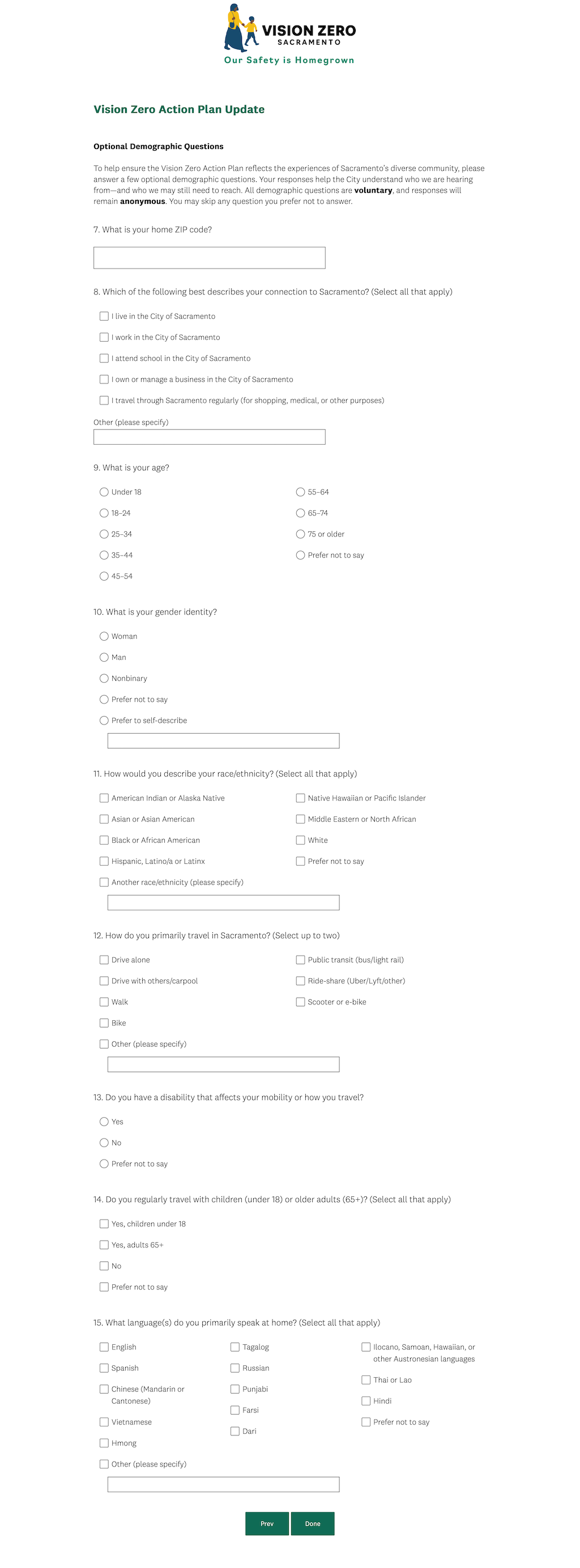
The other pages. Note that I sometimes had started to fill out a page before capturing it.
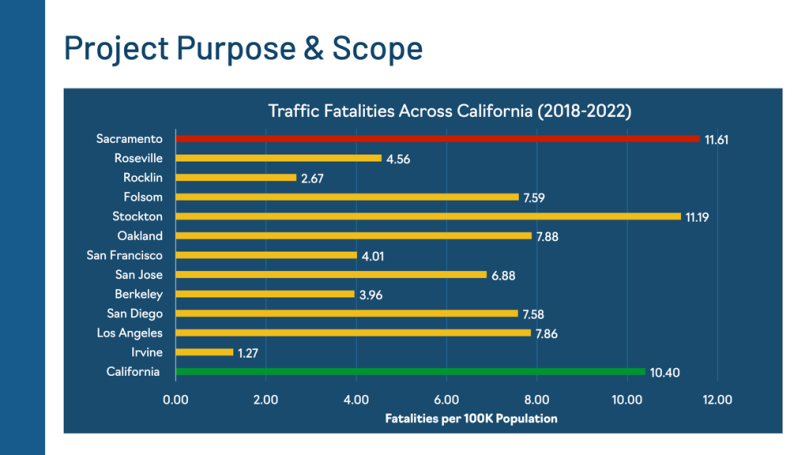
The city’s Vision Zero effort has failed. We are still the highest traffic fatality city in the state. I believe the reason to be primarily that there were flaws in the original approach to Vision Zerio. Though I’ve written about this before, I will post again, soon.
If you are not already following Slow Down Sacramento, please do. It is the best source of information on safety from traffic violence and the city’s Vision Zero effort.
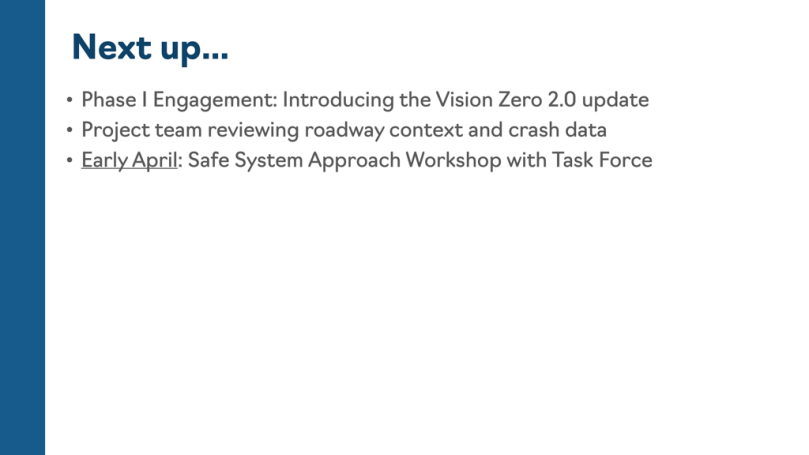
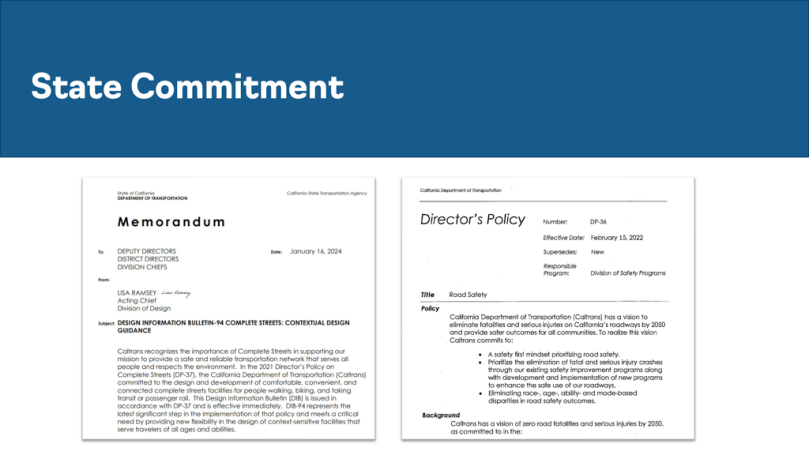
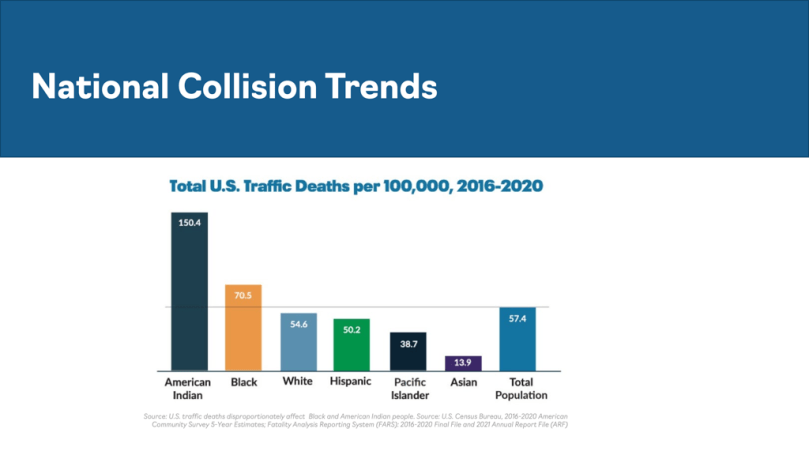
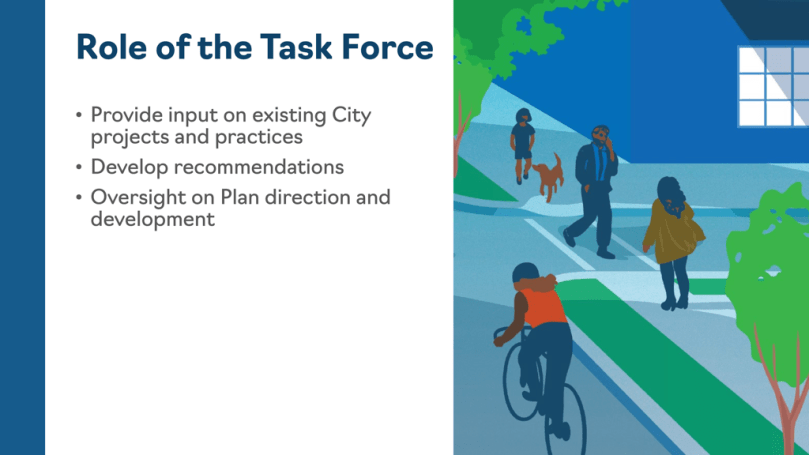
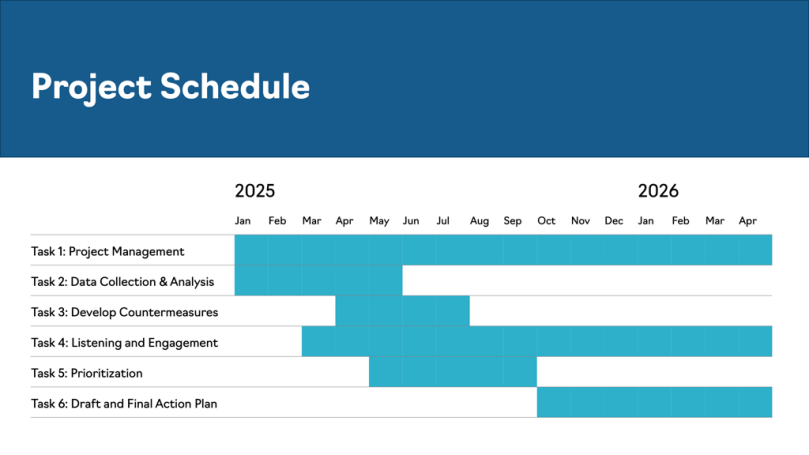
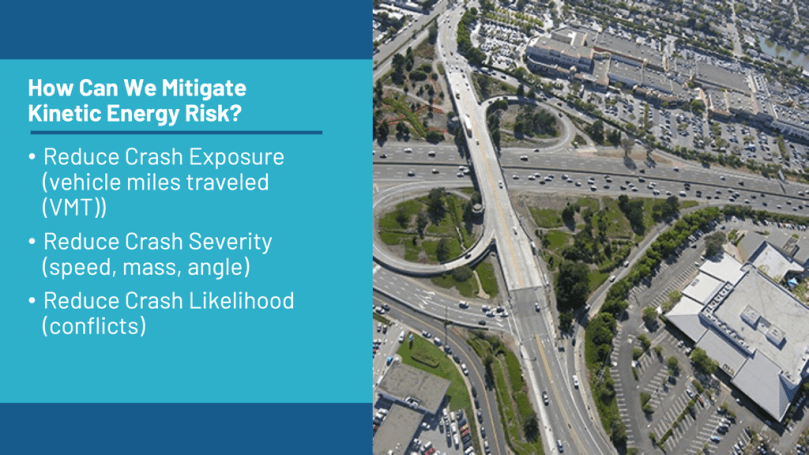
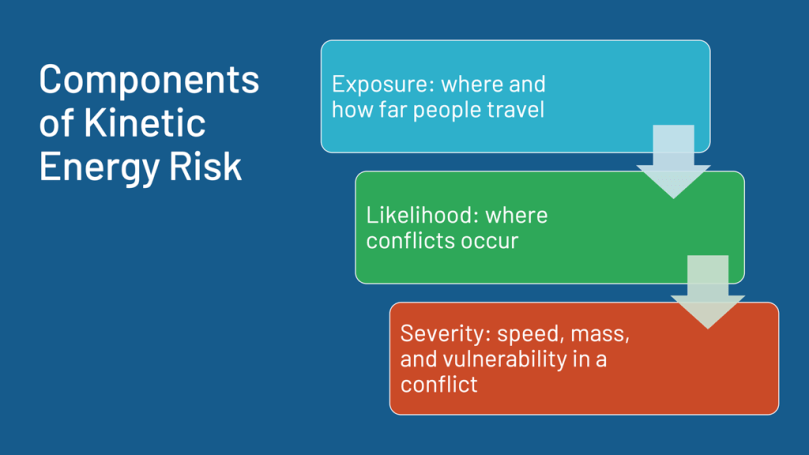
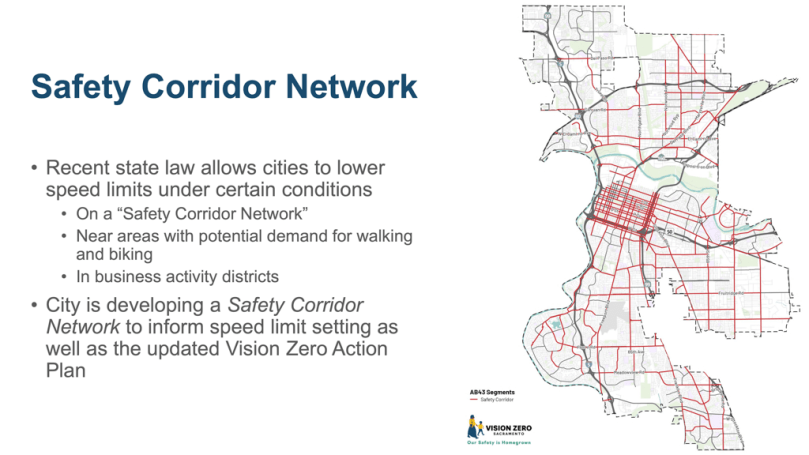
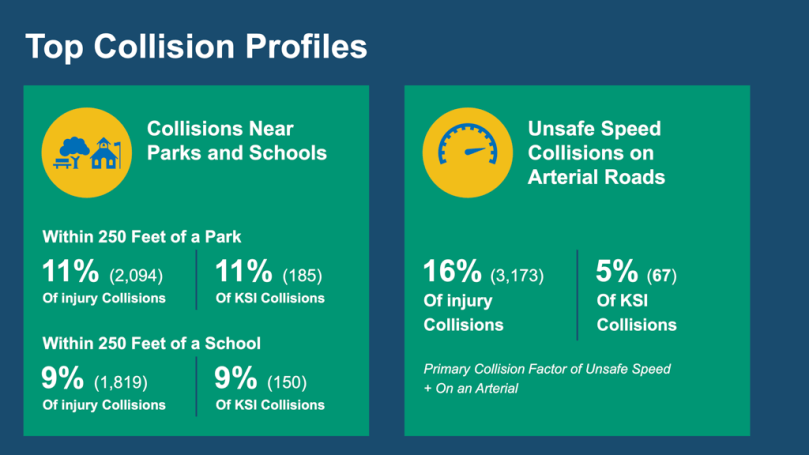
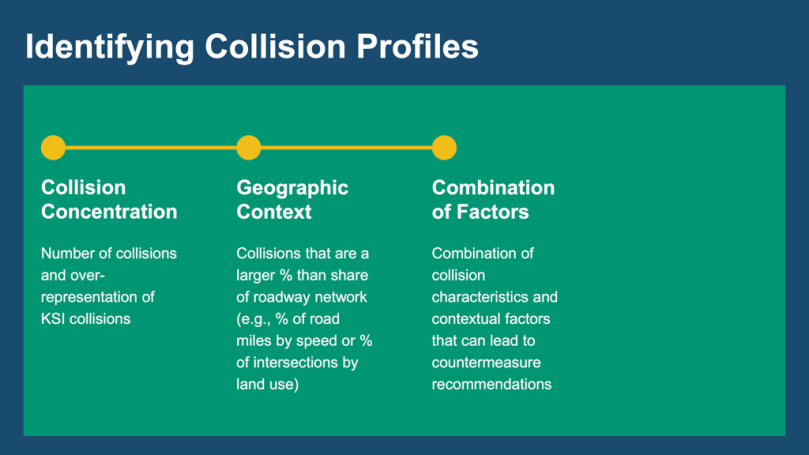
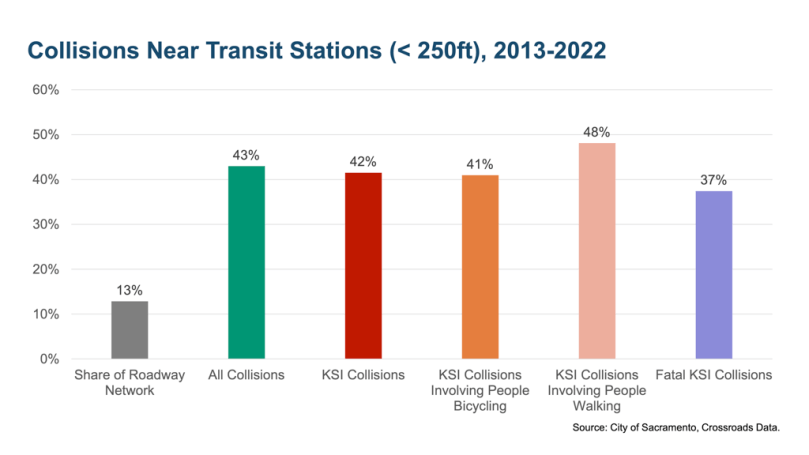
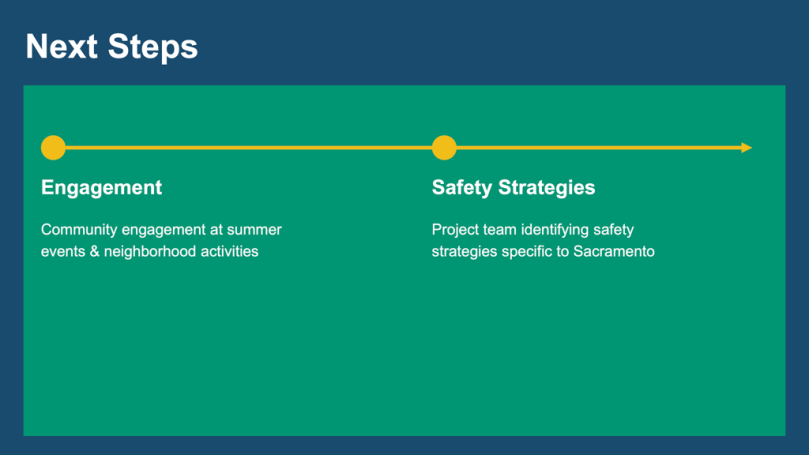
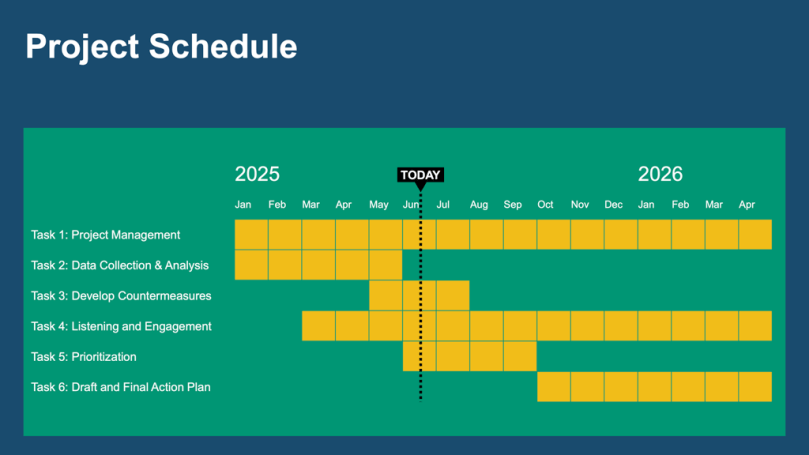
Getting Around Sacramento author Dan Allison is participating in the stakeholder group, wearing the Sacramento Transit Advocates and Riders (STAR) hat. Safety from traffic violence is a key part of encouraging transit use, since people need to walk or bicycle to and from transit stops and stations. Dan has attended three Vision Zero meetings, April 7, 2025 Task Force #1, June 2, 2025 Task Force #2 (the stakeholder group), and June 18, 2025 Working Group (combined Task Force and Technical Advisory).
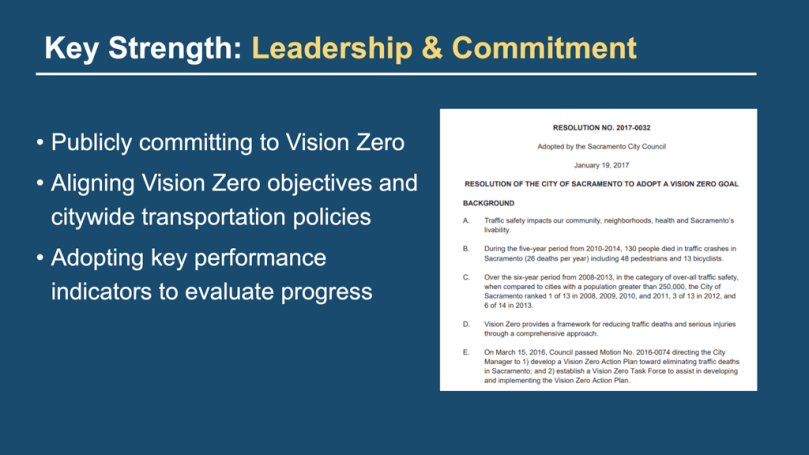
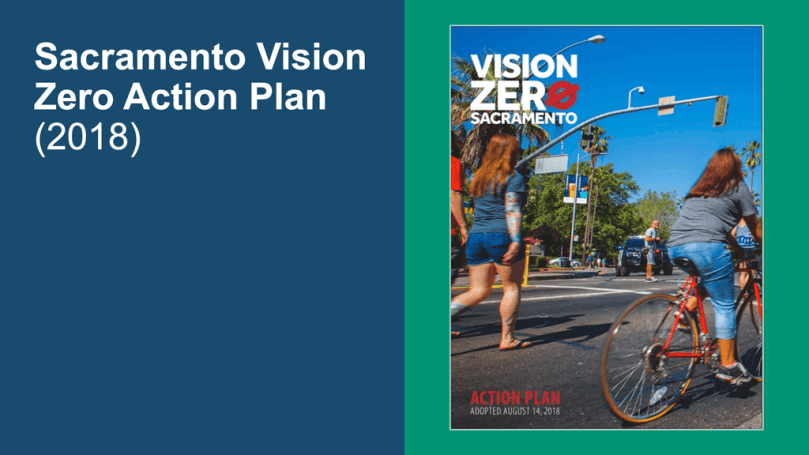
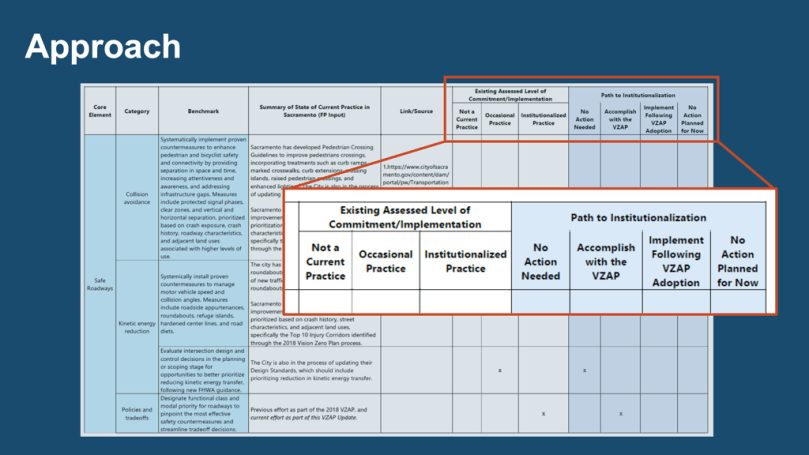
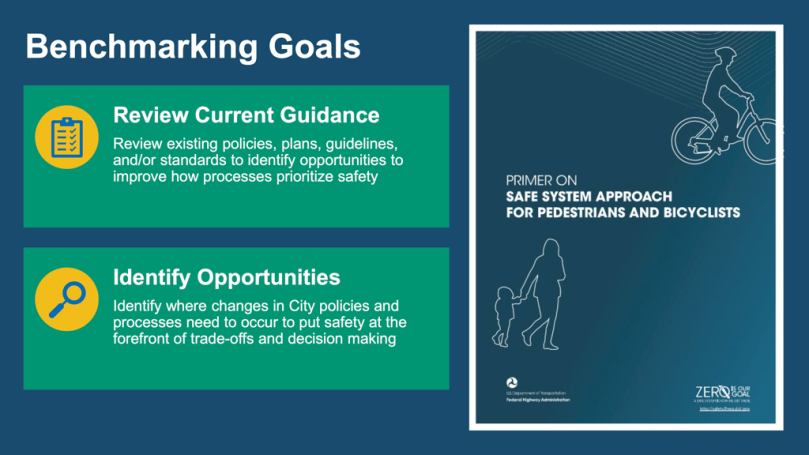
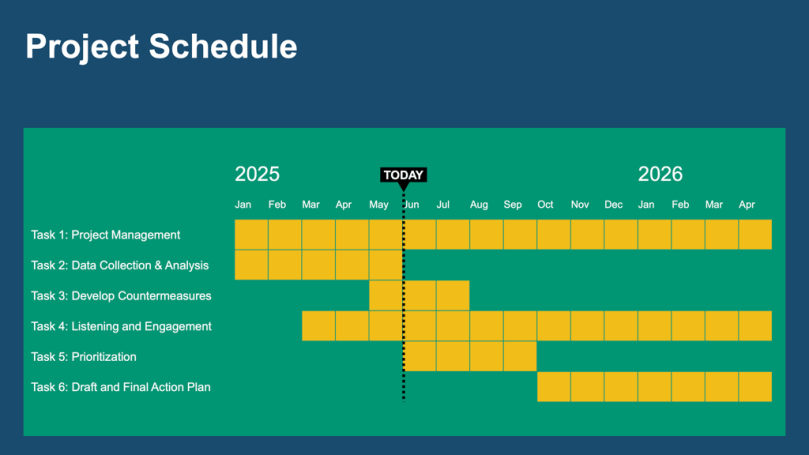
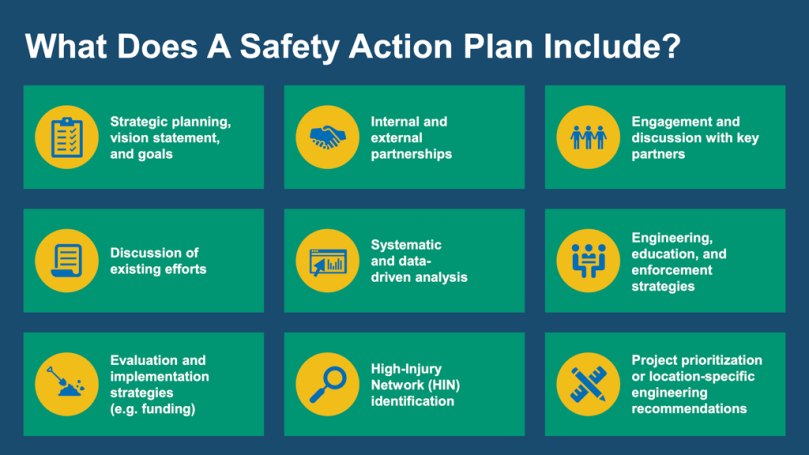
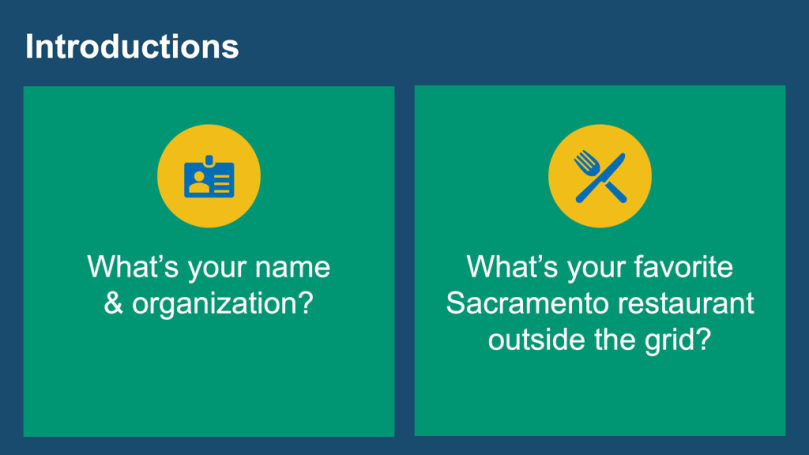
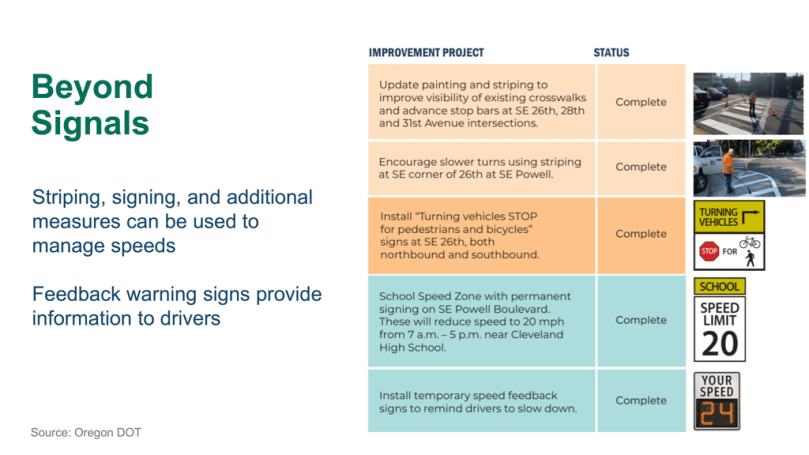
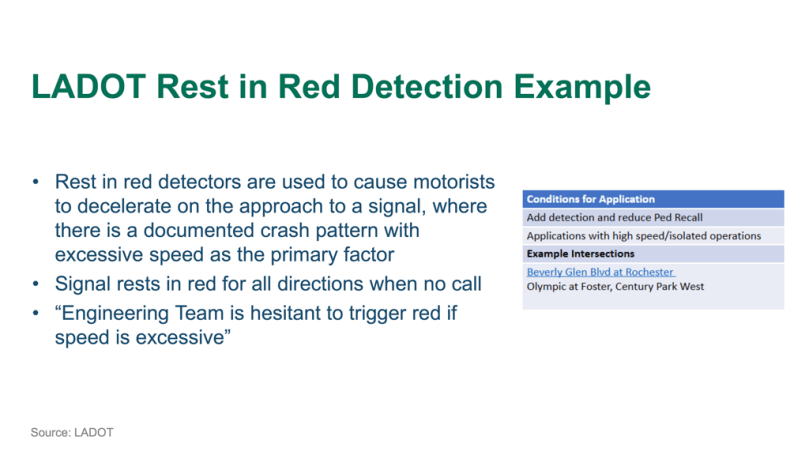
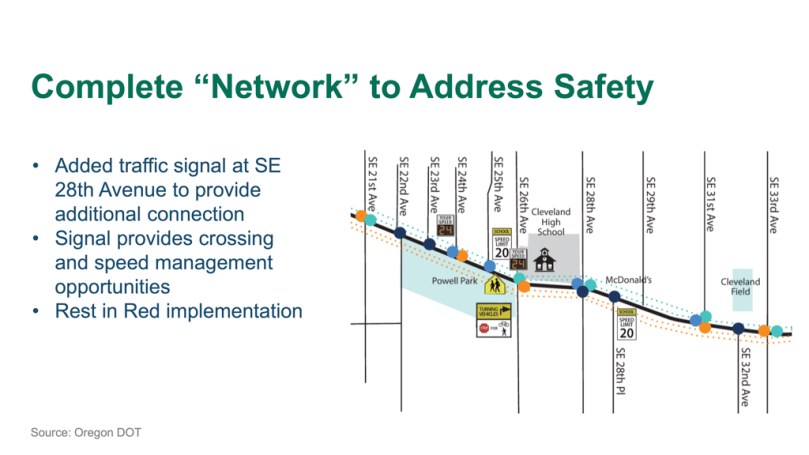
The slides from these meetings are presented below as slideshows.
Vision Zero Action Plan update intro
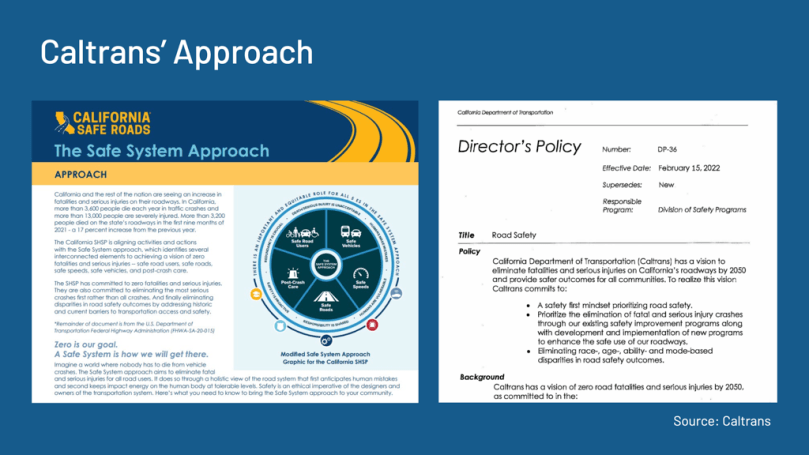
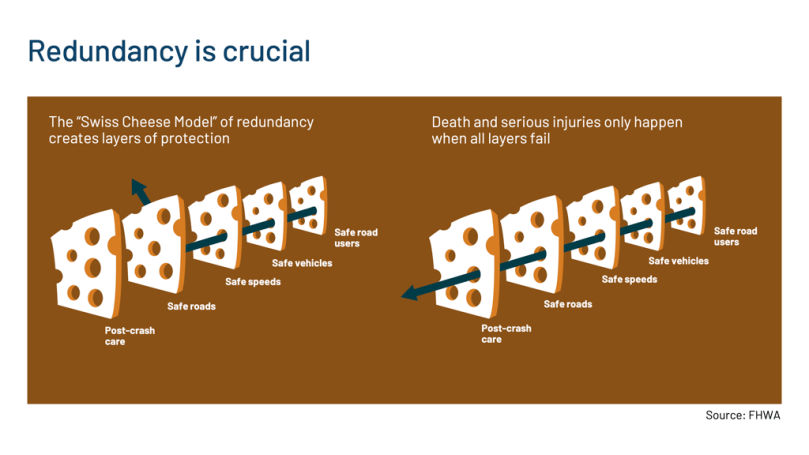
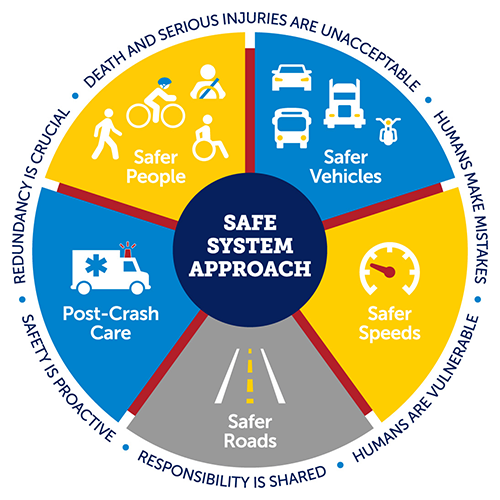
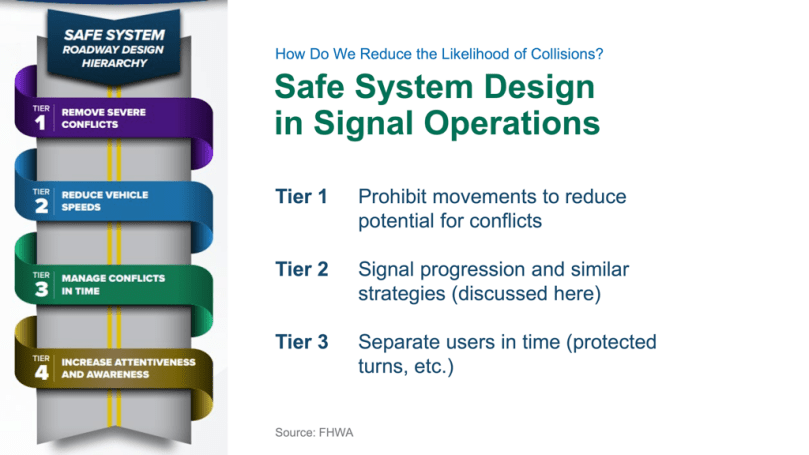
Safe Systems Approach
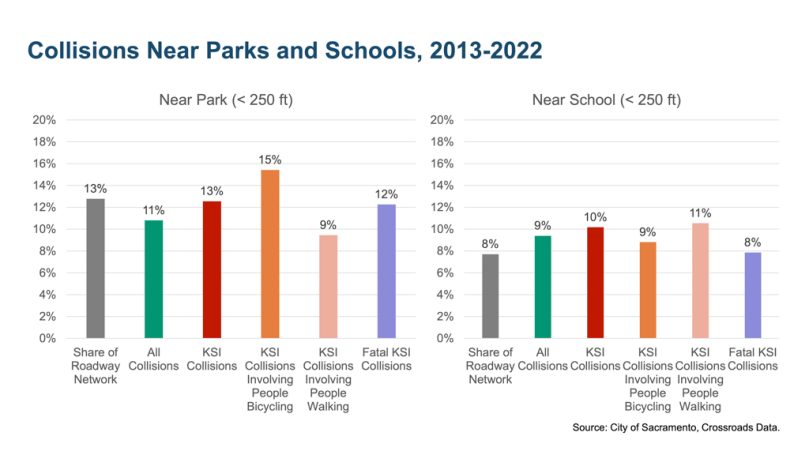
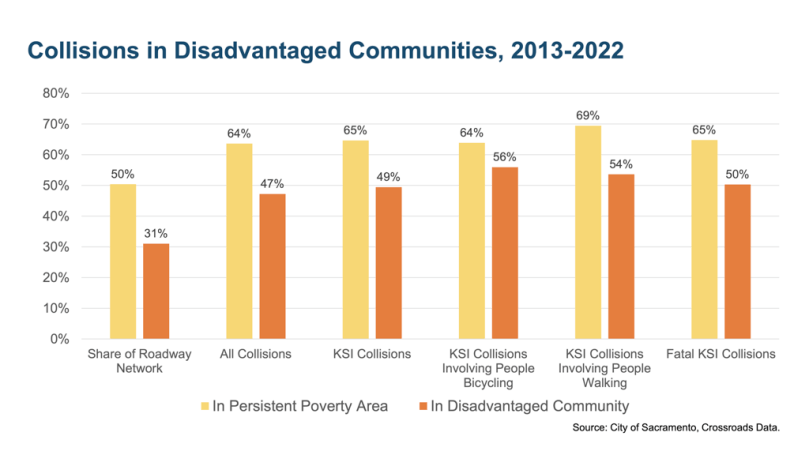
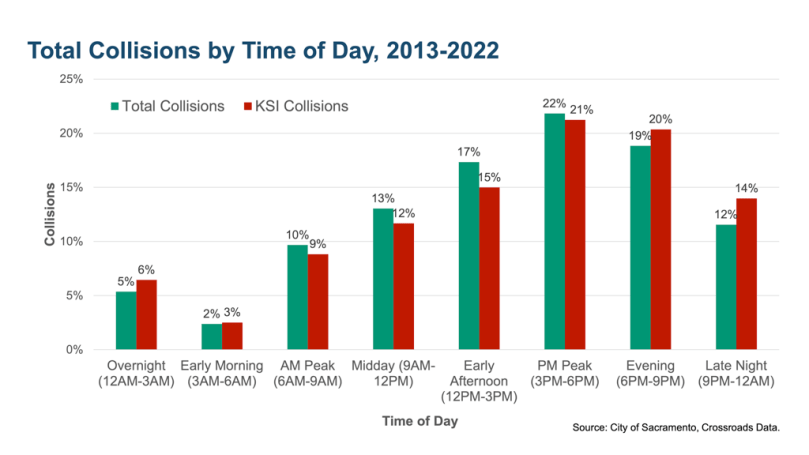
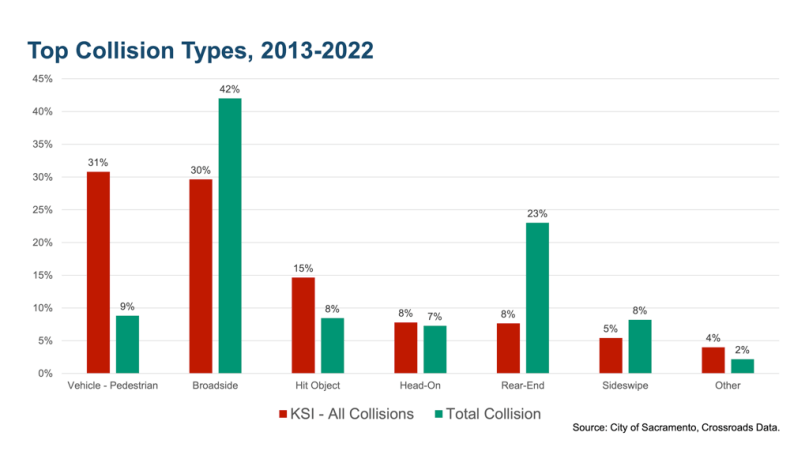
Benchmarking & Crash Analysis
Vision Zero Action Plan Benchmarking & Crash Data Analysis presentation
SacCity Vision Zero Action Plan update, Benchmarking & Crash Data Analysis presentation
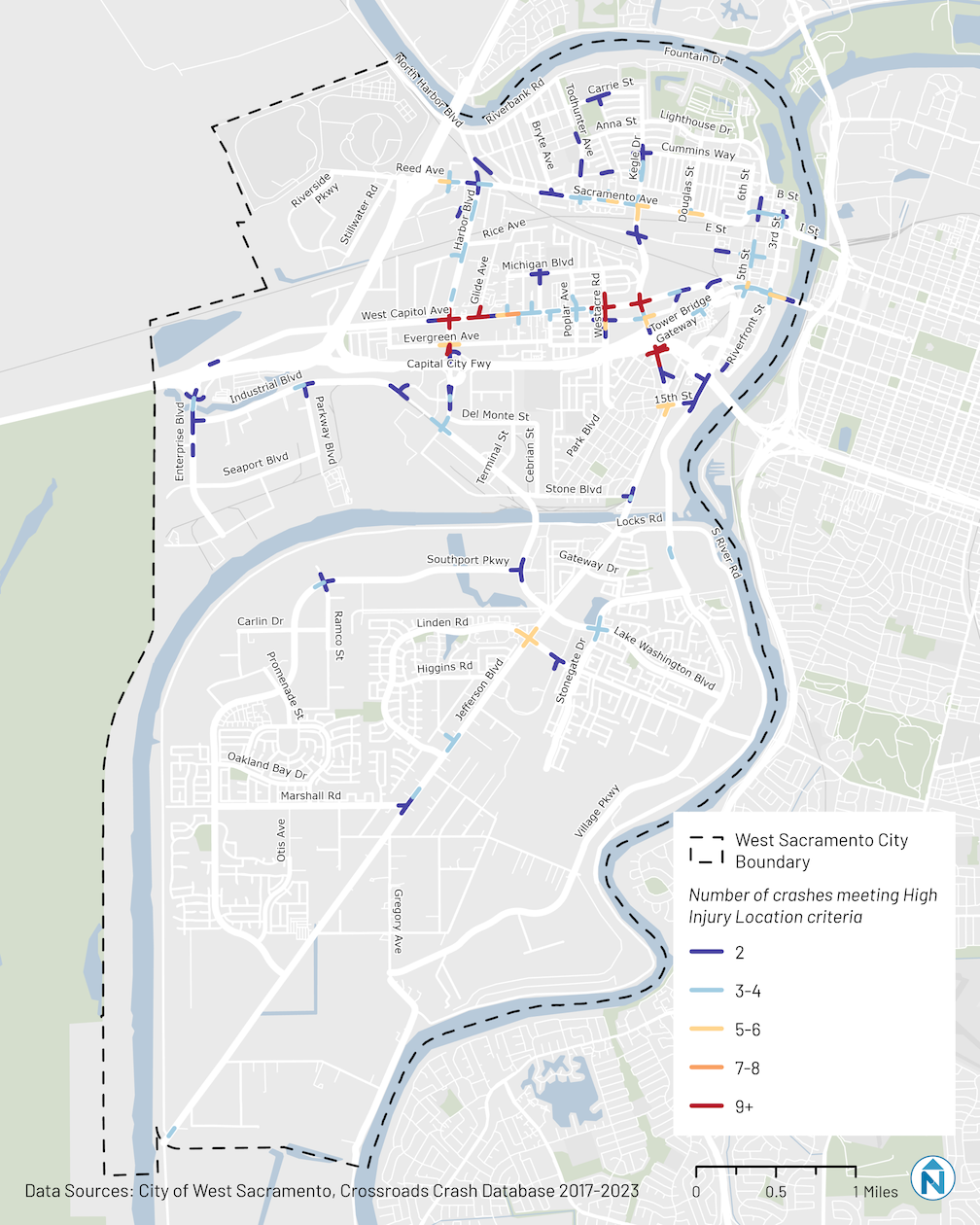
The City of West Sacramento is developing a Vision Zero Action Plan. If you live in, work in, or travel in West Sacramento, I encourage you to take a look at the VZ page. The map showing crash locations, nearly all at intersections, indicate that West Capitol Ave is the epicenter for traffic violence, with Sacramento Ave coming in second. That is my own experience in riding and walking on these arterial streets. West Capitol Ave is the route for Yolobus 42A/42B, and several other routes.


































































 Getting Around Sacramento