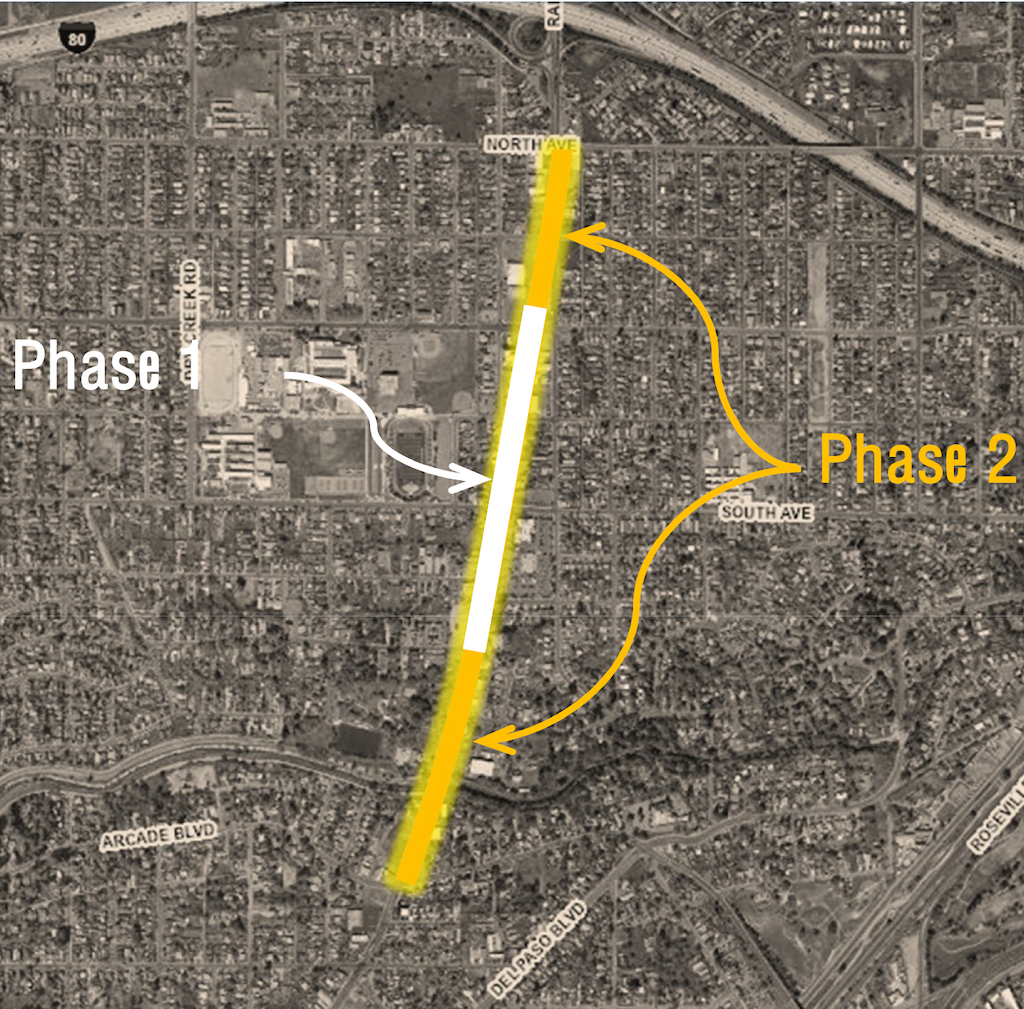
The Marysville Blvd Vision Zero Safety Project, Quick Build Phase 1, started today, Monday, March 16. The overview from the SacATC presentation on September 18, 2025, shows Phase 1, which is from Grand Avenue to Nogales Avenue only. Phase 2 will cover from North Avenue to Arcade Blvd. Phase 2 will include more extensive work, but is not being called a ‘complete streets’ project. Only Phase 1 is fully funded. The city has in the past applied for grants to convert the entire stretch of Marysville Blvd into a complete street, but has been unsuccessful in that effort, which has led to this quick build project in order to improve safety now rather than someday. Phase 1 will cost $1.4M and be completed in 2026. Phase 2 is about $18M and only partially funded.
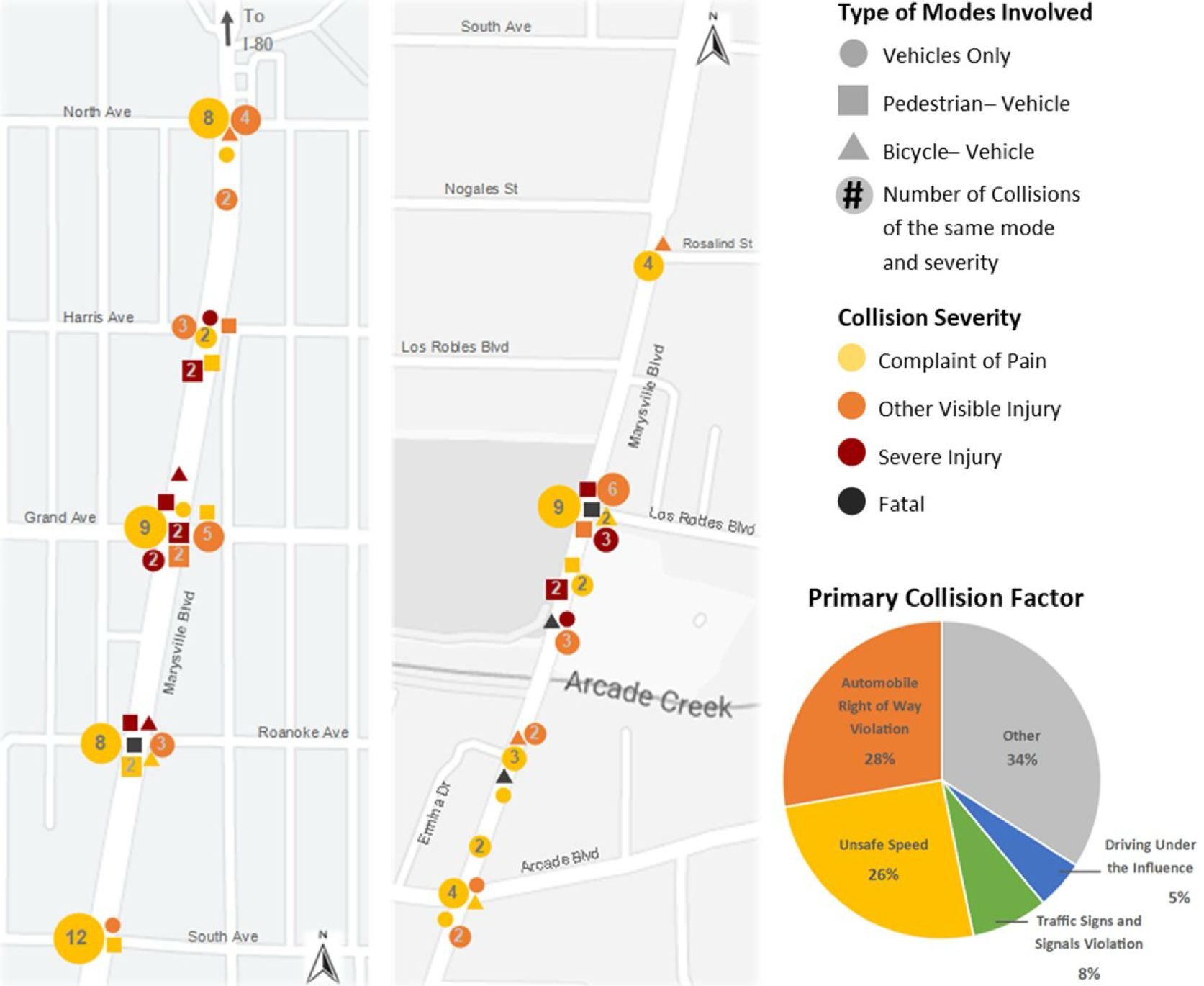
A diagram from the SacATC presentation September 18, 2025, shows collision history for the segment. This is the issue that the city if trying to solve. The diagram is rather dense with information, but of note is that of the four fatalities, three are outside the current phase, and only one is inside, at Roanoke Aveue.
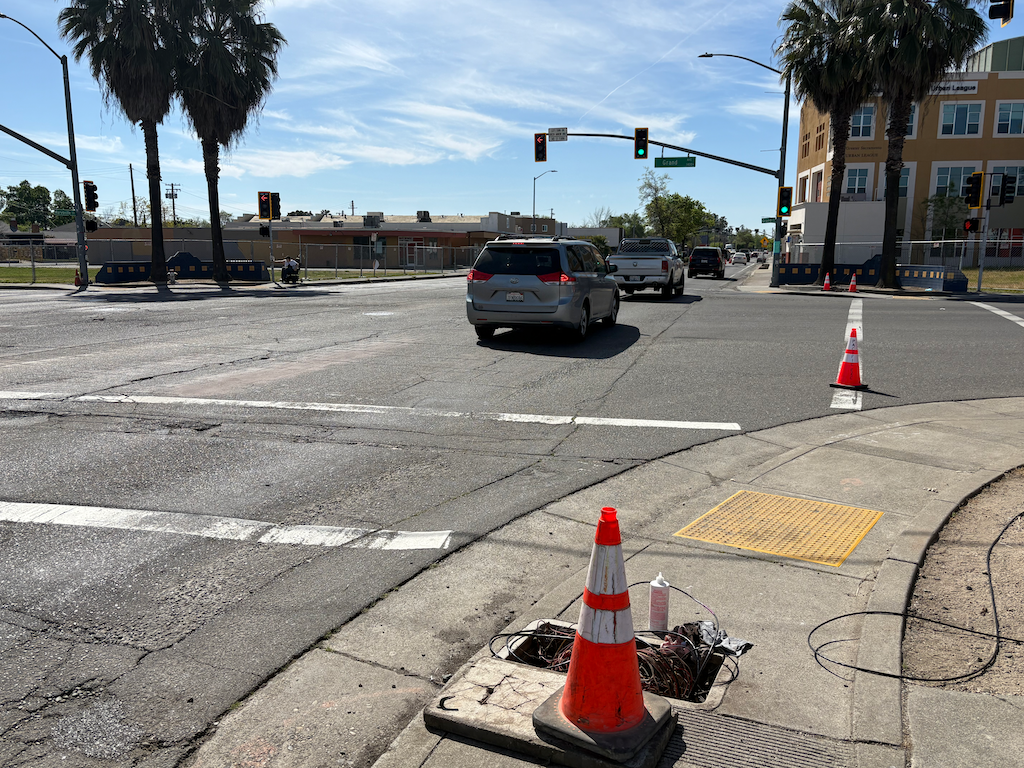
Marysville Blvd is narrowed for construction to one lane, starting just south of Harris Avenue and continuing to south of Roanoke Avenue. During my time of observation, I did not observe any significant backup of traffic, however, it was mid-day, not commute hours.
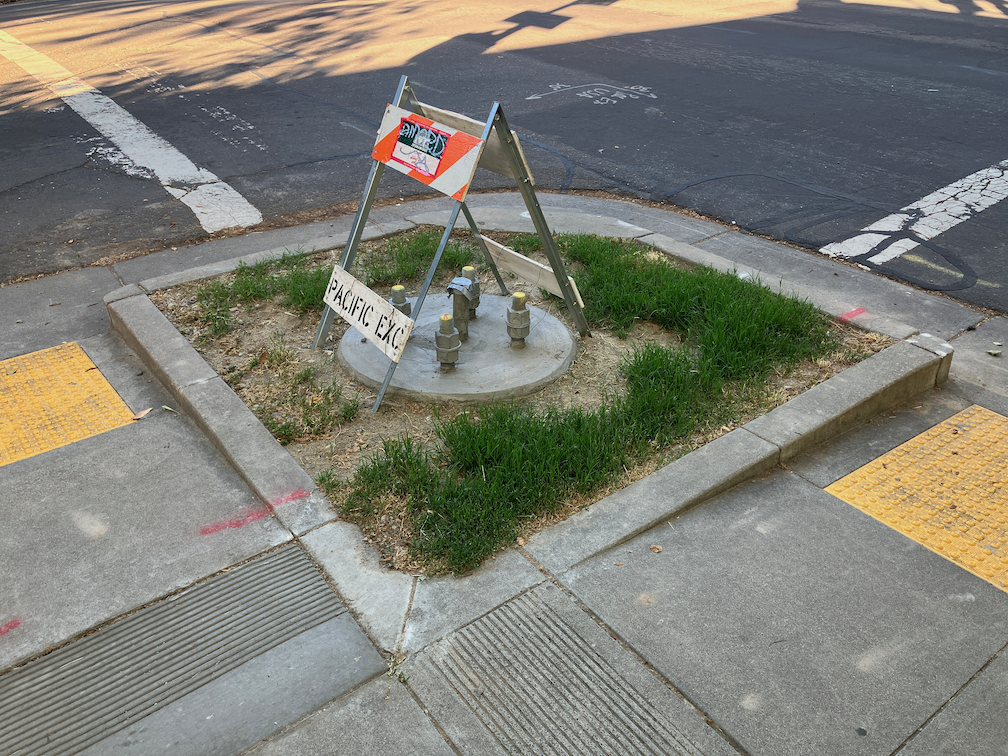
The work on this day is focused on the intersection of Marysville Blvd and Grand Avenue. Signal wiring at the intersection has been exposed and torn up, in preparation for installing a modified signal at this intersection. The diagram from the SacATC presentation on September 18, 2025 (below), shows a modified signal at Marysville and Grand. It is hard to reconcile the signal wiring being torn out with the term ‘modified signal’, but no other information is available.
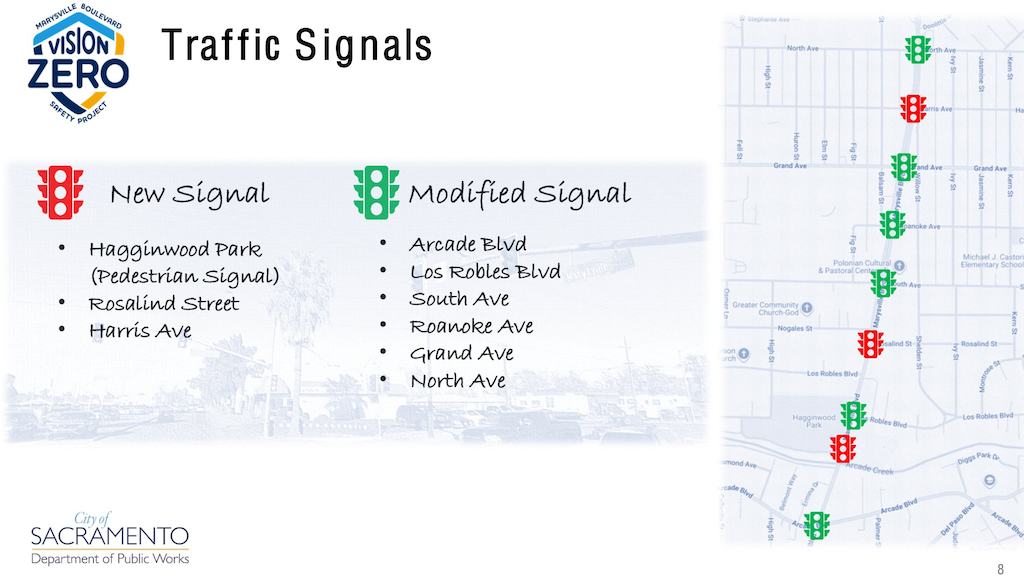
The SacATC presentation on September 18, 2025, includes existing and new for the section from Roanoke Avenue to Grand Avenue, and shows a complete rebuild of the intersection, but this is Phase 2, and it isn’t clear what the intersection and signal will look like at the end of Phase 1. Though the wording is not clear, the pedestrian hybrid signal (HAWK) at Roanoke Avenue may be completely replaced with a new regular traffic signal, but again, in Phase 2. I will have another post on Phase 2, but this one is focused on the Phase 1 Quick Build.
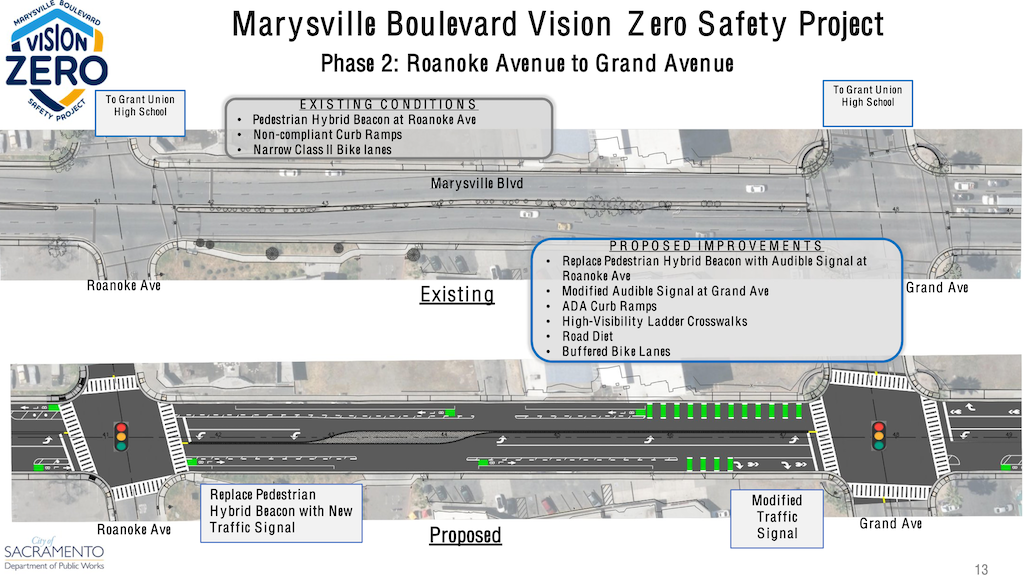
Future post will follow the construction project, and look more closely at Phase 2.
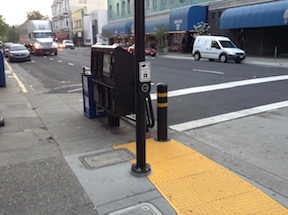
So far as I can determine from the presentation diagrams and the plan diagrams, no sidewalk improvements other than ADA ramps at intersections are planned. Though there are sidewalks nearly throughout the segment, they are narrow and unbuffered. The majority of the driveways ramps are sloped, many to such as degree that they present a barrier to wheelchair travel.
Sadly, most of this segment of Marysville Blvd is characterized by closed businesses, long abandoned buildings, and empty lots. This is not to denigrate the existing businesses, health services, and parks, but it will take much more than this project to energize this corridor. This is an area that has been disinvested by the City of Sacramento since it became part of the city, and it shows. A Marysville and Del Paso ‘Forward Together’ Action Plan lays out some of the actions necessary to heal this community.

 Getting Around Sacramento