The classic approach to planning transportation projects is to start with preliminary planning, and then present these ideas through public engagement or outreach. I have attended uncountable public meetings at which there are a series of display boards, and experts to answer questions and concerns, agency staff and usually consultants as well. At some meetings, I have been the only participant. Others, a few people show up. At a few, there are many people.
Most of the people attending are transportation advocates, people who have enough knowledge of planning and engineering and terminology to make some sense of the display boards. This is not the general public. I am one of those advocates, and try as I can to get to these public meetings. But I am not the general public. The general public, if it shows up at all, generally has two questions about a project: 1) where is my parking?, and 2) where are the trees? I don’t have much sympathy for the first, but the second is a critical question about every transportation project, and it is the aspect most likely to be neglected in planning and engineering. Every time I hear ‘where are the trees?’, it give me hope for the future.
For most members of the public, the display boards and answers by experts are largely unintelligible. This is not because these are not intelligent people, but because they have no context for understanding exactly what is being proposed, and how it will work and feel when complete. Going from an engineering or planning diagram, or even mock-up photo, to an understanding of the real world is simply not an exercise that most people are good at.
At each meeting I attend, I’m left wondering whether this was a useful exercise, a useful investment of the public’s time, and a useful investment of limited planning and engineering funds. Though occasionally two meetings will be scheduled, one afternoon and one evening, to try to meet the schedule of various members of the public with work and family responsibilities, the fact is that most people can’t make any meetings, or don’t feel comfortable in this setting.
Sometimes surveys are designed and offered to get feedback from those who can’t or won’t attend a meeting. My experience with the surveys is that the diagrams and mock-ups in the survey are just as unintelligible at the display boards. Often the surveys have questions that the planners want to ask, but don’t really provide a chance for the participant to comment on what they think is really important, and most particularly, to offer ideas ‘outside the box’ of what the planners are thinking. I tend to think that surveys are even more worthless than meetings. There is no interactivity in a survey.
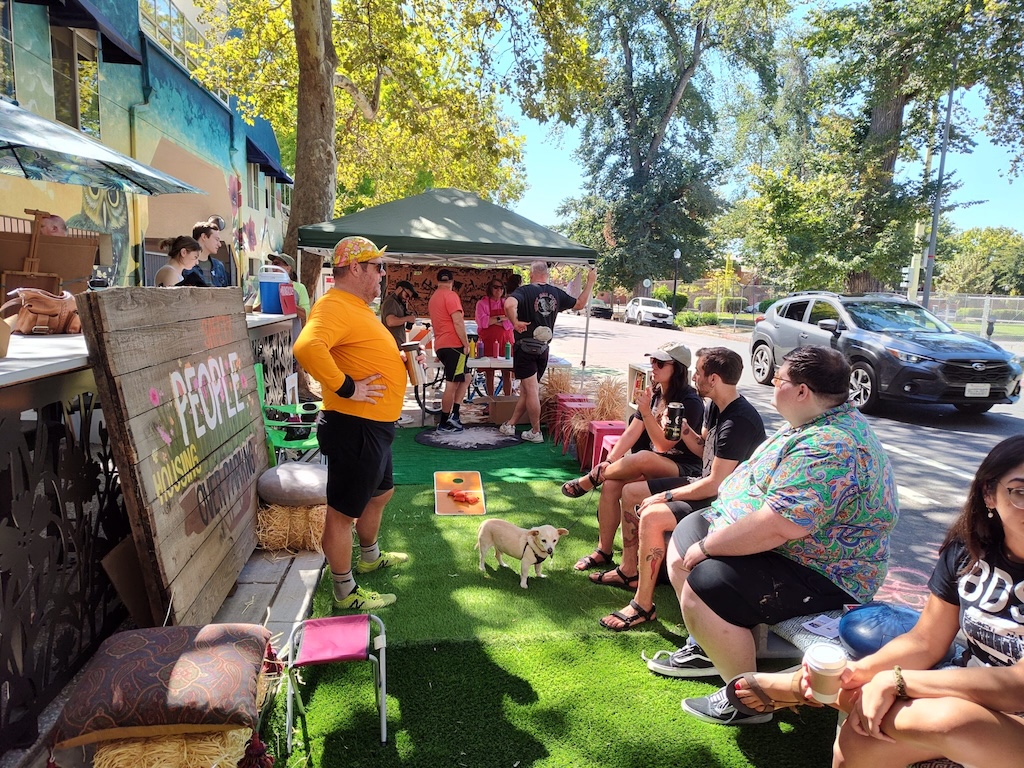
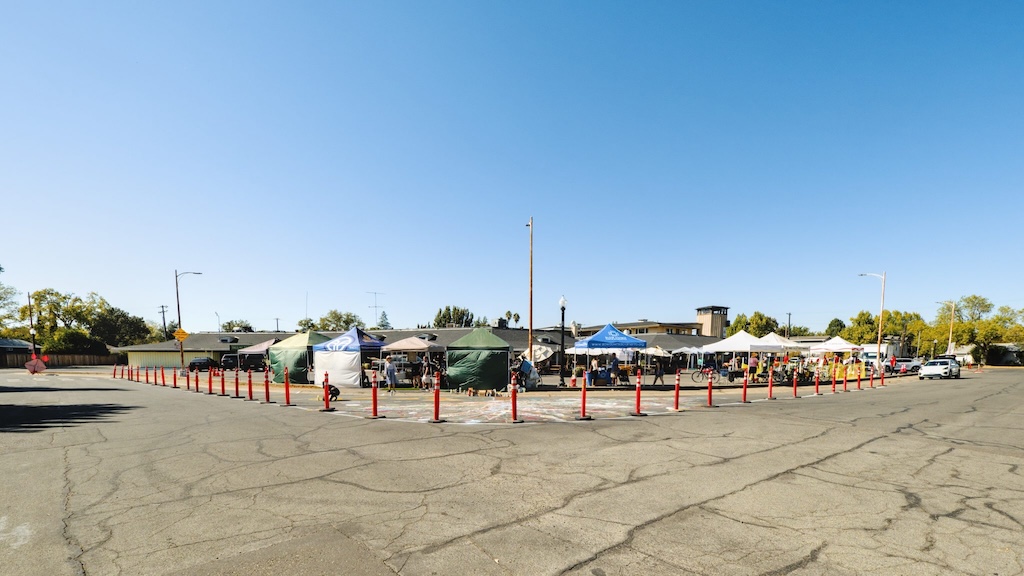
I want to strongly recommend that engagement/outreach occur after there is something in the real world to look at, and to experience. These would be demonstrations, pilots, or quick-builds. The agency puts something temporary on the ground, and then asks the public what they think. This could be one block, or one corner, or one parking space, or one conflict area. The public could then observe, and most importantly, use the changed streetscape. And then, provide feedback to the agency and consultants. Sometimes the demonstration would be on the site of the proposed project, but existing projects very similar to the one being proposed, could also be used. Either of these requires that the public be encouraged to look, to experience, to contemplate. Rather than trying to get people to a public meeting, get people to the location, and engage with them there. What do the ‘experts’ observe? What does the public have to say? What usability or safety issues show up that no one had thought about? This means being out in the city, not sitting in a meeting room. It means asking questions and really listening to answers. It means not wasting time and resources on fancy diagrams and mock-ups.
Most engagement would happen on the ground, not in a meeting. Probably a single engagement/outreach meeting could be scheduled to hear from people who experienced it and have thought about it, and those who were unable to get to the demonstration. But there is little to no use in repeated public meetings. That is not the real world. The real world is out there on the street, as people use the transportation system. In this case, as people use the demonstration.
I am certainly aware that not all types of projects are amenable to this approach. Some transportation changes don’t work or are not meaningful on a small scale. Some projects can’t be demonstrated with temporary measures. But I will say that I think most projects can be demonstrated.
Demonstration first, then engagement.
What we have been doing is not effective. Time to invert the approach, better engage the public, and get better projects.
Strong SacTown has created several demonstration projects of the sort that I am recommending, including a Park(ing) Day conversion of parking spaces on 10th Street into a multi-function parklet, and a Clean Air Day 2024 temporary curb extension and street narrowing of an overly wide street in Tahoe Park. These are just two ideas. Both were incredibly effective, and served to gather public feedback on temporary demonstrations.