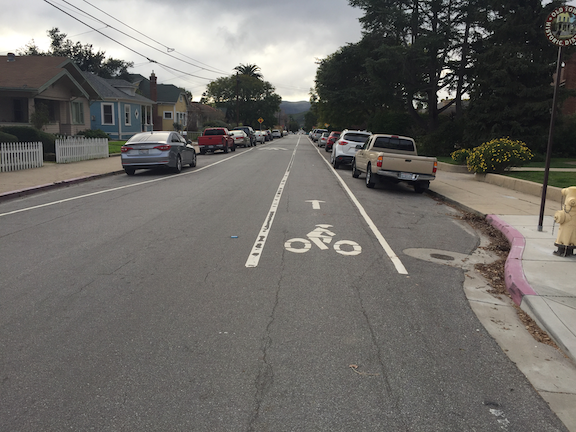
Bike share open house

I attended the bike share open house hosted by the City of Sacramento last night. There were as many people representing partners and consultants as members of the public, and I did not see any low income or people of color. SACOG staff were present, as SACOG is the sponsoring agency for the bike share program, staff from Toole Design Group which is managing planning and selection of bike rack locations, and staff from JUMP, the selected bike share vendor.

Some things to report:

  • Rollout date is between the middle of May and the end of June.
  • There will be 900 bikes total, about 600 in the City of Sacramento and the remainder in West Sacramento and Davis.
  • The bikes will be limited to 15 mph, even though they are designed to operate at up to 20 mph. Under state law, Class 1 bikes can operate with pedal assist up to 20 mph, but a decision was made to limit them based on (probably misplaced) safety concerns.
  • The service area is considerably larger than the pilot Tower Bridge Bike Share, a very positive sign. You can see the boundary at http://wikimapping.net/wikimap/SACOG_Bikeshare.html, and add suggestions while you are there. Scroll to the left to see the Davis section. The open house had a large paper map for the same purpose.
  • There will be some sort of discount for low income people using the system, probably the JUMP Boost program, which is a $5 membership the first year, and $5/month thereafter, for 60 minutes of ride per day. In Sacramento, the eligibility might be based on SMUD status. At least initially, the only other option will be the standard $2 for the first 30 minutes and $2/hour after that, prorated. Other types of membership or charge may be implemented later.
  • Nearly the entire service area in Sacramento is moderate and high income, with just a small area in neighborhoods south of Broadway and around Power Inn being included. The city doesn’t have a plan yet for how to reach out to these potential users, and others not included in the boundary.
  • Bike racks will be provided in a quantity of at least two per bike in the system, so 1800 rack spaces. The use of these racks will be discouraged for other bicycles, in order to keep the spaces open for the bike share bikes. Bikes will be required to be parked at these hubs or stations at the termination of the ride, though they can be put on hold (with the meter running) at any other location. Leaving a bike away from a hub incurs a fee of $2, the same as the current SoBi system. Popular and busy locations will have multiple racks, while other have fewer, or one. Many or most of the locations, particularly outside the central city, do not have bike racks yet, so these will be added by JUMP before rollout. The user agreement requires that bikes be locked to a bike rack, not to other objects or left free-standing. It is not a dockless system.
  • JUMP has designed charging racks where a parked bike will charge. Larger locations will have some of these charging racks, though it is not clear if they will be installed at rollout.

There are two additional open houses scheduled, both in Davis. Friday, March 2, 11 to 1 at UC Davis bus terminal, and Saturday, March 3, 9:30 to 1 at the Davis Farmers Market. These will be less formal, and will offer the opportunity to ride the JUMP electric bike.

Complete Streets aren’t

The Complete Streets movement, now 13 years old and with a newly released criteria for evaluating policies, is considered by some to be a success. Not by me.

There are two gaping flaws in the complete streets concept, that after all this time have not been addressed:

  • Who is responsible for sidewalks?
  • How close should safe crossings be?

Sidewalks: On the first issue, responsibility for sidewalks, most cities and counties (not all) have code that makes sidewalk maintenance the responsibility of the adjacent landowner. This includes repair and snow removal. Most cities have some money set aside to repair sidewalks, but only a tiny fraction of what is needed for the huge backlog of deteriorated sidewalks. A very few cities also clear sidewalks after snow. Sidewalks are every bit as much of the transportation network as travel lanes and bike facilities, but most places wash their hands of this reality and this responsibility, pushing it off to others. It has been pointed out that few cities and counties have the funds to also take care of sidewalks, but that is exactly the point. If we allow cities and counties to prioritize cars over walking, they will continue to do so.

How does complete streets play into this? It doesn’t. Complete Streets set no expectation that cities and counties will maintain their sidewalks. In the new policy rating documents, the word sidewalk only shows up twice, neither in this context. Even a search of the Complete Streets website only mentions sidewalks in relation to case studies and model projects. Fortunately, a few places do much better than just have a policy, but the Complete Streets movement does nothing to encourage this.

ElCamino-eb
El Camino complete street, 0.3 miles to the next safe crossing

Crossings: the second great weakness of the complete streets movement and Complete Streets documents is the lack of attention to frequent safe crossings. The new criteria does not mention crosswalks or crossings. The illustrations of a complete street often show an intersection with high visibility crosswalks and sometimes curb extensions to increase visibility and shorten crossing distance. But other illustrations show long distances along a “complete” street, with the next safe crossing often not visible.

In the Sacramento region, every complete street project along arterials has added sidewalks and bike lanes, but none of them have added safe crossings. In fact, several of them have removed crossings. If a busy street is hard for walkers to cross, they won’t cross it. They will either drive, or just avoid the other side of the street. So that fancy complete streets project, with the wonderful looking wide sidewalks, does not serve the very people it is claimed to serve. People need to be able to cross any land all Streets in a safe crossing at an interval of no more than 1/8 mile. The grid in downtown Sacramento is 1/12 of a mile. Few places in the suburbs are less than 1/4 mile, and many are 1/2 mile. To me, this is unacceptable. I would think a complete streets policy would address this distance between safe crossings issue as being key to walkability. Again, the Complete Streets movement ignores this issue.

Bike share for Rancho Cordova & Folsom?

From the 50 Corridor TMA Communter Connections newsletter:

Bike Share recommendation advances to City Councils

This month, both the Rancho Cordova and Folsom City Councils will hear the 50 Corridor Bike Share Task Force recommendations in for launching a new bikeshare program using LimeBike as the program provider.

The Rancho Cordova City Council is expected to vote on the recommendation at its February 20 meeting which starts at 6 p.m.  The Folsom City Council will consider the recommendation on February 27 during its meeting which starts at 6:30 p.m.

A representative of LimeBike will make a presentation to the Folsom City Council.

Should both councils approve the recommendation, bike share should be available on the 50 Corridor by early April.

LimeBike-e
LimeBike e-bike

LimeBike features a dockless system – allowing users to park bikes at whatever destination is convenient.  The cost is expected to be $1 for 30 minutes, although a variety of pricing options will be available, including monthly subscription rates.  Electric assist bikes will also be available for $1 to unlock the bike and $1 per every 10 minutes.

The main goal of employing bike share along the 50 Corridor is to address first mile/last mile connections for Regional Transit’s Gold Light Rail Line.  However, bikes can be used for any kind of trip. And because the bikes are not linked to a particular rack (or dock), they can operate anywhere along the corridor where a need exists. 

Read More »

Bike Share Open House Feb 21

from a City of Sacramento email:


Join the City and SACOG for a Bike Share Open House!

What is bike share?

Bike Share provides short-term bike rentals that you can pick up and drop off at various locations around Sacramento, West Sacramento, and Davis. Jump will soon be rolling out 900 bikes for anyone to use, and we want to hear from you!

You can find more information about our regional bike share program here.

When and Where?
Wednesday, February 21st, 5:30-7:00pm

City Hall, 915 I St, Room 1119 (off of H Street)

Can’t attend the meeting?

Share your thoughts on the online map!

Questions?

Email: bikeshare@sacog.org

More information can be found here.

SB1 Local Partnership Program applications

The California Transportation Commission (CTC) yesterday released the list of applications for the Local Partnership Program (LPP) which is one of many programs in SB 1, the transportation bill. The SACOG projects have been selected and are below (with pdf link).

Though these are just applications, and the process of selecting and awarding projects will take many months, it is instructive to take a look at what has been submitted by the transportation agencies in the region.

The list has zero transit projects. Though there are separate programs fo transit, nothings prohibits transit projects, but the agencies were not interested.

Four of the projects are Capital Southeast Connector related (Grant Line Road Operational Improvements Project, White Rock Road Four and Two Lane Improvements, White Rock Road Two Lane Improvements, and of course Capital SouthEast Connector Expressway), which total $40M out of the list total of $88M. This sprawl-inducing gift to greenfield developers has been criticized here and many other places, cannot comply with the air quality and VMT reduction goals of the regional sustainable communities strategy (if was grandfathered in), yet accounts for 45% of all applications.

Of the remaining projects, $27M, 31%, are mostly road widening projects. 24% of the projects have at least a minor component of bicyclist or pedestrian benefit, such as complete streets projects, and a few are primarily for active transportation.

Offshore drilling and vehicles

I am glad to see that so many people are getting involved in efforts to stop the Trump administration from drilling off the California coast. I was involved in other important issues today and did not participate. However, every time these kinds of “keep it in the ground” efforts come up, I wonder if our behavior is consistent with our message.

If you don’t want drilling off our coast, you probably are not in favor of drilling anywhere. The negative environmental impact is nearly as bad – which of our lands is NOT sensitive, which of our airsheds is NOT precious, which of our waters are NOT critical to life? So, how do we stop using oil? Well, in California, where 37% or more of our carbon emissions are from transportation, we have to radically change our transportation habits.

I will suggest:

  1. Stop using your privately owned internal combustion car. Now. Today.
  2. If you have an electric or hybrid vehicle, decrease your use by 90% over the next two years. Though in an ideal world we’d get electricity from renewable resources, that’s not where it comes from today. Don’t convert from fossil to electric, that is just delaying the inevitable.
  3. Unless you are physically disabled, don’t ever drive to an anti-fossil fuel protest.
  4. If you use ride hailing services (taxi, Lyft, Uber), cut your use by 95% over the next year. It is becoming clear that these services are worse for the environment and livability than private cars are. Don’t be fooled by the techno-glitter.
  5. Move or change jobs within three years so that you live within walking or bicycling distance of work; during the transition period, use transit, bicycling or walking for 80% of your work days.
  6. Join a group that is fighting against greenfield development and suburban and exurban sprawl, for example, ECOS. Work against re-election of any politician who votes for such development or expansion of cities into agricultural lands. Talking about you, Sue Frost.
  7. Get most of your food from as close to you home as possible, and if you have the space, grow as much of your own as possible.

I’m sure there are other ideas. This is what I’m doing, though I’m falling short on the food (and related transportation) ideal.

Is law enforcement the answer?

From my post on Vision Zero and law enforcement, it might be assumed that I think increased enforcement is the answer. I’m not so sure. The problem is that law enforcement in general, and traffic enforcement specifically, has long been used as a tool by law enforcement to harass and oppress people of color, low income people, and the homeless. As a white male, or course, I don’t experience this, but I certainly observe it happening to others. I see it in Sacramento, I see it everywhere I travel. It is part of the purpose of law enforcement to maintain privilege for those in power. And it can, and does, also protect people. But the privilege function seems to me to overwhelm the protection function. It is certainly true that people of color and low income, and the homeless, do not trust law enforcement officers, because they have long been victims. Having a tail light out, which results in a stop, and frequently a search, and sometimes brutality, and sometimes even death, does not lead anyone including me to think that simple enforcement is a solution to traffic violence. And yet, ignoring the real threat of traffic violence, which affects people of color, low income, and homeless, far more than people of privilege, is not a solution either.

So, what to do?

Automated speed enforcement (ASE) is part of the answer. Cameras don’t racially profile, and assuming that there is no bias in sending tickets, does not oppress. The city has included a recommendation for ASE in the Vision Zero Action Plan: 3.4 Support state Automated Speed Enforcement legislation. Of course speeding is much better controlled by street design, but ASE can contribute to a reduction in the number and severity of collisions, particularly during the long period of time it will take to fix our unsafe streets.

I have a theory that most traffic violations, at least the ones likely to result in fatality and severe injury (KSI), are the result of what I call egregious violators, those who continuously and flagrantly violate the law. These are the ones that are not going 30 in. 25 mph zone, but going 50 in a 25. If ASE can catch these drivers, and eventually remove them from the road, I would expect a great decrease in KSI.

Another solution is to prevent law enforcement from using stops as a pretext, for the purpose of racial profiling. A stop should be just a stop, dealing with the violation and no more. That will take a change in law enforcement policies and attitudes, and probably changes in law that restrict officers in what they can do on traffic stops. When traffic stops shift from low riders to Escalade drivers, we will have made some progress.

Another solution, one implemented in some European countries, is that a traffic violations of safety significance results in a ticket whose amount depends on either the value of the vehicle or the income of the driver, and is not a flat rate. Standard violation fees, with court and processing costs added on, are a huge burden to many lower income people, while high income people hardly notice. If you don’t think that income matters, look at parking violations. Many higher income people routinely get parking tickets, every day, but it does not change their behavior, they see it just as part of the cost of getting the best parking spot and keeping it.

To implement Vision Zero in Sacramento, the community is going to have to talk about how law enforcement has long affected people of color, and continues to. We are going to have to come up with solutions that reduce and eliminate the effects of profiling based on race, income, and housing status, and the disparate impact of tickets on different income levels. I don’t have the answers, but I have faith that the WHOLE community does.

What do you think?