SABA’s Gear’d Up newsletter

I recommend subscribing to SABA’s (Sacramento Area Bicycle Advocates) Gear’d Up newsletter. it is one of the best sources of information about what is going on with government and advocacy efforts to improve safety for bicyclists, as well as transportation in general.

The June Gear’d Up and older newsletters are available.

Of course SABA also needs your membership, donation, or volunteer. Check the SABA website.

daylighting enforcement?

The City of Sacramento has announced that it will be enforcing the state intersection daylighting law, AB 413 (Lee, 2024), starting today. Tickets will be $25.

Higher income people will of course just see this as the cost of parking, and won’t care. An open spot at every corner, only $25? Yes! With the new parking rates, a person could park in a daylighted space for 8 hours for less than the cost of a metered space.

Daylighting increases safety for people walking by providing increased visibility between drivers and walkers crossing the street. As with all crosswalk laws, it applies whether the crosswalk is marked (painted) or not.

I’m a little cynical about this. Over the years, I have reported about 60 violations of drivers parked ON the crosswalk. Once, the driver was cited. Often I would wait to see if parking enforcement officers would show up, and what they would do. Sometimes, the vehicle was gone. Often, the vehicle was still there, but the 311 report closed without action. Sometimes, it was closed without the officer even showing up.

Traditionally, parking enforcement has only been concerned about drivers overstaying time at parking meters.

Administration of the parking and parking enforcement program has changed, so perhaps the city is serious about enforcing daylighting. Time will tell.

alternatives to transportation sales tax

Sales taxes are regressive, in that lower income people pay a higher percentage of their income in sales tax than do higher income people. In Sacramento area, a new transportation sales tax measure is being talked about, whether for transportation in general, or for transit specifically. No proposals have been made, but there are certainly many discussions in many arenas.

The San Francisco Bay Area is also having the same discussions. There is legislation to authorize a transportation sales tax measure in up to five Bay Area counties. A recent KQED article (Proposed Transit Tax Should Be Paid by Businesses, Not People, Progressive Group Says) talks about discussions, and an alternative proposal to use a business gross receipts tax instead of sales tax. It is true that any tax ultimately comes out of the pockets of citizens, but a gross receipts tax is better distributed and not as regressive.

I have a concern that politicians again and again go to the default of sales taxes because it seems easier to sell. But sales tax rates are already very high, and there is increasing evidence that voters will not go for a higher sales tax rate, no matter what the topic or the benefit.

I’ll write more about funding options in the future. Past posts include Is sales tax for transportation the wrong approach?, transportation funding ideas, and many, many others under the category: transportation funding. I was amazed, looking back, at how many times I’ve posted about transportation funding and tax measures.

another big day of meetings

Tomorrow, Thursday, June 12, there will be at least three transportation-related public meetings:

SACOG (Sacramento Area Council of Governments) Board of Directors, 10:15 AM to about 12:00 PM, at Conzelmann Community Center, 2201 Cottage Way, Sacramento, CA 95814 (not at SACOG offices on L Street). agenda

Sacramento Transportation Authority (SacTA): 1:30 PM to about 3:00 PM, at the County Board of Supervisors Chambers, 700 H St, Ste 1450, Sacramento. agenda

Sacramento Active Transportation Commission (SacATC): 5:30 PM to about 7:30 PM, at City of Sacramento Council Chambers, 915 I Street, Sacramento. Note, SacATC usually meets on the third Thursday of the month, but the June meeting is on the second Thursday. agenda

Norwood Avenue

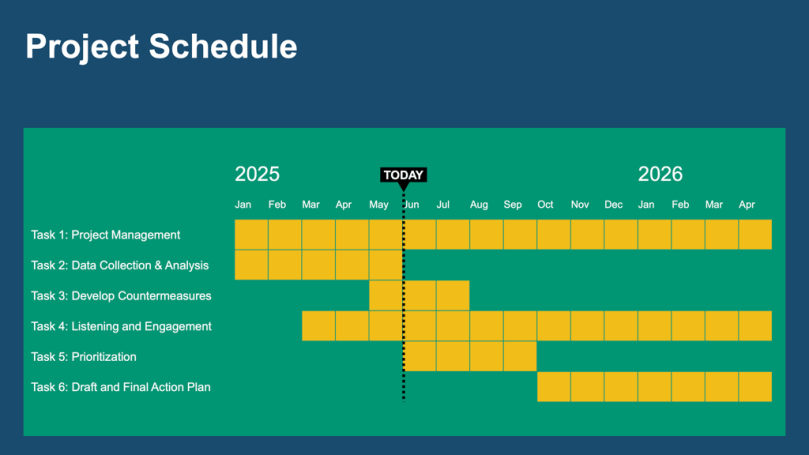
The city is asking for public input on a project to increase safety and mobility on Norwood Avenue in north Sacramento. I have not had a chance to look at the details, so for now I’ll just repost the article from the city’s Sacramento City Express. The project web page has more details, including street cross-sections for the three alternatives.


Community invited to weigh in on plan to address safety on Norwood Avenue

Residents in north Sacramento are invited to help shape the future of Norwood Avenue as the next phase of a transportation safety and mobility project gets underway.

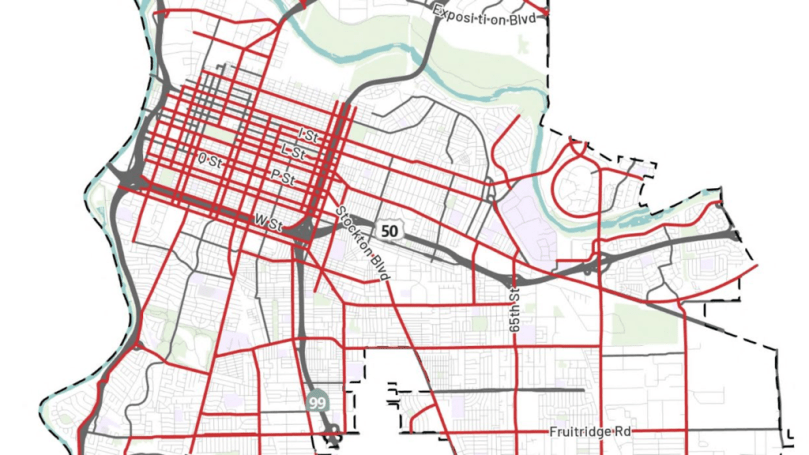
The Norwood Mobility Project is focused on a two-mile stretch of Norwood Avenue between Main Avenue and Arcade Creek—an area identified as part of the city’s High Injury Network due to its history of serious traffic collisions.

After initial community engagement beginning last fall, City transportation staff are now presenting a set of proposed design alternatives and gathering public input to develop a final concept that improves safety and mobility for all users, including pedestrians, cyclists, transit riders and drivers.

“We’ve heard from residents about the challenges they face walking or biking along Norwood, especially near schools and bus stops,” said associate transportation planner Charisse Padilla. “This is the community’s opportunity to directly influence the changes we make to the corridor.”

Upcoming public engagement opportunities include an in-person open house on Saturday, June 7, from 10-11:30 a.m. at the Robertson Community Center, and a virtual workshop on Monday, June 9, from 6:30-7:30 p.m. Registration is required for the virtual meeting.

Residents can also share their feedback on the proposed alternatives through an online survey.

The Norwood Mobility Project is funded through a Caltrans Sustainable Transportation Planning Grant. A draft plan is expected this fall, with final recommendations anticipated in early 2026.

Having a Council-adopted plan ensures the City is eligible for competitive grant funding for any next phases such as Preliminary Engineering Design, Environmental Clearance, Final Design and Construction.

For more information or to provide input, visit the Norwood Mobility Project page at norwoodmobility.org.

I’m not looking at you

Everywhere I travel, and walk, most other people walking will at least glance at me, and often acknowledge or smile, and sometimes say hi or good morning or good evening, or even talk. But that is rare in Sacramento. At least on the sidewalk, this is the least friendly place I’ve ever lived.

People passing look studiously at their phones, as though there were something important there, or look at the ground, or look away to the other side. 95% of people walking will not make eye contact, let alone give a positive vibe.

Why is this a transportation issue? The message is that I am an island (Simon and Garfunkel), I don’t need you, I don’t acknowledge you, I don’t care about you. Communities are built on trust, and trust does not occur if people don’t interact with other people. Sacramento (the city and region) has serious problems that can only be solved by group action and personal engagement. In particular, we have a very serious problem with traffic violence. That we are so bad at solving our problems is not surprising when we don’t think of anyone else except close friends as ‘our people’. Of course this is worse since the pandemic, but it has existing as long as I have lived in Sacramento (14 years) and spent time in Sacramento (22 years).

Is it different elsewhere? Yes, it is. In San Francisco, almost everyone I pass on the sidewalk will at least nod their head, and frequently more. Los Angeles. Portland. Seattle. Las Vegas. Denver. Salt Lake City. San Diego. And on and on.

I am very sad about this. But I do not know the cause, and I do not know the solution.

the worst drivers

I frequently travel to cities on the west coast and the intermountain west, and just recently traveled to several cities in the southern and eastern states. When I travel, I am always paying attention to transportation systems and driver behavior, in no small part because I get around by walking, bicycling and transit. From these experiences, I can state clearly that Sacramento has the worst drivers of any city I’ve visited. The incidence of aggressive and belligerent drivers is probably about average. What is so different, though, is the low skill level of drivers here. A brief list:

  • unawareness of traffic law (California Vehicle Code), both old and new
  • oblivious to what is going on around them, focused on their phone or car or daydreaming, not paying attention to others on and off the roadway
  • no understanding of taking turns at intersections with four-way stop signs; the most basic rule of intersections, first come – first served, is apparently not known by most drivers
  • uncertainty about where their vehicle is on the road; drifting into adjacent traffic lanes and bike lanes, stopping where they probably did not intend to stop; this is not just a problem of oversized trucks and SUVs where the driver cannot actually see the roadway, but for most drivers of most vehicles; the damage to vertical delineators, medians, traffic circles and roundabout, and curbs, attests that they don’t know where their vehicle is, or don’t care
  • unwillingness to stop (or yield, as the law states) for people walking across the street at intersections
  • failing to look when entering or exiting driveways for people on the sidewalk
  • running stop signs
  • running red lights

And most irritating to me, stopping for bicyclists when the driver has the right of way and the bicyclist does not. This teaches bicyclists to go when it is not legal for them to do so, and not safe. It also delays bicyclists. I once totaled up the amount of time I wasted waiting for drivers to take their legal right of way, and it was about 20 hours per year. Time that I will never get back.

I agree that really solving bad driver behavior requires correcting the roadways. But we have spent billions building unsafe roadways, and will have to spend billions making roadways safe again. When will we have that kind of money?

Again, Sacramento is sort of in the middle of cities making changes to their roadways. Much less than many cities (most notably the bay area), but significantly more than many cities. So the lack of safe roadways does not explain all of the bad driver behavior. Drivers here really are less skilled.

Why? I don’t know. But I’m certainly getting tired of it. Nearly every trip I take walking and bicycling, I am threatened by unskilled drivers, yes, and sometimes belligerent drivers. Sometimes many times on a single trip. I have a high level of skill in both walking and bicycling, watching out for and responding to unskilled driving. But what of everyone else who does not have that skill level? It is ironic that I, as a walker and bicyclist, need a high level of skill to navigate our transportation system, but the same expectation of drivers does not exist.