In response to the Viewpoint: Sacramento County Needs SouthEast Connector by Roberta MacGlashan and Steve Miklos in the Sacramento Bee on Tuesday:
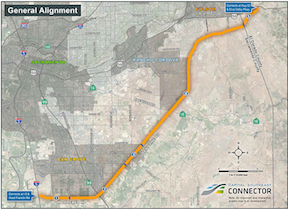 The southeast connector is a 1970s solution to modern transportation questions. It is based on the model of people living a long way from where they work, and commuting long distances, for example, from El Dorado Hills to Elk Grove. Many people are looking now for a different way to live, with home, work, shopping and cultural amenities all close to each other. They are looking for transportation alternatives, which are scarce in the Sacramento region.
The southeast connector will also produce sprawl all along the corridor. Even before the project is scheduled for construction, developers are wanting to turn agricultural land into yet another subdivision. Cordova Hills is just one example. The Sacramento region already has an oversupply of suburban housing and suburban office parks; we don’t need any more. Some people will continue to choose suburban living and long commutes, but the question is why the rest of us would want to subsidize that choice to the tune of $456M dollars.
The Sacramento region certainly needs transportation infrastructure, and some small part of that infrastructure might be new roads, but what we really need to meet the demands of people for livable places and a vibrant economy is alternatives to single occupant cars. We need a more extensive light rail system, a bus network that serves more people, frequent Amtrak service, and streets that are safe and welcoming for bicyclists and pedestrians. We won’t get that if we spend huge sums on the connector.
We know that freeways such as the connector do not reduce fuel consumption or air pollution. Instead, they induce more driving and increase both. If you don’t believe that freeways induce traffic, just look at Interstate 80. It has been under an almost continuous process of expansion, yet it is always congested, and the new construction underway will be full as soon as it is finished. The economic and freight needs of Interstate 80 could be met by a four-lane freeway. The other lanes are there for commuters. I don’t accept long-distance commuting as an economic benefit, in fact it is quite otherwise.
Though the viewpoint talks about $456M as being the “total cost,” it is only just the beginning. There will be interchanges and widening and enhancements, costing in total many times as much. It would be better to cancel the project right now and re-think the transportation network we need in the Sacramento region.
Capital SouthEast Connector JPA website