corner retail, part two

My earlier post on corner retail was in preparation for talking about an idea that corner retail should be acknowledged, supported, and promoted in the upcoming Sacramento 2020 General Plan. The general plan tentatively promotes higher density by allowing a reasonable floor area ratio for properties throughout the city, while removing development constraints that add nothing to safety or livability. Assuming the plan and the resulting code to support it does significantly increase the number of homes and people able to live in the city, if the city remains as car-centric as it is, the result will just be less parking availability and more congestion (both of which I’m in favor of, but I recognize most people are not). It would go towards solving the housing issue, but do little for livability and climate change issues.

So what is the solution? A place where people can perform most of their daily activities without driving. In other words, corner retail. The jobs issue is a separate one, though corner retail would also increase the number of jobs within walking distance.

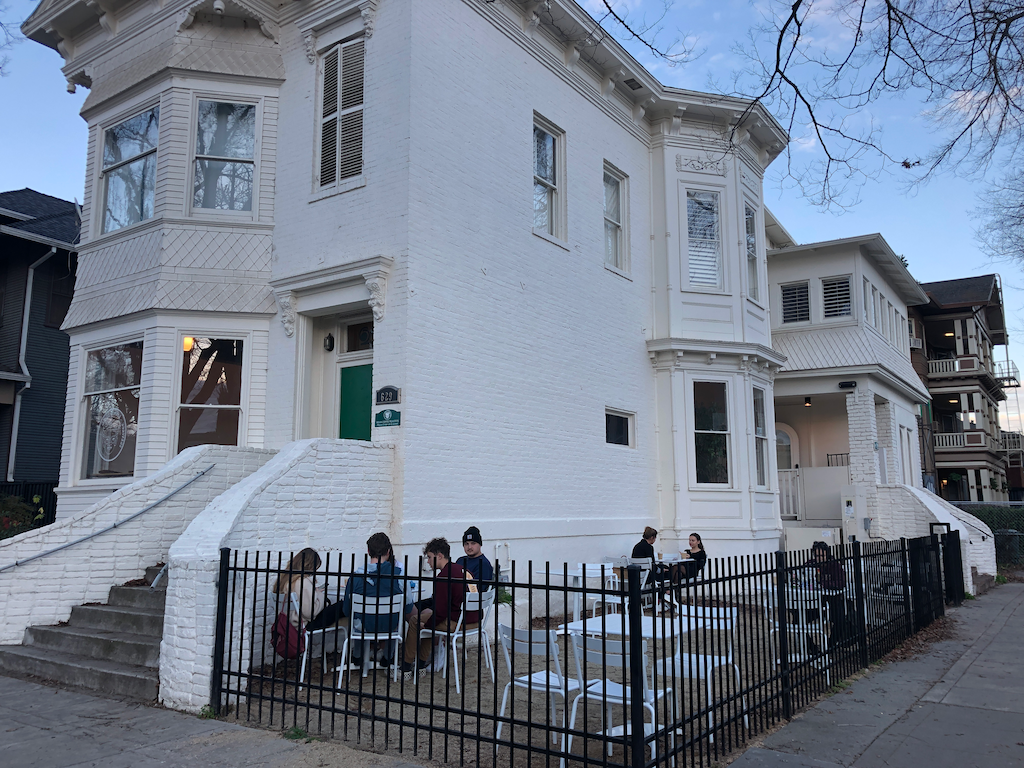
Karma Brew, my neighborhood bar, on the corner of P St & 16th St, 2-1/2 blocks from my house

I am not sure exactly how to accomplish this, but I’ll throw out an idea. I don’t think rezoning corner lots from residential to commercial is necessarily the answer, because that might encourage entirely new buildings replacing existing buildings. Obviously many existing buildings would need to be changed to serve as retail, but I don’t think wholesale replacement is good, and it is not respectful of that claim of ‘neighborhood character’ (which is often a cover for concerns not voiced, but is nevertheless a consideration).

Rather, I think a by-right conditional use permit (is that an oxymoron?) is the better solution. That way the building remains similar to what is there now, but becomes functional as a retail location.

Where? I’m partly of mind to say everywhere, every corner. Much of the existing corner retail predates zoning (grandfathered in) or is already under a conditional use permit. But I’m also of mind to limit it to fewer locations, which would be any corner fronted on at least one side by a collector or arterial street. In the lower density parts of Sacramento, I don’t think much corner retail would show up, because it takes a certain density to make retail viable, but there would certainly be more than there is today. Wouldn’t you like to be able to walk to a coffee shop in your neighborhood. Or walk to the market for a few items?

Note that I’m not clearly defining what corner retail is. Does it mean there is only one business present, or allowed, or could it be a few small footprint businesses clustered together? Some of the locations I’ve identified are not on actual corners, but they have the feeling of corner retail. The general plan and the supporting code would have to define corner retail.

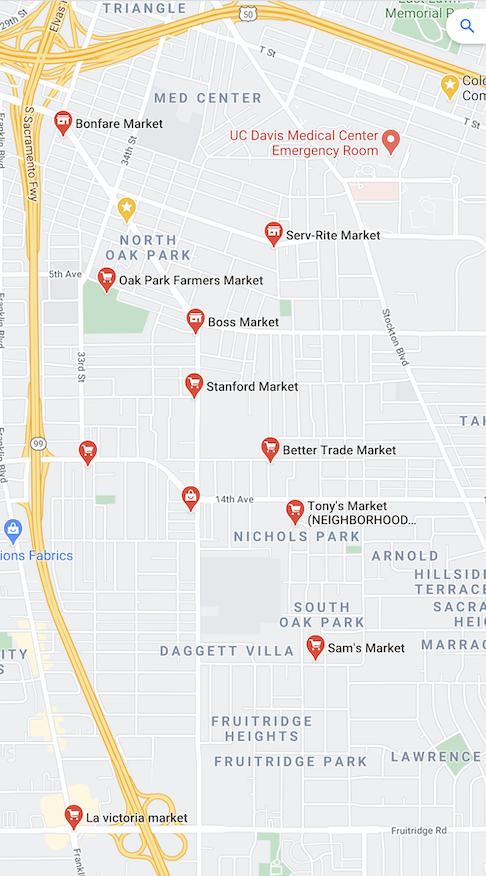
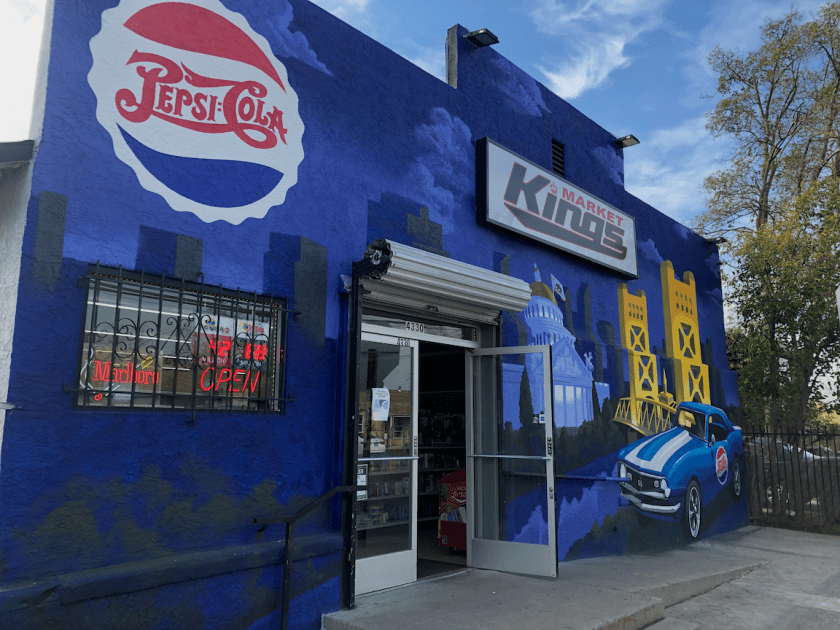
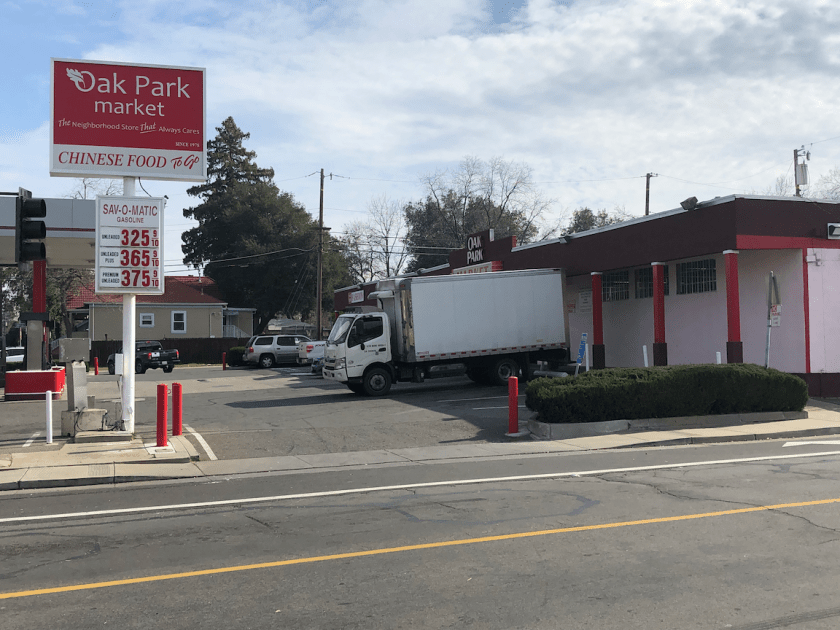
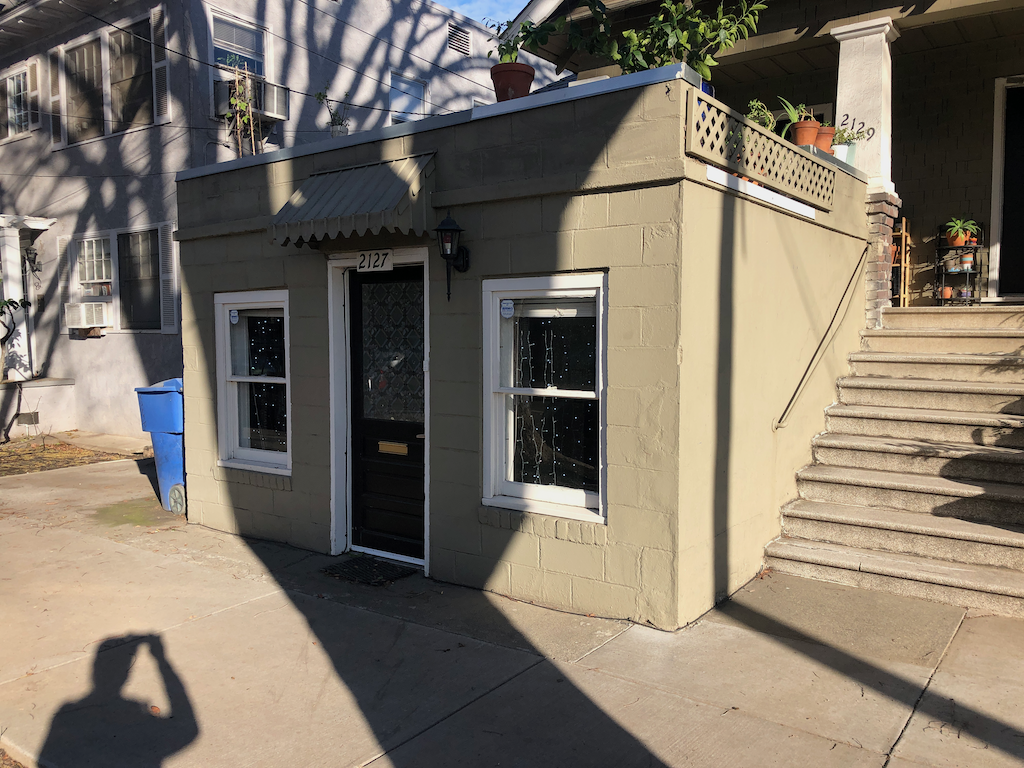
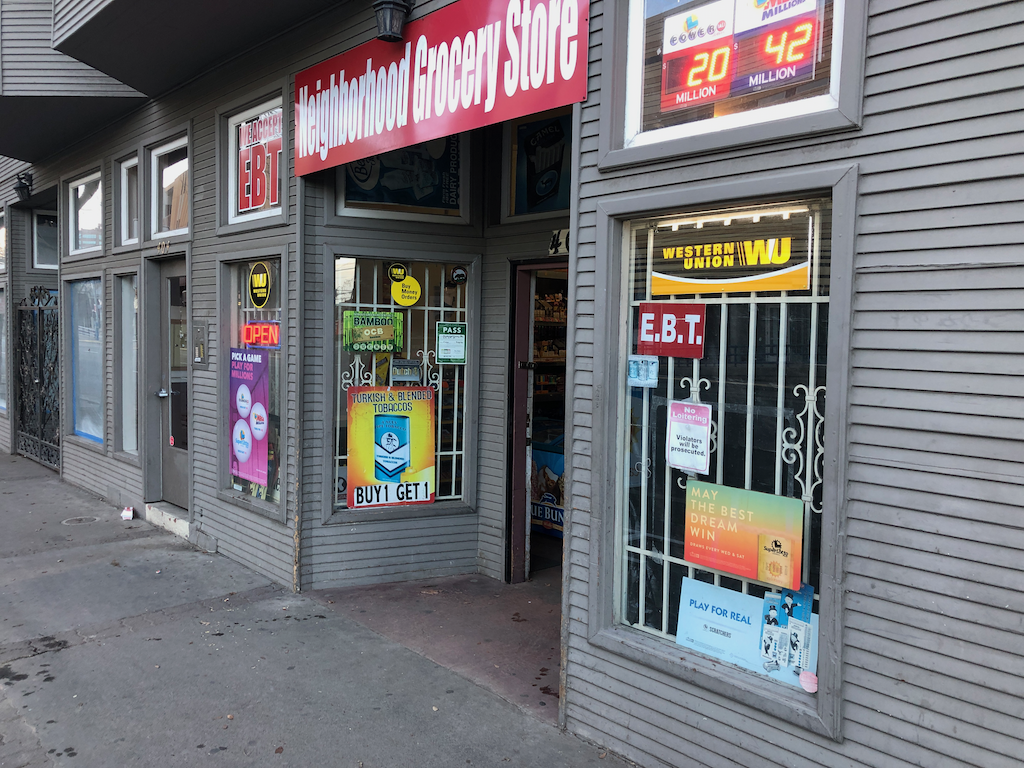
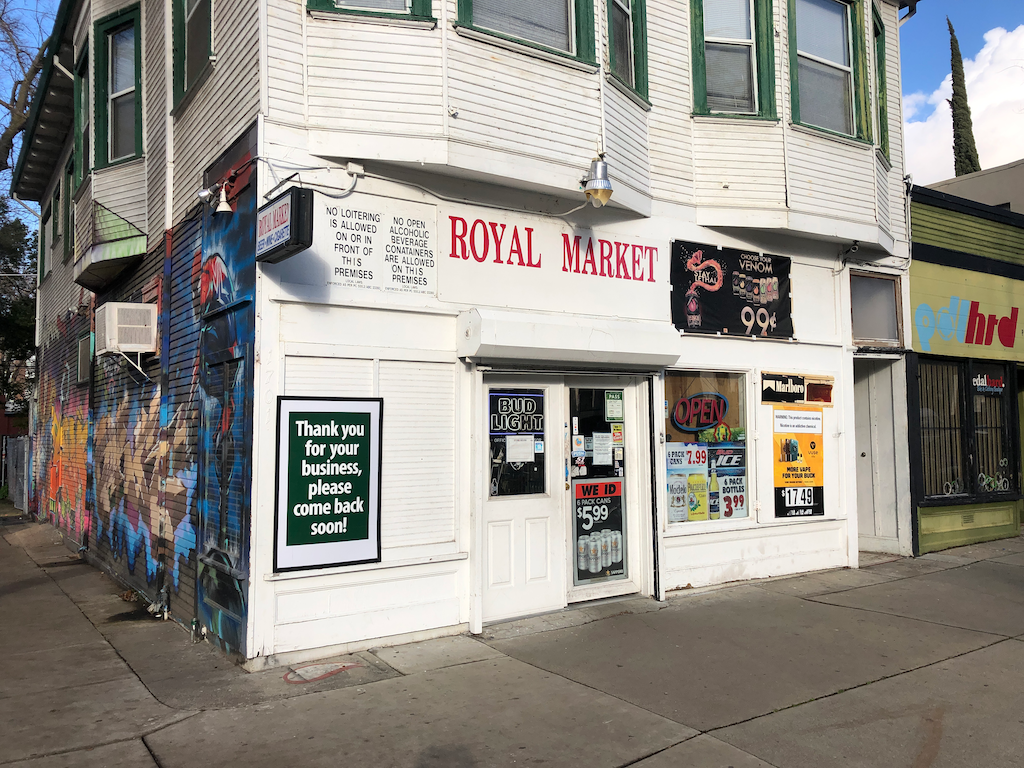
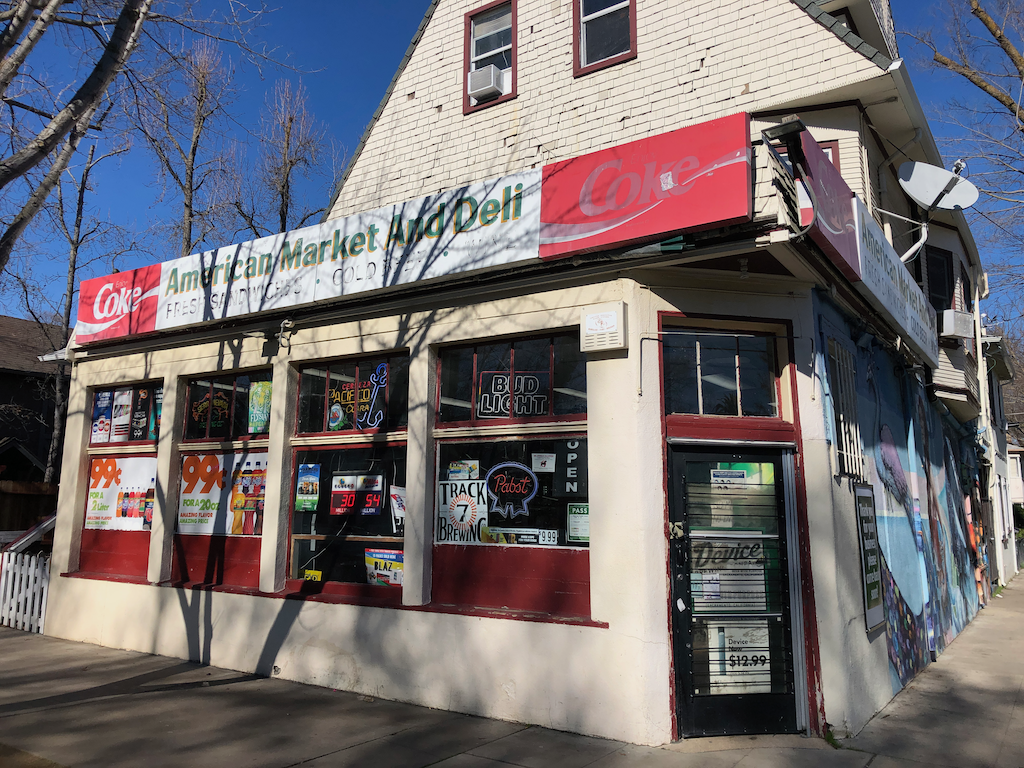
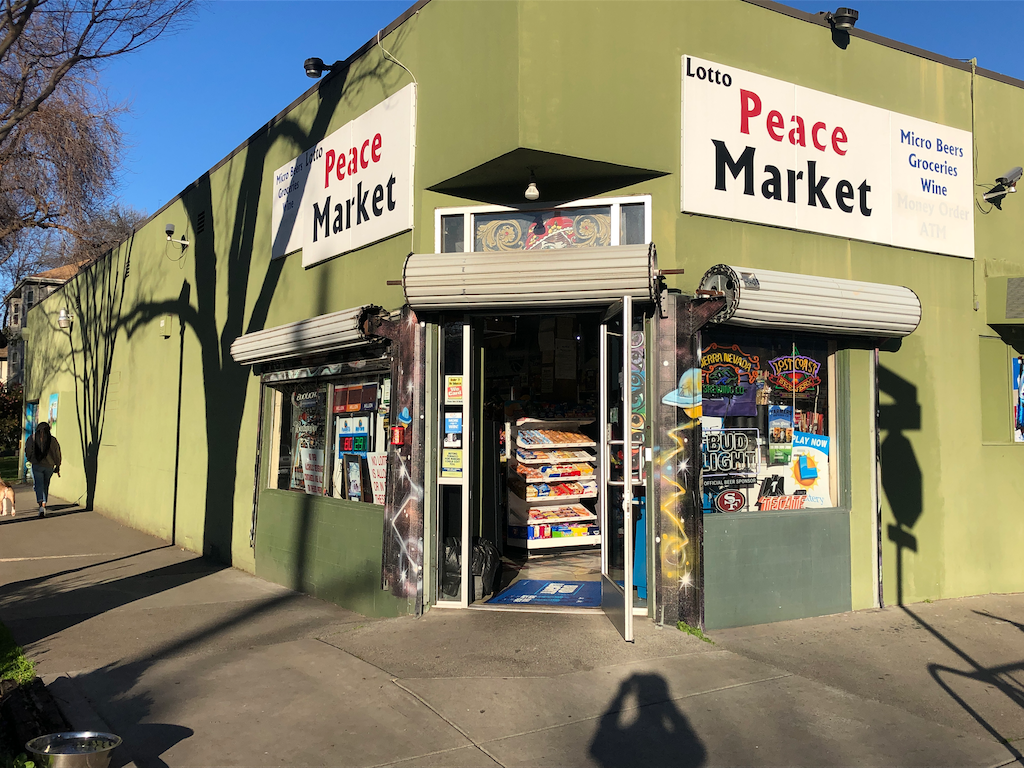
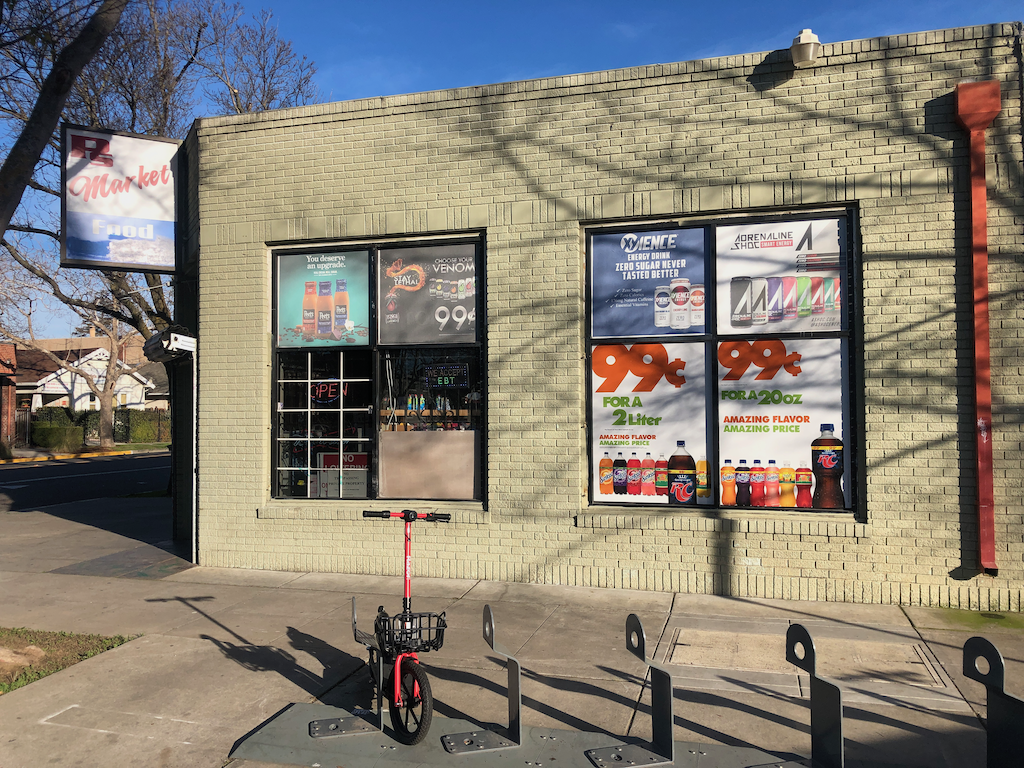
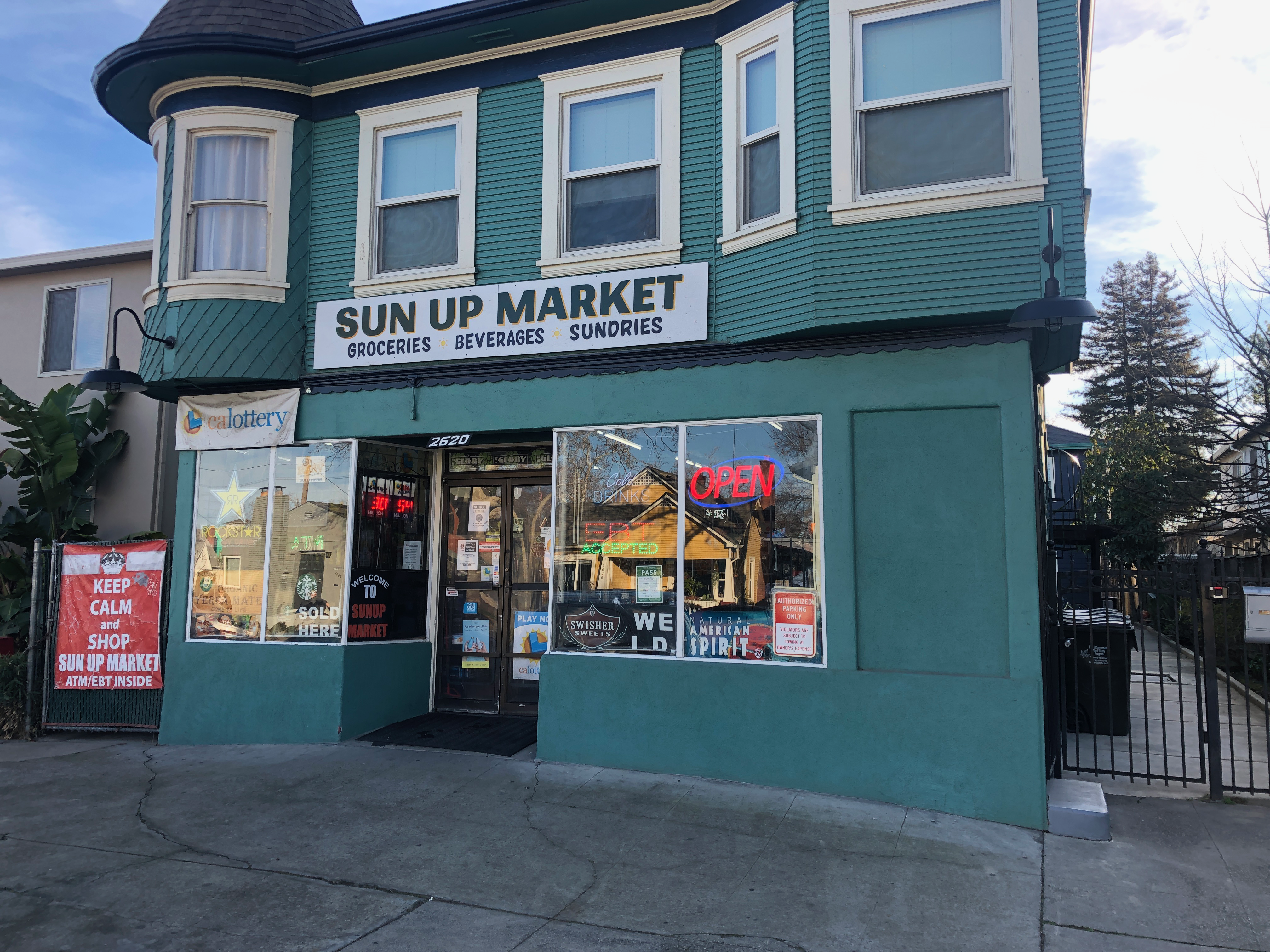
Below are two maps of Oak Park, on the left, arterials and collectors, and on the right, GoogleMaps with markets selected. The scales are similar but not identical. As you can see, some corners on arterials or collectors already have corner markets, and there are other corners with retail that is not a market, but there are a number of locations that could have corner retail under my proposal, but do not. I picked Oak Park just because I’d spent time there recently looking for markets and other corner retail (photos below).

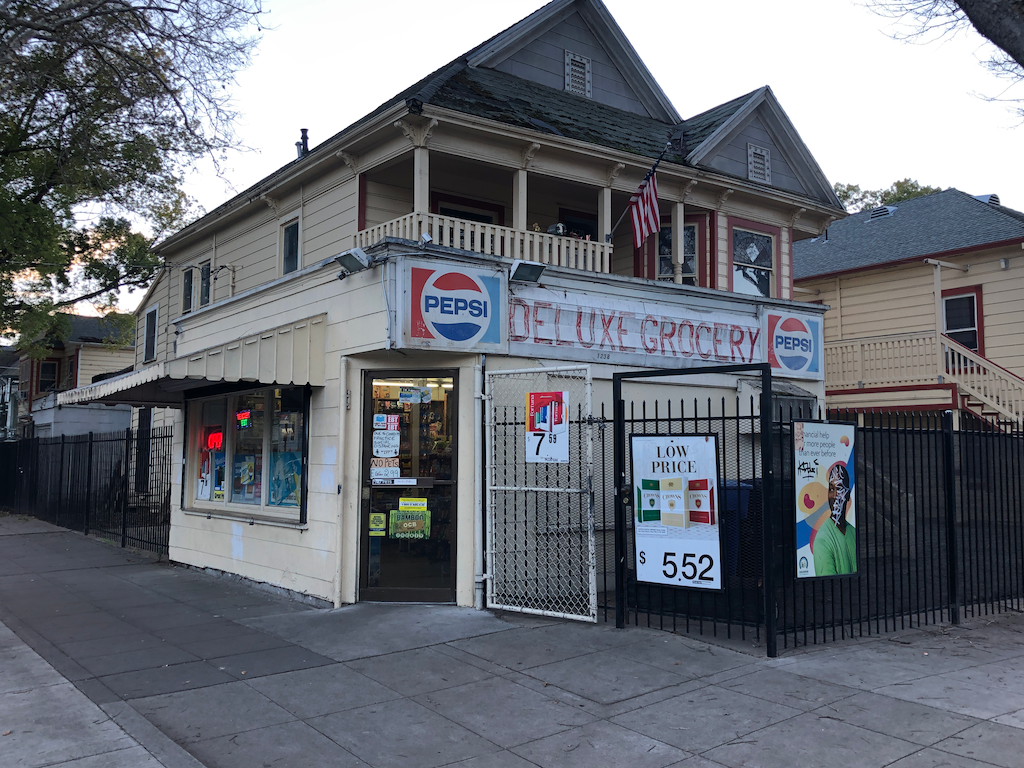
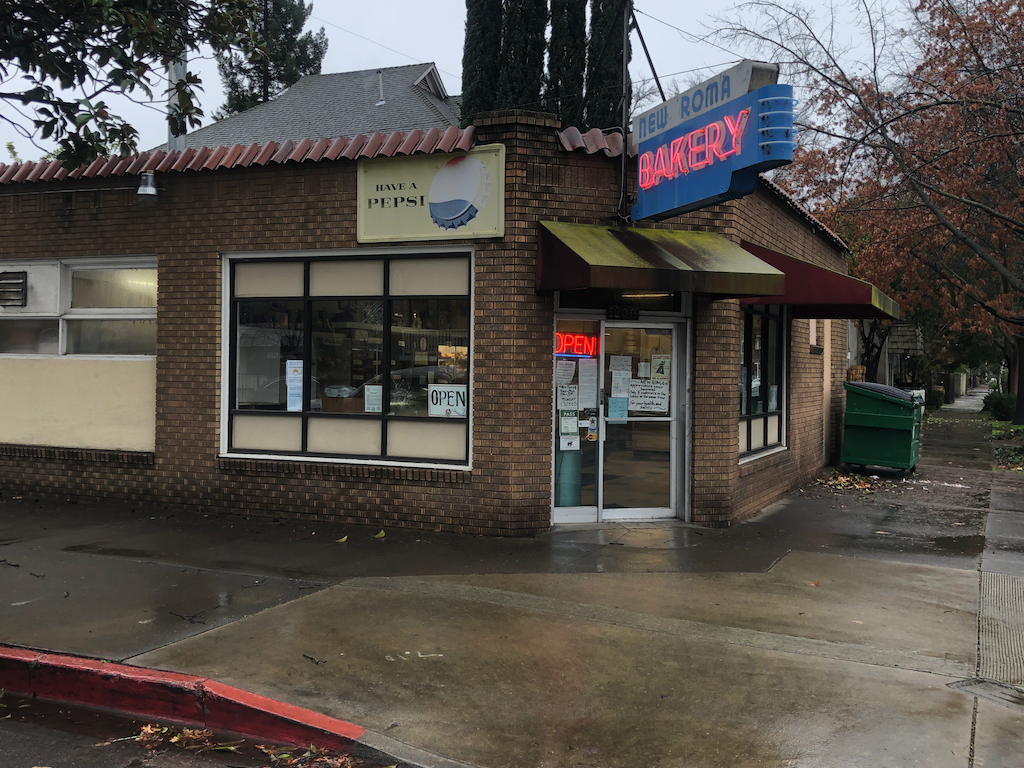
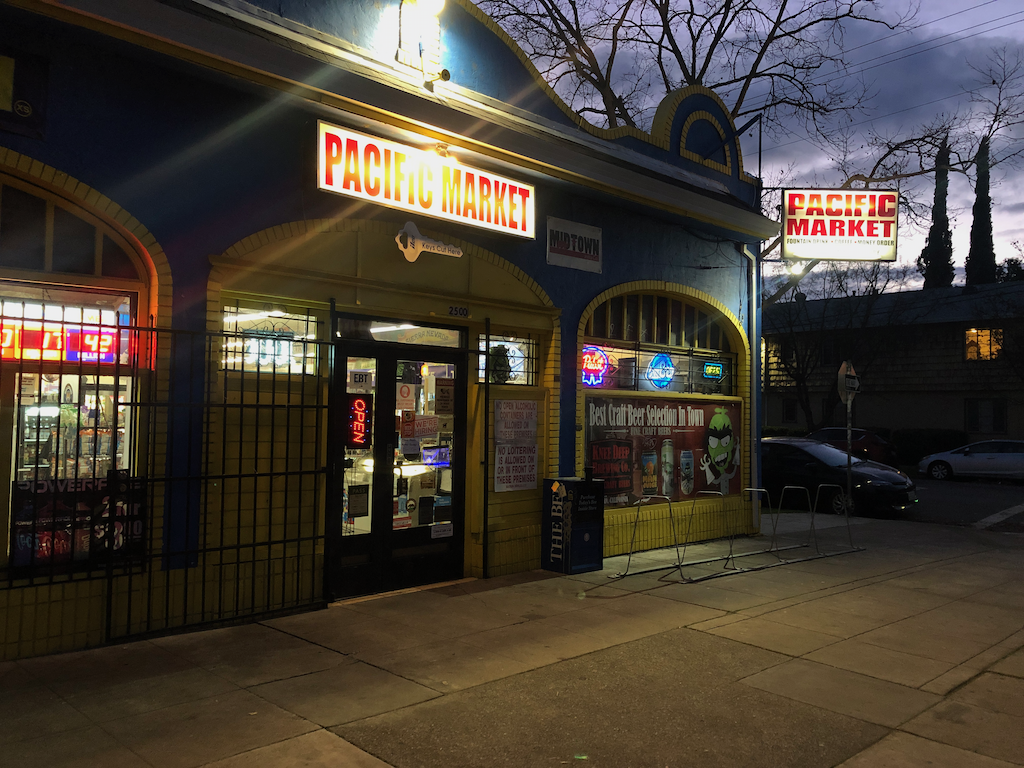
The slideshow below shows some of the corner retail, mostly markets, in Oak Park. Note that in general these locations are much more car-oriented than the ones I showed in the central city, because the area is much more car dominated. I will say more about that in the future. It does not include the many, many businesses that are part of commercial zones along Broadway and Martin Luther King. If you zoom in on Google Maps, a commercial area overlay shows up as pale yellow. I am gradually collecting photos of retail in other areas of Sacramento and will eventually post them.

corner retail

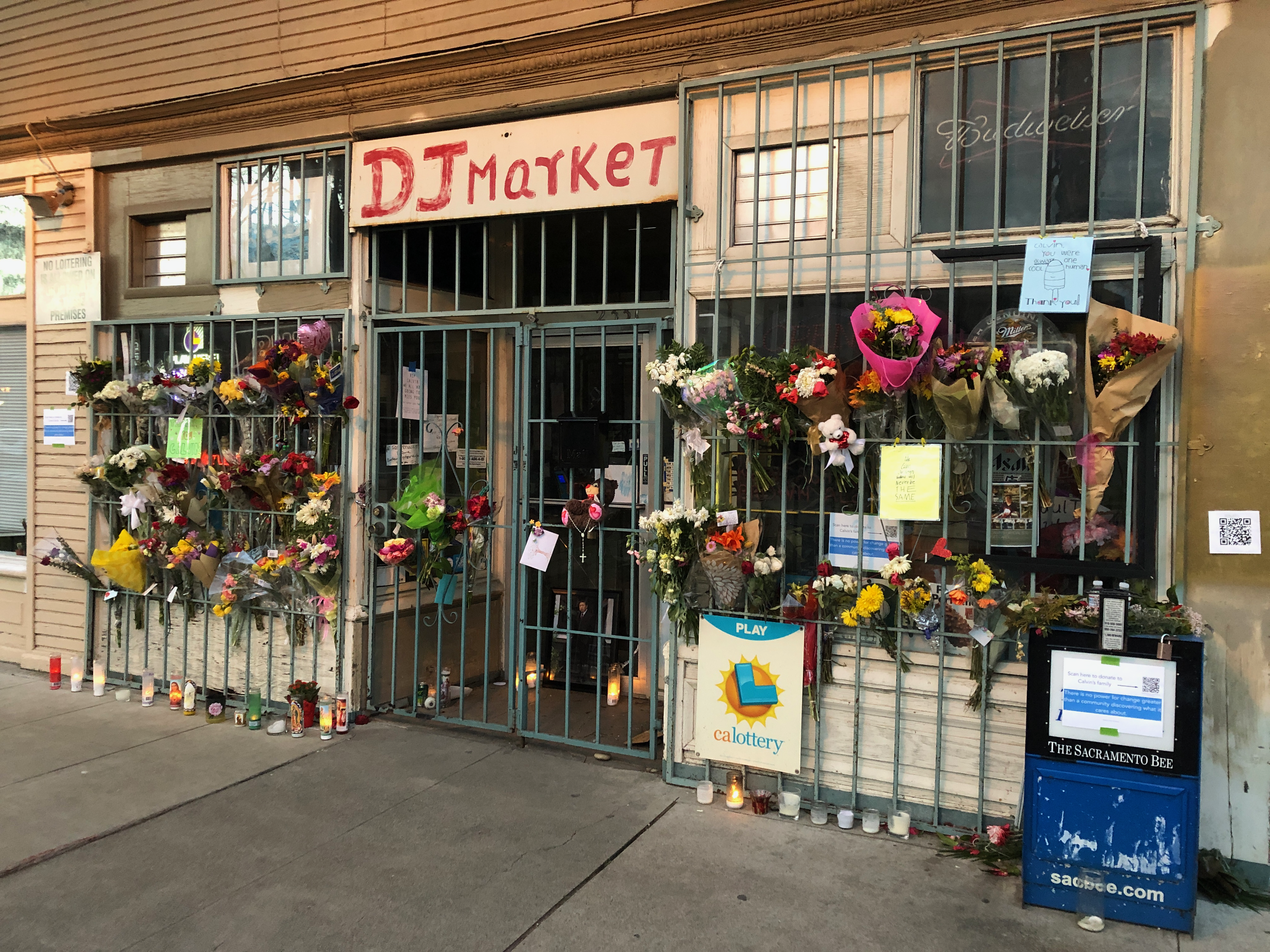
I have been thinking about the value of corner retail for a while, and gradually collecting photographs of corner retail in Sacramento. A Twitter reference also brought me to an article from last year by the Congress for New Urbanism, Public Square “Corner stores can anchor a neighborhood“. What moved me to post now, though, is the recent death of Calvin Yang, owner of the Sacramento midtown market, DJ Market. See Sacramento celebrates life of beloved midtown store owner Calvin Yang with vigil, memories. It really brought home to me how important these neighborhood, locally owned, small businesses can be to the community. They are a key part of livability.

DJ Market, midtown Sacramento, memorial offerings

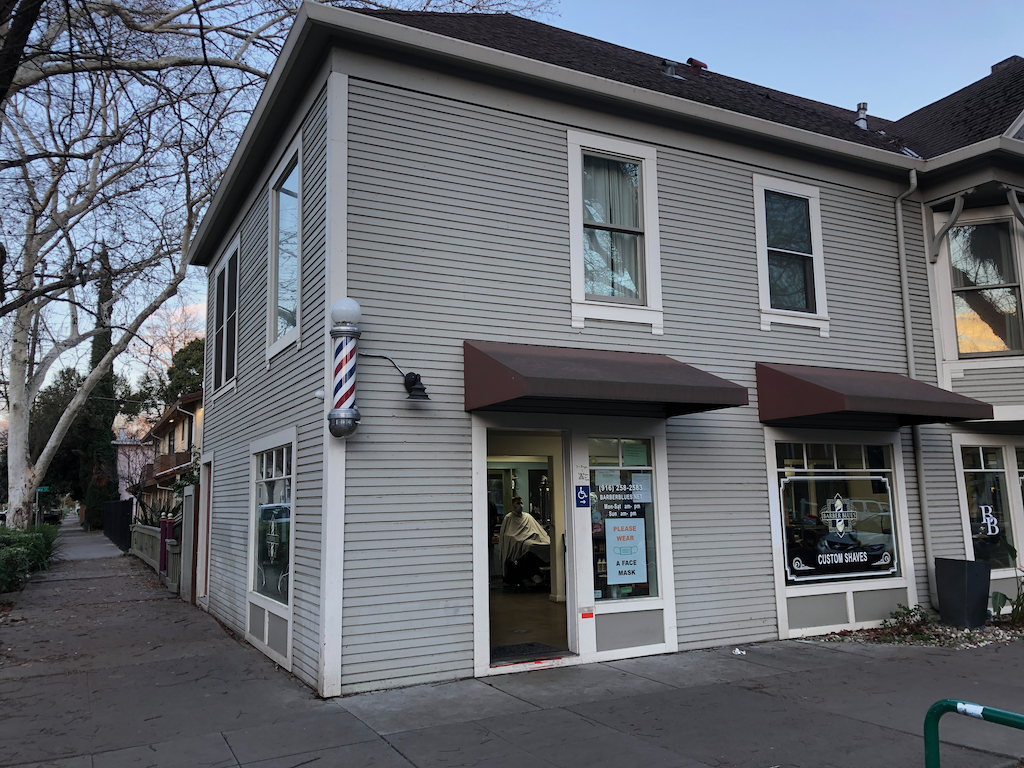
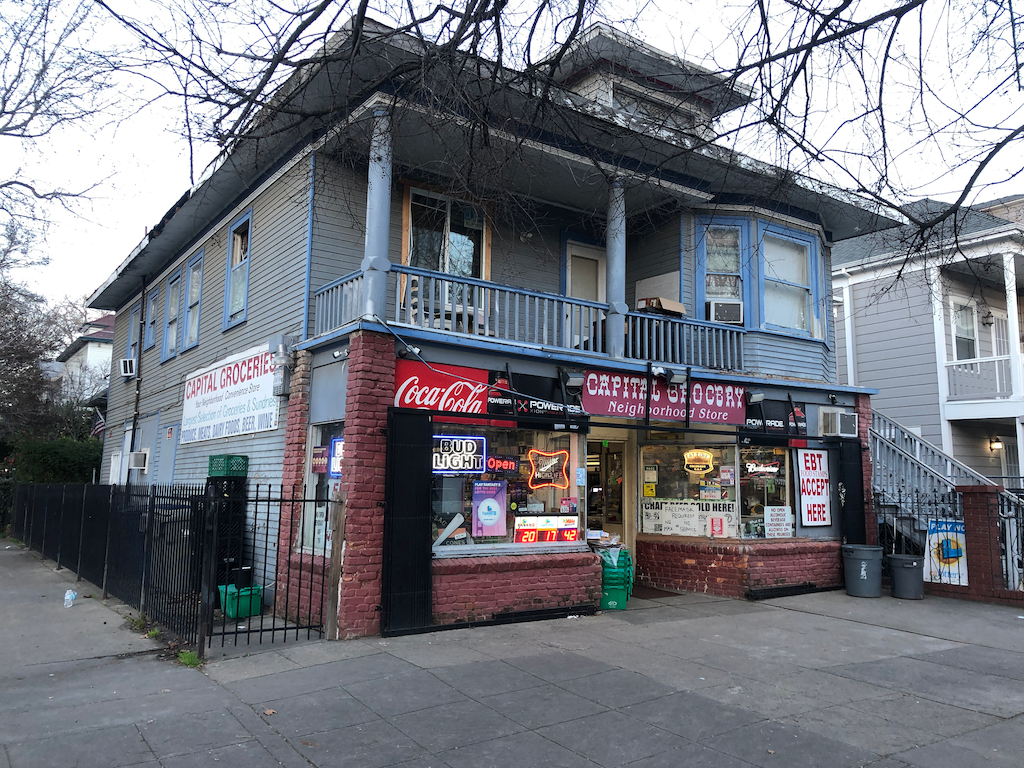
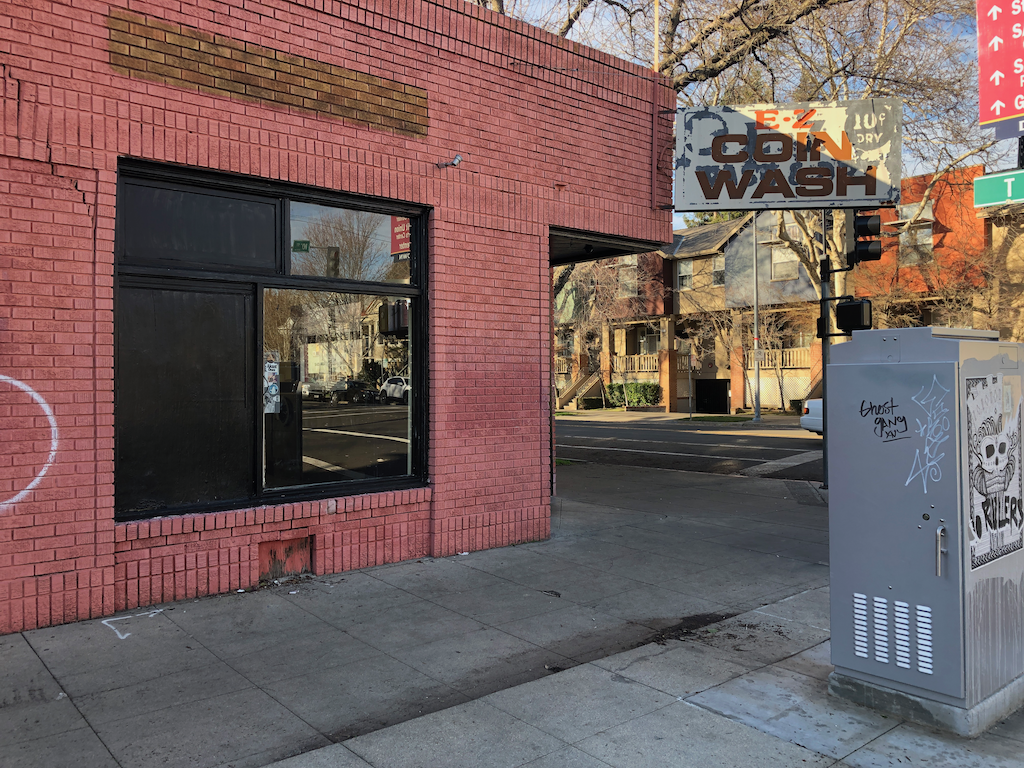
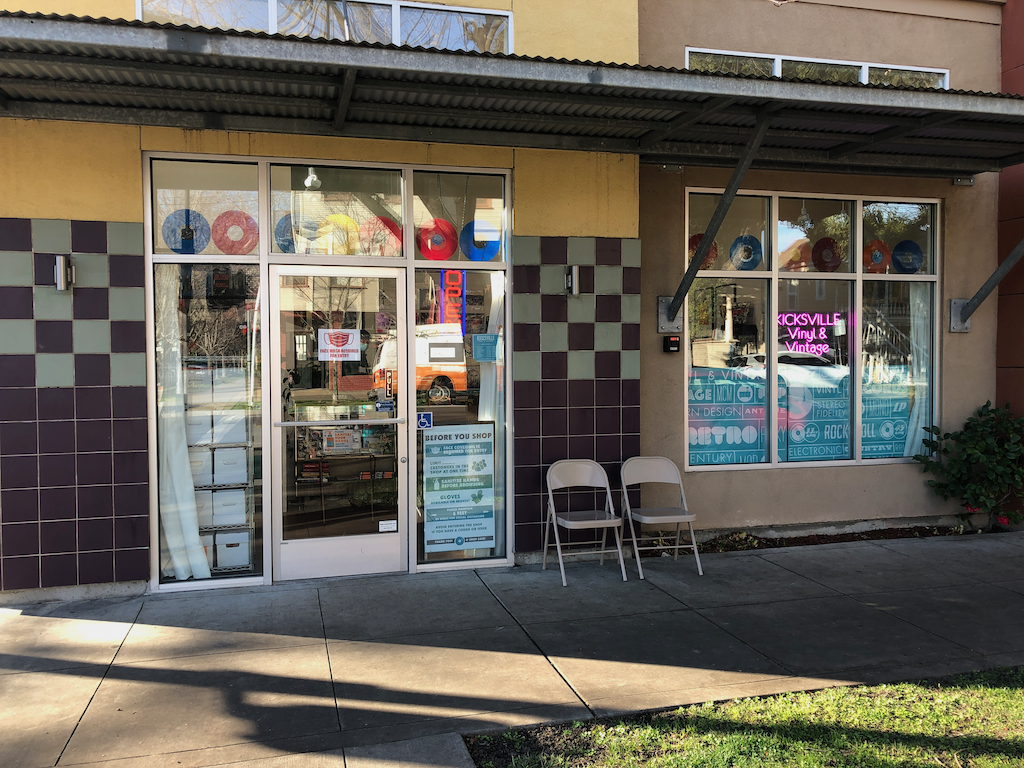
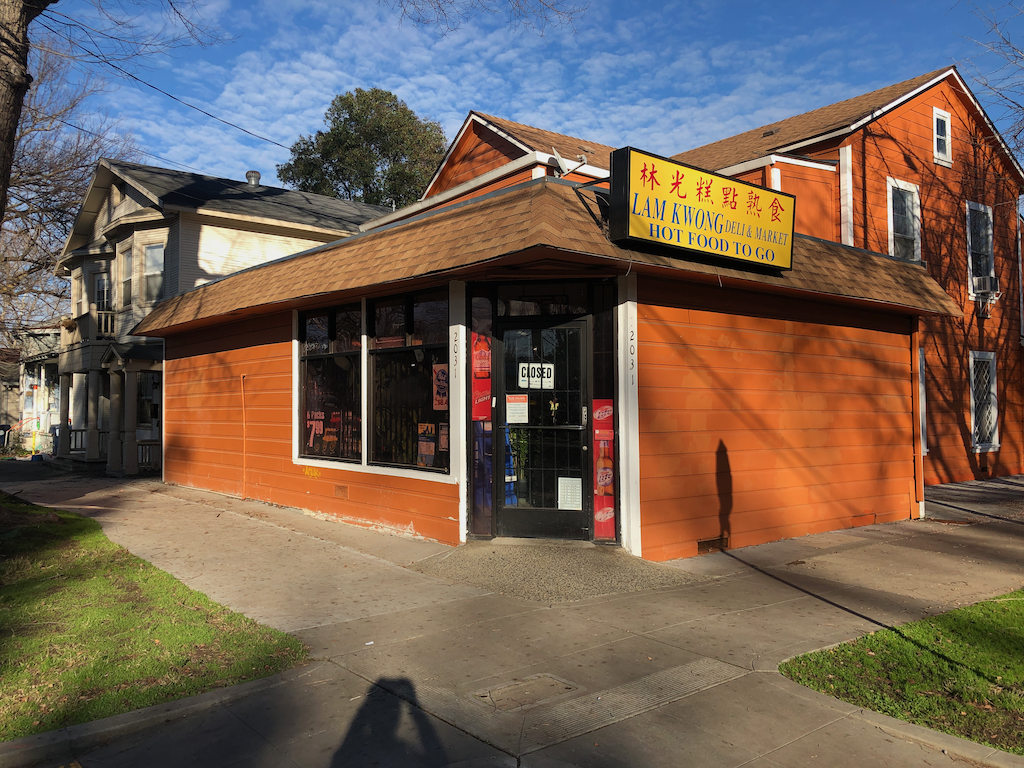
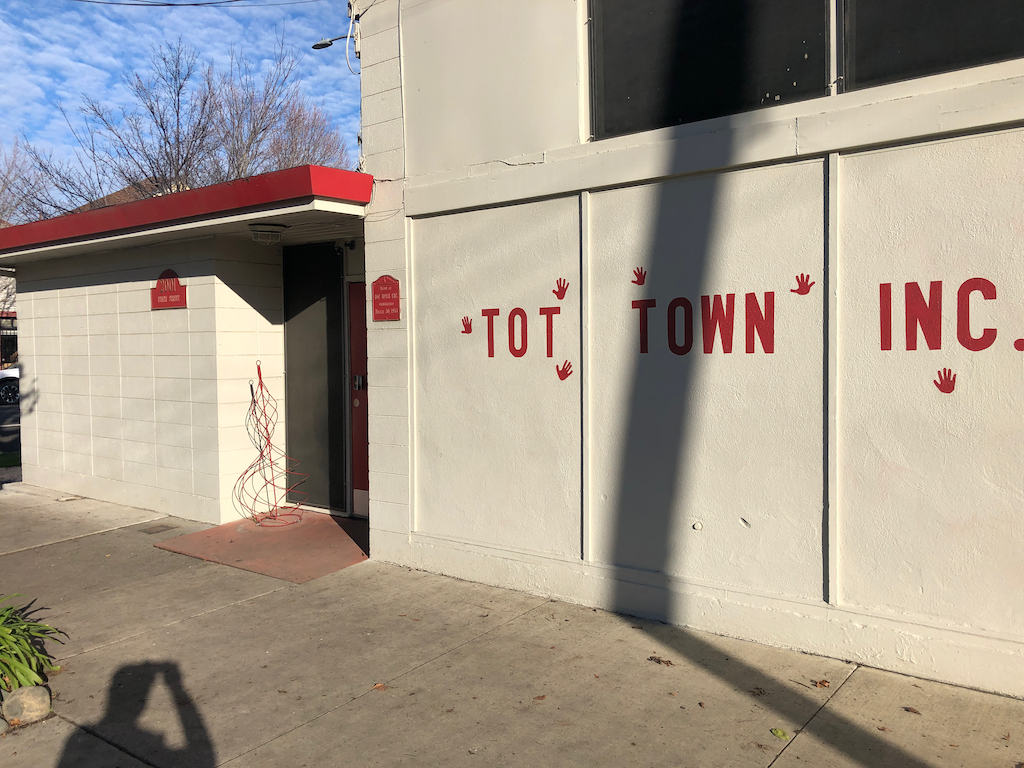
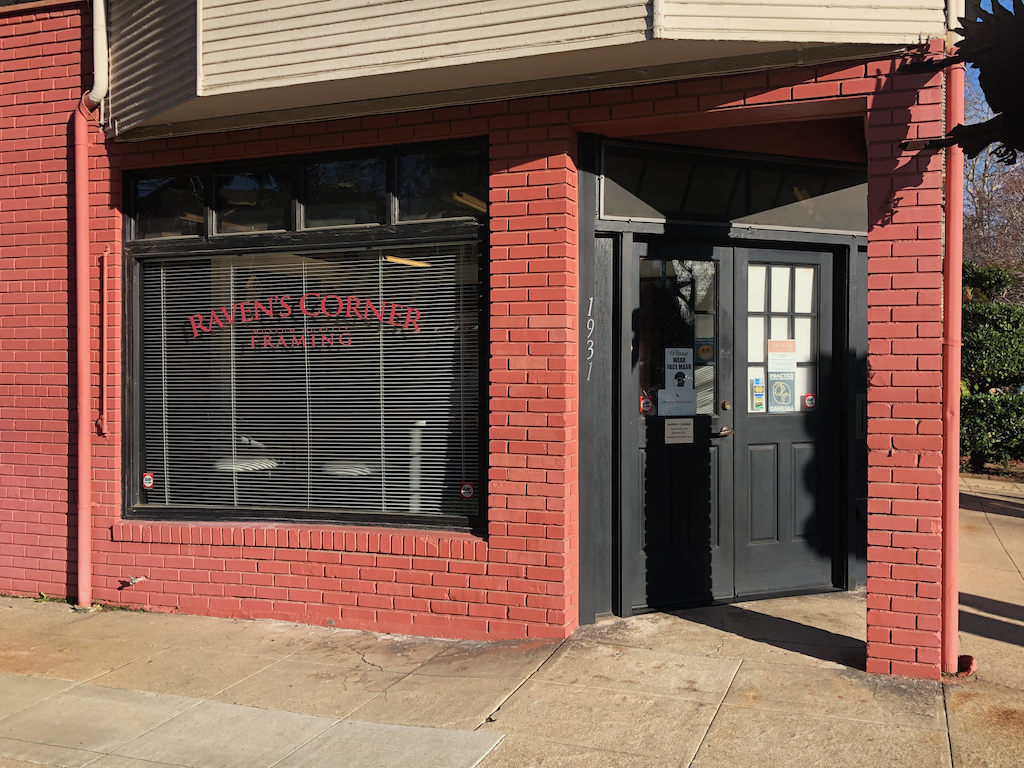
Using the term corner retail, I’m not just referring to corner markets, but to any public-facing business on a corner. In the Sacramento central city, these include frame shops, child care, laundromats, barbers, coffee shops, bakeries, restaurants, bars, record stores, and many more. Though grocery stores or markets are probably the most important, it is the variety of small businesses that make it work. And I am going to claim that much of the livability of the central city comes from these having these businesses close to hand. It is part of the 15-minute city that I will post on soon. The main point of 15-minute cities is that everything you need on a day-to-day basis is within a walking or bicycling distance of where you live.

One of the things I will never understand is people driving to get coffee, and even worse, drive-through coffee. I’m not a coffee drinker, but I do go out often for tea. My favorite location is The Mill on I Street, not because it is the closest to where I live, but it is walkable and easily bikeable, and I really like the owners. I have said for years, long before coffee places became more commonplace, that the single greatest determinant of livability is the density of coffee shops. It doesn’t matter whether you go out for coffee, or make it at home, or don’t drink coffee at all, having one or more coffee shops in your neighborhood means you are in a livable, walkable place. Coffee places are not just places to get coffee, but what are called third places, where people can socialize and get to know their neighbors.

It is also relevant to me that these corner lots and small, often quite old, buildings cannot host a chain business, except in some cases what I’d call local chains, of which coffee places are probably the most common. A national or regional chain simply cannot compete in this local environment.

I’m not referring here to modern mixed use buildings that contain ground-floor retail, nor am I referring to commercial/retail blocks or clusters where there are a number of businesses. These are businesses on the corner, adjacent to largely residential. Though I certainly support those as well, they are not what I’m calling corner retail.

My apologies for the central city focus in the post and the gallery of photos. I live downtown, so it has been easy to get to these locations for photos. When I have the chance to get to the other important parts of the city, I will post again. I have probably missed a number businesses that should be in this central city gallery.

What is your favorite corner retail? How often do you go there? How important is it to you that these places exist? What other businesses would you like to see within walking distance of your home?

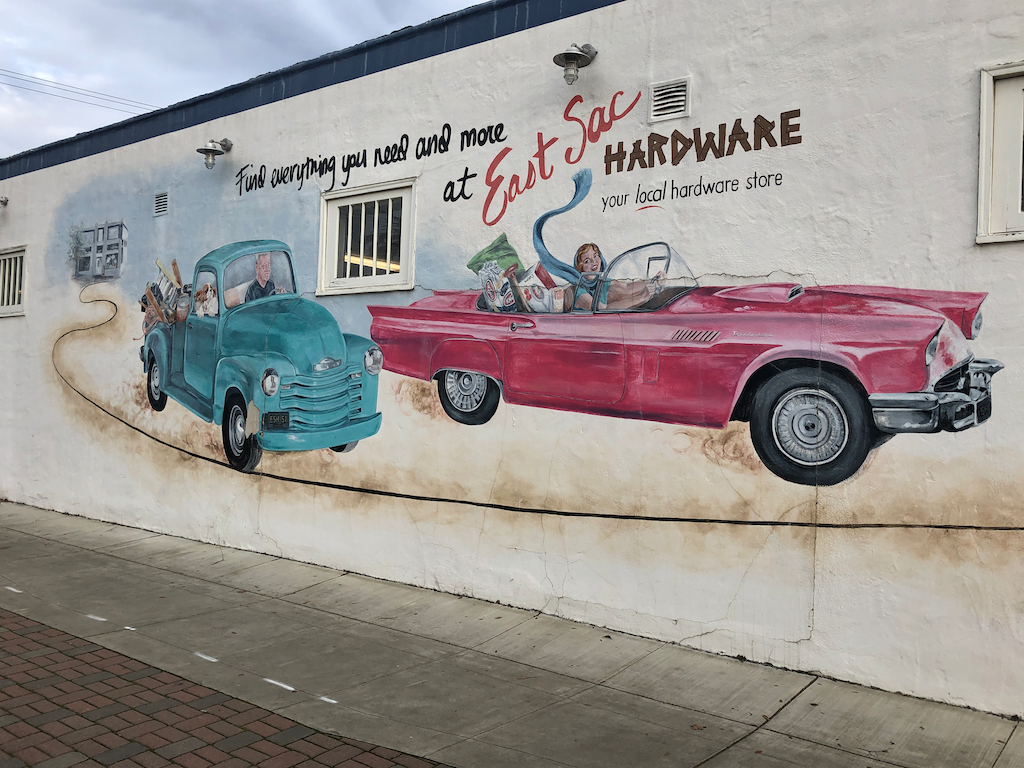
East Sac Hardware closing

I read with sadness in a Sacramento Business Journal article (https://www.bizjournals.com/sacramento/news/2021/01/29/east-sac-hardware-closing-permanently.html; paywalled, but there is a not-paywalled article at https://insidesacramento.com/farewell-neighbor/) that East Sac Hardware on Folsom Blvd is closing soon.

East Sac Hardware

I don’t question the business and property owners right to do what they want with the business and property, but the closure is nevertheless a big loss to the community. Locally owned businesses are almost always better in my opinion than national chains. Local stores and staff know their customers, and their customers often know them. Yes, I will admit that big box stores often have lower prices, but despite their huge floor area almost never have a better selection. I’d rather get exactly what I need from a local hardware store than something that sort-of-might-do from a big store.

The biggest losses here are the staff expertise, quantities, and location:

  • Expertise: In a local hardware store, the staff almost always knows what you need, or don’t need, and how to install it or use it. Home Depot and Lowe’s, not so. Though I rarely go into these big box national chain stores, when I do, I can’t get good help. Every once in a while I do find someone, but it always turns out they are retired from a real hardware store and just picking up some income and wanting to still serve the public.
  • Quantities: Another issue with the big stores is that you can’t buy just what you need. Need a screw or a bolt? They have them in packs of 25 or 50 or 100. In a real hardware store, you can buy just that one screw or bolt.
  • Location: Another big issue with the loss of hardware stores is that a person has to drive further and further to the big box store. Fortunately there are still two real hardware stores that I can access, Capitol Hardware on I Street in midtown Sacramento, and Emigh’s Hardware in Arden-Arcade. Emigh’s has expanded and diversified, so will probably survive, but I am concerned for Capitol.

And when was the last time you saw a mural on a big box store?

I believe that local businesses both create and support livability in a community. Big box stores do not. Though their employees may be local, their owners are not, and decisions are made by a corporate headquarters that knows little, and probably cares less, about the local community. Home Depot is headquartered in Atlanta, Georgia and Lowe’s is headquartered in Mooresville, North Carolina, though you’d be hard pressed to find that information on either of their websites.

Sac general plan and housing

The City of Sacramento is updating its general plan, and as part of that process considering modification of zoning and development restrictions, with the intent of allowing the creation of more housing. A recent SacBee article, Sacramento has a plan to address its housing crisis. Some neighborhoods are fighting it, covered some of the changes being proposed by city staff, and some opposition to those ideas. The opposition is coming from neighborhood associations in East Sacramento, Elmhurst, and Land Park, at least so far. Though neighborhood associations usually represent only some of the richer and more powerful residents, they are nonetheless very politically powerful, particularly East Sacramento and Land Park, so the views of these will hold some sway with city council. I will address some of the misconceptions represented in the neighborhood association viewpoints.

These neighborhoods, along with Oak Park, were originally streetcar suburbs, developed by and for the profit of the streetcar companies and their associated development interests (greedy developers, no doubt). I recommend Bill Burg’s Sacramento’s Streetcars book (and any writing by Bill), and you can view part of the content at http://sacramentohistory.blogspot.com/2007/08/sacramentos-streetcar-suburbs.html. As such, the development pattern is a relic of times past, which met the needs of that time but do not necessarily meet the needs of this time. East Sacramento and Elmhurst had more businesses than they do now, so they are less livable neighborhoods than once they were. Not sure about Land Park. Yes, most of the housing was single family and duplexes, but there were multi-family homes as well.

The neighborhood associations want to fix their neighborhoods in time, so that they never change. That is not possible. Neighborhoods either change or decline over time. Midtown is a continual example of that, as buildings that no longer serve are either converted or replaced. The reason these three neighborhoods have only experienced some decline is that rich people live in these neighborhoods and have been able to forestall decline by an infusion of money that they’ve made in other parts of the city and region.

Fixing a neighborhood in time, if it is in good condition, will inevitably lead to inflation of home values, which I consider unearned income. Maintaining and updating houses is not what I mean, I mean that the value just goes up and up regardless of any action on the part of the owner. Many of these homes are now unaffordable for middle class people, even though that is primarily who they were built for (with the fabulous 40s and homes right on Land Park park being exceptions). Intentional scarcity makes anything more expensive, and the neighborhood associations like intentional scarcity.

So what do middle class people do? They move out to the sprawling suburbs in an attempt to find affordable housing. Of course this is partly an illusion because the cost of car ownership and the time lost to commuting subtract most or all of that cheaper housing benefit. I attribute the explosion of the sprawling suburbs in large part to the fact that the inner ring suburbs refused to allow intensification of housing to accommodate more people. Many of the people in these old neighborhoods consider themselves to be progressive, yet their resistance to change produced vast sprawl, high speed arterials and the pollution, climate change, death, and un-livability that goes with these outer suburbs, and exurbs. A phrase that has been used by many to highlight this is pretty accurate, “I’ve got mine, screw you”.

Another impact is that in an effort to prevent all change, they actually induce undesirable change. From the article: “Their fear is that investors will tear down single-family homes and replace them with poorly-maintained rental properties, charging high rents to Bay Area transplants to turn a big profit.” What instead happens is that even richer people buy small houses, tear them down, and build large McMansions on the same lot. In many cases these McMansions violate current zoning, but that is no problem is you have enough money or political power. Yes, I know that the neighborhood associations hate that too, but it is in part a result of their resistance to change. Apparently a McMansion is better than multi-family? Not in my worldview.

Bill Burg (@oldcityguardian) recently posted a photo of midtown variety of housing types, below, and a diagram of various floor area ratio scenarios, indicating the FAR of 1.0 for much of Sacramento is probably too low, and the FAR of 2.0 for the central city is too low.

variety of housing forms, midtown Sac (Bill Burg photo)
Floor Area Ratio (FAR) diagram (source unknown, via Bill Burg)

Lastly, I find the frequent assumption by homeowners that renters are somehow less community involved as ridiculous. I have been a renter every day since I left my parent’s house (I’m 68, so that is a lot of years), and I know only a very few homeowners (also friends) that have been more involved in their community.

Restaurant space update

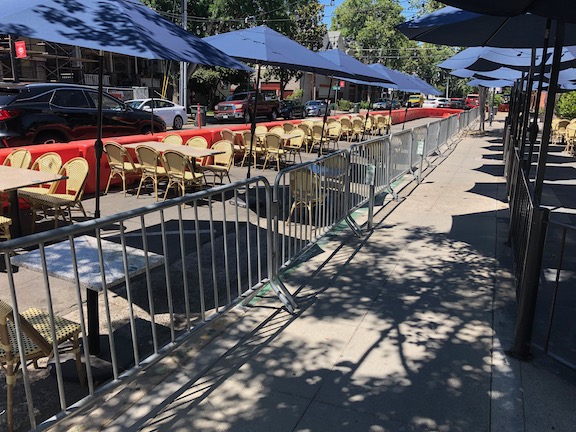
There are now several more allocations of sidewalk and roadway space in Sacramento for restaurant outside dining, since my May 28 post (https://gettingaroundsac.blog/2020/05/28/restaurant-space/).

I have created an album on Flickr of my photos: https://www.flickr.com/photos/allisondan/albums/72157715113286843. I am not claiming that I have an exhaustive archive, there may well be other locations that I have not run across. Let me know if you know of others.

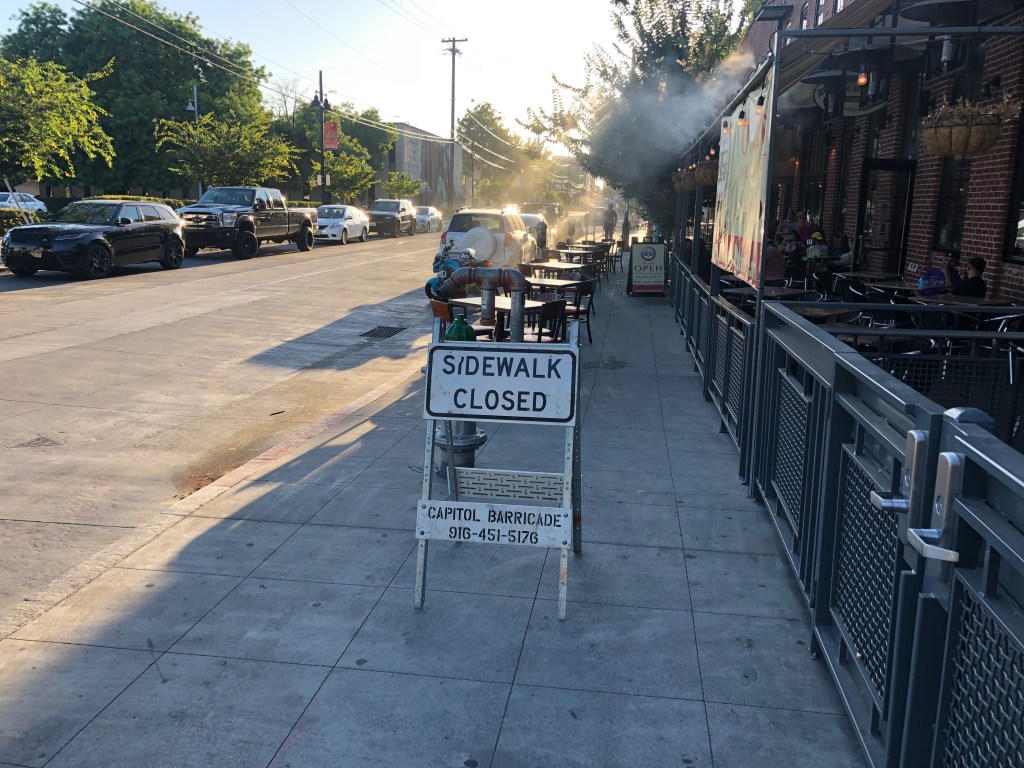
Most of the installations have been done reasonably well. I feel that it is better to place dining space in the parking lane, or even travel lane, rather than the sidewalk, however, if done well, using sidewalk is OK. Yesterday I did run across a completely illegal diversion on R Street. It is not legal to simply put up sidewalk closed signs without providing an ADA accessible pathway.

R Street illegal closure

I reported it, and the city had removed it in less than 24 hours. Already underway though, were plans to close this section of street and allocate it to restaurant dining and pedestrians. Some bollard bases had already been installed, and more were being placed this morning. These bollards will allow the closure (to cars) of R Street between 15th and 14th, R Street between 14th St and 13th, 14th Street between R Street and Rice Alley (to the south). It may be that additional bollards bases will be placed to allow a more refined closure.

I assume that since bollard bases and bollards are being installed, rather than just construction/detour signs, it appears likely that the intent is that temporary closures will continue to be available past the pandemic.

There were contractor crews working this morning to set up tents for outdoor dining, in the section of R Street between 15th and 14th. It isn’t clear to me yet whether other sections of street are going to be closed (to cars) at this time, or if the bollard bases are just in preparation for future use.
R Street at 15th Street, bollards, tents in background

This work is apparently a cooperative project between the city and R Street Partnership, but I do not know the role of each.

restaurant space

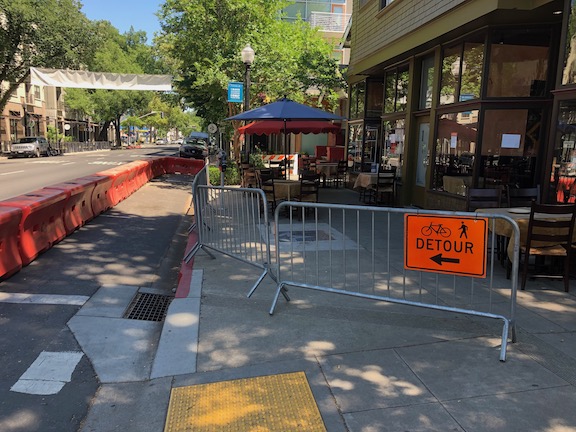
Sacramento has implemented changes to the streets along 18th Street and along Capitol Avenue and L Street near the intersection of the three. There may be other locations in Sacramento, but I’m not aware of them.
L St at 18th St restaurant space

The first example, along L Street at 18th Street, is for Aïoli | Bodega Española. The sidewalk has been closed and an alternate sidewalk provided in what was the parking lane on the south side of the street. There are a few widely spaced tables.

18th St at Capitol Ave, restaurant space

The second example, along 18th Street just north of Capitol Avenue, is for Zocalo Restaurant. It could also be used for the adjacent business, but doesn’t seem to be. The sidewalk was retained (more or less, there is a slight narrowing), and the angled parking on the east side of the street was converted into seating area.

The ADA ramps which go around the sidewalk closures look sketchy to me, but I don’t have expertise in that aspect of ADA, so I’ll leave that to others who do.

I think this is a great use of street space to help restaurants meet the challenge of physical spacing while reopening. I prefer the situation where the outdoor seating in in the parking space, rather than the sidewalk being diverted to the parking space, but each situation is unique, and it should work for the business and the walking public.

Of course with any of the ‘temporary’ COVID-19 measures, the question is, should this be a permanent solution? I think this needs to be a negotiation between the city, the business owners, and the public, but I do think in many cases, the answer is yes.

Redlining trees

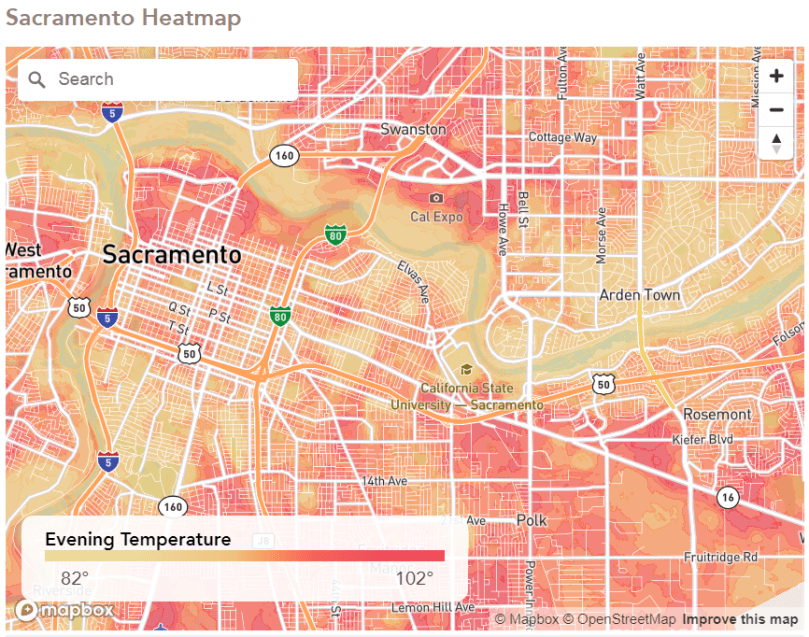
A take-off on the article on CapRadio, Summer Days Often Feel Much Hotter If You Live In One Of California’s Historically Redlined Neighborhoods, published/broadcast May 26.

image from @RandolWhite tweet

The lower temperatures along the river corridor are of course expected. And so is the pattern, almost universally seen here, that lower income locations have higher temperatures. One could speculate that these areas never had as many trees, but I don’t think that is the explanation. It has to do with sidewalks, and city neglect.

I walk a lot, and to the degree possible, walk throughout the city. What I see in the lower income neighborhoods is a decline in trees. Many have been removed, and many of the ones remaining are declining in health. I do not think it is because people who live there don’t care about trees, quite the opposite. It is because there are more renters in lower income neighborhoods, with landlords who do not care much about trees, or other things. For those who do own their homes, it is a struggle to pay the bills and take care of trees.

When these neighborhoods were built, they probably had just as many trees as any of the leafy neighborhoods in midtown or east Sacramento or Arden Park. But these neighborhoods are old enough that many of the trees are dying out (maybe for lack of care, more probably because they were not the right tree for the context), and not being replaced. The homeowners or renters don’t have the money to replace them, and the landlords don’t care.

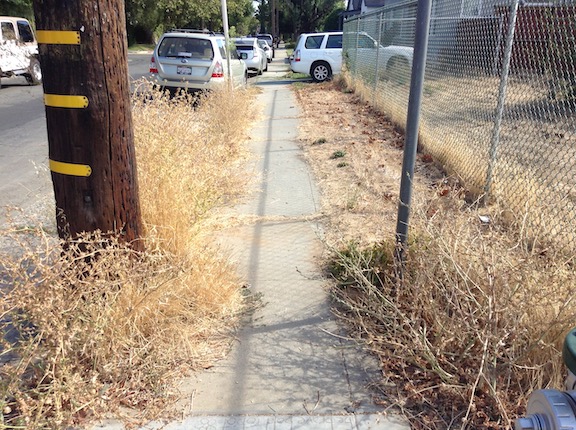
So why are there still trees other places? Because the design of streets in many higher income neighborhoods feature detached sidewalks, with a buffer in between the street and the sidewalk. This is the standard design for livability in all but intensive retail areas, and adds significant safety and comfort for walkers. But in the second ring and beyond suburbs, most streets are either without sidewalks or have attached sidewalks, with no buffers. So the trees were in people’s yards, not in the buffer. When they die or are taken out, the city has no responsibility. When there are buffers, the city replaces the trees. Yes, they are incredible slow about doing so, but it does eventually happen. And it happens for the most obvious of reasons, that richer (white) people get what they ask for in this city.

The city also repairs sidewalks when the buffer tree roots systems begin to crack and heave the sidewalk (many buffers were too small for the trees planted in them). Not with alacrity, but they do it. When a yard tree cracks and heaves a sidewalk, the city sends the owner a notice to repair.

tree in sidewalk buffer, with city repair
a typical lower income neighborhood, no buffer, no city maintenance
no buffer, rolled curb, no yard trees (though there were at one time)

A person posted in reply to the CapRadio article that the Sacramento Metropolitan Air Quality Management District did a Urban Heat Island Project to assess the issue and solutions. Good for the air district, and good for the study, but what about action? What about the city? What is the city doing, proactively, to get trees back into low income neighborhoods?

Tree redling also relates to the issue of sidewalk responsibility. Sidewalks are a part of the city’s transportation system, and are legally and morally the responsibility of the city to maintain. The idea that we provide for cars and car drivers, while leaving walkers to the vagaries of private property owners is an idea whose time has passed. In fact, I think that the city should establish a program of repairing and installing sidewalks before ANY road repairs are done. It will take many years to undo the damage of our cars-first transportation system and funding, but the time to start is now. Where sufficient public right of way exists, and sidewalks are in need of significant repair, existing sidewalks should be replaced by detached sidewalks, with buffers and street trees.

watch Why We Cycle

The 2017 video, Why We Cycle, was offered for free streaming for one day, yesterday. Though the freebie is over, I highly recommend you watch the video; at $4.99 it is still a great deal. This video has brought joy to me in ways that I haven’t felt in a while, and I think it will do the same for you.

So if you can push the car out of the city grid, leave it at the edges, and go walking further, it’s an enormous advantage for health, for clear air, for interaction.

Sjoerd Soeters

Though the bicycling infrastructure in the Netherlands has received the greatest notice in the US, this video is only secondarily about the infrastructure, instead focusing on cultural capital and transformation.

My own commute is cycling, that’s because I live cycling distance from work, but that is not a coincidence, that is why I live there.

Erik Verhoef

The video demonstrates the long list of benefits to a cycling culture (note that the video unapologetically uses the term cycling, without the cultural baggage of spandex and Strava and high priced bikes that the term carries in the US):

  • convenience: the bike is often the quickest way to get somewhere
  • economics: the bike is far less expensive than private motor vehicles, and even than transit
  • health: an active life brings measurable and significant benefits to the individual and to society in health care costs
  • cognitive: because bicycling requires people to be aware and interact with a large amount of information, there are clear benefits to cognitive development and maintenance
  • creativity: bicycling increase creativity, while on the bike and in life
  • reduced absenteeism: work absenteeism is lower for people who bicycle, and presumably for school as well
  • freedom to move: people are much freer to go where they want to go, when they want to go, on a bike
  • diversity: bicycling exposes people to diversity that they would not be if driving, to meet the ‘other’, to actively negotiate the flow with others

It’s the story of living in a city that is human scaled, that allows me to engage with the social/spatial environment… the intangible effects…

Marco te Brommelstroet

Data on bicycling trips clearly pointed to the conclusion that choices were often governed much more by the senses than the coldly logical plans of traffic designers, even causing people to leave the safe but sometimes boring cycle-ways for more interesting routes.

I noticed in the video, and it was commented on by one interviewee, that some signals have all ways for bicyclists at the same time, a bicycle scramble, so to speak. Because bicyclists have so much experience with negotiating with each other, it just works!

… it relates to the culture of mutual shared respect, but also the culture of trust; instead of infrastructure, by the users of infrastructure

Fariya Sharmeen

The adolescent social area can be the whole city, not a limited area close to the home. It’s about fun, being together. The video highlighted schools where nearly every student walks or bicycles, such a huge contrast to the US.

Dutch children are the happiest children in the world, just because they can go farther and farther from their homes…

Cycling is a good metaphor for a good education.

… to put the priority in relationships between people, then we support the cycling, we support freedom for children. Priorities for children and for bikes are good priorities for a happy politics.

Leo Bormans

A better world is possible, and we can achieve it if we work together and insist that each decision we makes moves us towards that end, and away from the car supremacy under which we have suffered, and died.

We can’t go back

sorry, could not find a photo for Sacramento,, but if someone provides it, I will replace this one of Los Angeles (via Business Insider)

We can’t go back to the way things were before! To the car-dominated world where walkers and bicyclists were considered second-class citizens, worthy of consideration only when it did not inconvenience the privileged drivers of cars. The streets are largely empty (except for some essential drivers and too many joy-riders). The air is clean. The city is quiet. It is (other than the above-mentioned joy riders) safe to cross the street, to bicycle on the street, even in some places, to walk in the street. I don’t intend to ever go back, and will work to make sure we do not go back.

Here is a list, with brief notes, of areas in which I think we should not and cannot go back. No priority order. I think that over time my ideas can be refined and added to. Let me acknowledge the many people on Twitter, my main social platform, for giving me a lot of good ideas and food for thought.

  • Right to Move: I believe that, as humans, we have a right to move, to freedom of movement (though I also believe that reduction or even suspension of this right for public health during a pandemic is acceptable, though traumatic). However, this right is expressed through walking (or mobility devices for those not able to walk). It is not expressed through bicycles, or scooters, or even transit, and it is absolutely not expressed through privately owned vehicles. I am not saying that bicycles and scooters and transit are not good methods of movement for transportation, but walking must always be the most important and the most guaranteed, our most basic right, with other modes coming later, if at all (in the case of cars). I am tired of myself and others being terrorized by private vehicle drivers, who are all too happy to inflict their traffic violence on innocent people. Walking FIRST!
  • Transportation
    • all pedestrian signals should be set on recall; they should be labeled with their function; and if there a locations where traffic engineers claim such a low rate of pedestrian use, I’d ask for an analysis of why is there no pedestrian use; if it is an urbanized area, why aren’t there pedestrians, and if it is a rural area, why is there a signal?
    • failure to yield to pedestrians (CA CVC 21950) should be considered a sociopathic offense, similar to drunk driving and smoking in buildings, and strictly enforced; I am not just concerned about the number of pedestrians who are killed and severely injured by drivers, but about all the people who could walk, but don’t, because they are rightfully afraid of car drivers; drivers who repeatedly violate this should have their driving privileges revoked (drivers license suspended and vehicle impounded), and those who still violate should be jailed
    • #NoNewLaneMiles (a more specific version of #NoNewRoads); we have all the roads we will ever need, we just need to use them more efficiently by increasing the density of homes, jobs, and services; because there are no new roads, there will be no greenfield developments, as we have plenty of infill/redevelopment land to work with, and we have an excess of single family homes
    • expenditures on roadways will only go to maintenance, and once a level of good repair is achieved, then to true complete streets projects which reallocate roadway space and increase safe crossings
    • all roadways that are more than two lanes per direction must be reduced to no more than two lanes. Drivers have proven themselves, again and again, incapable of responsibly using wide roadways, and so these wide roadways must end. Temporarily, we can put up barricades or delineators to reduce the lanes, and in the long run, determine and then implement ways of re-allocating this space to best serve the community; some land might be available for housing development
    • freeways will be designed and sized for freight movement, not for commuting; interstate commerce is the primary legally and morally justifiable use for our Interstate system; the idea of continuously expanding freeways so that a continuously expanding number of people can choose to commute continuously expanding distances is not socially or economically rational or feasible; where there are more than two lanes on a freeway, one or more of them should be designated (and enforced) as a freight-only lane so that freight is not slowed by commuting traffic
    • private and commercial fossil-fueled vehicles must be strictly controlled on all spare-the-air days; if the air quality particulates (winter) or ozone (summer) exceeds the ‘healthy’ level, then we start shutting down vehicles; this would be much easier to do if we implemented a pricing scheme (congestion management) all the time, but if we are still working on that, we can in the meanwhile reduce traffic; I’m thinking the easiest way to do that is to control on-ramps and off-ramps, since most long distance commuters, and much commercial traffic, is using the freeways; some on-ramps already meter vehicles, and we could just slow this down so fewer vehicles are allowed to enter; we would have to add off-ramp metering; there are a lot of ways of managing traffic, some of the best controlling the amount of underpriced or free parking, but this is definitely one to explore
    • vehicles must be speed limited, so that drivers cannot exceed safe speed limits; this is one of the easiest to accomplish because all modern vehicles could be speed limited with minor software modification, but I realize that it is politically the least feasible; nevertheless, we need to be talking about it and advocating for it
  • Work from home: I fully understand that not every job is amenable to working from home, and interestingly, it turns out that almost all of the truly essential jobs are not, but nevertheless, many jobs are; employers should be required to analyze each job position to determine whether a particular job could be done from home, either all the time, or some days of the week, and then to implement work from home policies that allow the least in-person work required
  • Schools: I am part of the educational system. I like the idea of school choice, and I think it has a number of benefits. However, I also see the cost of it. A huge amount of driving, taking students to and from school. The idling of cars outside the school has a measurable and negative impact on air quality in the classrooms. Much of this driving is unnecessary, and trips could be done walking or bicyclist, but is driven for the convenience of the parents (not the students). The greatest danger students walking and bicycling face is the drivers taking their own child to school, and in addition to the direct danger, there is the intimidation that makes people less willing to walk and bike. Students are getting significantly less physical activity. Students and families feel less connected to the neighborhood they live in, and the school feels less connected to its neighborhood as well. So:
    • for any school located on an arterial with more than two lanes of traffic in a direction, lanes will be immediately closed in order to increase the safety of students walking and bicycling, and to create a less polluted and hectic environment
    • private vehicles will be prohibited on campuses, except where the parent has submitted a statement to the school detailing why a particular student must be transported directly to the school (meaning, a disability of some sort), and received a pass; schools are there to educate students, not to accommodate drivers
    • for schools located on local streets, the block on which the school is located will be closed to through traffic for the duration of arrival and dismissal (or longer); of course this means that students and families using mobility devices must be guaranteed high quality sidewalks and crosswalks, with ADA ramps, at least 6 feet in width, and in good repair
    • school districts should have a conversation with families and the public about the ways in which a non-neighborhood school supports and does not support academic learning and the needs of its community
  • Housing: Part of the reason we have a housing crisis is that single family homeowners have been able to suppress the building of homes, for some types of people (read: minorities) and for some kinds of housing (read: multi-family), for a long period of our history. We all suffer from this: un-housed people, high rents, separation of jobs and housing, climate change, air pollution, most of our transportation dollars going to long distance commuters while we have potholes in our local streets, underinvestment in transit and rail, etc. The most egregious, though largely hidden from view, aspect of this is that single family housing has bankrupted our cities, and counties, and state. Single family housing can never generate enough sales tax or property tax or user fees to pay for the maintenance required to sustain all these spread out houses and roads and utilities and law enforcement, and fire, and, and and. I think it is becoming clearer by the day how financially on edge our governments were. They have huge bond debt, huge deferred maintenance and well as current maintenance obligations, and far too much reliance on new development just to keep the old going (which is called the development ponzi scheme – see Strong Towns). Sprawl is the primary though not the only driver (pun intended) of this. So:
    • immediately remove all residential zoning classifications, so that there is only one residential zone, and no limit on the types of housing that can be constructed on a piece of land; until such time as we can analyze what we need in terms of zoning and development standards, I’d leave the rest be, but this is a step we can and should take immediately
    • no developments (even infill) larger than a certain size should be allowed to deed road and utility improvements to cities and counties, unless they pay a fee to a maintenance endowment sufficient to maintain that infrastructure for all time; I am not talking about development fees, which of course are used to maintain past infrastructure and to keep the doors open, but never retained for the future, rather, these are banked funds to meet the needs of the future
    • recognize a right to housing for all people; this is obviously a huge undertaking, for which governments may not have the money (because of the sprawl subsidy and bankruptcy detailed above), though there is certainly a lot of shifting of resources that could get us a significant way there, but we need to start working toward that goal now, and with much of our societal focus on how to solve the issue as quickly and equitably as possible

Thank you if you stuck with this long list to the end. As I said, it is preliminary, and your constructive comments here or on Twitter are welcomed.

I admit that I thought we had a decent world, many issues to work on, but sort of OK. Probably some others felt this way. But the bottom has dropped out, for those in poor health (much of that poor health due to all the actions above that we did not take), people of color, low income people, un-housed people, people dependent on employer-provided health insurance, people in essential jobs. I am very lucky! (yes, the luck of privilege).

I hope that we reflect deeply on the clean air and streets available for people (outside cars) to live, and all join together to make sure we do not go back to the old, unenlightened times, but to work hard towards a better future.

I am quite aware that I have not mentioned, or have lightly touched on, a lot of other issues that are critical to so many people. Climate change is one of the biggies for me. Please don’t think that those other issues are unimportant to me, but transportation is my expertise and advocacy, and it needs strong voices, now and always.

surface parking to residential

Wasted space for parking. This was once residences, and should be again.

Part two of posts about O Street activation, but also of more general applicability. See also my related post No more pure office buildings downtown.

The activation of O Street under the CADA-led ‘Envision O Street: A Community Planning Process to Transform the Streetscape‘ effort will be only partially successful unless there are a lot more residents along O Street and the adjacent neighborhood to activate it. As it currently stands, the street is largely dead evenings and weekends. Even the homeless folks don’t much like hanging out there.

So, forthwith, my modest proposal. All surface parking lots along N, O, P and Q streets will be transferred to CADA and developed for residential and/or mixed use. These developments might even include some office space, but no development would be purely office. We have enough state office space as it is, and we have enough parking garages (decks) as it is. Significant parts of the parking decks are empty even on weekdays, and they are completely wasted space the rest of the time. Many of them are even locked up evenings and weekends, so they could not be used even if people wanted them to be used. The state seems to not care about whether downtown and its part of midtown (extending to 17th Street) are dead. It sees downtown as just a collection of office buildings, and is fine with the buildings and streets being empty off work hours. The state also believe that it is their responsibility to provide unlimited parking for their employees, no matter how much that parking decreases the livability of the places they work. I’m not sure if these attitudes come only from DGS (Department of General Services) which manages state property, or is a more general view, but it is wrong. The state should be encouraging workers to get out of their cars and onto transit (light rail runs on O Street), bicycles and foot, not providing them free and low cost parking. The state should be encouraging livability, not thwarting it.

All surface parking lots along N, O, P and Q streets will be transferred to CADA and developed for residential and/or mixed use.