SacATC 2025-05-15

Added comments on agenda 3 ‘Vision Zero School Safety Project’, below.

The Sacramento Active Transportation Commission (SacATC) will meet Thursday, May 15, 2025, at 5:30 PM. The meeting will be at Sacramento City Hall, council chambers, The meeting is livestreamed from the Upcoming Meetings Materials page. Comments may be made in-person, or via eComment on the Upcoming Meetings Materials page up to the time of the meeting, but should be submitted well ahead of time if you wish the commission members to see the comment before the meeting.


Agenda (pdf; the agenda below is abbreviated; consult the pdf agenda for details)

Consent Calendar

  1. Approval of Active Transportation Commission Meeting Minutes
  2. Active Transportation Commission Log

Discussion Calendar

  1. Vision Zero School Safety Project: staff report | presentation
  2. Nomination and Appointment of One Active Transportation Commission Member to the Secure Bike Parking Pilot Evaluation Panel

Commission Staff Report

Commissioner Comments – Ideas and Questions

Public Comments-Matters Not on the Agenda Adjournment


Agenda item 3 Vision Zero School Safety Project

I support this project. The focus on lower-income schools with existing safety issues, and use of relatively inexpensive measures such as high visibility crosswalks, and curb and bike lane paint, are good.

  1. The diagrams, both in the staff report and the presentation, should include the posted speed limit of each street. RRFBs are inappropriate for speeds over 25 mph, due to driver non-compliance, so the posted speed is an important consideration.
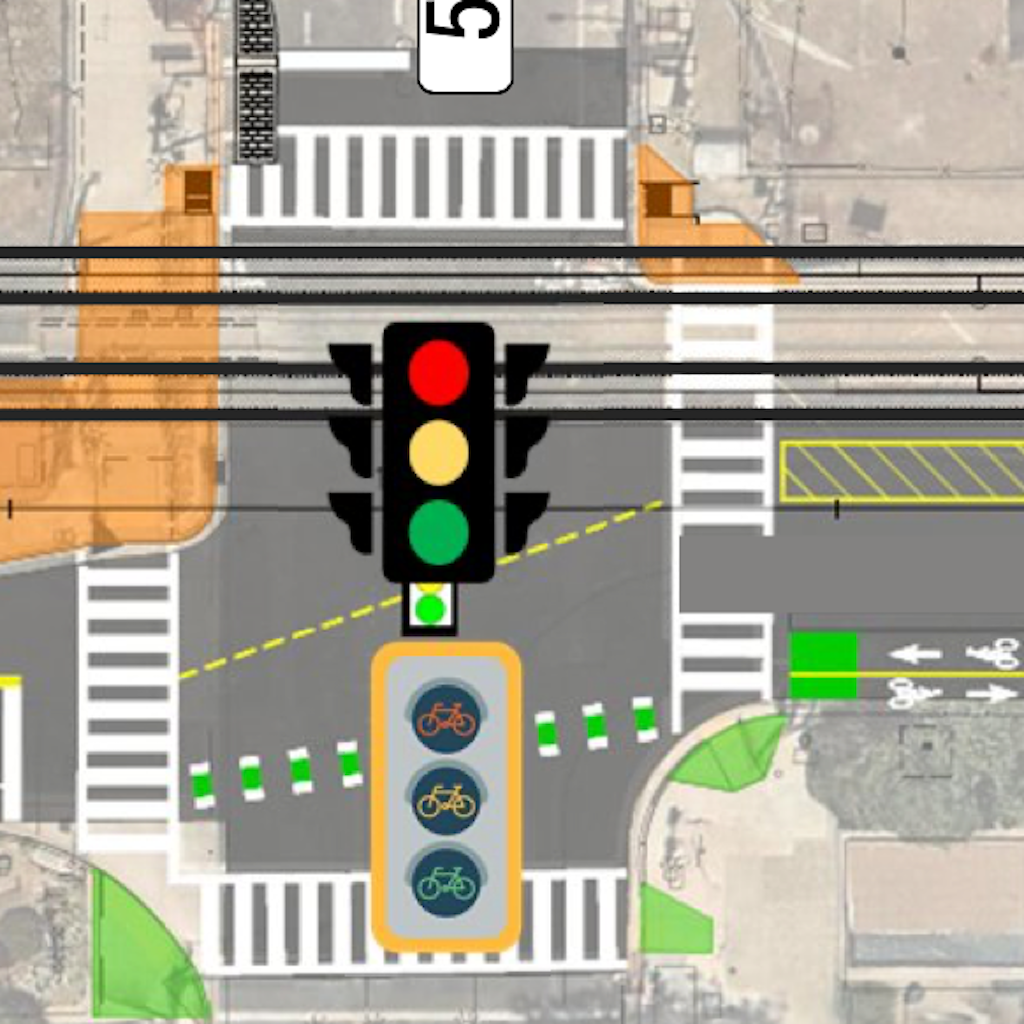
  2. APS (accessible pedestrian signal) ‘upgrades’ (West Campus, Natomas, Smythe, Kenney) should implement appropriate accessible messages, but SHOULD NOT implement required push buttons. Nothing in PROWAG requires that APS signals require button press for permission to cross. Required ‘beg buttons’ are inappropriate at these locations, and at all locations in the city.
  3. Though permanent curb extensions are probably beyond the funding of these school projects, I was surprised to not see any temporary or quick-build curb extensions, which are one of the most effective measures for calming traffic.

Sac City Council 2025-05-13

The Sacramento City Council will meet Tuesday, May 13, 2025 (today!) at 5:00 PM. There are two items that might be of interest to transportation advocates.

Item 02 on the consent calendar is ‘Approve Criteria and Guidance to Accommodate Active Transportation in Work Zones Policy’. There is a staff report, and the policy itself. Though items on the consent calendar are not expected to be controversial, and will only be discussed by council if a council members pulls it from consent calendar, this is nevertheless worth supporting. This policy has been delayed for years. It is not perfect, but it is an immense improvement over existing policy and practice.

Item 09 on the agenda is ‘Fiscal Year (FY) 2025/26 Proposed Budget Overview‘. The budget should reflect the priorities of citizens in Sacramento, but it only partially does.

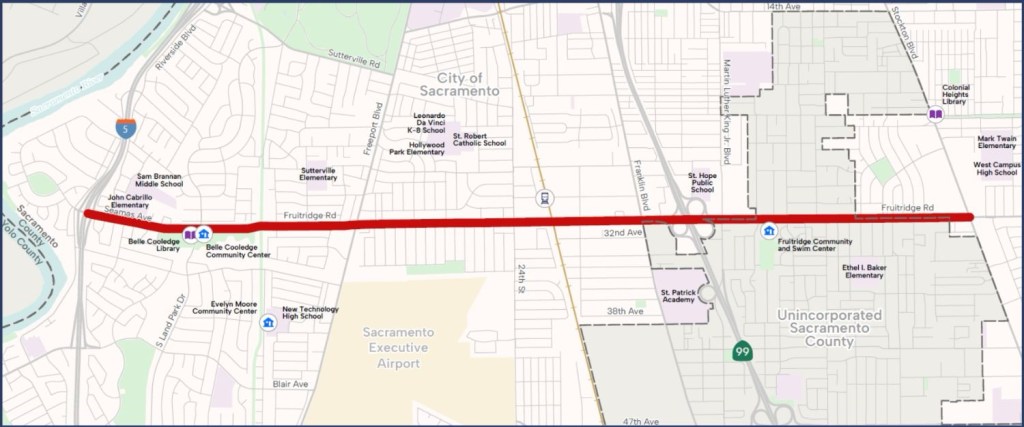
Fruitridge Road community workshop April 23

The City of Sacramento is holding a community workshop on Wednesday, April 23, 2025 on the Fruitridge Road Improvement Project. The in-person location will be Earl Warren Elementary School, 5420 Lowell Street, Sacramento, from 6:00 PM to 7:30 PM. There are not online options at this time for this phase of the project.

From the city email:

After the workshop held in August 2023 at Earl Warren Elementary School, the Fruitridge Road Improvements team has been updating the design plans based on community feedback while considering enhancements between Stockton Boulevard and the 65th Street Expressway.

  • Phase 1 runs from the 65th Street Expressway to Power Inn Road
  • Phase 2 runs from Stockton Boulevard to the 65th Street Expressway

About Project: The City of Sacramento is upgrading Fruitridge Road between 65th Street and Power Inn Road to enhance safety for all travelers. The project will add continuous bike lanes, fix pavement, upgrade signals, and create ADA-compliant curb ramps. Due to space limitations on the current four-lane road with intermittent bike lanes, the team is considering lane reductions to better accommodate bicyclists, improve pedestrian crossings, and enhance transit access while connecting to existing and future bikeways.

The city webpage is Fruitridge Road Improvement Project. There do not seem to be any documents available at this time.

concern about SacPD enforcement against bicyclists and walkers

Update/correction: The grant was apparently approved by city council and awarded by OTS, so the program is in effect. Transportation and equity advocates are recommending that the city council advise city manager and police that the bicyclist and walker enforcement portions of the project not be carried out, and funds diverted to more effective uses.

In an April 14, 2025 SacBee article by Ariane Lange, she expressed concern about an upcoming Sacramento Police Department program to enforce and educate about dangerous roadway behaviors: Sacramento police will ticket cyclists and pedestrians with safety grant money. I had noted this grant earlier, and figured it was not focused on enforcement against bicyclists and walkers, but concern by Lange and the local transportation and equity organizations now has me concerned.

The the grant application text:

“Similar to the “Know Your Limit” program is the “Wait for the Walk” campaign. The activities include informal contact with citizens and enforcement operations where officers saturate high-density intersections, educate pedestrians about the dangers of jaywalking, and reinforce safe pedestrian habits. The message we spread is that pedestrian-related collisions can be avoided, and we should always use crosswalks and sidewalks and always wait for the walk signals. Pedestrians should stay off their phones and pay close attention to approaching traffic when crossing streets.”

Though this is not the major part of the grant, it is concerning. Law enforcement, including but not limited to SacPD, knee-jerk blames crashes involving bicyclists and walkers hit by motor vehicle drivers as the fault of the bicyclist or walker. Even when the driver is drunk or high, it is often still blamed on the victim. This world view is so deeply embedded in law enforcement thinking that most officers never overcome it. OTS (California Office of Traffic Safety) grants, which use pass-through money from NHTSA (National Highway Traffic Safety Administration), have often been used as stings against bicyclists and particularly walkers, targeting and ticketed them for behavior that may be against the law but does not endanger anyone. There is no guarantee that this grant will not be used in the same way.

The text uses the term ‘jaywalking’, which is a throughly repudiated term in the transportation advocacy community, indicating a deep-seated bias against people walking. Though crossing the street outside a crosswalk is still illegal in California, it is not an citable offense unless the walker interferes with traffic or otherwise endangers other people. The reason this law was passed is that police in Los Angeles, as well as other place, were targeting people crossing the street, for no other reason than they were people of color. Law enforcement bias shows up so often that the legislature spends a lot of time trying to improve law enforcement behavior, often with insufficient impact.

Common knowledge among transportation advocates, but apparently unknown among law enforcement, is that it is safer to cross the street between intersections because there are only one or two directions of motor vehicle traffic to pay attention to, whereas at intersections, there are sixteen different directions and possible threats to people walking. Certainly, ‘pedestrian related collisions’ can be avoided, but it is by controlling driver behavior and redesigning streets, not by enforcing against or ‘educating’ people walking.

Lastly, I’ll note that the bulk of the grant is towards overtime for law enforcement training, which should be happening under the regular (bloated) police department budget, not with grant money.

Apparently there is no city council meeting this week (today, April 15), so I don’t know when approval of the grant application will be on council agenda. The council should send this back to PD for a re-write that focuses solely on dangerous driver behavior, with automated enforcement, not with in-person enforcement which is frequently biases and frequently leads to escalation and harm to the person bicycling and walking.

SacATC 2025-04-17

The Sacramento Active Transportation Commission (SacATC) will meet Thursday, Aprll 17, 2025, at 5:30 PM. The meetings are held in city council chambers at 915 I St, Sacramento, CA 95814. The meeting can be viewed online via the link provided on the city Upcoming Meeting Materials page at the time of the meeting, but comments may only be made in person, or via eComment ahead of time.

The agenda is


Consent Calendar:

  1. Approval of Active Transportation Commission Meeting Minutes
  2. Active Transportation Commission Log

Discussion Calendar:

  1. Pedestrian Crossing Enhancements – 2025; presentation
  2. Audible Signals Phase 2; presentation

I have concerns about the use of RRFBs (Rectangular Rapid Flashing Beacons) at unsignalized crosswalks. They may be better than crosswalks without, however, they may provide a false sende of security for walkers. I have noticed (anecdotal evidence only) that the rate of driver compliance with RRFBs is poor, only about 40%, which is not much better than unprotected crosswalks, and it has not improved at drivers have gotten used to the RRFB as they are installed in more locations. I would suggest that before the city install any additional RRFBs, there a literature survey to see if there are recent indications of driver non-compliance increasing hazard for people walking, and on-the-ground observation of at least two existing locations in the city. I know that compliance with the RRFB on J Street at 17th Street is poor. I have almost been hit in both the west and east crosswalks, both of which have RRFBs. I kinow not to trust drivers to yield, but what about people walking who do not know to not trust drivers. The other enhancements proposed seem good.

In Audible Signals Phase 1, a number of locations in the central city where pedestrian signals were on auto-recall were converted, or downgraded, to locations requiring the push of a button. These are called beg-buttons) because the pedestrian indicator will never come on unless the button is pushed, though with many of the locations, the pedestrian signal is set to auto-recall even though the button says it must be pressed. This is an unofficial city policy, that people walking will NOT be informed of the operation of the pedestrian signal, left to guess whether it is auto-recall or requiring a push. The recently installed ‘push or wave to cross’ signals do not overcome this issue. The staff report claims that all of the new locations already have push buttons, though it does not say whether any are on auto-recall.

The city is claiming as support for the past and proposed audible signals project that citizens are requesting beg buttons. They are not. What they are requesting is audible signals that communicate effective crossing information to visually impaired walkers (or rollers), to comply with current ProWAG requirements. The city is conflating audible signals with push buttons, but they do not need to go together. Audible signals can be installed at auto-recall intersections.

See earlier posts Central City Mobility: new beg buttons on 5th Street, update on SacCity new beg buttons on Alhambra, Sac City NEW beg buttons, beg button signs, and Beg buttons on K? Really?.

SacCity crash dashboard

Corrections: Crash data is from Sacramento Police Department, not SWTRS, but does use the SWITRS selection categories. Demographic data is from the Transportation Priorities Plan.

The City of Sacramento has released a VZ Crash Dashboard with an interactive map and charts. The dashboard apparently uses data from SWITRS for crash data (which means that it will never be up-to-date, as SWITRS is never up-to-date, but patterns don’t depend on up-to-date data), but is selected for the City of Sacramento, and also has demographic data layers for ‘SB 535 disadvantaged communities’, ‘neighborhoods that lack transportation infrastructure’, and ‘communities that have been recipients of racism and bias’. You can turn on and off layers, and can select for crashes on a wide variety of criteria, such as ‘severity’ (fatality, severe injury, etc.) and ‘involved with’ (bicycle, pedestrians, etc.), which are criteria from the SWITRS database.

I have only explored the data in a superficial manner, but noticed some interesting geographic patterns. If you look at crash density, the central city looks bad, but for fatalities only, it looks better than many parts of the city. There are several arterial roadways that were identified as high injury network (HIN) corridors but were not in the Vision Zero Action Plan. However, a visual representation does not necessarily reflect the details of data.

What patterns do you see in the crash dashboard?

VZ crash dashboard map, selected for severity = fatal

quick build at SacCouncil 2025-03-25

The Sacramento City Council meeting on Tuesday, March 25, 2025 (agenda), starting at 5:00 PM (not the 2:00 meeting) will consider a proposed quick build program. Agenda item 21 is ‘Transportation Safety Initiative: Establish Positions, Establish Quick Build Capital Improvement Project, and Suspend Competitive Bidding and Approve an Alternative Procurement Process to Install Signing and Striping and Quick Build Improvements (Two-Thirds Vote Required)‘.

This quick build proposal is worth supporting, whether in person at the council meeting, or ahead of time using the eComment capability on the Upcoming Meeting Materials page. Transportation advocates have been asking for a quick build program (also called tactical urbanism, though they are subtly different) for years. When Councilmember Caity Maple and others proposed an emergency declaration over traffic violence, advocates pushed for quick build to be the top element of that proposal. The city has done a few such projects, such as the closure of a block of 2nd Avenue at Broadway and 34th Street to increase safety for bicyclists and simplify complex intersections. Photo below. But this new program would greatly accelerate the implementation of quick build projects. Some will be at the location of major crashes, while others will be at locations where crashes might be expected and where prior city neglect of lower income neighborhoods has resulted in more unsafe walking and bicycling.

photo of 2nd Ave and Broadway delineators
Sac_2nd-Ave-Broadway_delineators

The program would have a Traffic Safety Team staff of six FTE (full time equivalent), paid with funds from existing budget categories in Public Works. The program would suspend competitive bidding requirements so that projects could be implemented quickly.

The Vision Zero or Safe Systems approach to roadway safety is to immediately change the street design with temporary fixes that slow or channelize traffic, and then to eventually replace these with permanent design changes. The Street Design Standards update (category: Street Design Standards) and Strong SacTown (tag: Street Design Standards), the Active Transportation Plan, Neighborhood Connections and Streets for People Active Transportation Network, and many other efforts align with the quick build program. Most of the traffic calming measures in Neighborhood Connections (SacCity Neighborhood Connections) and and many of the traffic calming measures in Streets for People Active Transportation Network visual gallery – pedestrian and visual gallery – bikeway can also be implemented in quick build, as the photo below shows, a temporary curb extension with vertical delineators.

photo of Land Park Dr & 8th Ave curb extension
Land Park Dr & 8th Ave curb extension

The SacATC 2024 Annual Report is also on the agenda, item 1 on the consent agenda. It is not expected to be controversial, but it would be nice if a couple of people spoke in support, just to remind council that advocates are interested and supportive.

SacATC 2025-03-20

The Sacramento Active Transportation Commission will meet this Thursday, March 20, 2025, at 5:30 PM. Comments may be made in person during the meeting, or beforehand via the eComment capability on the Upcoming Meetings page. Though the meeting is live-streamed on that same page, comments may not be made in that way.


The core agenda is:

Consent Calendar

  1. Approval of Active Transportation Commission Meeting Minutes
  2. Active Transportation Commission Log

Discussion Calendar

  1. Airport South Industrial Annexation – Amendments to the City Bicycle Master Plan
  2. Streets for People Draft Plan and Phase III Community Engagement Approach (staff report, Streets for People Draft Plan; note: the plan is a large document, and does not include appendices, which can be downloaded from the Streets for People webpage)

In the webinar today, a comment was made that the information in the plan and in the webinar is very complex and hard to get a handle on. I agree. Even as a transportation nerd, it is very hard to digest. I’d suggest the city come up with a simple presention, even simpler than the Executive Summary, that speaks to people who just want better and safer transportation for walking and bicycling, but know little about transportation planning and infrastructure. Some people will want to focus on the streets in their neighborhood where they live, or the routes they travel. Others will want to focus on the policy and approach of the plan. It is probably not possible to look at and understand both.

As I’ve said, I hope to post more detailed information and comments on the plan, but haven’t gotten to that yet.

SacCity Streets for People draft plan

for Matt

Additional posts on the Streets for People Plan will be under category: Streets for People – Active Transportation Network. I encourage you to take a look at Strong SacTown’s series of posts on Street Design Standards. And all of the NACTO Design Guides. And Jeff Speck’s Walkable City and Walkable City Rules. But your own lived experience is just as valuable as the words of the experts, so please join in to support and improve the plan.

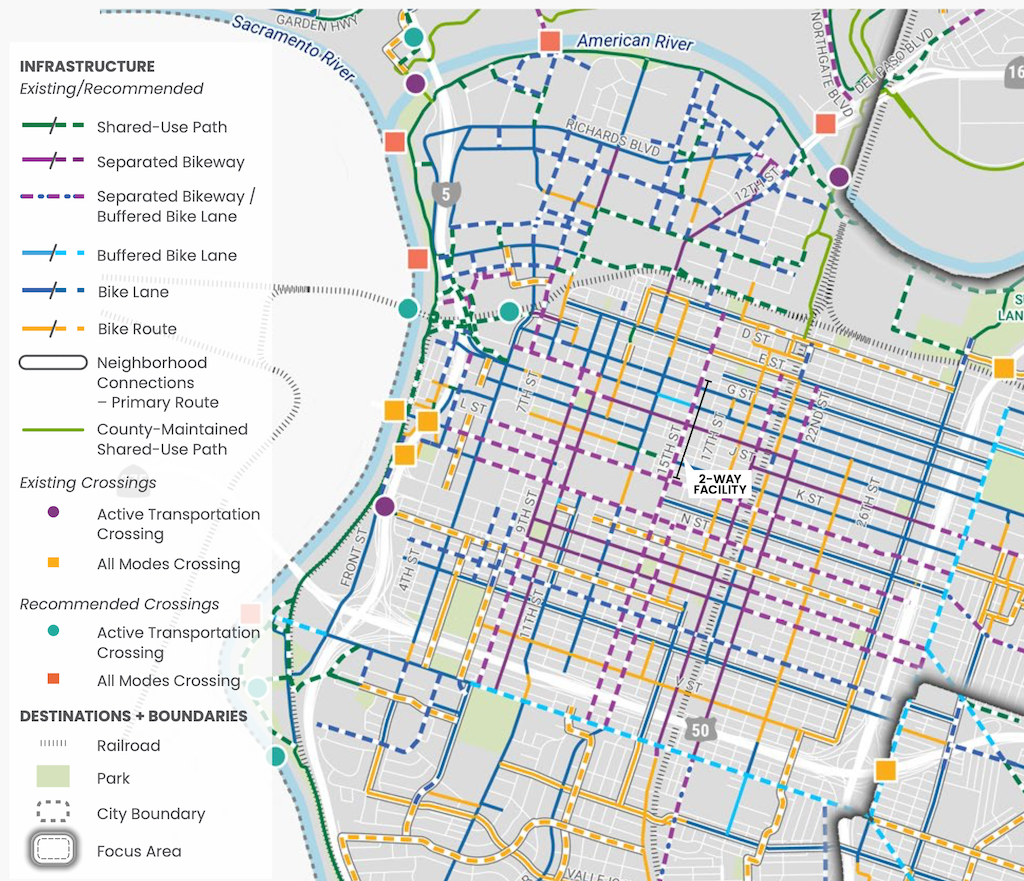
The City of Sacramento Streets for People draft plan has been released. The Streets for People / Active Transportation Plan webpage has more detail. The body of the plan is a little difficult to download there, so it is also available here (57MB pdf). The appendices and related documents are easy to download there (I don’t know why Appendix 5 is missing). A comment about terminology: ‘Streets for People’ refers both to the overall Active Transportation Plan, and to this specific section of the overall plan. The Streets for People: Sacramento’s Active Transportation Plan public draft 2025-03 is the section that covers arterial and major collector streets. Local streets are covered in the Neighborhood Connections Plan (2025-01), which has now be adopted by the city and will be incorporated into the overall plan later this year. The diagram below shows the relationship, with the green neighborhood connections, and the blue ‘active transportation network’ which is the topic of the draft plan.

I have only skimmed the plan, so don’t have comments yet, but since it is out there, I hope that many people will take a look and comment. To the city, mainly, but you can also comment on this blog post. Comments are accepted through April 6. Though the map for gathering geographically related comments is closed, it is still available for viewing. You can submit comments through a form, probably best for general comments that apply to the process or the overall document. You can email city staff directly at StreetsForPeople@cityofsacramento.org. The preferred method for comments is to make comments directly on the pdf, available at https://streetsforpeopledraftplan.altago.cloud/#/, probably best for specific comments on text or graphics. You can also sign up to receive email updates.

The Neighborhood Connections Plan is great and provides a solid basis for improving both safety comfort level for people walking and bicycling in their neighborhood. However, local streets are not where the majority of crashes occur, certainly not the fatality and severe injury crashes. These occur on arterial and major collector streets, the ones that were designed for motor vehicle movement and convenience. These roadways are too wide, and too fast. Yet many walking and particularly bicycling trips must cross or travel along these dangerous streets. Until these streets are redesigned to not only accommodate but encourage walking and bicycling, most people won’t leave their immediate neighborhood, and will continue to make most trips, even short trips, but motor vehicle. And that is the subject of this draft plan, and why it is so important.


Table of Contents

  • 1 About This Plan
    • What Is Streets for People?
    • Need for a Focused Approach
    • What’s in the Plan?
    • Plan Goals
    • Recent Achievements
  • 2 Walking, Biking, and Rolling in Sacramento Today
    • Building on the Past
    • What the Data Shows
    • Equity
    • Walking and Rolling
    • Biking
    • Safety
    • Comfort
    • Access
    • Sustainability
  • 3 Community Engagement
    • Leading with Equity
    • Community Planning Team
    • Engagement Events
    • What We Heard
  • 4 Recommendations 52
    • Network Recommendations
    • Intersection Recommendations
    • Recommended Policies and Programs
    • Maintenance Considerations
  • 5 Implementation
    • Costs
    • Funding
    • Monitoring and Review
    • Next Steps
  • A Appendices (which are in separate documents, available on the webpage)

quick build at SacCity Budget & Audit

Note: Added letters of support from four organizations, below.

The Budget & Audit Committee of the Sacramento City Council meets tomorrow (!) Tuesday, February 25, 2025, 11:00 AM in city hall council chambers. The Budget & Audit Committee members are Roger Dickinson, Chair, District 2; Karina Talamantes, District 3; Caity Maple, District 5; and Eric Guerra, District 6.

On the agenda is item 10 SacATC 2024 Annual Report. The discussion, however, will include more than just the annual report. It will include the city’s proposed quick build program. Quick build, sometimes called tactical urbanism, is a concept related to Vision Zero, that rather than just accepting traffic violence, the city would take action to reduce or prevent future crashes at that location. What makes it unique, and different from the long term roadway redesign that the city undertakes when they can get grant funding, quick build analyzes the issue now, and takes action soon to correct it.

The city is calling this effort TAG Team (tactical action group), and it would be implemented from existing budget and staffing limits with six staff dedicated to the project.

If you can’t make daytime meetings, you can submit an eComment on the city meetings page. The earlier you submit eComments, the more likely committee members are to see them before the meeting.

Three examples of quick builds: the street closure and bikeway improvement at Broadway and 2nd Avenue and 34th Street, with yellow vertical delineators; the corner curb extensions that have been installed at some corners with paint and/or white vertical delineators, and lane channelization delineators on 15th and 16th Streets. Vertical delineators are much less expensive, and also somewhat less effective, than concrete curbs, but they do reduce the likelihood and/or severity of crashes.

Letters of support:


The same day, at the evening Sacramento City Council meeting, the Neighborhood Connections plan, part of the Streets for All Active Transportation Plan, is on the on the consent agenda, item 9 Neighborhood Connections Plan. The plan is full of specific designs that can be implemented in temporary and/or less expensive materials. See earlier posts under categories Active Transportation Plan, Neighborhood Connections, Street Design Standards, and particularly traffic calming measures. The Neighborhood Connections Draft Final Plan (2025-01) is also available, if you have time to read it. Though it is on the consent calendar and unlikely to be controversial, it still deserves support.