This is essentially the second part of my red-light-running bullies post. Except that it applies to every intersection, not just signalized intersections.
This is another driver behavior that accelerated with the pandemic. But it didn’t start there. It primarily started with the election of Donald Trump. There was a noticeable change in driver behavior immediately after the election. Many drivers apparently thought, well if the president can say and do whatever he wants without consequence, so can I. It was really noticeable to me how belligerent drivers became. I’m guessing that it was because many drivers see people walking and bicycling as ‘other’, people with different values and political views. Used to be communists, then it was “lib’rels”, and I won’t use the current round of words here. If you are walking or bicycling, you are ‘other’ and if you are walking or bicycling and black or poor, you are truly the enemy. God meant us to drive, and anyone who thinks otherwise or gets in my way is against both God and me. That may sound outlandish, but it does accurately reflect how many drivers view the world.
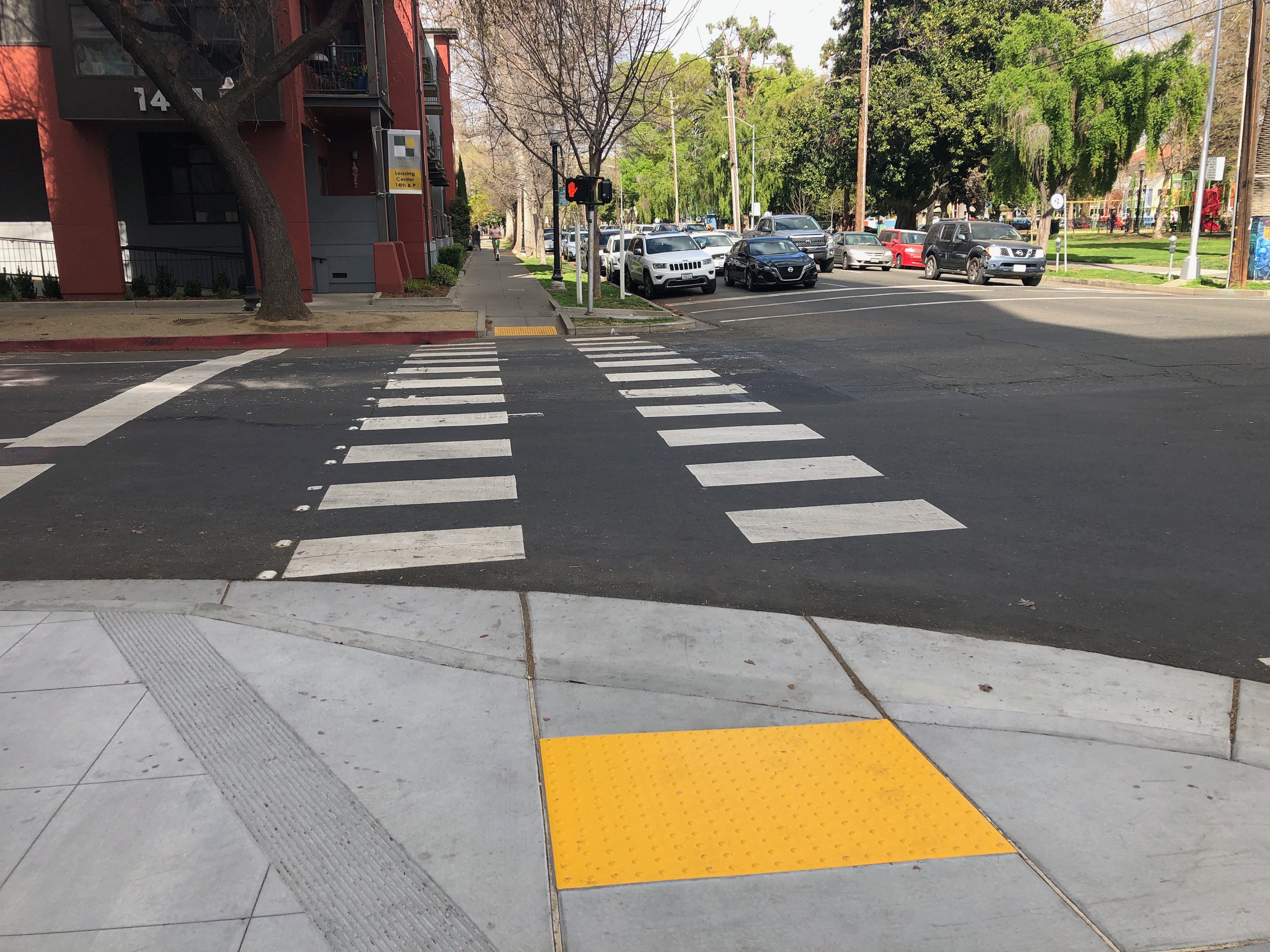
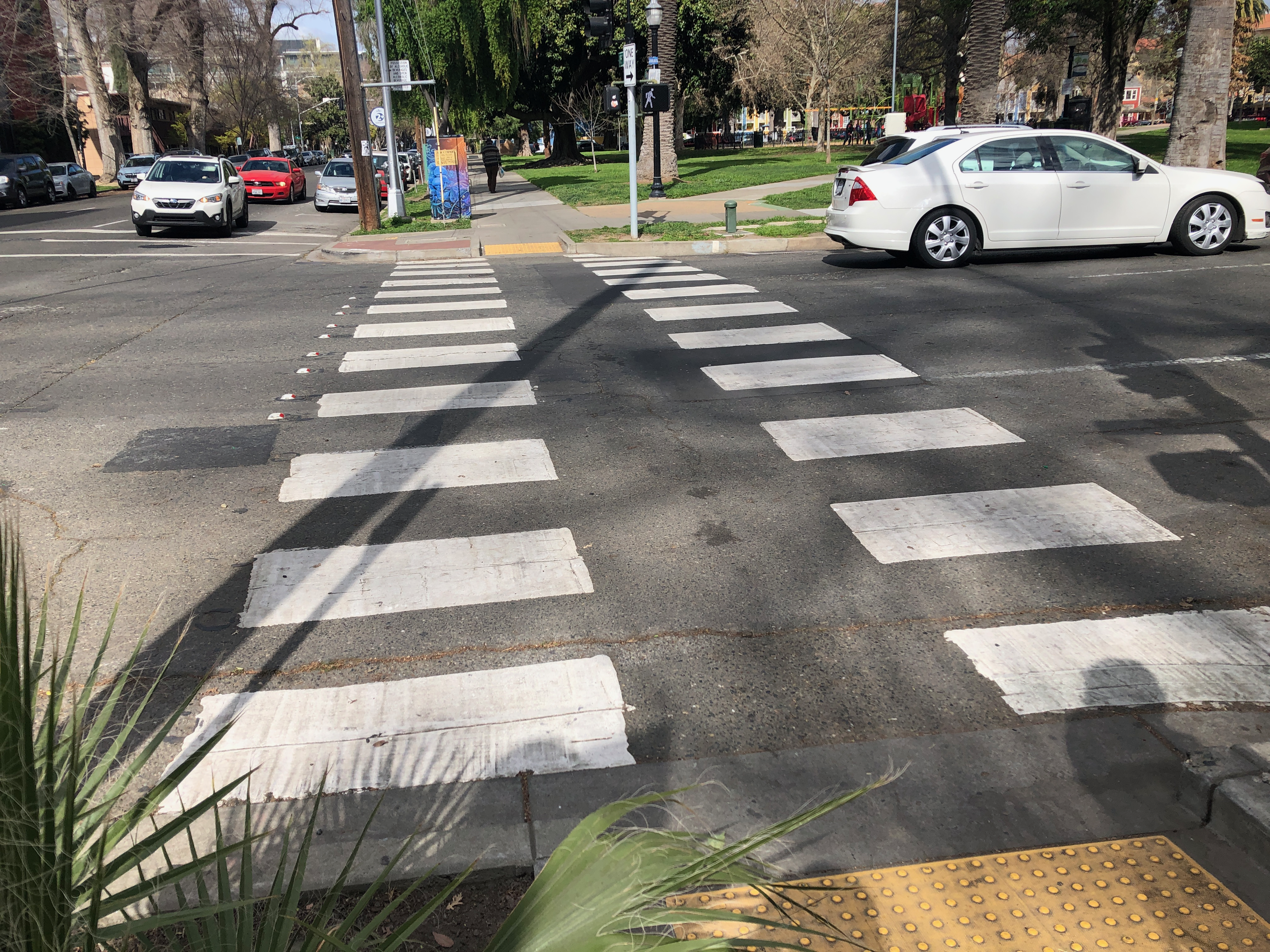
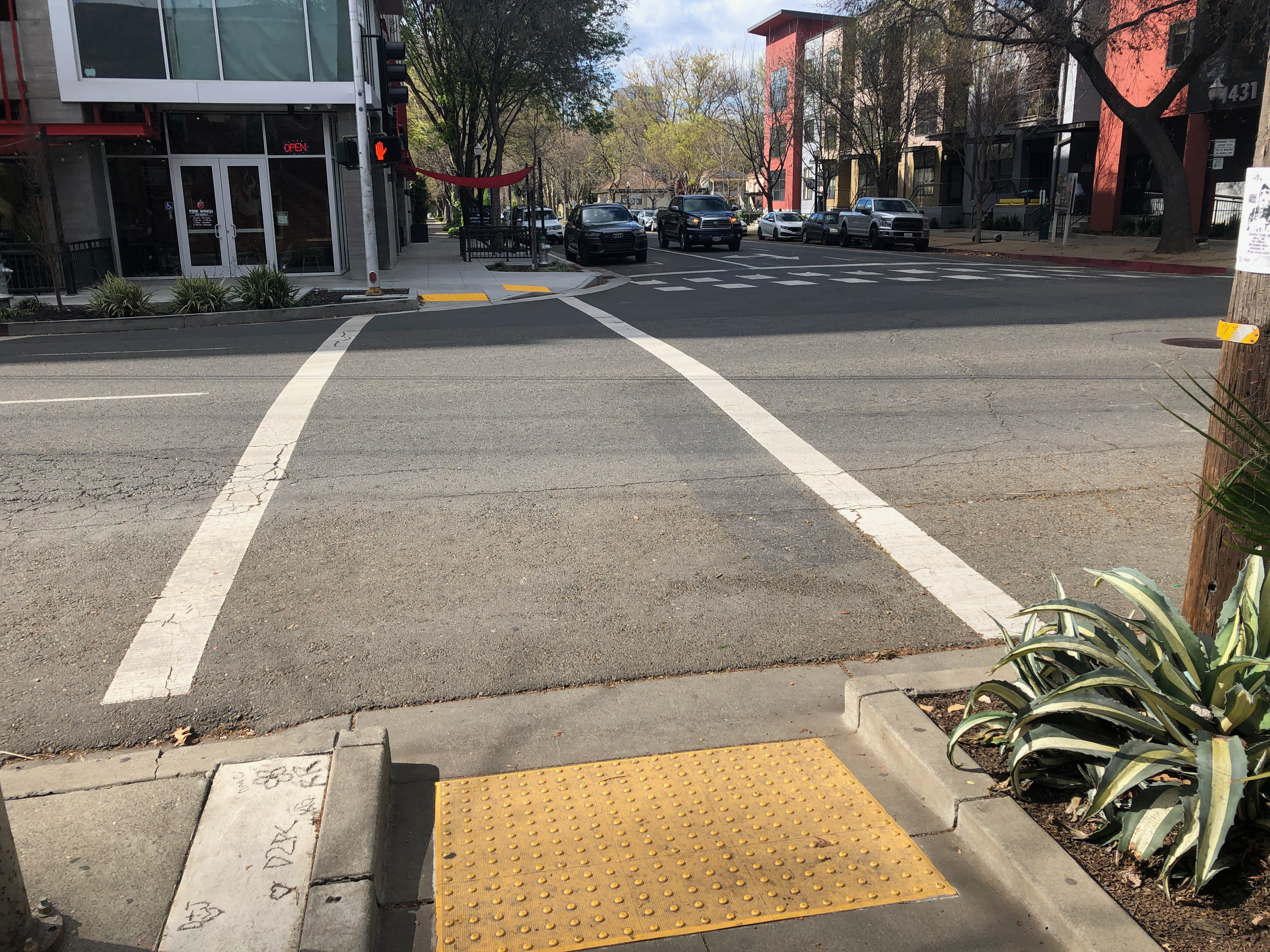
But back to the driver behavior. Most drivers no longer yield to people using crosswalks. Of course most drivers are not aware that there is a crosswalk at every intersection, whether marked or not. And the DMV is complicit in this, they make no effort to educate drivers about pedestrian right-of-way. The law doesn’t require a driver to stop until the walker steps off the curb (or ramp) and into the street. Common decency would mandate yielding to waiting walkers, but common decency is not common among drivers. Once the walker has stepped into the street, they have the right of way. But most drivers will not stop. They may change lanes to avoid the blood splat on their car, but they won’t stop.
There are drivers who do stop, but when I look at them, I see the fear in their eyes, that they are going to get rear ended by an inattentive driver, or that on a street with more than one lane in the same direction, another driver in another lane will fail to stop or even slow, and they will have to see someone die right in front of their eyes. I understand that fear, because both these things happen with disturbing frequency.
City of Sacramento code prohibits pedestrians from crossing streets at alleys.
10.20.030 Crossing at alleys. No pedestrian shall cross a through street at an intersection with an alley except within a marked crosswalk. (Prior code § 25.03.052)
While this code has always been an attempt to prioritize motor vehicle drivers over people walking, it is becoming increasing problematic as housing and businesses are now located along alleyways in the central city. ADUs and lot split housing are often accessed through alleys and not from the street. This code makes it so that anyone living or doing business in an alley must go out of the way to cross the street, and it prohibits people who just want to walk alleys to avoid busy streets.
Today I wandered around the edges of Sac State, looking at some of the access points. But the worst of the worst is this slip lane from 65th Street northbound to Folsom Blvd eastbound. More on access soon.
slip lane 65th St north to Folsom east
Is there a stop sign? No. Is there a signal to stop motor vehicle drivers when the crosswalk is being used, or the bike lane on Folsom? No. Is there a yield to pedestrians sign? No. Is there paint on the ground? Yes. It is well known, among traffic engineers, if no one else, that the word ‘yield’ painted on the ground slows drivers to a safe speed. This is bullshit.
The city recently did ADA ramp work on this corner. They could have fixed the issue, but did not.
This is the kind of transportation infrastructure the City of Sacramento builds to preference the convenience and time-saving of drivers over the lives of people walking and bicycling. This is criminal negligence. The next time someone is killed or injured here, I would be happy to testify that the city was aware of this hazard and chose not to do anything about it. Criminal negligence, as I said.
Improved Right-Turn Slip-Lane Design (this points out that slip lanes can be made somewhat safer, when no other options exist, but it is rare that other options do not exist; the slip lane in question does not meet any of the recommendations)
Solutions
Install stop signs at every slip lane.
Do NOT install signalization since this is an expensive alternative and would be wasted when the slip lane is removed.
Place a prohibition on slip lanes in city code except under rare and defined circumstances. This would be where the crossing roadway presents an angle less than 75 degrees, a sharper than right angle turn. This skewed intersection does not quite meet that criteria, but even if it did, the slip lane as constructed is hazardous.
Develop a program to close all slip lanes in the city within one year.
Develop a program to replace the closed slip lanes with sidewalks, planting strips, or other useful infrastructure within five years.
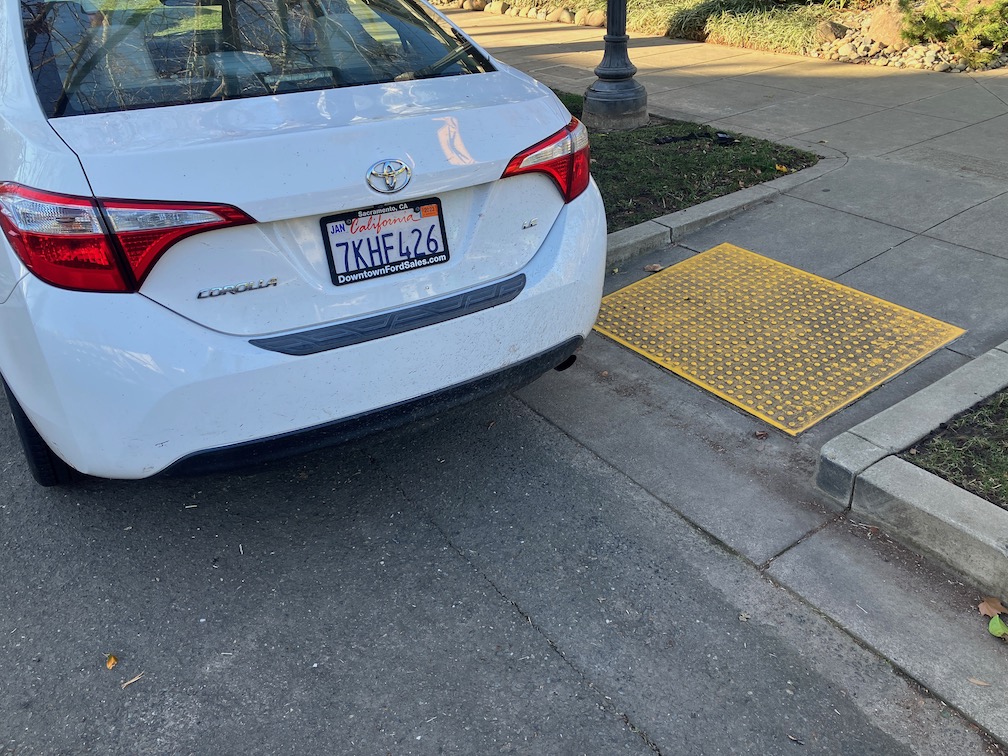
As a person who walks a lot in the central city, and some in other areas, I often see and report illegal parking to the city through the 311 app. I’m not talking about parking too long, or not paying, but about blocking driveways, sidewalks, and crosswalks. 90% of the time, the response that I get was that a parking officer was dispatched and the vehicle was no longer there, so no citation was issued. I provide the license number, vehicle description, and a photo, but the city will not use that information to ticket once a vehicle has moved. But, the real issue it that they often ignore the violation completely.
An example. I reported this illegally parked vehicle at 9:17AM. It was blocking the crosswalk over 13th St, and the ADA ramp. The remaining ramp area was not wide enough to allow a wheelchair to pass. At 11:09AM I received an email reply from the city, stating: “A Parking Enforcement Officer arrived at P ST & 13TH ST, SACRAMENTO, 95814 to find that the vehicle(s) reported were no longer on the scene.” At 7:30PM, the vehicle was still in exactly the same place. The officer was lying. The vehicle was still there. Either the officer never visited the location, or decided not to cite the vehicle.
illegally parked vehicle, 13th St, not cited
This is the sort of attitude the city has toward people who walk, or roll. They are always less important than people who drive.
The City of Sacramento, both the city government and many people who live here, have a picture of a pretty good place to live, and work, and play. And that is true, to some degree. Good climate (except middle of summer), a wealth of trees, interesting and useful businesses (at least in midtown), mostly flat (for bicyclists), two rivers and the confluence, moderately friendly people. But the transportation network sucks.
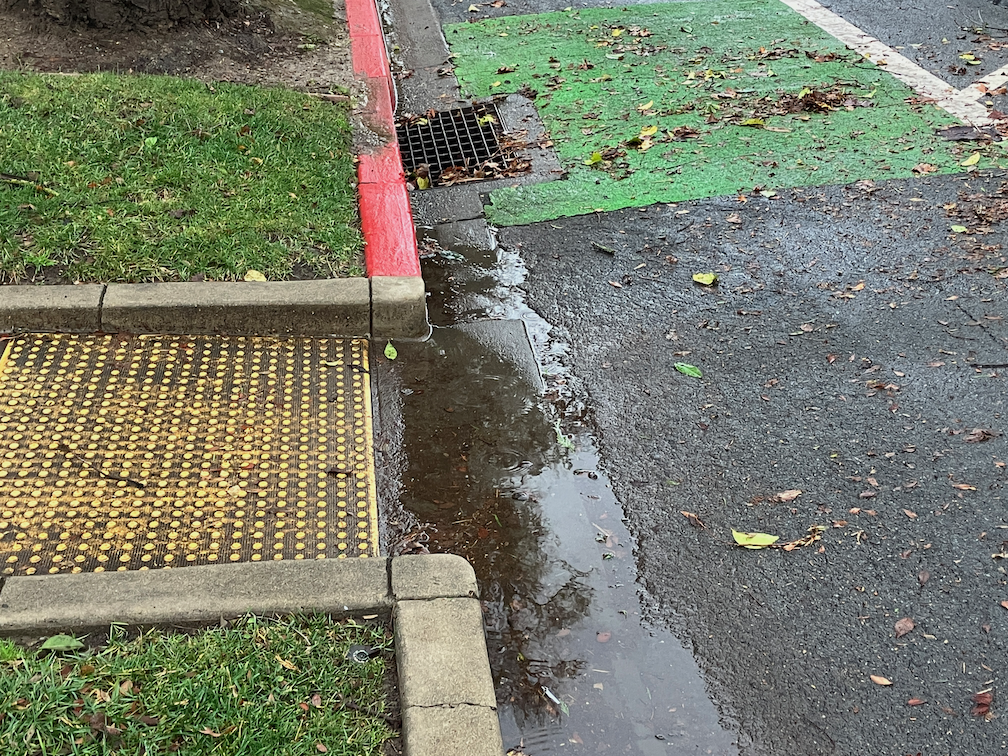
Heavy rain of course brings out the flaws in the transportation system. Flooded roadways that at the least make it hard to get places, and at worst kill people. Trees and tree debris blocking both sidewalks and bike lanes. Light rail that runs late or not at all, buses behind schedule. All of those are important issues. But this post is about flooded ADA ramps.
flooded ADA ramp, Q St at 13th St
The above photo is a mild case, as it does not make the ADA ramp and connecting sidewalks impassible. It just means wet feet for people who can’t jump the puddle, or wet wheels for people with mobility devices. You might think that this is a problem created by the storms. But look closer. The ADA ramp was built so that it is LOWER than the drain inlet. This puddle will remain until it evaporates, and if the rain continues, it will be there for quite some while. There are two explanations, and I don’t know which is correct. 1) The ramp and drain inlet was designed by an incompetent engineer; or 2) ramp and drain inlet were not built as designed, meaning that the construction inspector did not notice or did not care that it was not installed as designed. In either case, it is the fault of the city.
You might think that this is an unusual circumstance, but if you walk and notice, about half the ADA ramps in the city have this same problem. Why is this so common? Because the city doesn’t care. The engineer doesn’t care, or the inspector doesn’t care. Every one of these situations expresses the city’s disdain for walkers, and users of mobility devices.
I started with a mild example, but to present a much worse example:
flooded ADA ramp and sidewalk, 3rd St at O St
This puddle won’t disappear for at least a week, even without additional rain. This is not a problem of a plugged drain inlet. The ramp and sidewalk was designed to be BELOW the gutter level along the street.
I have reported this location multiple times to the city, over the years. It has never been fixed. When I submit a 311 report, it is marked as complete without anything being done. Which is not untypical for the city, most of my 311 reports are ignored, marked as complete without anything being done.
Does this bother you? Get in touch with your city council member, provide photos and stories about how this impacts you and the people you know. Ask council members to hold city staff responsible for their incompetence and lack of care. If the city manager can’t fix these problems, it is time for a new city manager. If Public Works can’t fix this problem, it is time for a new head of Public Works. Anything else is not acceptable.
The City of Sacramento, that bastion of doing the least amount possible, has failed to notice that progressive cities in the US and worldwide are making changes to their environment to make is safer for people who walk and bicycle, and more efficient and welcoming for people outside of cars.
What the city is NOT doing, that it could:
Accept responsibility for maintaining sidewalks, as an integral part of the transportation network. The city continues to shirk its responsibility, spending funds on motor vehicle infrastructure instead of maintaining walker infrastructure.
Installing leading pedestrian intervals (LPIs) at every traffic signal in the city. The same eleven have been in place for years; none have been added. The recent legislation, AB 2264, only applies to state highways; it is up to cities and counties to implement on other roadways.
Daylighting intersections. This means removing parking from within 15-20 feet of the crosswalk or stop bar, either by painting and enforcing red curbs, or building curb extensions (bulb-outs) at every intersection. Upstream, approaching the intersection, is the big safety feature, downstream, leaving the intersection is much less important. There are interim solutions here, such as painting curb extensions and using soft-hit posts (vertical delineators).
Implementing construction zone requirements that accommodate walkers and bicyclists. The current city policy is to provide safe bypasses only if it does not in any way inconvenience drivers. The public has asked that a policy be developed along the lines of the Oakland construction policy, but the city has stonewalled against that.
Making transportation improvements that benefit walkers and bicyclists, except with county, state or federal grants. The city simply will not spend any of its general funds on improving transportation safety.
Waiting until a roadway is completely repaved to reallocate roadway width to bicycle lanes or separated bikeways, or transit. Compounding this issue is that the city doesn’t share with the public the repaving projects that it intends to do, so the public has no chance to comment beforehand.
Lowering speed limits citywide. While it is true that spot reductions have little effect on travel speeds, there are a growing number of cities that have lowered speed limits citywide, with a significant reduction in speed.
Enforce traffic laws. The Sacramento Police Department has essentially stopped enforcing laws related to the safety of walkers and bicyclists. This of course is also true in many other places. Police don’t see traffic safety as an issue worthy of concern. Of course so much of law enforcement is used as pretext to oppress, and I’m not in favor of any of that, but if the police won’t even enforce failure to yield to people in the crosswalk, what use are they? We would all be much safer if traffic law enforcement were removed from the police, largely automated, and the money saved diverted to real community needs. Yes, defund the police.
Painting marked crosswalks at every intersection. Yes, I know that unmarked crosswalks are legal crossings, but most drivers either don’t know or don’t care, so marking crosswalks is critical.
Remove beg buttons. These buttons, which sometimes a walker must press to get a walk sign, and sometimes don’t need to press (this is called auto-recall) are a direct attempt to discriminate against people walking. The city, after much pressure from the public at the beginning of the pandemic, set five crossings to auto-recall, out of the thousands. Of course they didn’t change the signing, so people walking don’t know this. The city it being intentionally obstinate in its defense of this outmoded requirement.
Remove pedestrian prohibition signs unless that is a demonstrable safety reason for the prohibition. There are numerous signs all over the city that were placed solely to preference motor vehicle drivers over people walking. The default should be that every one is removed unless the city wishes to do a traffic study to justify them.
Install traffic diverters (mode filters) all over the city. These diverters, which allow bicyclists free travel but turn motor vehicle drivers aside, are the single most effective safety measure that city could implement. But the city has decided to take these off the menu of solutions, for no reason that it has ever been made public. The few that exist are in the central city, almost none in other neighborhoods. Another example of privileging the already privileged over lower income neighborhoods.
Charge for parking, eveCavrywhere. Residential neighborhoods, where there is usually open parking space, would be charged through permits for the cost of maintaining that portion of the street. Any place where parking is in short supply, market rates for parking should be charged. Giving away free parking is subsidizing drivers and throwing your tax money in the trash.
I could go on with this list for pages. In fact, I have: walking policies for SacCity, and many related posts. But the city is still not taking meaningful action on any of these items, so I will keep reposting. For as long as it takes. And it will probably take quite some while before the city gets over its culture of doing the least amount possible.
Caveat: The city has disinvested in lower income and high minority neighborhoods, probably for its entire history. The first steps should be taken in these neighborhoods, with input from the residents, of course, and not in higher income and non-minority neighborhoods which have always gotten more than their share.
The draft City of Sacramento Climate Action Plan (CAAP) section MEASURE TR-1: Improve Active Transportation Infrastructure to Achieve 6% Active Transportation Mode Share by 2030 and 12% by 2045, includes the performance indicator “Deploy 20,000 feet of new/repaired pedestrian infrastructure by 2030”. The final CAAP will become part of the city’s 2040 General Plan.
This is less than four miles of sidewalk repair. The city has approximately 2300 miles of sidewalk. At this rate, 8 years to repair 4 miles of sidewalk, it would take 4600 years to address the sidewalks in the city. What does the city intend instead? That private property owners repair sidewalks, even though the sidewalks and the land they sit on belong to the city (in most cases, though some wider sidewalks in the central city are a mix of city and private). From the city’s Sidewalks, Curbs & Gutters page:
Q: Isn’t it the City’s responsibility to maintain the sidewalk? Isn’t it public property?
A: The sidewalk is in the City’s right-of-way. However, California Streets and Highways Code sections 5610 through 5618 allow cities throughout California to require property owners to maintain the sidewalks in front of their property. Sacramento City Code section 12.32 sets forth the City’s procedures under these sections. Sacramento is not the only city to require sidewalk repairs to be the property owner’s responsibility. However, curb and gutter maintenance is the City’s responsibility. As the property owner may bear civil liability for a person suffering personal injury or property damage caused by a defective sidewalk: it is in the property owners best interest to maintain the sidewalk and reduce the risk of a lawsuit.
Note the word ‘allows’. Nothing requires that the city shift the burden of sidewalk maintenance to private property owners. The city has simply decided to do so, so that it may shift responsibility of a critical part of the transportation infrastructure off the city and onto adjacent property owners (so that it may spend more on roadway capacity expansion, in case you were wondering). Though it would make sense to require property owners to repair sidewalk damage from root heaving due to trees on private property, it is ridiculous (and criminal, in my opinion) for the city to demand that private property owners repair sidewalks when the trees are in the city-owned sidewalk buffer area. This is the sort of action one would expect in a dictatorship, forcing citizens to take on individual responsibility for city actions.
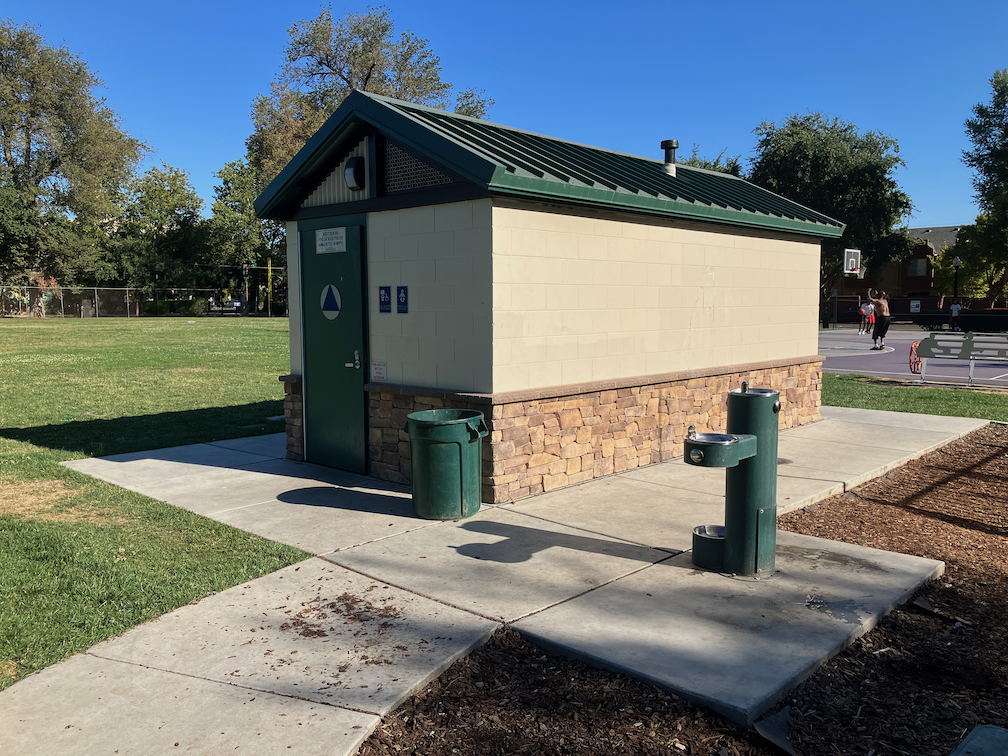
Car drivers can zip between places with restrooms. Bicyclists, to a lesser degree. Transit users and walkers, not at all. This is a transportation issue. If people cannot find restrooms, they can’t make their way through the city. They can’t afford to wait at a transit stop for a transfer. People with urinary issues (count me among them) have to plan carefully around not just their movement, but around restroom access. A city without public restrooms is a city that biases transportation against walkers and transit users, and in favor of vehicle drivers. Access is denied to an entire class of citizens.
In Sacramento, public restrooms are scarce. Cesar Chavez Plaza downtown has a Portland Loo type restroom, but it took years to get it done. So far as I know, there are no plans for additional locations.
Cesar Chavez Plaza restroom Portland Loo model
Roosevelt Park downtown has a new restroom, replacing the old one. There are two single-use, all-gender units, which is the current trend and probably much better than the older multi-user, gendered restrooms.
Roosevelt Park new restroom
The restroom in Fremont Park, right across the street as I type, has been closed for years, and despite the sign, is never open during events. Porta-potties are used for events at this park.
Fremont Park restroom closed
I have not traveled to all the city parks to see which restrooms are open, which are open but with limited hours, and which are closed, but my impression is that about half the park restrooms in the city are closed. The city has a GIS map of park restrooms, but no indication of whether the restrooms are actually open or not: https://data.cityofsacramento.org/datasets/b9e7fa6d1d104833b3f04268d7f682dc_0/explore. Park restrooms are valuable for walkers, but very few are located on transit routes.
There are no public restrooms at transit hubs. No restrooms where people are waiting for the next train or next bus. The next bus, at transfer points for low frequency routes, can be quite a long wait, up to 45 minutes assuming the buses are on schedule. Even at Sacramento Valley Station, where a number of modes converge, you can only use the restroom by showing an Amtrak train ticket. Using light rail or bus, or just walking or bicycling, you are out of luck. (Note: Many people assume that Amtrak or Capitol Corridor owns the train station, but it is owned and managed by the city.)
Some light rail stations and a few bus stops have restrooms for the transit operators, but not for the public.
The city should:
re-open or replace all park restrooms, within two years
install public restrooms at every city park which does not currently have them; this would include Muir Children’s Park, Grant Park, Winn Park, and several others
install a public restroom at the bus layover point on L St & 14th St
install a public restroom at the 16th St light rail station (where the Gold Line and Blue Line diverge, and the most used transfer point)
install a public restroom at 7th St & Capitol Ave light rail station (where the Blue Line, Gold Line and Green Line diverge; the 8th St & Capitol Ave stop is a block away)
identify locations throughout the city where walkers and transit users congregate, and install public restrooms there
You might wonder why I’m asking the city to install transit restrooms rather than SacRT. The reason is that I see it as the responsibility of the city to provide restrooms everywhere they are needed, not of the transit agency, though of course the projects could be joint projects.
With the exciting news that the closure of a part of JFK Drive in Golden Gate Park will remain permanently closed to private vehicles. This closure was made to provide safe open space during the pandemic, and is only a small portion of the roads in the park. Most of the people who live in San Francisco support this closure to cars (opening to walkers and bicyclists), and most of the people who visit the park from elsewhere (which includes me) also support.
People have started talking about Land Park in Sacramento. I was certainly not the first. This has been an ongoing conversation among advocates for walking and bicycling for years, but it never turned into a movement. Maybe today is the day.
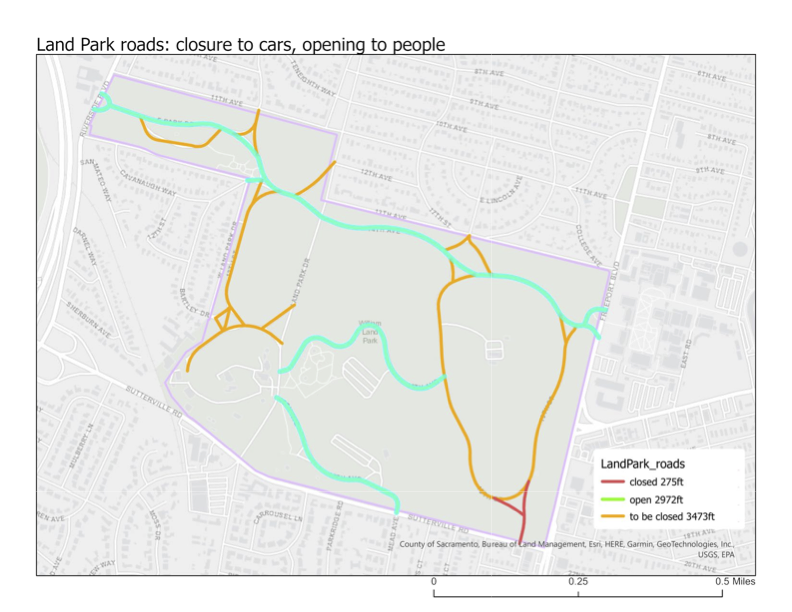
Below is my (modest) proposal for closing some of the roads in Land Park to private vehicles (pdf). There is a small existing closure, of the roadway in from the southeast corner of the park. It has gates that are permeable to bicyclists.
My proposal closes about 53% of the roads in the park, but leaves open roads that access important points such as Fairytale Town and the golf course (if that is important). It also leaves open an east-west route through the park, with ample parking along the roadside, for those who need vehicle access. People who drive are most likely to access the park from Riverside Drive, Land Park Drive, and Freeport Blvd; all those access points remain open.
Of course the use of the term ‘closed to cars’ is really an inversion. Roads that are closed to private vehicles are by nature open to walkers and bicyclists, and so are really ‘open’ to people.
So, what do you think? Constructive comments are always welcome.
I live in downtown Sacramento, and walk through the 15th Street & Q Street intersection almost every day, sometimes multiple times a day. On the southeast corner is my favorite coffee shop, Naked Lounge (I drink tea, not coffee, but they have a good selection). I often sit outside watching people and traffic, so I am very familiar with this intersection. Fremont Park is on the northeast corner, and again, I walk through the park pretty much every day. Let me say up front that this is not a high injury intersection that must be fixed soon. There are so many more dangerous intersections in the city to address first, and so many locations where poor engineering and disinvestment and discrimination has left walkers and bicyclists at great risk. But I can start here because I think about it so much.
A photo of the intersection. The trees on the northwest corner obscure the corner and part of what I’m going to talk about. The sidewalk, curb, ramps, and parking on the southwest corner are all new, as this was reconstructed along with the 1430Q apartments and ground floor retail. The other corners have not changed recently. 15th Street is a three-lane one-way street (it should be reduced to two lanes and bike facilities added), and Q Street is a two-lane one-way street with bike lane on the left side. The northwest, northeast, and southeast corners have small radii, meaning tight corners. The southwest has a high radii corner, meaning loose corners. This is new.
15th Street & Q Street, Sacramento
The wide radius corner on the southwest must have been someone’s idea of necessary for trucks turning from Q Street eastbound onto 15th Street southbound. But notice the northeast corner, which is just as likely to have such turning movements, has a small radius corner, and I’ve never seen a problem with trucks turning there.
Three of the corners do not have curb extensions. On the southwest corner, there is a curb and sidewalk extension along 15th Street, running about half way to the alley. Curb extensions (also called bulbouts) extend the curb and sidewalk out over the parking lane, slow drivers due to perceived friction, and shorten crossing distances for people walking. They are a known and frequently implemented safety solution. You can see curb extensions at a number of locations in the central city, though strangely, only about half the reconstructions install them. The extensions also create more sidewalk waiting or queueing space for walkers, important on busy pedestrians intersections such as this.
The southwest corner gets a lot of deliveries, both for the businesses below and the apartments above. The southeast corner has fewer deliveries. Delivery use should be considered in any change that is made at and near this intersection. On 15th Street, there are green 15 minute parking spots, one on the east, primarily for the coffee shop, and two on the west. On Q Street, there is one green spot on the south, along with about two white curb spots. There are no delivery (white curb) zones on the southeast corner. Green limited time parking and white commercial loading zone markings are relatively rare in Sacramento.
While having tea this afternoon, I saw a driver on 15th Street run a red light and almost collide with a Sacramento Fire Department truck turning from Q Street onto 15th Street. Lights, siren, loud horn, makes no difference to some drivers. I see a lot of close calls at this intersection, but have never witnessed a collision. A person sitting nearby mentioned that she works at another coffee shop on J Street, and sees collisons fairly regularly. Those who claim the solution to street safety is solely redesigning streets to slow traffic ignore that there are also drivers who won’t drive safely no matter what. There is nothing about street design that can prevent someone from running a red light, except of course not having a traffic signal there at all (too many traffic signals?).
To make this intersection safer for everyone (walkers, bicyclists, motorists), these changes could be implemented:
Paint high visibility crosswalks on the north and south legs of the intersection, similar to what the west and east legs already have. Sacramento is nearly unique in using these split crosswalk patterns, but they are probably as safe as any other high visibility pattern, which are often called Zebra crosswalks.
Create red curb offsets for each of the four corners, in the upstream direction. For 15th Street southbound, that means removing the last parking spot before the intersection on the west and east sides. For Q Street eastbound, that means removing the last parking spot before the intersection on the north and south sides. There is already an offset on the north side, and a small offset on the south, but it should be longer. You will notice in the photo above that there is a car stopped illegally in this area on the south side.
Immediately install temporary curb extensions on all corners. These extensions would fill the parking lane. Vertical delineators (posts or bollards) and paint (tan or purple is often used) set off this area. Why temporary? Temporary is low cost, and allows observation of how the installations are used by walkers, bicyclists, and drivers. The corner radius actually needed can be determined before any permanent installation.
Observe the temporary extensions, and then design permanent extensions with hard curbs and sidewalks. The permanent extensions must consider bike facilities on both Q Street and 15th Street. Q Street up through 14th St has a parking protected separated bikeway on the left side, and it is assumed that this will be continued to the east. 15th Street should have a parking protected separated bikeway on one side or the other, and the city will have to determine which side before installing permanent extensions. The curb and sidewalk extension on the west side of 15th Street south of Q Street may indicate the city has already made that decision, or it may be an oversight.
The photos below show crosswalks and offset locations for the intersection.
Q St west crosswalkQ St east crosswalkQ St short offset15th St no offset15th St south crosswalk15th St north crosswalk