where did the bikes go? partial answer

Follow-on to where did the bikes go?.

SACOG staff provided this information:

About a month ago, Lime pulled their e-bikes from the cities of Sacramento and West Sacramento. They are renewing their permits in both cities with the intent of only continuing to provide e-scooters. Bird has about 30 e-bikes available to rent in the City of Sacramento.

Since the launch of bike share in the SACOG region, Sacramento and West Sacramento have had open market permitting for shared micromobility, which allows any private operator to apply for a permit. If the operator meets all local requirements, they are then able to deploy shared bikes and scooters. For more information on these cities’ permitting processes, please see the links below:

The City of Davis and UC Davis recently launched a shared micromobility system with Spin. More information on this program and their plans is available here: https://taps.ucdavis.edu/spin.

Though not obvious from this response, I have been told by several sources that SACOG is no longer involved in bike share in any way. They have washed their hands of the program that they originated. The last time bike share was on the agenda for SACOG board or committees was May 2023. Since then, nothing. No discussion, no announcements, no communication with the public.

City of Sacramento staff said that the permit that Lime has with the city specifies a number of ‘devices’ but does not require that any of them be bikes.

This loss of a transportation service again points out that bike share systems must be at least publicly owned, though they might be operated by a private company with expertise. This is the second time that a private bike share has pulled out of the city, and region, without any notice to customers or the agencies. This is unacceptable.

For my earlier take on bike share ownership and operation: public or private bike share?. Additional posts under category bike-share.

Sac City NEW beg buttons

I was out walking last evening, and was horrified to discover this:

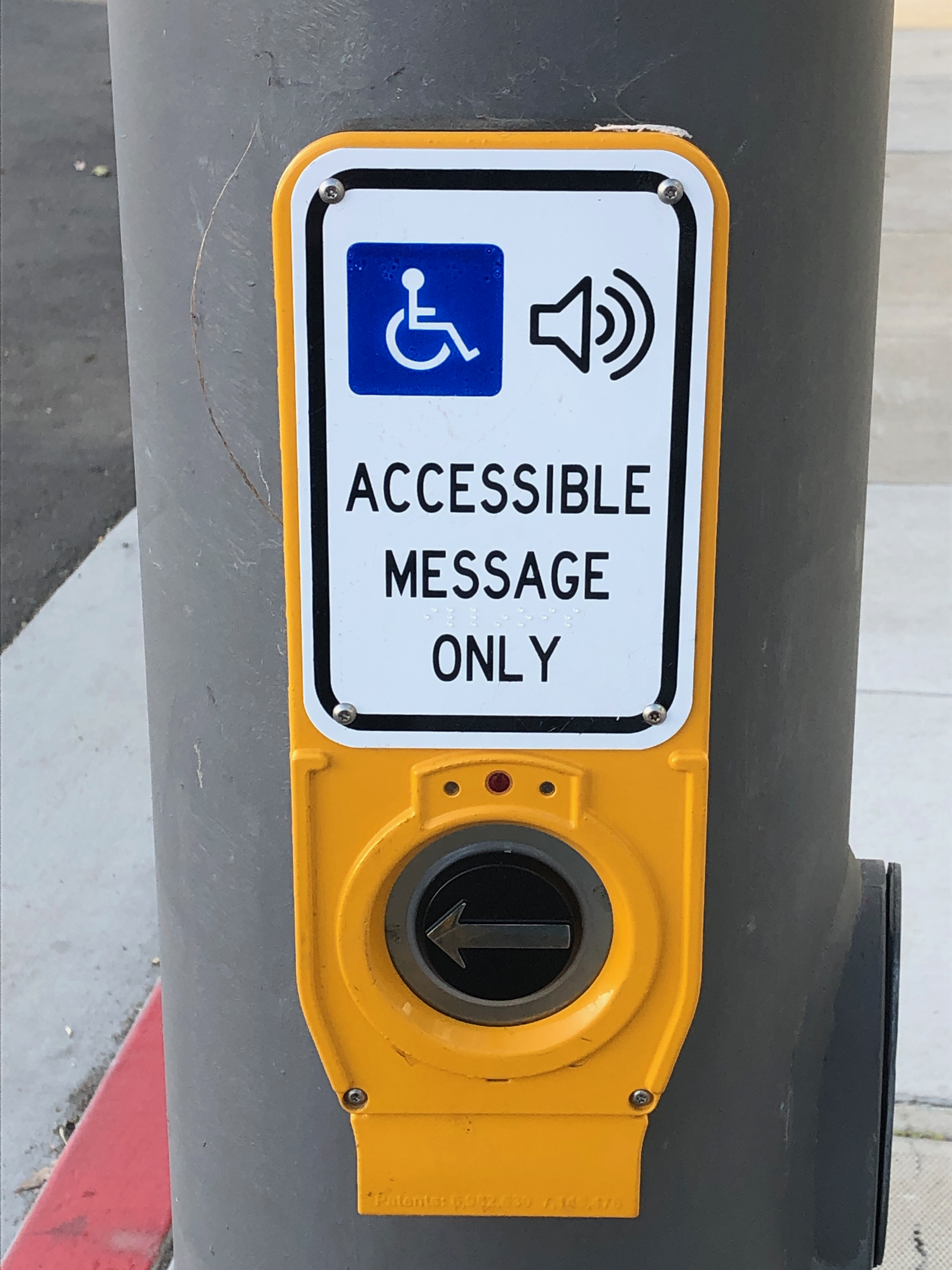
photo of new beg button at Alhambra Blvd and L Street
new beg button at Alhambra Blvd & L St

This is a brand new beg button (technically called pedestrian pushbutton) on Alhambra Blvd in Sacramento. These have not been turned on yet, hence the cardboard over the button itself, but they are newly installed. There are a number of these along Alhambra Blvd, though I don’t yet know how many. For at least the ones I observed, these are all at locations where the pedestrian signal was previously on auto-recall, meaning the pedestrian signal changes as part of the regular signal cycle, not requiring any action on the part of the walker. Now, with these beg buttons, a person walking must ‘beg’ to cross the street by pressing the button. These buttons do not, at least in Sacramento, speed up the signal cycle. The person waiting must wait the same amount of time before a walk indicator comes on.

This is an affront to myself and anyone who walks. I’m sure the city considers this a pedestrian safety improvement, and I’d not be surprised if the city used pedestrian safety funds to install it. But it is a motor vehicle facility and improvement, it does absolutely nothing for someone walking. What is does do is allow the traffic engineer to favor motor vehicle traffic in signal timing.

The trend all over the US is to either remove such beg buttons completely, or to change them to accessible audible buttons. In a few places, they are being replaced by automated pedestrian detection, so that no action is required on the part of any walker. San Francisco has converted all of its beg buttons to accessible buttons. Other bay area cities have started to do so. I know of no place in the US where new beg buttons are being installed.

City of Sacramento Public Works is populated by fossil engineers and fossilized thinking. It has a cars-first attitude, and will continue to have that attitude until the fossils are cleared out. Put them in a museum of the 1970s, and get them out of our transportation system.

beware the leaves of December

It is fall in Sacramento, trees are turning, leaves are falling. It is my favorite time of year, in part due to the knowledge that it will be over soon, only memories and photos. While out walking the last two days, I have been watching little breezes create leaf-fall, more fascinating to watch than snowfall. The four ginkgo trees back of my apartment are at their peak of brilliant yellow color, and the ground is carpeted in yellow. Blocks with a variety of trees are a kaleidoscope of colors.

This morning landscape workers were out blowing leaves into piles, but they were falling faster than they were moved. As I write, it is raining lightly, which will accelerate the leaf fall.

photo of ginkgo tree and leaves next to bikeway on P St
ginkgo tree and leaves next to bikeway on P St

What is not to like? Well, what happens over the next few days. The wet leaves will start to rot, which is a natural process. But any leaf area where cars are allowed to drive will grind the leaves into fine particles, and those particles with turn into what I call leaf slime. Leaf slime is incredibly slippery, and it is a clear and present danger to bicyclists (and walkers). The Class 4 separated bikeways probably won’t be too bad, since bicycles don’t grind up the leaves, and the city may even get around to sweeping the bikeways. But the regular Class 2 bike lanes will be horrible. Cars will drive over the leaves, and start the process. The city very rarely sweeps bike lanes. They may be partially cleared if residents have illegally piled leaves in the bike lane, and the claw picks up the leaf piles, but the very act of scraping up the piles leaves a thin leaf slime layer.

So, it is time of year to avoid bike lanes, until there is either maintenance or enough rain to wash away the leaf slime. Ride in the general purpose lane. Yes, you will get yelled at by asshole drivers whose car isolates them from the realities of roadways, but at least you won’t be slipping and falling on the leaf slime. Beware the leaves of December.

Central City Mobility: 5th St signals and rubber speed bumps

This is Central City Mobility Project update #28.

Rubber Speed Bumps

The rubber speed bumps have finally been installed on most of the non-concrete turn wedges. These are marked by vertical delineators, as shown below. it is odd that most of these installations have both green K-71 vertical delineators in addition. These K-71s might have been installed temporarily, while waiting for the rubber speed bumps, and be removed later, or may be permanent. In some of the locations, the white vertical delineators have already been hit and bent by errant drivers. I have not visited all of the locations where the rubber speed bumps have been installed (or not), so don’t have any more information. More info about the rubber speed bumps is available from the vendor TreeTop Products.

photo of turn wedge at 16th St & P St, with green K-71 delineators and rubber speed bumps
turn wedge at 16th St & P St, with green K-71 delineators and rubber speed bumps
Read More »

where did the bikes go?

I noticed on the evening of Friday, November 10, that there were no bike-share bikes available on the Lime app, anywhere in the Sacramento region. This is still true on the morning of Thursday, November 16. The red-orange Lime/JUMP bikes had been available throughout the center of Sacramento and West Sacramento. Where have they gone? I don’t know. I’ve received no communication from Lime about the issue, and no one has shared any information with me.

Since there were no Lime/JUMP bikes on the 10th, I looked at the Bird app for their blue bike-share bikes. There were none. As of this morning, there are a few Bird bikes available in the app, but far fewer than there used to be.

I don’t know if the disappearance of bikes from these two vendors was related, or just happenstance.

Bike-share from Lime and Bird are privately owned and operated, under permit from the City of Sacramento and City of West Sacramento. But the permits apparently do not require notification to the cities of major service interruptions or issues. JUMP pulled its bikes from the entire region, without notice to any of the agencies, or the users, at the beginning of the pandemic. Users were left in the lurch, with fewer transportation options that before. The withdrawal, which was not necessitated by the pandemic, was probably a business decision. It killed off the most successful bike-share system in the United States (in terms of rides per bike per day). Sacramento continues to be a second class bike-share market to this day.

I believe that bike-share must be controlled in some way by the transportation or transit agencies. The systems might be contracted out to vendors such as Lime and Bird, but control would be with the agencies. Again, we see the flaws in the privately owned and operated model.

transportation and May is Bike Month thoughts (guest)

This is a guest post from reader Sonya Hendren. Sonya is a bike advocate and educator in the Sacramento region.

In looking back at this year’s May is Bike Month, two comments during meetings have left an impression, informing my current opinions on the efficacy of our bike advocacy.

During a neighborhood association meeting about walking/biking safety, a panelist emphasized that transportation projects are funded by competitive grants. It’s a fixed-sum game: if Sacramento gets a grant, all the losing cities’ projects are left unfunded. If another city’s project wins, Sacramento’s project doesn’t happen, at least not in this funding cycle, from this source. Of course our first instinct, mine included, is to cheer for Sacramento; we get funding, we do projects.

My revelation is that I don’t want Sacramento to win competitive grants. In the Freeport Blvd Transportation plan, the city never considered a road diet (reduction in lanes), despite it being a prominent request during the community input phase, because their goal is to maintain previous ADT (average daily traffic count.)The city works to maintain current levels of private-car use. The city’s Climate Action and Adaptation Plan, companion document to the General Plan, reduces the MCCC (Mayors’ Commission on Climate Change) goal of 30% Active Transportation, down to 6%. Under these practices and policies, Sacramento would use transportation funding to further cement car-dependency. Grant funding would be better spent in another city that is actually trying to shift transportation mode share away from private-cars, trying to reduce VMT (vehicle miles traveled). The project in another city would do more good to Sacramento by serving as a positive example, than spending the money in Sacramento under Sacramento’s current practices and policies.

Second, during a debrief-and-next-steps meeting on school “bike buses,” I learned that after Safe Routes to Schools programs end, feedback of continued walking/biking is the rare exception, not the norm. The norm is that Safe Routes to Schools programs are funded for one to three years, they get a group of kids walking or biking during those years, and when the funding ends, all the families go back to driving. Current infrastructure and incentives are such that without a paid person there helping, even students/families who have been taught how to walk/bike to school and practiced it for years, do not. That’s so discouraging: if “holding people’s hands,” not just teaching them the routes, but traveling those routes with them regularly, sometimes for years, doesn’t convert people to using the routes, how can any of our encouragement projects have any affect??

Read More »

Caltrans likes killer interchanges

See Caltrans Readies Guidance for Complete Streets, with a Giant Exemption (StreetsblogCal, 2023-09-29) and Caltrans: We Need Complete Streets at Freeway Interchanges (CalBike, 2023-09-28).

I worked for 10 years as the Safe Routes to School Coordinator for San Juan Unified School District. Three of those years were focused on Citrus Heights schools, and the rest on schools in unincorporated Sacramento County (Orangevale, Fair Oaks, Carmichael, Arden-Arcade, and Gold River). The interchanges with Interstate 80 presented barriers for students who lived on one side and went to school on the other. They could not walk or bike across the freeway, because the interchanges were designed to be safe only for motor vehicle drivers (and not really even those), not to be safe for walkers and bicyclists. Crosswalks over on-ramps and off-ramps were placed where drivers would cross them at freeway speeds, with poor visibility due to the curves. Bike lanes were usually non-existent, and when they were there, exposed bicyclists to high speed merges at on-ramps and off-ramps. If you have ever had the ‘pleasure’ of walking or riding across one of these interchanges, you will know how scary and unpleasant they are. Generally only ‘fearless’ bicyclists and people who have no other choices will walk or bicycle here.

Since these horrible interchanges were designed and constructed by Caltrans, you might think that they are responsible for fixing them. They deny responsibility. They say to cities and counties, if you want a better interchange, you build it on your own money, or with grants. One of the interchanges in Citrus Heights, Antelope Road, was repaved by Caltrans, and they removed the bike lane from the westbound direction. Of course that bike lane was not safe to begin with, but removing it was criminal.

Same Caltrans denial of responsibility for ped/bike bridges over the freeway. There is one ped/bike bridge over I-80 in the entire stretch between Sunrise Blvd and Watt Ave, a distance of about eight miles. One. And it is no a pleasant crossing to use, often full of trash and graffiti. Again, to the cities and counties, Caltrans says, if you want it, you pay for it, don’t expect it to come out of our budget.

Given this, Caltrans will not even allow the application of complete streets designs to these interchanges. They want them to remain as they are, barriers to travel, and killers of the few walkers and bicyclists who use them.

All of this after spending four years developing a new complete streets policy, which could have been done in a year if Caltrans were not dragging its feet. Caltrans says that it has changed its ways, and is now concerned with people who walk and bicycle. Their actions say otherwise.

bike and scooter share back in Davis

The City of Davis and UC California Davis have created a new bike and scooter share program with vendor Spin (Spin E-Bikes and E-Scooters Launching in Davis This Fall). I was in Davis yesterday, and did not see any of the bikes or scooters, but I was not looking for them. There is going to be a slow roll-out, and I don’t know how many are on the street yet.

Davis was previously part of the JUMP/Uber bike-share regional system, but dropped out when JUMP pulled out of the area. JUMP/Uber was bought, in part, by Lime and Lime now operates with former JUMP bikes in Sacramento and West Sacramento.

Davis is requiring that devices be parked correctly, with economic consequences for not parking properly, in order to meet one of the main concerns about earlier programs. Spin will make adaptive devices available on request, which were not available in the earlier programs.

Spin Access offers lower prices for people who qualify based on CalFresh or similar low-income programs. Note that Davis is not yet listed as a city option, but it should be soon.

Spin – Shared Micromobility (City of Davis)

Spin Shared Micromobility Program (UC Davis)

$5 billion, or reduce cars

The number of $5 billion (or more) has been bandied about recently as the amount of money we need to fix all the poorly designed and dangerous roads in the City of Sacramento. The number seems reasonable, and I myself have estimated that sidewalk repair alone is $1.5 billion. This is just the city, let alone the county or region. The county and region are in most cases much worse off than the city. I support more funding for this work, some via sales taxes, but more via property taxes. After all, it is property that requires our transportation infrastructure and benefits from a good system.

But what if there is a better way? A less expensive way?

I encourage you to watch the latest (August 24) episode of Not Just Bikes (by Jason Slaughter), titled ‘Even Small Towns are Great Here (5 Years in the Netherlands)‘. He has collected video clips from visits to small towns across the Netherlands. He has two main points about small towns: almost all of them are served by good rail service, and many of the small towns and suburbs don’t need extensive bike structure because there are so few motor vehicles that it is safe and comfortable to ride on any street. My favorite quote from the video is:

“To make a place friendly for cycling, it was more important to restrict cars than it was to build a bunch of expensive bicycle infrastructure. After all, protected bike lanes are just an extension of car infrastructure, right. You don’t need bike paths if you don’t have a lot of cars.”

Not Just Bikes (Jason Slaughter)

A related quote, that I will have to paraphrase, since I can’t find the original source is: We have plenty of space for bikes on our streets, its just that it is currently occupied by cars.

The point, for me, is that we could make much more effective investments if we greatly reduced the number of cars on the road rather than trying to make all our roads safe for bicycling and walking. We need to make car drivers pay the true cost of their transportation choice: fossil fuel extraction, climate change, air pollution, expensive highways, foreign wars and fossil fuel subsidies, and a long list of others. Yes, and making it necessary to build protective infrastructure for walkers and bicyclist to protect them from those drivers. We need to make is more expensive and less convenient to drive, so that people will make other choices.

If we actively and directly reduce car dominance, we might only need $1 billion to fix everything. Still a lot of money, but not out of reach.

Jason moved to the Netherlands from Canada, but the car dominated ‘no places’ that he left are the same car dominated ‘no places’ of the United States, and of Sacramento. In fact, Canada tried to imitate the US, and left themselves impoverished, both economically and mobility wise.

Imagine for a moment, someone saying “Carmichel, where there are so few cars that it is safe to bicycle and walk on any street, and the are great transit connections to all the regional destinations.” They would be laughed out of the room. Yet Carmichael, and unincorporated town in Sacramento County, is about the same size as many of the small cities called out in the Not Just Bikes video. We have designed a horrible world in service of the idea that we can and should drive everywhere. We if we flip that and make it hard and expensive to drive everywhere, places will begin to heal. Even Carmichael.

Central City Mobility update

This is Central City Mobility Project update #21.

I have been backpacking and traveling, so not keeping up as much with the Central City Mobility Project. I may do updates on my days back in town, about once a week.

19th St: Paint and vertical delineators are mostly complete from H St to W St. Nothing has happened in the two blocks from W St to Broadway. Though pavement has been patched from Q St to W St, no other work has occurred.

21st St: Paint and vertical delineators are complete from W St to I St. No bicycle signal at I St, so the intersection of 21st St and I St remains extremely hazardous to bicyclists (and walkers).

P St: Paint and vertical delineators are complete from 21st St to 15th St.

Q St: Paint is mostly complete from 14th St to 21st St. Vertical delineators have been installed on some blocks but not others, probably due to materials shortages. Some crosswalks are missing.

10th St: Paint is mostly complete from W St to Q St (Q St to I St was already ‘complete’ before this project). No vertical delineators yet. The block from Broadway to X St has a traditional bike lane on the right, but no changes. The block from X St to W St, under the freeway, has a wide right side shoulder, but it is not a bike lane, nor is it marked as such. The parking-protected separated bikeway on 10th St is on the right side, because 10th St does not have bus service to be accommodated by a left-side bikeway.

9th St: Other than some patching, nothing has happened on 9th St. The new bikeway from L St to Q St will be on the left side. A construction project from L St to Capitol Ave closes the left side bike lane, and there is no accommodation for bicyclists. Though there is a bus area on the right, followed by a parking lane, it is not marked as a bike lane, nor is it safe as a bike lane. There is no signed on 9th St approaching L St to indicate that the bikeway ends, nor how to ride south. See photo below.

9th St at L St, no bicycle accommodation

Another construction project from O St to P St closes the right side of the roadway, but the existing bike lane on the left hand side is still open. As previously noted, it is unlikely that the bikeway on 9th St will be installed until both construction projects are complete.

I St: Other than pavement patches, no other work has taken place. No-parking signs continue to be up even though no active work is occurring. Most blocks from 21st St to 12th St will be reduced from three general purpose travel lanes to two, but from 20th St to 19th St, and part way to 18th St, the three lanes will be retained. It is not clear why.

5th St: No further work has occurred.

Nothing has changed about the ‘turn wedges of death‘. A closer look at the design diagrams (thanks to the person who provided them) shows that the wedges at intersections of the separated bikeways are intended to have hard curbs, 4 inches with sloped sides (regular curbs are six inches or more) with stamped concrete interiors (style 3), but the other intersections will have ‘rubber speed bumps’, and vertical delineators. The bumps are apparently as shown in the photo below, though the photo shows a bump in the travel lane, and these are in the turn wedges. The bumps are 2.25 inches high, which won’t be even noticed by trucks and SUVs, though might be noticed and respected by passenger car drivers.