I have always been leery of Uber. They have seemed from the beginning like a bunch of spoiled tech brats, whose only values are innovation and profits. Their business model is to exploit the grey areas of law, and to exploit the black and white areas of law by making huge profits in the time gap between recognition and enforcement. They are really not providing a service so much as running a scam. They are scamming their drivers. They are scamming their riders. They are scamming their investors. They are scamming society as a whole by proposing that shady dealings are the future of transportation. They have been found in a number of states to be violating employment/contractor and wage laws, but they continue as though they can. And if we let them, they can indeed. The instances of discrimination against people of color and the disabled are legion. The instances of intimidation and violence against patrons by drivers who have not been sufficiently background checked are legion.
What has brought me to this point of anger, however, is their arrogant attitude about operating semi-autonomous vehicles in San Francisco. Their vehicles have been observed violating the law and endangering pedestrians and bicyclists, and the company’s response has been that things will get solved eventually, with a little engineering. They have thumbed their nose at both the state of California and the city of San Francisco, refusing to cease vehicle testing, though they have not acquired permits to do so. All the other companies have.
I’m a frequent visitor to San Francisco, and what I’ve observed when walking, bicycling and using transit is: Uber drivers making high speed right turns, failing to yield to pedestrians in crosswalks (marked or unmarked), cutting in and out of lanes and disrupting traffic flow, greatly exceeding the speed limit, pushing bicyclists out of traffic by using their vehicles as weapons of intimidation, blocking bike lanes to pick up and drop off (legal for taxis when the client’s disability requires that, not so for Uber), blocking transit only lanes (the bus + taxis designation does not apply to Uber), circling the block waiting for rides which increases congestion and air pollution. I could go on. I’ll say that I’ve also experienced some very polite and safe Uber drivers, but they are the exception.
It is well documented that Uber is losing money. So what is their plan? Their plan is to drive the competition out of business. One of their competitors is taxi cabs (which are licensed and regulated), and in some locations their have nearly succeeded. I’m not defending taxis, whose service was poor for years, but driving your competition out of business by violating the law is not the way things are supposed to work in a country of laws. Competition by offering a better service? Sure, but not by violating the law.
Another effect of even more concern to me is that they are harming public transit. Many transit systems are just hanging on, with declining ridership and declining fare recovery. Some might go under due to the actions of Uber. Of course it is likely that Uber will go under as well, and so the marketplace should work, but what of the damage they cause on their way down? Uber has encouraged the idea that ride hailing is the future and transit is the past. And if we let it be so, it will be.
None of this is to suggest that ride-hailing/car-“sharing”/transportation network companies (TNC’s, the official name of such services) can’t be part of our overall transportation services, complementing other modes. But I will state right here that Uber is not part of that solution, they are the problem.
So, what to do. I ask you, dear readers, to stop using Uber. If they lose riders, they will fail all the sooner, and do less damage on their way down. There are other ways to get around, please use them.
Until a few months ago, I’d have said that companies that bully everyone cannot succeed, but then a bully was elected as a president (or not, depending on your view of the electoral college and popular vote). Perhaps all bets are off. Maybe Uber is the future, the model of business so well refined by Donald Trump.
You bet I’m angry.
#NoMoreUber
 Before we can start doing right, creating system that truly serves people’s desires for access in livable communities, we have to stop doing what we were doing. It think we can keep doing the wrong stuff and just add in the right stuff, we are wrong. We need to stop expanding and widening roads. Now, and for ever. #NoNewRoads
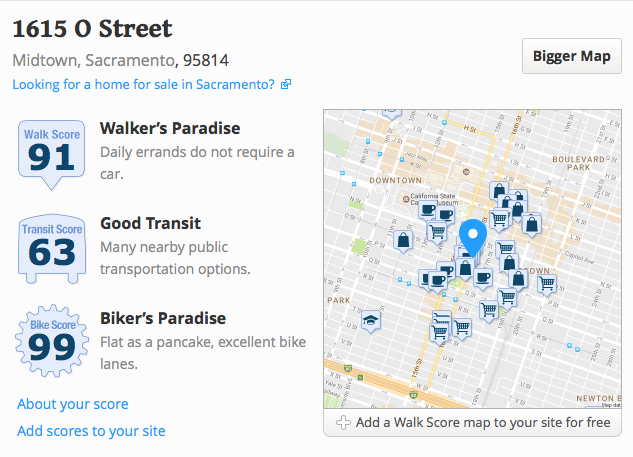
 Getting Around Sacramento