I often take Capitol Corridor to and from the bay area, and sometimes back from Davis (riding my bike there, usually). My observation is that I-80 is indeed congested at times, never more so than on Friday afternoons with traffic heading to Lake Tahoe area, but to some degree at AM and PM commute times. And of course when there are crashes that slow or stop traffic, which seems to happen pretty regularly. Though transportation agencies and most drivers see this section of I-80 as a bottleneck, and want the congestion solved, I see this section as a control valve on the whole system between the bay area and Nevada. Some people will make a choice to travel at a different time, or to avoid the trip completely, or to use other modes of travel. But many will just sit in traffic and cuss the government for allowing congestion. As the say goes, “You are not stuck in traffic, you ARE traffic”. In that sense, the three lanes each way segment of I-80 through Yolo County serves as the pressure valve on the cooker of motor vehicle traffic. If the bottleneck is removed, traffic will expand to fill the available space, just as the steam does when I turn the valve to release my pressure cooker. Caltrans does not deny that the project will induce more VMT, so it has a list of mitigations for that induced VMT.
Earlier posts on Yolo and related managed lanes issues: Tolling for I-80 managed lanes, no HOV lanes, Yolo 80 teach-in. For existing and future posts, see category ‘managed lanes‘. I’ll have more to say about managed lanes.
There are more or less two views on the Yolo 80 project: Alan Hirsch/Yolo Mobility (and others) believe that we should not expand the freeway or remove the bottleneck. Instead we should better fund transit and rail to provide an alternative to freeway travel. The others, such as YoloTD and Caltrans, believe that expanding transit and rail is important, but we can only fund that with the income from managed lanes. They also want to ‘solve’ the ‘congestion problem’.
HOV lanes should be removed from consideration, as they do not work. Alternatives 2 and 7 in the draft EIR include HOV lanes. I don’t support alternative 6 to add a transit only lane (part-time of full-time) because under this scenario, no source of sufficient funding to run frequent bus service is available, and if no frequent service, a bus lane is a waste of space, whether it is a new lane or an existing lane. This is not to discount the value of transit lanes, but to say they must make sense under current or near term service plans. Alternatives 3 and 4 add HOT (high occupancy toll) lanes, 3 is 2+ occupants, and 4 is 3+ occupants. I don’t know enough to distinguish between these, though I do know that 2+ is common in the bay area and 3+ is common in southern California. However, I don’t think that HOT lanes are the best tolling solution because they allow vehicles with the requisite occupants to avoid tolls completely. They do have some congestion reduction benefits and some VMT reduction benefits, but the research available indicates they don’t have significant benefits, and there are equity implications since it may be mostly higher income commuters and travelers that can arrange for higher occupancy over long distances.
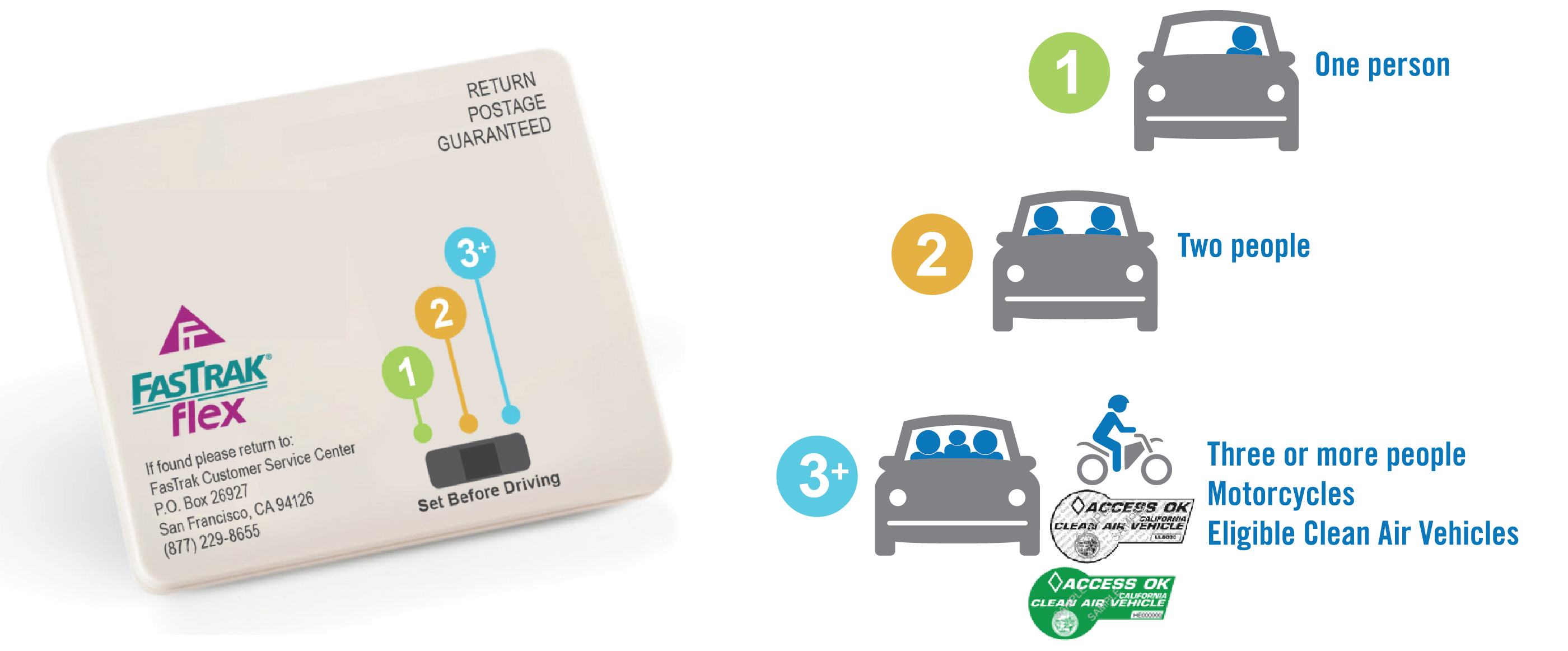
If the corridor is to be widened at all, I believe alternative 5, express lane tolling, is best. It should be designed so that every vehicle (except transit) pays for every trip. There would be discounts for lower income people, probably using the CalFresh or other program discount of 50%. There would be discounts for the number of occupants for users of the FasTrak Flex transponder that can be set to 1, 2, or 3+ occupants. Caltrans is also exploring technology that would allow sensing of number of occupants without this particular transponder. The could be and probably should be discounts for travel during non-congested times when all lanes of the freeway are mostly free-flowing. But every vehicle should be paying something at all times. There is a clear equity advantage to express lane tolling in that all users are paying into the system so that tolls per use can be set lower. People talking about Yolo 80 tolling, including those opposed to any tolling at all, have bandied about charges of $10 to $40, but I believe that express lane tolling would set full price tolling at no more than $5, and likely less. A detailed operations and charges plan would await creation of the tolling authority, so nothing is known for certain about tolls at this time. I have not been able to find any projection of tolls in Caltrans or YoloTD documents, though certainly it may exist.
My preferred alternative is 1, no build. I want the Yolo bottleneck to remain a bottleneck so that it sets a ceiling on VMT in the entire I-80 corridor from Nevada to San Francisco. We don’t need, now or ever, more motor vehicle capacity. We need travel mode alternatives. The best alternative, I believe, is higher frequency for Capitol Corridor between Roseville and San Jose. Other actions such as better bus service, both local and regional, better walking and bicycling facilities, e-bike subsidies, and effective bike share systems are all part of the solution. More lanes, of whatever type, is not the solution.


[…] Yolo 80 thoughts […]
LikeLike