street design from outside in

Streets should be designed from the outside in. They have traditionally and still are designed from the inside out, which means first deciding how much motor vehicle traffic to allow or encourage, and at what speed, then working outward to parking, transit, bike facilities, and sidewalks. This approach has given us the transportation system we have, which is rapidly changing the climate while not meeting the needs of most citizens.

If we plan outside in, we can have a better design, in every way. I don’t mean starting with the sidewalk, I mean starting with the land use. What land use is already there, or do we know will be there in 10-30 years, or most importantly, do we want to be there? What types of livable, economically vibrant places do we want? Then, and only then, what sort of design do we want to accommodate walkers (and rollers) who will access those land uses? What trees do we need to shade and shelter those walkers (and reduce utility bills for the buildings), and what other sidewalk-related amenities do we need for those walkers, and that land use? Benches, bioswales, dining, bike and scooter parking? What sort of bicycle facilities do we need to allow people using bicycles, bike-share, scooter-share, etc. to access that land use? What sort of transit facilities such as bus stops and dedicated transit lanes (bus or rail) do we need to serve those land uses? And lastly, what sort of motor vehicle facilities do we need? Do we need parking? What number and width and direction of general purpose travel lanes do we need? There may be some space left over for motor vehicles, once all the other needs have been met.

You might think I am being facetious, that motor vehicles should be accommodated in left over space. But I am serious. In most cases we don’t need motor vehicles on many streets. We think we do because we have designed streets that way, and encouraged people to think that way, that cars are the main mode of transportation. But there are examples of streets all over the world, and even a few in the US, that don’t allow motor vehicles at all, or if so, under very controlled circumstances. These include car-free or car-light boulevards, all the way down to woornefs, where motor vehicles are guest subservient to all other uses.

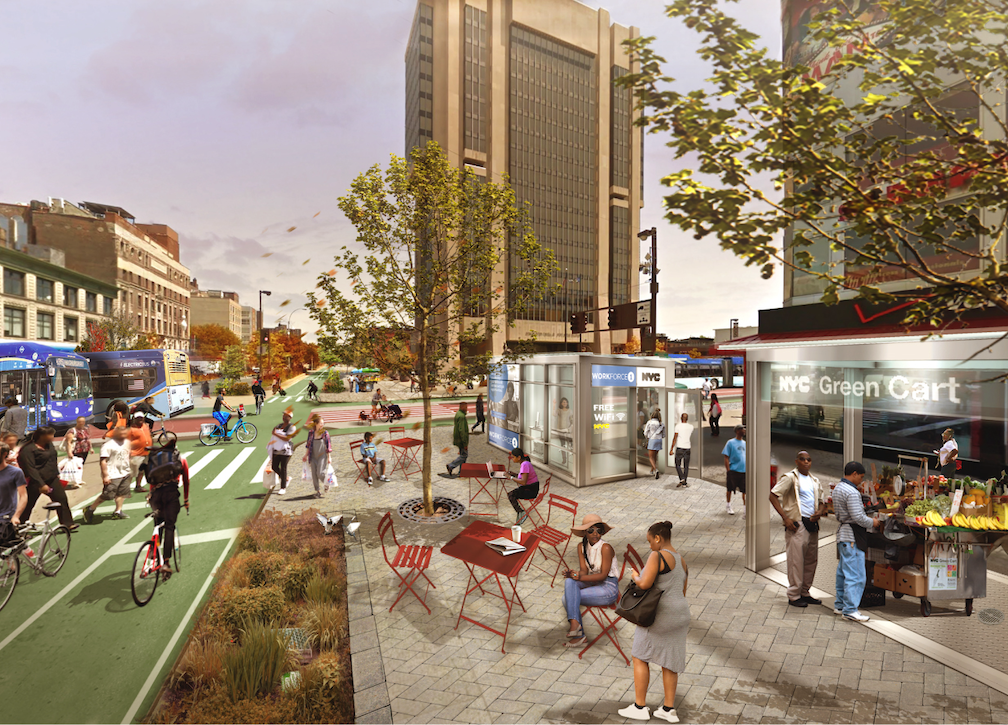
A Google search for ‘photos boulevards without cars’ interestingly produces hundreds of photos of streets with cars, and cars on streets, and mostly, car crashes. But Wikipedia has photos of woonerf, and Google did find one photo of a proposed street redesign for NYC produced by PAU architecture practice.

woonerf street in Utrecht, Netherlands
proposed people street design for NYC

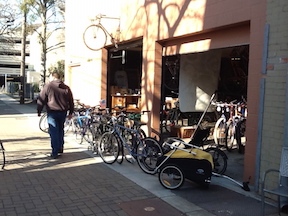
Liestal Row shared space

Edible Pedal in Liestal Row

Shared space is a type of roadway that is common in Europe, found in a few places in the United States, and so far as I know, only one place in Sacramento. The concept is that pedestrians, bicyclist, and motor vehicles can mix without having to have set-aside areas defined by curbs and painted bike lanes.

In Sacramento, Liestal Row, an alley between L Street and Capitol Avenue, and 17th Street and 18th Street, is the example. The alley was reconstructed with sidewalk areas defined by smooth concrete and roadway areas defined by bricks, however, there are no curbs in between and no limitations that keep the modes separate. The two businesses in the alley, Edible Pedal and Old Soul, spill out into the alley, and people often stand around in conversation. Often vehicles (including bicycles) have to thread their way between other users. What makes the alley work is that motor vehicle drivers are moving at a very slow speed, and do not have priority over other users. I’ve seen the uncertainty in the eyes of drivers negotiating the space, and that is exactly what makes it safe for everyone, the uncertainty that leads to paying attention instead of making assumptions or driving distracted.

Read More »

clarifying my doubts

M62Just before posting “doubting protected bikeways” yesterday, I’d been reading Momentum Magazine, one of my favorites. After posting, I turned the page, and there was a 14 page article entitled “The Rise of the North American Protected Bike Lane” by Angie Schmitt (not yet posted to their website, so you’ll have to read the paper or digital copy). The article is a classic defense of protected bikeways, with the standard criticism of vehicular cycling.

The heart of the article is the “by the numbers” graphic which shows the increase in bicycling in seven different cities that occurred after installation of protected lanes. The increases are impressive. The text talks about Portland research on types of bicyclists, positing that such facilities are necessary to get the “interested and concerned” 60% onto bicycles. Though safety is mentioned several times, it is clear the greatest benefit proposed is an increase in bicycling mode share. I’m not in disagreement with any of this. What I am in disagreement with is the focus on increasing bicycle share as the most important goal of changes we make to our streets.

Bicycling mode share in the U.S. ranges from below 1% in some places to as high as 6% in a few cities. Andy Clarke of The League of American Bicyclists is quoted as saying we could increase this to 10% or even 15% with the use of protected facilities. Sounds great. The problem is that it leaves a whole lot of motor vehicles on the road, making our cities unlivable and threatening the lives of pedestrians.

Read More »