a trip to San Rafael

Dan Allison, author of this blog, took a trip to San Rafael, California, in north bay Marin County, on Monday of Week Without Driving. To be transparent, I have been car-free for over 13 years, and car-light for about 7 years before that, so a trip on bicycle and public transportation is just the way I live life, not an exploration of the challenge that people who can’t drive face. My income is lower middle income, so I have enough money to travel, at least locally. I went to San Rafael to retrieve my phone charger and battery pack that I’d left on a Marin Transit bus last Wednesday. It took three days for Marin Transit to find the item and get it to lost and found. It was entertaining, and sad, to watch the included AirTag travel around on multiple bus routes. AirTags are bluetooth, so only report when they are close to a modern iPhone, but they do keep showing up in new locations.

So, the Monday trip:

  • bicycle from home to Sacramento Valley Station
  • Capitol Corridor train from Sacramento Valley Station to Richmond Station, $22.95
  • BART from Richmond to El Cerrito del Norte, $0.85
  • Golden Gate Transit bus 580 from El Cerrito del Norte to San Rafael Transit Center, $3.50
  • bicycle to a local coffee shop, where I worked on Week Without Driving communication
  • bicycle to Sprouts Farmers Market for lunch supplies
  • bicycle to Larkspur Ferry
  • Golden Gate Larkspur Ferry to San Francisco, $7
  • bicycle to San Francisco Bay Ferry gate G1
  • San Francisco Bay Ferry to Oakland Ferry, $2.30
  • bicycle to Oakland Jack London Station
  • Capitol Corridor from Oakland to Sacramento, $24.65
  • bicycle from Sacramento Valley Station to home

All of the public transportation was using my senior Clipper Card, on my watch. Capitol Corridor train travel was pre-purchased tickets through the app. The total was $61.25, which is rather expensive for a none day trip, but is quite a bit less than I would have spent driving. At about 83 miles there, and about 105 miles back, using the IRS rate of $0.67 per mile, driving would have cost $126. Plus $17.25 for Golden Gate Bridge and Carquinez Bridge tolls. Most people think only about gas costs, or charging costs, and forget about depreciation, insurance, maintenance, parking, and tolls.

Travel time is hard to compare, since I made so many stops along the way, and did not travel by the most direct route. Looking at the simpler Sacramento to San Rafael trip, driving would be 1 hour 20 minutes, whereas I spent about 2 hours 20 minutes on public transportation.

This is a trip that I’ve taken many times, so there was very little planning involved, and in fact I changed my plans for the leg back home several times on the fly, without problems. Less familiar trips would take more planning.

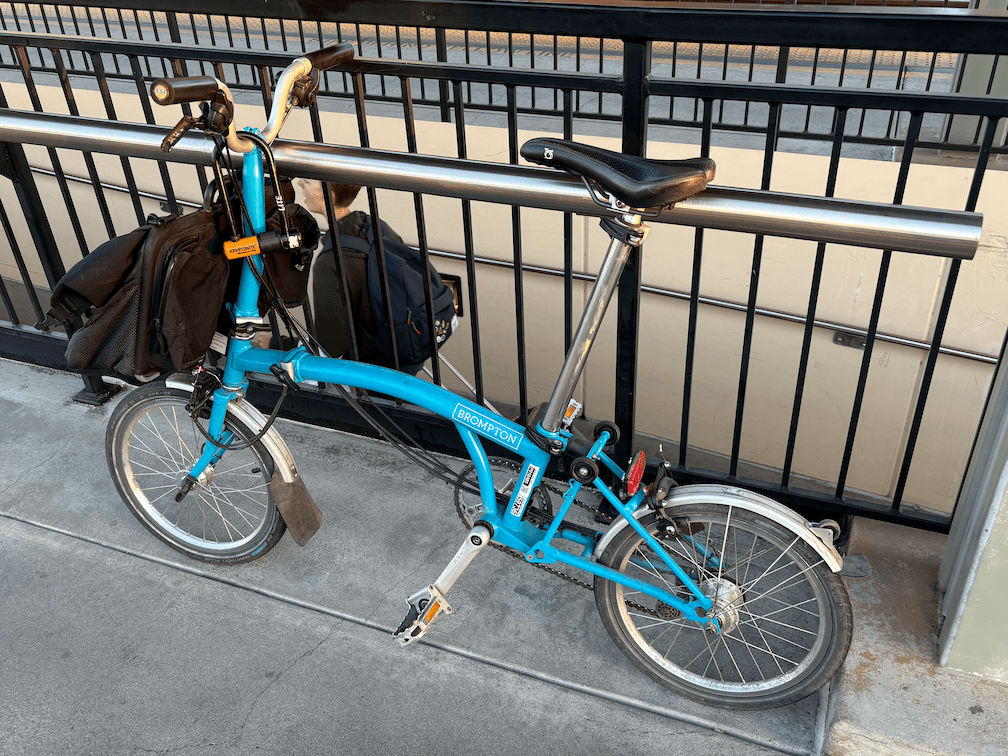
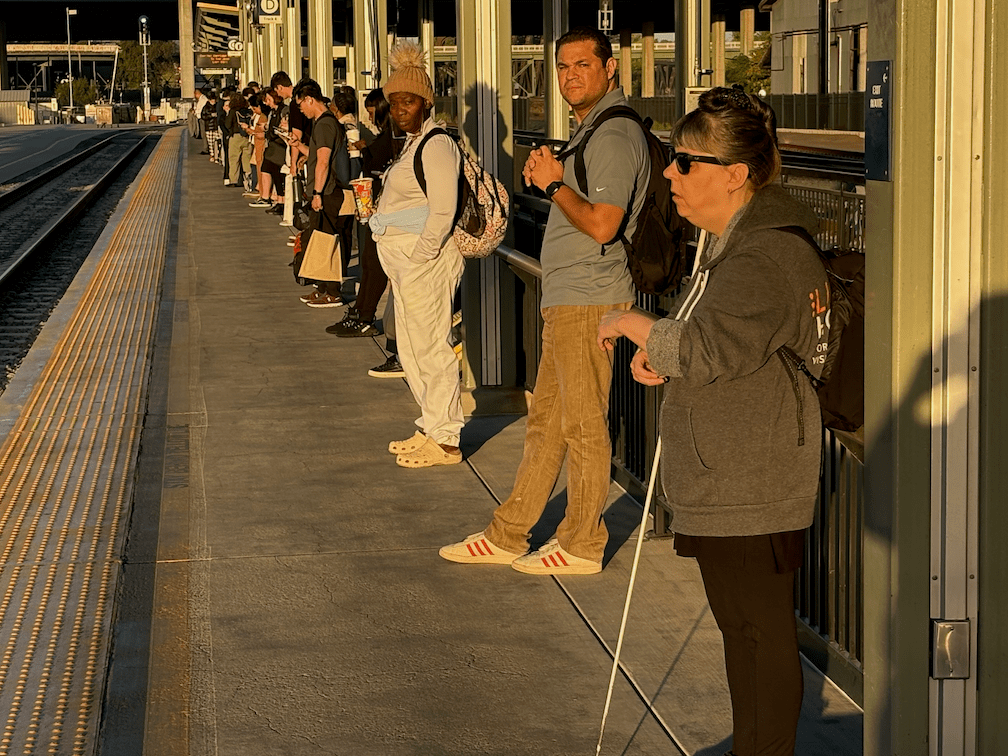
A few photos from my trip are below, but many parts are missing. I’m not used to documenting my public transportation travels, and even less for selfies.
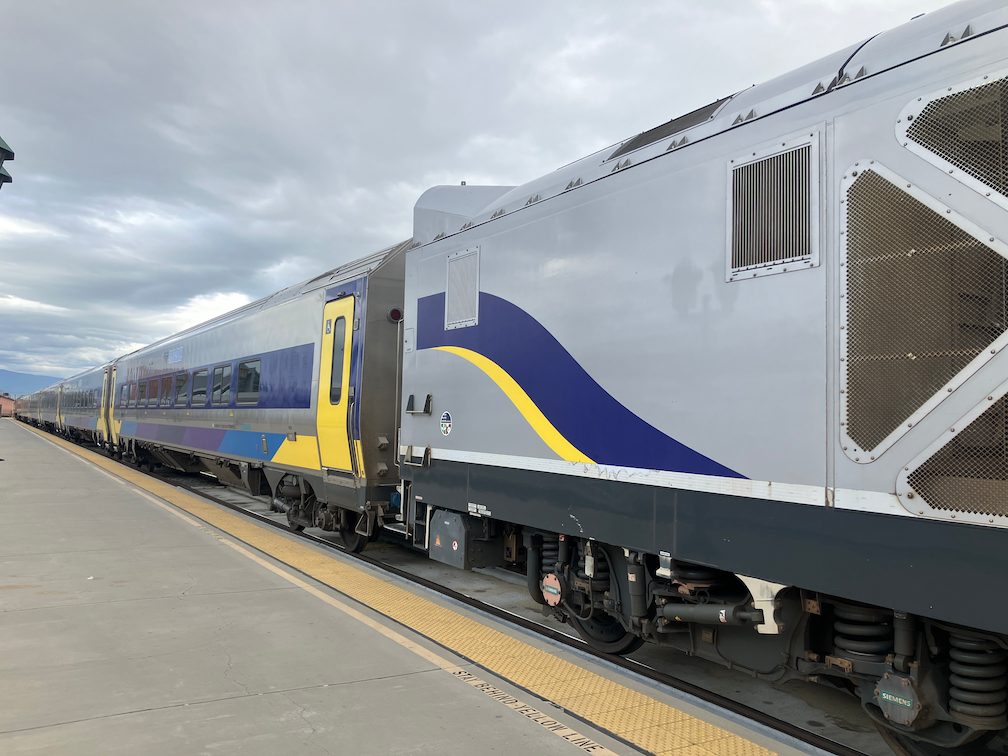
San Joaquins on new Siemens Venture trainset

This is a followup to its a rough ride!

On March 1, I rode San Joaquins 719 from Bakersfield (4:12PM) to Stockton (8:55PM). The 719 continues on to Oakland Jack London, but there is a bus connection to Sacramento from Stockton. I had picked that schedule specifically to experience the new Siemens Venture trainset used on that route.

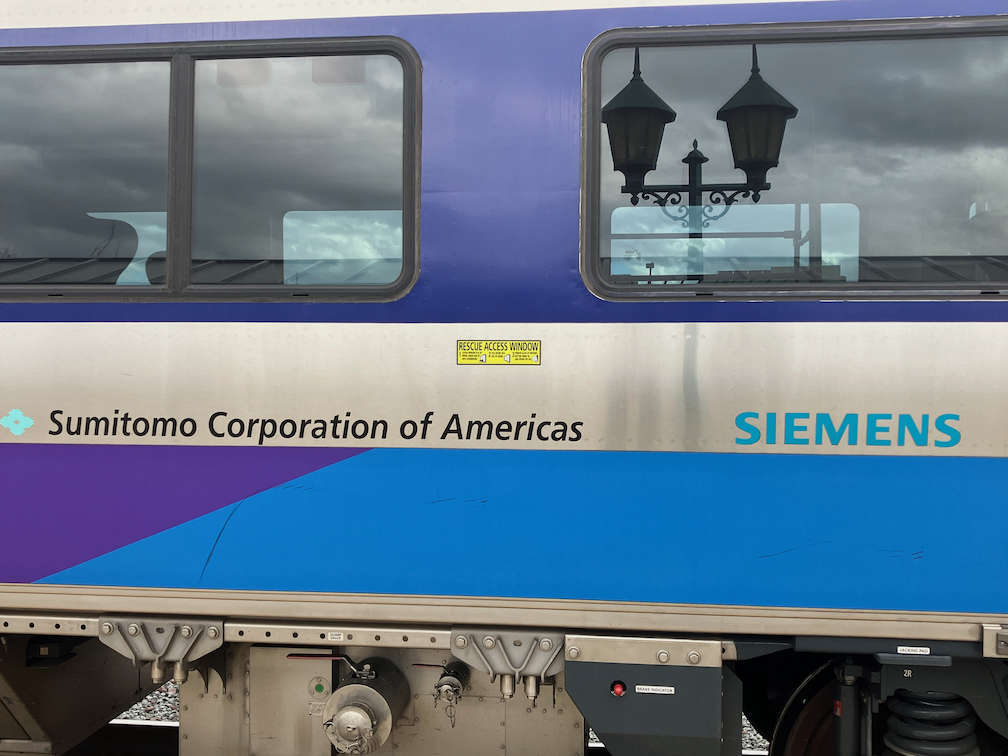
The official page is Welcome Aboard Amtrak San Joaquins New Venture Cars. I did not know until observing the cars more closely, that Sumitomo Corporations of America is actually the lead contractor, and Siemens is the subcontractor who built the cars. Roger Rudick wrote Review: Amtrak California Passengers are Starving for New Trains on StreetsblogSF. Though the trainsets have been in service since December, I haven’t found any other reviews that have details.

Seats: Roger talked about narrow seats. They are indeed narrower than those in the California Cars (I don’t have measurements; an online source says 19.1 inches for the new seats), though I did not find them uncomfortable. Others may.

No food or water: As noted, there is no food service on the train. The announcements said ‘snack packs’ and water were available for free, but what was actually offered was Cheez-Its. Though there are rumors of eventual vending machines, none were present, and it is not clear where they might be placed, perhaps in vestibules. No water dispenser is available on the trainset, only bottled water.

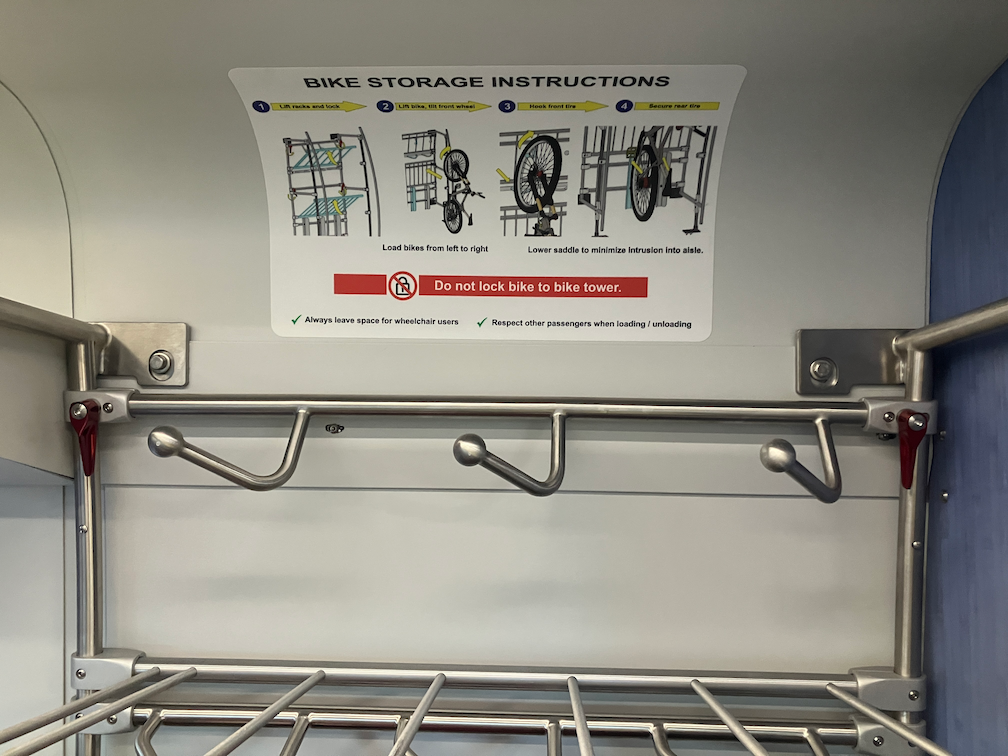
Bikes: One of the luggage racks in each car has three bicycle hooks, but the luggage racks were fully occupied by luggage, so not available to bicycles. A conductor told a bicyclist to take his bike to the baggage car rather than on board. I don’t know if that is policy. Given that there is not space set aside for bicycles, I’d have to say these new track sets have zero bicycle capacity. The baggage car is a false locomotive that has been used on San Joaquins for years, not part of the new trainset. Bicycle use on the San Joaquins has always been low. It will be a long time before these trainsets are used on the Capitol Corridor – San Joaquins and Pacific Surfliner first, with California Cars moved to Capitol Corridor and prolonging that. But the bicycle configuration would be totally unacceptable on Capitol Corridor, where bicycle use is moderate and sometimes high.

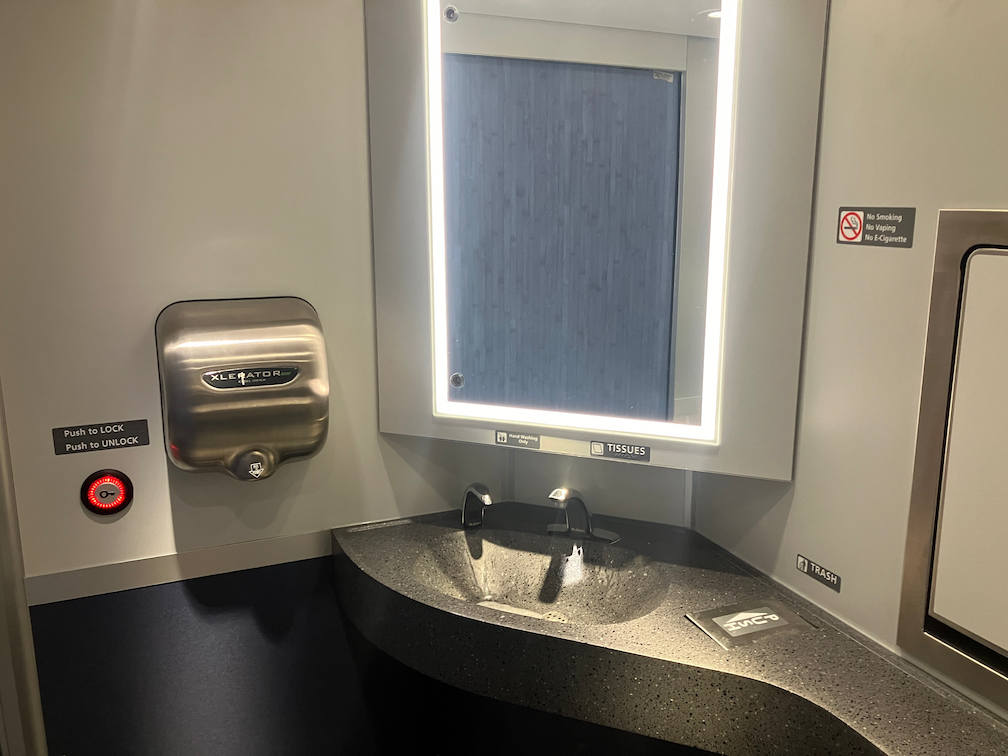
Automation: Many things are automated: the doors between the passenger seating and vestibules; standard announcements; restrooms doors. The toilet, water, soap and dryer are no-touch.

Power: There are two power receptacles and two USB-A receptacles between each seat. Hello! This is 2024, and few people use USB-A anymore, but actually most people use plug-in chargers, so the USB-A is irrelevant.

Display: There are three display signs overhead in each car. At this time, the only useful information they carry is which of the six coach cars you are in. The destination was shown as Bakersfield, when the train was northbound with destination Oakland Jack London. I imagine they will have useful information in the future, otherwise they are a waste.

Access: On the train I was on, three doors were opened at each stop, between 2/3, 4/5 and 5/6, with a staff member at each (two conductors and one attendant, I believe). If one of the wheelchair doors were being used, then either staff would not be at one of the other doors, or one of the others would not be opened. Apparently they are never opening all doors.

ADA Access: One door at each end of the train is for wheelchair and device loading. I did not observe this in operation. One person with a wheelchair was on board for part of the trip. The aisles are wide enough for most wheelchairs, and each car has a wide aisle though only those two cars out of six have the loading door.

The Ride (the big question): Is the ride smoother? Yes. It is still a little rough, but much smoother than the California Cars. I did not feel unsafe standing up and walking around, though it is still too rough to write. So tracks condition continues to be a problem on the San Joaquins route (and everywhere else).

Is driving or the train less expensive?

In today’s SacBee article by Tony Bizjak, California just got 125-mph trains. Here’s why they still can’t outrace your car, it is claimed that driving is less expensive than the train. The example given is Sacramento (SAC) to Oakland Jack London (OKJ) round trip. The article says “A price check by The Bee last week found basic Capitol Corridor round-trip train fares – with no monthly pass or other discounts – of $50 to $54 for the Sacramento-Oakland ride. That is typically more expensive than the cost of gas and vehicle wear and tear on a car drive that distance.”

First, the undiscounted Capitol Corridor ticket price is $58 round trip, though there are many discounts. But I’ll stick with the price of $58. I use the IRS mileage rate, 53.5 cents per mile for this year, to calculate driving costs. I hear people all the time claim that it costs them much less to drive, but realize that this is a real calculation the IRS does each year, and it IS the average cost. Unless this is Lake Wobegon, where all cars are “below average,” this is the best number to use.  Driving from the Sacramento station to the Oakland station is 82 miles, so 164 round trip. Calculated cost is $0.535 x 164, $88. $30 more than the train. Of course this is a solo trip. If two people are going, then it is $116 train and $88 driving, advantage driving. However, once you arrive at Oakland, you have to find parking. There is no free parking within 1/4 mile of Jack London, and even that is places most people would not want to park at night. Parking rates in lots and decks (parking garages) is commonly $15 for the day, though there are a wide variety of choices. Add that to your trip cost if you are driving. 

My point is not to give Tony a hard time. He is just repeating information he hears all the time. I hear it all the time too, including from transportation advocates who should know better.

Amtrak discounts include AAA, NARP, military and veteran, senior, disabled, and children (2-12 50%, under 2 free). Capitol Corridor promotions include steep discounts for additional passengers in a group, such as the current Take 5 Weekend Deal and ongoing Friends and Family, and sports and entertainment co-promotions. Every situation is unique, but these discounts and promotions can often bring the train cost down below the driving cost even for groups of people. 

Of course there is the environmental responsibility comparison, and for that one driving always loses.