SacRT: Dos Rios station

The Dos Rios light rail station is now open, as of September 28, 2026. This station, between Alkali Flat/La Valentina and Globe stations, was built to serve Mirasol Village and other homes and businesses just south of the American River.

Though you won’t find mention of this on the SacRT website, SacRT and SACOG tried to kill this station, but Mirasol Village residents, the public, and transit advocates rose up to defend it, and it was eventually approved and constructed (SacRT board passes Dos Rios station). Construction took a long while, mostly to move utilities and address contaminated soil which was more extensive at the site than originally estimated.

The station is very nice. A SacRT employee commented that it would be great if all the light rail stations were this nice.

The station has the traditional ticket vending machines (TVMs), but to my surprise also has the new Tap2Ride readers that will eventually be installed at all light rail stations. These are the same readers that have been installed on all the SacRT buses, but here they are housed in a protective box. I noticed three readers, though there may have been a fourth, located at ends of the platforms where the track crossings are located. For two of the three, the screens were illuminated. I used one as an experiment, and it worked, deducting $1 from my account (I am registered in SacRT’s Tap2Ride as a senior). One reader had a blank screen, but it beeped at my phone, so might be working. SacRT’s original intent was to integrate Tap2Ride into the TVMs, but I am glad to see they are separate, since many functions of the TVMs do not work properly. It isn’t clear whether the eventual Transit Connect physical cards will be read by these Tap2Ride readers, or by some modification of the TVMs. No Connect Transit Card readers, the old legacy system, were installed, and the TVMs never were able to read these cards, though they claim to.
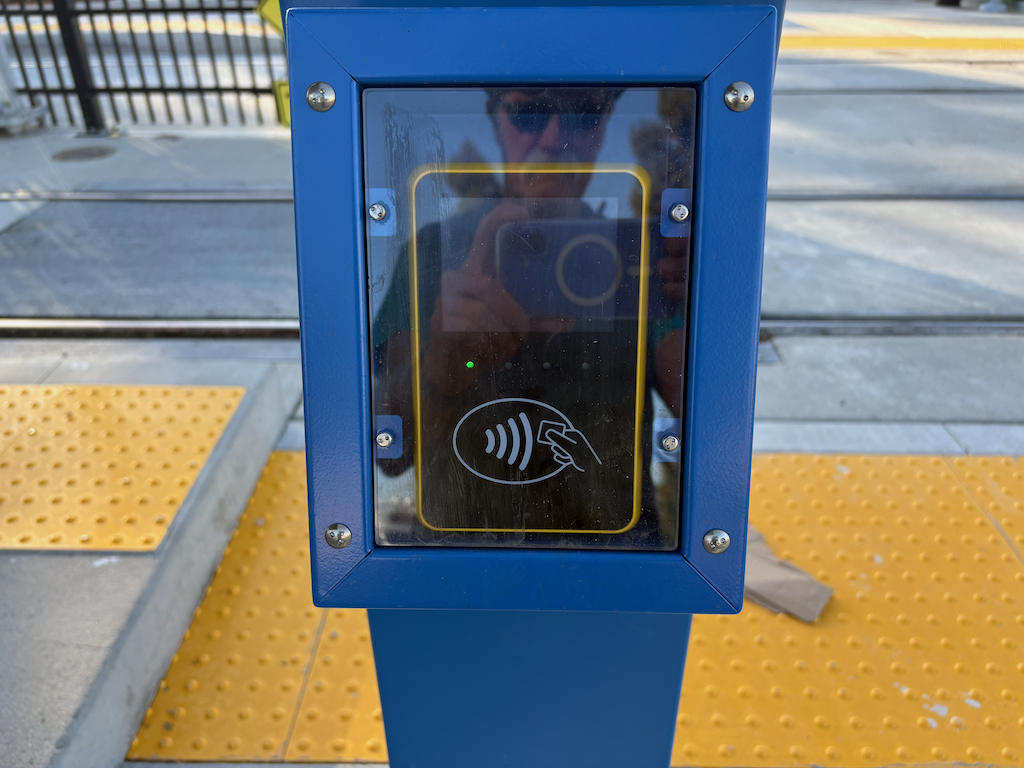
photo of SacRT Tap2Ride reader at Dos Rios Station
SacRT Tap2Ride reader at Dos Rios Station

The station has a fence installed between the two tracks for this side-boarding station. Though these are not required at stations with the higher platforms, 8 inches above top of rail, they may be required when the platforms are eventually raised to 14 inches above top of rail, sometime in the 2030s. There are track crossings at the north and south ends of the platform. All of the side-loading stations on the north section of the Blue Line have these median fences. I think they are a good thing.

There is a crosswalk over North 12th Street towards Mirasol Village from the southbound platform, and access to Sproule Avenue from the northbound platform.

The station has ample sun/rain shelters, and ample seating blocks (not benches), and trash cans. Though I did not visit at night, it appears lighting is good. I did not notice a drinking fountain. Many light rail stations have drinking fountains, but almost all are non-functional. I guess SacRT has decided they are not capable of maintaining drinking fountains.
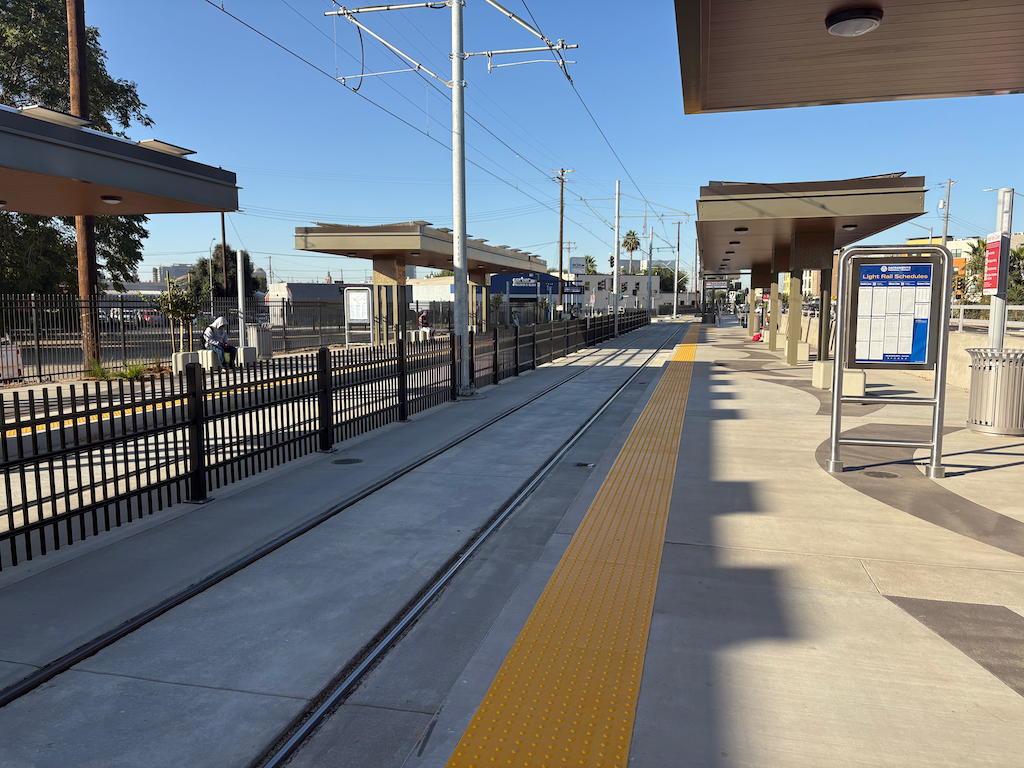
photo of SacRT Dos Rios station
SacRT Dos Rios station

At the south end of the northbound platform, there are some odd devices that might be intended to be bike/mobility racks. These do not meet the requirements of the APBP (Association of Pedestrian and Bicycle Professionals) bike parking standards, which are recognized by the City of Sacramento. Of maybe they are just intended to be for scooters, but then there aren’t any bicycle racks. I don’t know.
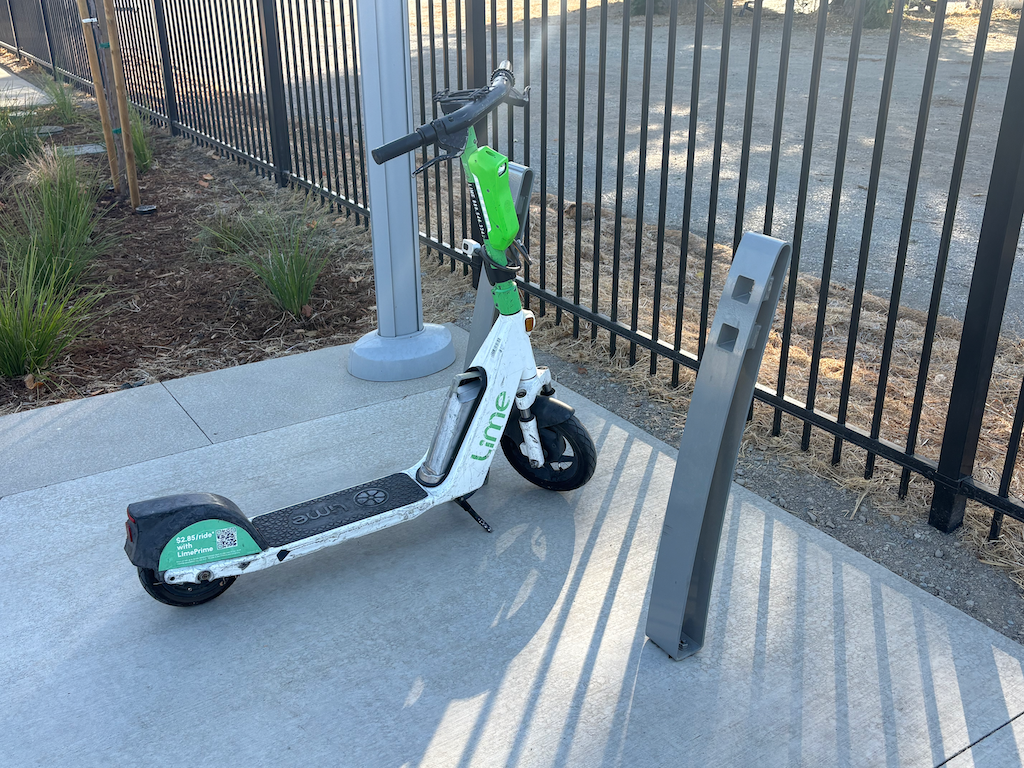
photo of SacRT bike racks ? at Dos Rios station
SacRT bike racks ? at Dos Rios station

Another infill light rail station in the River District is due to open sometime this fall. SacRT is advancing planning for an infill station on the Gold Line at Horn Road, but this one is in early stages.

transit cards for unbanked

Yesterday at the SacRT board meeting, there was a lot of discussion about the decision to terminate the Connect Transit Card system. This physical card system was chosen by SACOG years ago, but has been problematic for its entire lifespan. In fact, it did not really work at all for the first year of its implementation. The card readers are unusually prone to vandalism. Nevertheless, many riders use the Connect Transit Card as their preferred payment system. With the projected end of this card by the end of 2026, many riders are asking how transit fares can be paid for people without smart phones and credit cards.

SacRT, as with many transit agencies, is implementing Tap2Ride, where any contactless credit or debit card (the ones with the contactless symbol) can be used to pay fares, using new card readers that have been installed on buses. SacRT is in the early stages of implementing Tap2Ride. There are no tap readers at light rail stations, and it seems likely that there will never be tap readers on the trains (though riders and advocates have questioned this decision). No senior or disabled fares are available through tap, from SacRT, though cards registered with the state CalITP program do provide discounts. No transfers are available through tap. No fare capping is available. These lacking capabilities are due to be implemented in ‘Phase 2’ of Tap2Ride, scheduled for fall 2025, but now optimistically scheduled for fall 2026. Payment by contactless credit card is called ‘open loop’, though this is a technical term that doesn’t make sense to most riders.

There are a lot of other issues related to fare payment. The transition from ZipPass app to Transit Connect app, by June 30, is a good thing (ZipPass was glitchy and customer support lacking). Agencies and transportation management associations (TMAs) have questioned how subsidized or donated transit fares will be handled without a physical card. SacRT has promised a solution, but doesn’t seem to be actively working on one. The SacRT Fares page lists a number of options. Is more options good for riders, or just confusing?

But what provoked this post is the question of how riders without smart phones and credit cards will pay fares. SacRT staff could not answer that question. There was a reference to a Transit Connect ‘card’, but there is no indication that the program has been defined or is being worked on. There was a lot of concern about what to do when my phone dies, or the fare app doesn’t work. Or I don’t have a smart phone. Several riders told stories about just those issues.

The big issue, though, is how unbanked people, who do not have credit cards to add fare to apps, and in many cases also do not have a smart phone, will pay fares. There is an easy solution, but one that SacRT has so far rejected.

The Cash App Debit Card is the first method for unbanked people (this page does not address how funds get added if the user doesn’t have a smart phone and Cash App account). Riders can add value to the card with cash, at vendors which offer this service. No credit card or smart phone required. Cash App lists vendors that can add value from paper money (‘paper money deposit’). It is a remarkably comprehensive list, including many stores often used by unbanked people. Of course, this is not limited to unbanked people. It can be used by anyone who doesn’t have or doesn’t want to use a smart phone, or who has concerns about their phone dying at a critical moment (though Apple iPhones can continue to make transit fare payments (express pay) for at least an hour after their phone is out of battery. It can be used by anyone who doesn’t like apps. It can be used by anyone who doesn’t have or doesn’t want to use credit cards.

There are now many other options for adding paper money to debit cards, but so far as I could determine, few have the ease of adding at so many vendors, or require a bank account for contactless capability, or require an app, and none are oriented to transit use.

All that is required is that the transit agency advertise this capability to their riders, though as many venues as possible. SacRT has chosen not to take this path. It is a mistake.

Several posts on Tap2Ride and contactless fare payment are available on the archive STAR website.