Strong SacTown Street Design Team will be posting a series to improve and promote the City of Sacramento update of their street design standards. This is the first. You can follow their website at https://www.strongsactown.org/, and the series at https://www.strongsactown.org/tag/street-design-standards/. Getting Around Sacramento / Dan Allison is participating in the team planning and writing, but these posts are the work of the team.
“We are Strong SacTown — Streets for People, a group of Sacramentans advocating for updated street designs that will rank safety, livability, and economic vitality above vehicle throughput or speed; where congestion relief will not be the goal in street design.
The City of Sacramento is updating the street design standards for the first time since 2009. The city is embarking on this effort as it is becoming increasingly apparent that the existing standards do not meet the needs of all users in the modern era.”
This is the second post on working differently to achieve the streets we want, and heal the streets we have. The first is Crash Rapid Response Program for SacCity.
Strong Towns Street Design Team
The concept of a street design team came to me from the Strong Towns Academy course ‘Establishing a Street Design Team‘. This is a paid course, but I’ll offer the key concepts here.
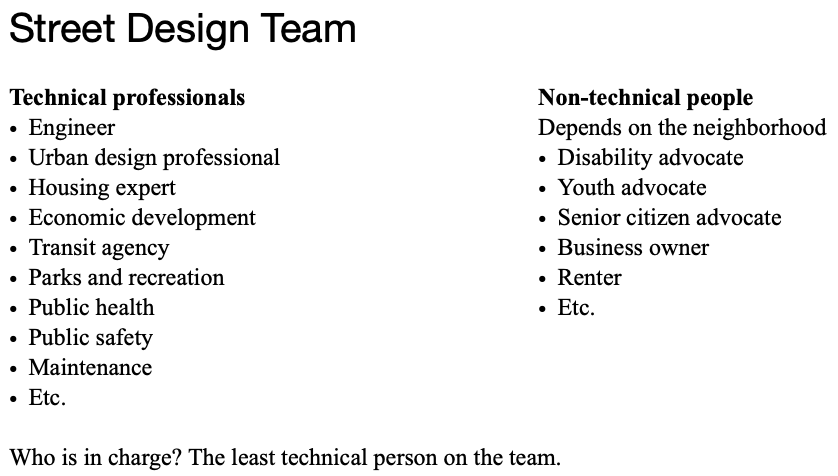
The origin the street design team is the Strong Towns post Engineers Should Not Design Streets. The upshot is that engineers do not have the training or expertise to design streets. Streets should be designed by everyone, and then the engineer will implement that design. The way to do that is to create a street design team with both professionals and citizens. The course presents this chart.
In the presentation, Mike Lydon recommended starting with designing streets that already have some good things about them, and making them better, rather than starting with horrible streets (stroads) that can take a lot of money and time to heal. Anthony Garcia said that if either engineers or politicians are not initially supportive, starting with a small project can show them that alternatives work and are supported by the public. He also said, don’t pick something really controversial or really challenging, rather, pick something likely to be successful.
The whole street design team concept is based on one of the core principals of Strong Towns, four steps for public investment.
for SacCity
I would say that the number of non-technical people should outnumber the technical professional. I would also include in the non-technical list the regional walking and equity organization, Civic Thread, and/or the regional bicycling organization, SABA, and/or one of the transit advocacy organizations. And I would include a member of the SacATC, which has 11 members. Non-technical people should be compensated in some way for their participation, such as stipends, food, transportation, child care.
People could speak up for being on a team, and then a team for each issue or block would be assembled from those available. Though team application and team formation could be managed by the city, they would not be in charge of the team. Though the concept does not specify how big the team should be, I find that teams of more than 12 people tend to have issues with hearing from everyone. Team members would have to agree to a set of group guidelines or community agreements about how to treat each other, with respect, listening more than talking.
A team might stay together for more than one project, or might do only one before the team members disperse to other projects.
Next step? I’m not sure. I intend to talk to some SacATC member and city staff about the idea.

 Getting Around Sacramento