Sac Public Works enemy of safe streets

At the June 15, 2023 meeting of the City of Sacramento Active Transportation Commission meeting, agenda item 5 was ‘Stone Beetland Planned Unit Development – Amendments to the Bicycle Master Plan’. The topic was about modifying the bicycle master plan so that the new bicycle facilities in this development connected with other facilities already in the master plan. But since it is the purview of the commission is to address all active transportation topics, several members of the public and of the commission asked questions and commented on the transportation aspects of the overall development plan.

I asked why the streets were so wide, ranging from 42 feet to 74 feet, with the most common being 59 feet. Wide streets encourage drivers to speed, and so are significantly less safe than narrow streets. Another commenter and two commission members also asked about this. A 42 foot right of way should be the upper limit of street width, not the lower limit. When asked, the developer said that they had wanted narrower streets, but City of Sacramento Public Works forced the wider streets. The excuse from Public Works was apparently that as the area developed, there would be more traffic and wider streets were necessary. This is a self-fulfilling prophecy: building wider streets induces more traffic, and so the wider streets are needed to handle the motor vehicle traffic that the wider streets induced.

There were other questions about this development, including whether streets will have sidewalk buffers of sufficient width to host trees as they mature, and whether bicyclists will be able to leave the neighborhood since Cosumnes River Blvd is a high speed (55 mph!), high volume arterial that has paint-only bike lanes (which should not even be legal on a road with 55 mph posted speed limit), that very few bicyclists feel comfortable riding on. No matter what bicycle facilities the developer provides, people will be trapped in their neighborhood, unless they can drive and want to drive.

Public Works is the enemy of safe streets. Again and again the safer streets proposed by city planners and developers are nixed by someone in Public Works. There are car-brained engineers in Public Works that think the sole purpose of streets is to carry the maximum number of motor vehicles at the maximum possible speed. Despite the world changing around it, and the clearly documented hazard of wide fast streets, Public Works is living in the past, dedicated to a cars-first transportation system. I am not denying that there are progressive people in Public Works, and in Community Development as well, but somehow the outcome is always worse and less safe than the public wants.
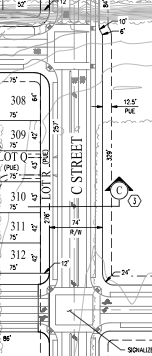
Stone Beetland development 74 foot wide street

Measure 2022: words have meaning


A group calling themselves A Committee for a Better Sacramento is sponsoring a citizen-initiated ballot measure for the November election, titled “Sacramento County Transportation Maintenance, Safety, and Congestion Relief Act of 2022—Retail Transactions and Use Tax”. (Note: Some people are referring to this as Measure A, but measure letters are assigned by county elections, not by the sponsors. I’ll continue to refer to it as Measure 2022, for now.)

As your parents no doubt told you, words have meaning. So what are the words used in the proposed measure?

  • congestion (in the context of congestion relief) = 24 occurrences
  • greenhouse gas = 6
  • climate = 3
  • low-income = 3
  • community engagement (only in Exhibit B ITOC) = 1
  • equity = 0

A major purpose of this measure is to fund capacity expansion, in an effort to provide congestion relief. But it is well documented and uncontroversial (except among greenfield developers and engineers whose jobs depend on expansion) that attempts to relieve congestion through expansion actually induce new traffic that fills every bit of added capacity. The sponsors of this measure do not believe that. They refuse to believe that. This is a 1970s version of transportation investment, that time when the only issue was building infrastructure that would allow cars to go further and faster. Walking, bicycling, and transit was either an afterthought, or actively discriminated against. We don’t live in those times any more, but the sponsors still do.

Search for category Measure 2022 to see posts as they are added.

HOV lanes solution

So, given that new HOV lanes do not reduce congestion, and in fact induce demand and increase vehicle miles traveled (VMT), what is the solution? I suggest the following policy:

HOV lanes will not be added to any freeway by the construction of new lanes. If, in the judgement of Caltrans or other agencies, a HOV lane is desirable, an existing general travel lane(s) may be converted to some sort of HOV or tolled status. This only applies to freeways with three or more lanes existing. Existing general purpose lanes may also be converted to transit-only lanes or dedicated to rail use. It is well known that additional lanes of any sort will induce additional traffic, which is directly contrary to state goals to reduce carbon emissions and vehicle miles traveled (VMT).

This could be implemented as a 10-year moritorium rather than a permanent policy, as I think that within 10 years the folly of adding lanes to freeways will be clear to everyone, even Caltrans. 

#NoNewLanes

Note: when I wrote the preceding post and this one, I was aware that ECOS (Environmental Council of Sacramento) was working on a lawsuit against Caltrans over the project to add carpool lanes, as additional newly constructed lanes, to Highway 50. That suit has now been been filed.