SacRT: delay of zero emission buses

SacRT has decided to delay the hydrogen bus (fuel cell electric) plan to meet zero emission bus (ZEB) requirements, and will buy natural gas buses instead. This was the subject of a SacBee article: Sacramento RT to buy new natural gas buses, delaying zero-emission transition, 2026-09-09, Madison Smalstig. I had missed this, I think because the decision was scattered across several board meetings, and often on consent calendar rather than regular agenda item.

SacRT will require a waiver from CARB (California Air Resources Board) Innovative Clean Transit (ICT) program. SacRT has an approved Rollout Plan from 2021, and more recent proposals for a hydrogen fueling station at McClellan and a fleet of hydrogen fuel cell buses, including a grant (see below). Sacramento Transit Advocates and Riders (STAR) had a series of posts on SacRT’s hydrogen plans and hydrogen in general (see Tag: zero emission buses). It is clear that the hydrogen plans were not well thought out, were not environmentally sound, and were only partially funded. The grant to fund hydrogen fueling at McClellan and hydrogen buses was converted to other buses and a refurbishing at McClellan. SacRT apparently still intend to pursue the idea of hydrogen buses, but will have to start over seeking money for that.

FY24 FTA Bus and Low- and No-Emission Grant Awards: “The Sacramento Regional Transportation District will receive funding to buy new hydrogen fuel cell buses to replace older buses, modernize a maintenance facility and initiate a workforce development program. The project will create jobs and improve service, reliability and air quality as SacRT works to convert its fleet to entirely zero emission by 2028. $76,847,678”

The grant to fund hydrogen fueling at McClellan and hydrogen buses was converted to other buses and a refurbishing at McClellan. SacRT apparently still intends to pursue the idea of hydrogen buses (fuel cell electric), but will have to start over seeking money for that.

SFMTA is going with diesel-hybrid buses: Muni is too broke to use more eco-friendly buses, The San Francisco Standard, 2026-09-14. I assume other transit agencies will be making similar plans. By the way, SFMTA Muni has an incredibly low carbon footprint due to light rail and electric trolleys that run on overhead wires. Sacramento could have some of the same benefit without investing in fossil fuels by considering overhead wires. But it won’t.

e-bike incentives crawl along

The state e-bike incentive program continues to crawl along, with snails outpacing it. Some posts from StreetsblogCal:

It is clear to me that the e-bike incentive program rates the lowest priority with California Air Resources Board (CARB). The Clean Cars 4 All program (up to $9500) has been in place since 2015. The Clean Vehicle Rebate Project (up to $7000) has been in place since 2010. The Clean Vehicle Assistance Program has been in place since 2018. It is 2020. E-bike incentives? Nada.

Converting motor vehicle trips to bicycle trips is a top action for reducing greenhouse gas emissions (GHG). The other two are transit and infill housing.

Seeing the failure of the state to act in a timely manner, several locations have created e-bike incentive programs. See E-Bike Incentive Programs for more detail. Alameda, Central Coast, Contra Costa, Healdsburg, and Santa Clara County have a rebate programs. Berkeley, Oakland, San Gabriel Valley, and Santa Barbara have bike lending programs. South Coast AQMD, Bay Area AQMD, San Mateo County, and Santa Cruz have voucher programs.

Sacramento Metropolitan AQMD offers a Clean Cars 4 All program that allows voucher credit to be used for transit rather than motor vehicle purchase, but does not offer e-bike incentives.

Governor asks CARB for more

CARB has released for public review the Draft 2022 Scoping Plan Update. On July 22, the governor sent a letter to CARB, asking for more ambitious and quicker goals in the Scoping Plan (Governor Newsom Calls for Bold Actions to Move Faster Toward Climate Goals).

As has been posted here, the Scoping Plan is weak, and depends far too much on motor vehicle electrification, so the governor’s letter is a good move. It includes:

  • Offshore Wind
  • Clean and Healthy Buildings
  • Moving Away from Fossil Fuels
  • Methane
  • Carbon Removal
  • Increasing Climate Ambition

What the governor’s letter, and the Scoping Plan, does not include, is bicycling and in particular electric bikes. This is a sad oversight on the part of both. Conversion of motor vehicle trips to bicycle trips and especially e-bike trips, is the shorter and lowest cost pathway to reducing greenhouse gas (GHG) emissions. CARB knows that, the governor knows that, but both are so committed to a windshield perspective and continuation of car dominance of our transportation system, that they ignore the simple steps.

The governor also announced the launch of the Climate Dashboard. On the dashboard, there are only two indicators that are red instead of green, and one is VMT. Yet despite this, the governor and CARB, and many other advocates who should know better, want to just convert fossil fuel motor vehicles to electric vehicles.

CA Climate Dashboard VMT indicator

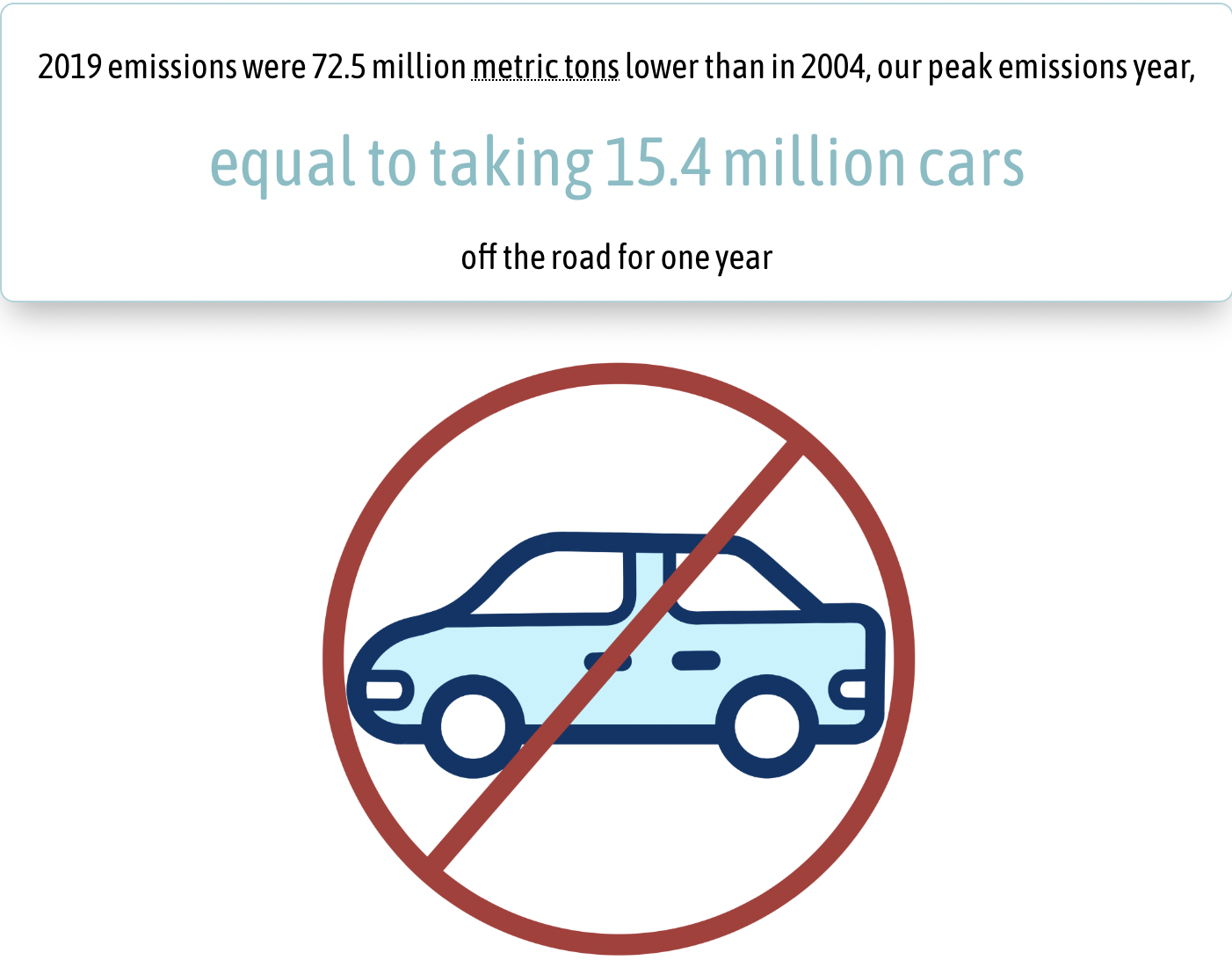
The Climate Dashboard also includes the following graphic, often used in text, as a comparison to show progress being made. The question which logically follows is: Why not just take the cars off the road?

CARB 2022 Scoping Plan

CARB has released for public review the Draft 2022 Scoping Plan Update. The June 23/25 CARB Board Meeting will have public comment (and board decision?) on this document. The document is 255 pages, not even including many appendices. I have only just begun to review the document, but what I see so far is pretty disappointing. For a brief introduction, see the four page Executive Summary. Also see Air Board Seeks Comments on Climate Scoping Plan; Shoup Urges a Look at Parking.

From the Executive Summary: “… rapidly moving to zero-emission transportation, electrifying the cars, buses, trains, and trucks that now constitute California’s single largest source of planet-warming pollution”. Notice that bicycles are not mentioned. Even more worrisome is that one third of the carbon reduction is from actions that capture carbon, including natural environments and as-yet unavailable carbon capture technology.

From the Ensure Equity and Affordability section: “… effective actions to move with all possible speed to clean energy, zero-emission cars and trucks, energy efficient homes, sustainable agriculture, and resilient forests…”. No mention of electric bikes or transit. Unless CARB intends to buy every low income person in the state an electric car, its plan will not meet with needs of low income and disinvested communities. What would meet those needs is a transit-first policy and funding, with significant state investment in making walking and bicycling more welcoming and safer.

In the entire document, there are two instances of ‘bike’ and three of ‘bicycling’ (and none of bicycle or e-bike or electric bicycle). There is one instance of ‘transit’. Six instances of ‘walking’. Ten instances of ‘active transportation’, but 163 instances of ‘transportation’, many of them referring to other documents and programs. In contrast, 157 instances of ‘vehicle’. Not hard to see where the focus is.

Here is a wordcloud of just the Executive Summary section. See if it speaks to your concerns. A wordcloud of the entire document would show vehicle prominently.

CARB seems incapable of imagining a future that is not dominated by cars. They simply intend to replace existing cars with electric cars. Put simply, this is climate arson, by the very agency that is supposed to be working on climate change in a serious way.

Sadly, many of the climate change and environmental organizations seem aligned with this focus on vehicle electrification.

I’ve said it before and will repeat (again and again): electric cars, or any electric vehicles other than bikes, are only a partial solution to the climate crisis. Serious solutions will include and prioritize walking, bicycling and transit. If you are an electric car booster and not working to reduce the dominance of motor vehicles in our cities and lives, you are not serious about climate change. And you are certainly not serious about livable cities.