Sacramento bike share update

There are a number of new white and green Lime bikes on the street in Sacramento. There are not the easy-to-steal white and green ones of a few months ago, some of which were promptly stolen and the others quickly pulled from service. Though they still seem to be called Gen 4 bikes, they now have a cable lock very similar to those used on scooters. I have seen more of these bikes downtown/midtown than elsewhere. See photo.

Lime bike cable lock

There continue to be red JUMP/Lime bikes on the street. I had the impression that there were fewer of these bikes than there used to be, but it may be that they are just being distributed differently. I’ve seen racks (the old SoBi/JUMP racks) full of these bikes, which had not had more than one or two bikes since the return of bike share. Lime does not make its GBFS (General Bikeshare Feed Specification) available to the public, nor does it have a map of bike share other than in the app, so it is difficult to say whether the bikes are being appropriately distributed/balanced.

While looking to see if there was a web map, I ran across an interesting ArcGIS Story Map from the City of Sacramento, Shared-Rideables in Sacramento. It was created in January 2022, and has not been updated, but is quite interesting.

Lime still seems to be failing to track and pick up dead bikes. By dead, I mean that the battery has run down to the point that it no longer powers the GPS unit, so Lime loses track of where these bike are. Several months ago there were a number of these bikes, reported to both Lime and the city, but not picked up after three weeks. Lime promised to me and to the city to do better. However, recently there were two bikes parked on the pathway from Sacramento Valley Station to the platforms for more than five days. Bike parked anywhere other than in very visible location on the street network do not get picked up for significant periods of time.

I used a Lime bike (white and green) Saturday without incident, returning from a trip. But on my outbound trip, using Lime/JUMP bikes, when I was on a tight schedule, I had no luck finding a bike that worked properly. The first one was stuck in first gear. The second had no pedal assist. The third had a jammed seat post that could not be adjusted. I managed to make the train on time, but barely. The bikes are simply not being maintained as they should be. I have noticed that if I report a problem, though the app, the bike is still there days later, and still rentable by another victim.

When reporting a bike problem, the app provides a limited number of issues (below), and no longer provides a text field for entering detail. The diagram says pedals, but there is no indication here or anywhere whether than means a problem with the pedals or cranks, or means problem with the pedal assist.

Lime app, problem report screen

One feature that was added to the app a few months ago that I really like is that the user can select scooters only, or bikes only, or both, for map display.

The app seems to show whether the bike in question is one of the new white and green ones or the older red Lime/JUMP bikes with the fabric covered locking cable. I’ve said before and will say again that it was a mistake for JUMP to drop the U-bar lock mechanism used on the SoBi and early JUMP bikes. So far as I know, a properly locked bike with U- bar was never was stolen.

Measure 2022: SacTA buys in

The Sacramento County Transportation Maintenance, Safety, and Congestion Relief Act of 2022—Retail Transactions and Use Tax (Measure 2022) by the Committee for a Better Sacramento came before the Sacramento Transportation Authority (SacTA) last week, 2022-07-27.

Agenda item 6 was to have the authority accept responsibility for implementing the measure if it passes in November. This item did not generate much discussion, and passed unanimously. I will note that the measure sets up a gotcha that will be very difficult for the authority to work through – it basically says that if a project sponsor claims that a project meets air quality criteria, they do not have to prove that it does, and may proceed to spend tax funds on it, no matter what anyone else says. Not only will this likely make it impossible for the SACOG region to meet the greenhouse gas (GHG) reduction target of 19% set by the state, but likely make it imperative that other projects both in Sacramento county and the other five counties in the SACOG region make up for (mitigate) the GHGs generated by the project. This is largely about the Capital Southeast Connector, but applies to every capacity expansion project in the measure.

Agenda item 7 (presentation), to direct the SacTA Executive Director to negotiate an memorandum of understanding (MOU) with SACOG that would set us criteria for having SACOG review the GHG impact of the entire measure, using SacTA funds (presumably Measure A funds, since tax collection would not start until January 1 if the measure passes). A review would also be done by a third party, not specified in the MOU, but likely a consultant more amenable to discounting the GHG contribution of roadway expansion projects. SacTA or the third party may challenge the SACOG analysis, but the MOU doesn’t make clear what happens then. It is worth noting the several SACOG board members, particularly David Sander of Rancho Cordova, who is also, conveniently, on the board of the Capital Southeast Connector JPA, said the the SACOG analysis of the impact of the connector on GHG and the likely failure to meet the target, was so flawed that it should be discarded. Several board members accused SACOG staff of lying. I assume that the new review of the Transportation Expenditure Plan will be challenged in the same way, by the same people. It is likely that the measure, and the MOU, and the signing agencies will end up in court.

There was considerably more discussion on item 7. It passed, but with three no votes and one abstention (of the sixteen votes on the board, some of whom were absent).

The MOU is only between SacTA and SACOG. It does not include the Capital Southeast Connector JPA, nor the tax measure proponents (the greenfield developers), nor the county, nor any of the cities, nor the other five counties. So it is not legally binding on anyone beyond SacTA and SACOG. That means that the connector JPA can do what it wants to do, which is to avoid responsibility for GHG emissions.

There was an earlier promise that there would be ballot language in the pro argument that explained the MOU and what it would accomplish, but it is not clear that this is any longer on the table. The MOU itself is far longer than could be included, so if there is anything there at all, it would be a summary, and would be written by the measure proponents, hardly an unbiased source.

I will repeat that it was the specific intention of the measure proponents to bully SACOG and SacTA into supporting the measure and specifically excepting GHG-inducing roadway capacity expansion projects from air quality review. The intentional removal of the GHG language from the 2020 version of the measure (which was withdrawn before going on the ballot) makes this absolutely clear. The claim by many politicians that the measure proponents think that the MOU clarifies that the intent was not to violate GHG goals is laughable. They intended to bully, and they succeeded.

For more on the measure, see Measure 2022 posts. The use of this name and category is not meant to confuse. A lot of people are referring to this as Measure A, but the measure letters are assigned by county elections after they have qualified, so this is in no sense Measure A at this time. Sacramento County Elections has verified signatures for the measure, but has not assigned a measure letter.

Governor asks CARB for more

CARB has released for public review the Draft 2022 Scoping Plan Update. On July 22, the governor sent a letter to CARB, asking for more ambitious and quicker goals in the Scoping Plan (Governor Newsom Calls for Bold Actions to Move Faster Toward Climate Goals).

As has been posted here, the Scoping Plan is weak, and depends far too much on motor vehicle electrification, so the governor’s letter is a good move. It includes:

  • Offshore Wind
  • Clean and Healthy Buildings
  • Moving Away from Fossil Fuels
  • Methane
  • Carbon Removal
  • Increasing Climate Ambition

What the governor’s letter, and the Scoping Plan, does not include, is bicycling and in particular electric bikes. This is a sad oversight on the part of both. Conversion of motor vehicle trips to bicycle trips and especially e-bike trips, is the shorter and lowest cost pathway to reducing greenhouse gas (GHG) emissions. CARB knows that, the governor knows that, but both are so committed to a windshield perspective and continuation of car dominance of our transportation system, that they ignore the simple steps.

The governor also announced the launch of the Climate Dashboard. On the dashboard, there are only two indicators that are red instead of green, and one is VMT. Yet despite this, the governor and CARB, and many other advocates who should know better, want to just convert fossil fuel motor vehicles to electric vehicles.

CA Climate Dashboard VMT indicator

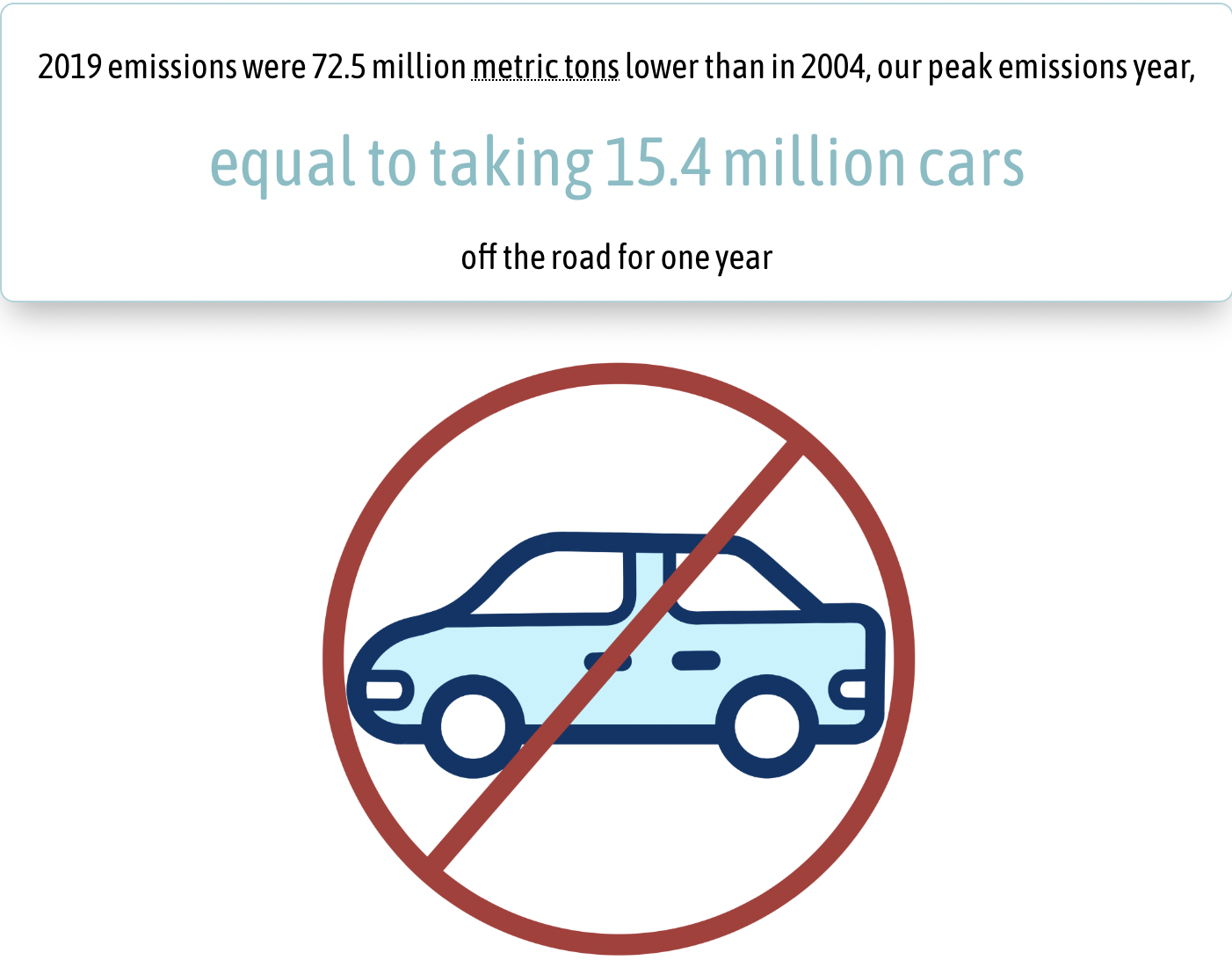
The Climate Dashboard also includes the following graphic, often used in text, as a comparison to show progress being made. The question which logically follows is: Why not just take the cars off the road?

what news media gets wrong

Beth Osborne, Director of Transportation for American (T4A) tweeted on July 20 about what news media gets wrong about crashes involving walkers and bicyclists. She solicited more ideas, and the ideas have been flowing! After just two days, there are 135 comments, 326 retweets, and 2026 likes.

I had assumed that the topic of news media bias and deference to law enforcement victim blaming was a niche concern, but apparently not. The diversity of people commenting is surprising but hopeful, and the list of things news media gets wrong could fill pages. Not that every media article is wrong, or that all parts are wrong, but the consensus seems to be that news media is more wrong than right.

I contributed my own two cents:

  • It is true that most law enforcement officers have a strong bias against bicyclists and walkers, and so what they say should be taken with a grain of salt, if not discounted entirely. But reporters usually treat LE with deference rather than challenge.
  • Almost all reporters simply repeat what the law enforcement officer or PIO or news release said. They rarely go to the scene to see what it actually looks like. I realize that not all crash locations can be visited, but current practice is none of them are.

But I really encourage you to follow this tweet thread to see how many ideas there are from so many people of different backgrounds.

Sac CAAP: more carbon-intense transportation and land use

The City of Sacramento (and the county, and the region, and the state) have created a very carbon-intensive transportation system, focusing on moving motor vehicles (more and faster) over all other uses of the public right-of-way. It has also created a carbon-intensive land use pattern, by allowing and encouraging sprawling development that places everything further away, and makes motor vehicle travel the only reasonable option for many people to get from one place to another. Sprawl not only makes transportation less efficient, but uses more water and more electricity, reduces agricultural lands, and isolates people. Freeways and the arterial street network that supports them are far more expensive than other roadways, so most of our transportation budget goes to those two types. There is little left over for streets, and little left over for maintenance. But you know all that.

If the city is serious about reducing greenhouse gas emissions (GHGs), it would focus most of the Climate Action and Adaptation Plan on these issues. Transportation and land use, and housing in particular, cannot be separated from each other. They should not be separated in the plan. If we change our transportation system without changing land use and housing, we fail. If we change land use and housing without changing the transportation system, we fail. They must both be changed, healed from the harms of past city action or neglect, together. What the draft plan proposes to do is make minor changes to housing and minor changes to transportation, but sets low goals for both. And it uses enough vague language that it is not even clear that those low goals will be achieved. Most importantly, it does not commit the city to spending any money to fix problems and do better. What it is basically doing is kicking the can down the road, in case future versions of the city government happen to be more committed to change and innovation.

I encourage you to take a look at the plan (yes, it is long and hard to read), and then contact your city council member to express your concerns. I’ll likely be gone by 2045, so won’t see the outcome, but for many of you and your children, the meek action and underfunding that the plan proposes will make your world unlivable. Time for leadership is now!

Sac CAAP: affordable housing near transit


The City of Sacramento’s Climate Action and Adaptation Plan (CAAP), preliminary draft, sets a goal, in the Measure E-5: Support Infill Growth section to “Enable the development of 8,700 new affordable by design units by 2040 within 0.25 mile of public transit…”. Sound good, but.

This is a low goal. The city already has a deficit of affordable housing, and has no plan for raising the necessary funds to build this affordable housing (it killed inclusionary zoning, and replaced it with a completely insufficient development impact fee, and the $100 Measure U contribution to the housing fund is on hold). The city’s Housing Element, required by RHNA, specifies that 16,769 units of ‘Extremely Low- and Very Low-Income, and Low Income’ housing are needed. While it it true that some affordable projects have been, and will be, developed without any city help, setting a goal of only half what is already needed is meek.

Location within 0.25 miles of transit is a mixed bag. While it is clearly a good that affordable housing is accessible to transit (otherwise it is not truly affordable under the housing+transportation analysis), past practice has been to locate affordable housing projects on arterial roadways, those sources of pollution and noise and traffic violence that families living in affordable housing should be protected against rather than exposed to. Unless the city is making a real commitment to redesigning these roadways to reduce VMT, reduce traffic violence, reduce air pollution, and emphasize active transportation and transit, it would be better to place affordable housing elsewhere. I don’t think that CAAP is making that commitment. A strong argument made by many housing advocates is that we should be encouraging affordable housing everywhere, not just along arterial roadways (also known as stroads).

Sac CAAP: non-motorized and MCCC

The City of Sacramento’s Climate Action and Adaptation Plan (CAAP), preliminary draft, sets targets for active transportation and transit. The Mayors’ Climate Change Commission (MCCC) Achieving Carbon Zero in Sacramento and West Sacramento by 2045, set different targets.

MCCC 2020MCCC 2045CAAP 2030CAAP 2045
Active Transportation30%40%6%12%
Transit & Shared30%50%11%11%
MCCC page 26, CAAP page 66

The CAAP states (page 100) “This level of active transportation mode share by 2030 is consistent with outcomes of comparable case studies and peer-reviewed literature and anticipated level of investment through 2030, all of which are necessary factors to consider for quantifying evidence-based reductions for a qualified GHG reduction plan.” and (page 102) “Planning for at least an 11 percent transit mode share by 2030 is an evidence-based goal that the City considers achievable given current understanding of transit behaviors in Sacramento and comparable case studies, given that sufficient funding can be obtained to implement the necessary infrastructure.”

The justification for the mild targets is in the CAAP Appendix C – Community Measures GHG Emissions Quantification, page 20 for Active Transportation (TR-1) and page for Transit (TR-2). The document active transportation section cites work commute trips, which misses the point that all trips are an opportunity for GHG reduction, and that only about 15% of all trips now are work-related (pre-pandemic). It also states that we can’t be compared to European cities (nor does it even use up-to-date data from Europe), but implies that Sacramento won’t be taking the actions to significantly increase mode share, so therefore uses a much lower number. No actual research is cited. For transit, the document states that we could achieve a 21% mode share based on peer city Oakland, but then inexplicably sets the target of 11%.

Why is the city setting such low goals? Reading between the lines, it is because they don’t intend to spend the funds necessary to reach these goals, and they know they can’t fund this all with competitive grants. This is not climate leadership, in my opinion. The city should be doing everything it possibly can to shift trips aways from motor vehicles to active transportation and transit.

Some elements of the MCCC were included in the CAAP, some were not. I’ve found it valuable to compare the two. If you have the time, please do that yourself. The MCCC is a much stronger document.

Sac CAAP: what to focus on

The City of Sacramento’s Climate Action and Adaptation Plan (CAAP), preliminary draft, includes the graphic below, showing emissions by sector for the city.

Transportation is 57% of emissions (2016), and is likely higher now because other sectors are being reduced but transportation is expanding. One might assume that 57% of the document would be devoted to this primary source. But Chapter 6, GHG-Reduction Measures and Actions, devotes 15 pages to built environment, 14 pages to transportation, and 13 pages to other sectors (waste, water and wastewater, carbon sequestration). Transportation is the second sector to be addressed, after built environment, which I think represents that the city sees transportation as less important than built environment.

what Sacramento did wrong

I’m reviewing the City of Sacramento’s Climate Action and Adaptation Plan (CAAP), preliminary draft. I’ll have several more posts on this, but what immediately comes through to me is that the plan doesn’t acknowledge what the city did wrong in the past to create such a carbon-intensive city.

So, let me help with that:

Transportation

  • focusing the transportation network on continuously expanding capacity for motor vehicles, ignoring and more frequently being hostile to other modes; this has changed slightly, but is still the dominant approach
  • spending almost all funds on roadway capacity expansion (more lanes and interchanges) instead of maintaining what we have; every pothole is a policy failure
  • refusing to accept responsibility for sidewalks, which are a critical and core component of the transportation network
  • refusing to spend any general funds on transportation improvements, other than required matches, depending instead almost entirely on grant funding from the state and federal levels
  • providing free and below market rate parking throughout the city, which not only subsidizes but increases motor vehicle use
  • going all-in on motor vehicle electrification, while nearly ignoring electric bikes; there are no electric bike incentives, and no electric bike charging facilities
  • failing to update the outmoded 2006 pedestrian plan, and/or to combine it with the bicycle plan into an integrated active transportation plan
  • refusing to develop policy around transportation solutions, as though every project were unique and had nothing to do with other projects or with the overall pattern; the bicycle and pedestrian master plans are examples, laying out individual routes but not creating policy that determines what kind of facilities are appropriate for what kinds of streets and intersections
  • refusing to innovate and pilot new ideas, as every peer city has been doing; despite accepting the progressive NACTO guidelines, the city has actually not implemented anything that does not comply to the letter with the regressive MUTCD guidelines

Housing and Land Use

  • zoning which prevented multi-family and mixed use throughout most of the city; this has changed a little, and will change more with the 2040 General Plan, but the legacy of this will be with us for generations, and yes, the intent was largely racist; zoning of this sort makes everything further away, requiring more driving
  • setting development standards which make inefficient use of land, with setbacks and height limits, which again, spreads everything out
  • eliminating inclusionary zoning without creating a viable method of funding affordable housing through development impact fees or other mechanisms; for example, the city only contributed pittance $2.8M of the $40 or so that the newly opened Lavender Courtyard cost
  • supporting and celebrating large residential greenfield developments while ignoring infill development, and placing requirements on development that are easy for large developers and onerous for small developers; this has changed a bit, but not much
  • bending over backwards to promote and subsidize very large projects, such as the arena and Delta Shores, while paying no attention to small businesses; every empty storefront is as much a failure of the city as it is of that business

None of this is to say that the city is not doing some good things, or that it is not light years ahead of the county, and ahead of most of the cities in the region. But overcoming carbon addiction requires admitting that you have a problem, and largely created the problem, and can’t overcome the problem until you stop doing the wrong things.

I think it is important that the CAAP not only state what the city will do, but also what it will STOP doing.