lawsuits against Yolo 80

For earlier posts on Yolo 80 and managed lanes, see category ‘managed lanes‘.

Two lawsuits have been filed against Caltrans over the Yolo 80 freeway widening project.

Sierra Club and ECOS: Sierra Club, ECOS file lawsuit against Caltrans over I-80 project; Sierra Club and ECOS Sue Caltrans over Yolo I-80 Freeway Widening Project

“Caltrans’ Environmental Impact Report (EIR) grossly underestimates increased vehicular travel, which would emit far larger quantities of greenhouse gases (GHG) and air pollutants than claimed. The EIR fails to consider viable alternatives, such as increased public transit or alternate tolling strategies. Therefore, the project neither adequately manages demand nor produces adequate revenue to fund needed transit alternatives. Also, Caltrans’ proposed mitigation is woefully inadequate to offset the resulting increased GHG and air pollutant emissions.” – Sierra Club/ECOS Press Release

NRDC (Natural Resources Defense Council)/Planning and Conservation League/Center for Biological Diversity: Environmental Groups File Suit Against I-80 Highway Expansion; Environmental Groups Challenge Highway Expansion Project in Court

“First, Caltrans improperly chopped this project into two pieces to use funding in illegitimate ways and obscure environmental impacts, as documented by a Caltrans whistleblower. The first project, already underway, is using maintenance-only transportation dollars to strengthen the shoulders of the highway so they can accommodate heavy vehicle travel. The second project would restripe the road to accommodate the additional lane of traffic in each direction.” – NRDC

I tend to be cynical about the chances of stopping this widening project. However, the lawsuits can have several beneficial impacts:

  • requiring Caltans to supplement or revise its Environmental Impact Report, because it failed to consider several impacts, and failed to address induced demand
  • requiring Caltrans to allocate more funding to environmental and GHG mitigation; the existing project only partially mitigates impacts, and depends on income from a single tolled lane, which may fall short of projections
  • highlighting the failure of the California Transportation Commission, and in particular Chair Carl Guardino, to provide legally required oversight of Caltrans

I am in favor of tolling freeway lanes in order to recovered construction and maintenance costs, and to fund mitigation measures, not just for GHG but for other environmental impacts. A tolling authority (CARTA) has been set up to administer the added toll lane, but there are great uncertainties about how much will be raised, and the fee structure (vehicles and time of day) has not been developed.

“The EIR does not consider tolling existing lanes, which could be based on income, with funds used to provide clean public transit and bike and pedestrian options along the corridor, facilitating affordable infill development.” – Ralph Propper, ECOS Climate Committee Chair, from the press release

convert HOV lanes to Express Lanes

With the establishment of the regional tolling authority, Capitol Area Regional Tolling Authority (CARTA), a joint powers authority (JPA), the opportunity exists for existing HOV (high occupancy vehicle) lanes to tolled lanes, specifically Express Lanes. HOV lanes had their time, but that time is past. HOV lanes are routinely violated. If you stand on an overpass and look down at vehicles in the HOV lane, you will see that many of them are single occupant vehicles, not high occupancy. You could also do the same while driving, but I’d rather you kept your eye on the road. The HOV 2+, used in the Sacramento region, which requires two occupants, is a pretty low bar, but even that is not achieved by many drivers. HOV lanes, being free, also generate no funds to maintain the lanes.

The SACOG region current has about 144 lane-miles of HOV lanes. It has no HOT (high occupancy toll) lanes, and no Express Lanes (all vehicles tolled, though toll may vary with occupancy or time of day). The map below (pdf) shows the existing HOV lanes (blue), and the HOV lane now being constructed as part of the Fix50 project. I have seen a SACOG map of the intended Managed Lane Network, but am unable to find it at the moment.

While the Yolo 80 project initiated the current tolling effort, SACOG in the 2020 MTP/SCS, identified managed lanes as a key component of both managing traffic and paying for maintenance of the system.

The MTP/SCS identifies these policies directly related to tolling:

  • POLICY 11: Initiate a leadership role in testing and piloting roadway pricing mechanisms, such as facility-based tolling and mileage-based fees, in partnership with the state, federal, and local agencies and private sector organizations.
  • POLICY 12: Take steps to implement tolling or pricing of specific lanes on major facilities, such as freeways, to improve traffic management, reliability, and operations of those facilities and to help raise funding for the cost of building and maintaining large capital investments.
  • POLICY 13: All new major expansion projects on the region’s freeways and expressways should be planned for eventual deployment of pricing options to both manage demand and provide a financing mechanism for capital costs. Any pricing strategy pursued should be sensitive to changes in roadway demand during different parts of the day (peak/off-peak) with the objective of managing demand and providing travel choice.
  • POLICY 14: Revenues generated from facility-based pricing should be used to build and maintain a regional network of paid express lanes and, where surplus revenue is available, on strategic transit services (e.g., express buses) or other mobility solutions that can reduce vehicle miles traveled and provide multiple travel options along priced corridors.

SACOG also has Managed Lane Network webpage, which includes Frequently Asked Questions.

I propose that all HOV lanes in the Sacramento region be converted to Express Lanes within a five year period, and that tolling be managed by CARTA. The reason for five years is that it will take about that long to do the public hearings required by law, to purchase and install the tolling infrastructure, and to determine the amount of tolls and any discounts offered for occupancy or time of day.

There are now so may types of vehicles that might lay claim to discounts that it would be better to charge the same for every vehicle. The road mileage charge, which is being considered by the state, could vary by type of vehicle, particularly to charge by weight which directly corresponds to wear and tear on the roadway, as well as the amount of tire and brake dust generated.

Converting HOV lanes to Express Lanes is the first step. The second step is to convert any lanes in excess of two per direction to Express Lanes (the basic two would remain free, for a period of time), and eventually to toll all lanes on all freeways and bridges. Freeways and bridges are incredibly expensive infrastructure to build and maintain, and users of the freeways and bridges should be paying for this, not the general taxpayer, many of whom never drive (though they do derive some benefit from freight traffic).

For additional posts on managed lanes, see category ‘managed lanes‘.

tolling authority at SacTA

At the Sacramento Transportation Authority (SacTA) board meeting today, SACOG gave a presentation on the tolling authority and governance, as part of agenda 9, Receive Information on the creation of the Capital Area Regional Tolling Authority (CARTA) and the Yolo 80 Managed Lane Project and provide direction as appropriate. The two presentations, one by SACOG staff and the other by Executive Director Kevin Bewsey on possible SacTA role, are available: SACOG, SacTA role. SACOG estimated in the current MTP/SCS (not the update being worked on) that about 70% of the expected tolled lanes will be in Sacramento County. See map at bottom.

In my public comment, I spoke on these points, similar to the points I’d also made at the SACOG Transportation Committee meeting:

  • Support creation of regional tolling JPA
  • Support governance options with one Caltrans voting member, but not two
  • Support inclusion of Sacramento Transportation Authority as the Sac county agency
  • Tolling advances user pays concept, which transportation advocates support
  • If the JPA had been in place, Fix50 project would have had toll lanes rather than HOV: HOV lanes don’t work for management because they are routinely violated
  • Support does not indicate that I support adding lanes in Yolo, but if lanes are added, they should be tolled
  • Questions about JPA membership, board members and voting are probably best answered by proportional representation based on tolled lane miles rather than county representation, which is more consistent with citizen representation; this would also entice counties to add or convert tolled lanes so they could be part of the process and benefits
  • Conversion of HOV lanes and general purpose lanes to tolled lanes will be required in the future to maintain our very expensive highway system, so this is a start

Brian Abbanat of YoloTD also spoke.

Several board members spoke, and to summarize and paraphrase their comments:

  • Rich Desmond and Eric Guerra supported a lanes miles voting idea
  • Karina Talamantes expressed concern but seemed satisfied by the answers
  • Bret Daniels expressed the standard ‘I don’t want to pay anything’ and tolling is for rich Tesla people
  • Phil Serna asked about safety of adjacent lanes, SACOG responded that safety can be part of the infrastructure and/or tolling design; I don’t think the idea of separation on the causeway has come up before; also asked about detection and enforcement
  • Eric Guerra said benefit or presentation is raising awareness
  • Patrick Hume actually said that eventually we will need to toll not just lanes but entire facilities

Overall, the concerns of the board were mainly that Sacramento County be treated equitably in terms of tolled projects, design of tolls, and distribution of toll revenue; several people also commented that the focus on excess revenue may be premature since it isn’t clear that there will be excess revenue, and some of it is already dedicated to mitigation measures.

Kevin Bewsey presented on SacTA’s role in the JPA, including how votes would be handled.

Though no motion was made on the issue, nor any vote taken, the consensus of the board seems to be:

  • Support for creation of the JPA
  • Support for creating tolled lanes in Sacramento County
  • Yes to SacTA being the agency for Sacramento County
  • Yes to appointing members of the SacTA board to the JPA board, probably with one county representative and one city representative (under the staff recommended governance structure, SACOG would appoint another from its own board, and from Sacramento County or a city within)
  • Concern about the governance model treatment of Sacramento County, and concern about a voting methodology that is equitable for Sacramento County, but willingness to allow some uncertainty here for the time being (the voting document created by SACOG was not presented, but was discussed since several SacTA board members are also SACOG board members)
map of potential tolled lanes in the SACOG region

Note: I am unsure of the source of this map. It was referred to as being in the 2020 SCS, but I don’t find it there. Apologies for the low resolution, it was extracted from the SACOG presentation today, not from an original source.

For additional posts on managed lanes in general, this regional tolling authority, and the Yolo 80 project, see category ‘managed lanes‘.

tolling authority at SACOG Transportation

The proposal for a tolling authority JPA for the Sacramento region came before a special meeting the SACOG Transportation Committee yesterday. Agenda item 2 was to recommend to the SACOG Board that the JPA effort move forward, and that was passed after a whole lot of information and even more discussion. The reason for it coming back is that several options for governance membership are now included, which were not available in December. The tolling authority would be called Capital Area Regional Tolling Authority (CARTA). The meeting can be viewed on YouTube, and the supporting documents are available from SACOG.

presentation page on tolling JPA governance options

For reasons that were not clear to me, SACOG staff added an addendum to the item at the last minute, Evaluation of Voting Options, about how votes might be allocated on use of excess revenue. At least one-third of the meeting time was taken up by discussing this issue, though it was not to be voted on, and is not even relevant in the near future. It will be years before there is any excess revenue to be spent, there will not likely be a large amount of excess revenue, and there is already a long list of mitigations to be funded by excess revenue that are part of the Yolo 80 project. Just when the committee was ready to move on from this topic, SACOG staff brought it up again. Argh!

It is typical of government councils or boards, when composed of more than one government agency, to spend an absurd amount of time haggling over membership. The situation is created when these boards adopt a one-member/one-vote policy, where the vote of each member weighs equally with each other. This sounds like representative government, analogous to one-person/one-vote that our democracy is founded on (with the exception of the US Senate, of course). But it is NOT analogous, and it is NOT representative. Smaller agencies have an outsized affect on the outcome, which is the case of transportation related boards means that smaller cities and rural areas have a much larger voice than they would have if voting were population weighted. We recognize this in creating city council districts, supervisor district, legislative districts, and US House of Representative districts, where each district has an approximately equal number of people. And it is why we do redistricting, so that this balance is maintained over time as population shifts. But for some reason, when it comes to transportation, the usual solution is to give each entity the same voice. I believe this is wrong. In most cases, voting should be population weighted.

In the case of the tolling authority, however, I believe that membership and voting should be weighted by tolled lane miles. This means that initially, only Yolo County, through YoloTD, would have that voice, and other counties would gain that voice over time as they added tolled lane miles. It would make sense to add membership and voting rights at the beginning of construction, not at opening of the toll facility, since decisions about tolling amounts, discounts or exceptions, and hours would start to be made at that point. Since Sacramento County has the largest number of freeways likely to be eventually tolled, it would end up with the highest membership and weighted voting, but not at this time.

Caltrans spend an inordinate amount of time in the meeting defending their right to one or two voting memberships. They had a long list of expertise they could provide, though when challenged to put a dollar value on in-kind or contracted work, was flummoxed. Though both Caltrans District 3 denied it, it was pretty clear to me that they had their eye on excess revenue for future capacity expansion projects. Caltrans has never really had to justify its work or existence to anyone, and when challenged to do so, is quite inept at it.

I spoke at the meeting, the only member of the public to do so. My points were:

  • Support creation of regional tolling JPA
  • Support governance options with one Caltrans voting member, not two
  • Support inclusion of Sacramento Transportation Authority as Sac county agency
  • Voting options for excess revenue can be deferred because there likely won’t be any for a while
  • Tolling advances user pays concept, which transportation advocates support
  • HOV lanes don’t work for management because they are routinely violated
  • Support does not indicate that I support adding lanes in Yolo, but if lanes are added, they should be tolled

For additional posts on managed lanes in general, this regional tolling authority, and the Yolo 80 project, see category ‘managed lanes‘.

Yolo 80 and managed lanes

These are my posts on Yolo 80 Managed Lanes Project, or related and relevant. The category ‘managed lanes‘ will surface most of these posts, and future ones if there are any. My main purpose is to inform the public so we will be better informed for the next project (and there will be a next project). The only thing that might stop the Yolo 80 project is a lawsuit or lack of funds. Public opinion will not stop it.

I now will get back to other issues that I’ve been neglecting while focused on Yolo 80 and managed lanes.

all-lanes tolling (freeways are not free)

All-lanes tolling means that all lanes of a freeway or bridge are tolled, or priced. Freeways and bridges are incredibly expensive to build and maintain, even if they are not way over budget as most bridges and many freeways are. Gas tax or road charge (road charge) will never be enough to pay for these infrastructure projects and maintenance. Therefore, more than half of the cost is shifted onto taxpayers who use less of these facilities, or don’t use them at all. In the future, either more and more taxpayer funds will go to keeping these facilities in state of good repair, or they will deteriorate, which is already happening in many places. The solution is to have the users of such facilities pay the full price of such facilities.

Caltrans approach to transportation is to continually build more and to under-maintain what they already have. Anyone who says the era of big, expensive bridge and freeway projects is at an end doesn’t know Caltrans. Caltrans is like the heroin addict who needs ‘just one more hit, and then I’ll quit’. The only solution is to have Caltrans go ‘cold turkey’, ceasing all freeway expansions and focusing on maintenance. Of course most Caltrans engineers would be suddenly superfluous, and that it the real issue, that freeway and bridge building is just an employment program for engineers, having little to do with meeting the needs of the traveling public.

MTC (Metropolitan Transportation Commission) is the Municipal Planning Organization, MPO, for the nine county Bay Area, similar to SACOG in the Sacramento region. MTC is considering all-lane tolling in a study to determine how to fund maintenance of freeways. I encourage you to view the MTC presentation at the SPUR Digital Discourse in January 2023 (https://www.spur.org/sites/default/files/2023-01/NGFS_SPUR_Jan2023.pdf). The best summary page is below. Keep in mind that this is a long term study, and solutions might not be implemented before 2035. Nevertheless, the Sacramento region could learn a lot from the study, and even implement some ideas before 2035. Other MTC pages and documents of interest: Express Lanes START, Next Generation Bay Area Freeways Study, Bay Area Express Lanes, and Open Road Tolling. Yes, Sacramento is not the bay area, but anyone who claims we can’t learn from each other is stupid.

Most Bay Area bridges are already all-lane tolled, via the Bay Area Tolling Authority and the Golden Gate Bridge Highway and Transportation District. So the issue for the Bay Area is the freeways, some of which currently have HOV, HOT, or Express lane tolling on one lane, but many freeways do not have tolling at all.

MTC graphic for Pricing Strategies

Note that it says ‘in Transit-Rich Corridors’ for two of the options. Sacramento currently has three corridors that might be considered transit-rich: Capitol Corridor between Sacramento and the Bay Area (if frequency were improved), light rail to Watt/I-80 for I-80 (if access and connections were improved), and light rail to Folsom for Hwy 50 (if access and connections were improved, and after 15-minute service to Folsom is implemented). I-5 does not have an alternate transit corridor. None of these are comparable to transit-rich corridors in the bay area provided by BART, Caltrain, Capitol Corridor, and several high frequency and BRT-ish bus services. To achieve this level of transit-rich in the Sacramento region will require funds beyond that which might be available from a new sales tax measure (which has been delayed until 2026, or beyond). I believe that tolling/pricing is the only practical source of funds that will allow our region to develop transit rich corridors parallel to our freeways, and beyond, as well as maintaining what we have. Note: I can’t find an official definition of high frequency rail, so I’m going to say 30 minutes during peak times and 60 minutes at all other times. Capitol Corridor and San Joaquins do not achieve this yet.

I believe that all-lane tolling is the best ultimate solution. Freeways should not be free. The illusion that they are free to use is the same that biases motor vehicle drivers over all other modes and users. The money is coming from somewhere, so the question is, is it coming from the users of the freeways, or from everyone? For individuals, paying for what they use would cause them to use less, and shift travel to other modes. Yes, people would still drive, but less than they do now. For freight, paying true costs would no doubt increase the price of goods transported by truck. Truck freight traffic is highly subsidized, most prominently by not making trucks pay their share of road damage. Rail freight is not directly subsidized, though in a sense accepting the diesel pollution, disruption of travel across rail corridors, and dominance over passenger rail are indirect subsidies.

Below is a map of the SACOG region showing freeways, rail, and high frequency transit (light rail and bus). If you squint hard, you may be able to pick out the transit. So the following map shows the area focused on Davis to Folsom. These are sketch maps meant to give a general idea, so pdfs are not provided, and I intend to update and refine the maps.

map of freeways, rail and high frequency transit
map of freeways, rail and high frequency transit, focused on Davis to Folsom

Yolo 80 thoughts

I often take Capitol Corridor to and from the bay area, and sometimes back from Davis (riding my bike there, usually). My observation is that I-80 is indeed congested at times, never more so than on Friday afternoons with traffic heading to Lake Tahoe area, but to some degree at AM and PM commute times. And of course when there are crashes that slow or stop traffic, which seems to happen pretty regularly. Though transportation agencies and most drivers see this section of I-80 as a bottleneck, and want the congestion solved, I see this section as a control valve on the whole system between the bay area and Nevada. Some people will make a choice to travel at a different time, or to avoid the trip completely, or to use other modes of travel. But many will just sit in traffic and cuss the government for allowing congestion. As the say goes, “You are not stuck in traffic, you ARE traffic”. In that sense, the three lanes each way segment of I-80 through Yolo County serves as the pressure valve on the cooker of motor vehicle traffic. If the bottleneck is removed, traffic will expand to fill the available space, just as the steam does when I turn the valve to release my pressure cooker. Caltrans does not deny that the project will induce more VMT, so it has a list of mitigations for that induced VMT.

Earlier posts on Yolo and related managed lanes issues: Tolling for I-80 managed lanes, no HOV lanes, Yolo 80 teach-in. For existing and future posts, see category ‘managed lanes‘. I’ll have more to say about managed lanes.

There are more or less two views on the Yolo 80 project: Alan Hirsch/Yolo Mobility (and others) believe that we should not expand the freeway or remove the bottleneck. Instead we should better fund transit and rail to provide an alternative to freeway travel. The others, such as YoloTD and Caltrans, believe that expanding transit and rail is important, but we can only fund that with the income from managed lanes. They also want to ‘solve’ the ‘congestion problem’.

HOV lanes should be removed from consideration, as they do not work. Alternatives 2 and 7 in the draft EIR include HOV lanes. I don’t support alternative 6 to add a transit only lane (part-time of full-time) because under this scenario, no source of sufficient funding to run frequent bus service is available, and if no frequent service, a bus lane is a waste of space, whether it is a new lane or an existing lane. This is not to discount the value of transit lanes, but to say they must make sense under current or near term service plans. Alternatives 3 and 4 add HOT (high occupancy toll) lanes, 3 is 2+ occupants, and 4 is 3+ occupants. I don’t know enough to distinguish between these, though I do know that 2+ is common in the bay area and 3+ is common in southern California. However, I don’t think that HOT lanes are the best tolling solution because they allow vehicles with the requisite occupants to avoid tolls completely. They do have some congestion reduction benefits and some VMT reduction benefits, but the research available indicates they don’t have significant benefits, and there are equity implications since it may be mostly higher income commuters and travelers that can arrange for higher occupancy over long distances.

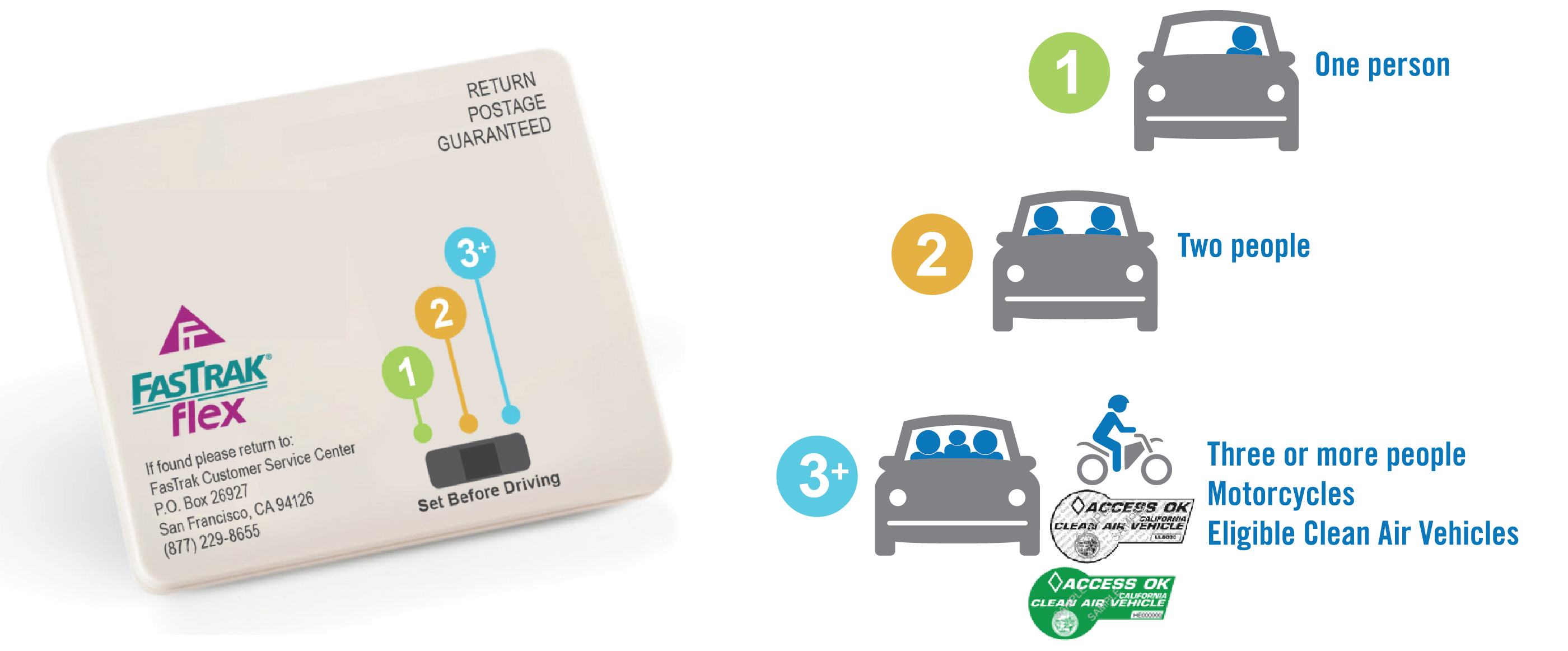
If the corridor is to be widened at all, I believe alternative 5, express lane tolling, is best. It should be designed so that every vehicle (except transit) pays for every trip. There would be discounts for lower income people, probably using the CalFresh or other program discount of 50%. There would be discounts for the number of occupants for users of the FasTrak Flex transponder that can be set to 1, 2, or 3+ occupants. Caltrans is also exploring technology that would allow sensing of number of occupants without this particular transponder. The could be and probably should be discounts for travel during non-congested times when all lanes of the freeway are mostly free-flowing. But every vehicle should be paying something at all times. There is a clear equity advantage to express lane tolling in that all users are paying into the system so that tolls per use can be set lower. People talking about Yolo 80 tolling, including those opposed to any tolling at all, have bandied about charges of $10 to $40, but I believe that express lane tolling would set full price tolling at no more than $5, and likely less. A detailed operations and charges plan would await creation of the tolling authority, so nothing is known for certain about tolls at this time. I have not been able to find any projection of tolls in Caltrans or YoloTD documents, though certainly it may exist.

FasTrak Flex with occupany switch (from VTA)
FasTrak Flex with occupany switch (from VTA); different agencies use different models

My preferred alternative is 1, no build. I want the Yolo bottleneck to remain a bottleneck so that it sets a ceiling on VMT in the entire I-80 corridor from Nevada to San Francisco. We don’t need, now or ever, more motor vehicle capacity. We need travel mode alternatives. The best alternative, I believe, is higher frequency for Capitol Corridor between Roseville and San Jose. Other actions such as better bus service, both local and regional, better walking and bicycling facilities, e-bike subsidies, and effective bike share systems are all part of the solution. More lanes, of whatever type, is not the solution.

no HOV lanes

HOV lanes are a failure. They save time for the drivers using them, but always less time than was asserted when the project was designed, funded, and built. And they do not save average drivers any time at all. But when added to existing freeways, they certainly cost a lot of money. And they certainly induce a lot more travel, exacerbating climate change, motor vehicle pollution, and damage to the communities through which they pass.

Hwy 50 in Sacramento

Despite this fact, the Hwy 50 project in Sacramento is adding HOV lanes in order to widen the freeway, which will induce more travel, and return traffic to previous or greater levels within a few years, or less. That means accelerated climate change, motor vehicle pollution and noise in the areas through which they travel, and for this particular project, strong discouragement to walkers and bicyclist passing under the freeway, since the undercrossings are very dark and very scary.

Hwy 50 HOV lanes (Fix50) project includes: “Adding Carpool [High-Occupancy Vehicle (HOV)] lanes in each direction on U.S. Highway 50 from east of Watt Avenue to Interstate 5”. HOV lanes would also be added on two on-ramps at 65th Street. I haven’t been able to locate any operational information. Will HOV be weekdays daytime, as in the Bay Area, or full time, as in Southern California?

HOV lane enforcement

Part of the reason HOV lanes have no benefit is that they are violated by many drivers. Though the target violation level is 10% (see below), data from the bay area indicates that violation is often 25%. If you stand on an overpass looking down at a HOV lanes, as I have done, you may conclude that 25% is an underestimate. (Study finds large number of drivers abusing Bay Area carpool lanes)

How Are HOV Lanes Enforced? (Caltrans): “The California Highway Patrol (CHP) is responsible for HOV lane enforcement. The goal is to keep HOV violation rates to less than 10%. Once monitor counts detect violation rates above 10%, District personnel will notify local area CHP of the need for heightened enforcement in a particular HOV corridor. An HOV lane violation ticket is a minimum $490 fine. Fine may be higher for repeat offenders. In addition, at the discretion of the county’s Board of Supervisors, local counties can assess additional administrative fees.”

CHP recently did a maximum enforcement period on Santa Rosa area HOV lanes. These actions are almost always funded by grants from OTS, and are commonly an indication the vehicle code in question is NOT being enforced at other times. CHP officers get paid overtime for these enforcement actions, but they don’t consider these violations are part of their routine activities. (Carpool lane crackdown: CHP writes 72 tickets in a single day, even the boss gets in on the action)

The upshot

HOV lanes are not a solution to anything. They allow Caltrans and other transportation agencies to increase freeway capacity while claiming benefits, while what they do is induce more travel, undoing any possible benefits. There should be no more HOV lanes constructed, anywhere. All existing HOV lanes should be converted to HOT (High Occupancy Toll) or Express tolled lanes.

This includes the new HOV lanes that will open on Hwy 50. They must be converted to toll lanes. The creation of a regional tolling authority would make this easier, though it would certainly be politically unpopular, or at least unpopular with drivers who think everything should be free, and politicians who kowtow to the entitlement of drivers. The legislation which authorizes tollling (AB 194 of 2015) provides that HOV lanes may be converted to toll lanes. The benefits of conversion must be documented, and it appears likely but not certain that it must be approved by California Transportation Commission (CTC).

References

If you search for ‘induced travel hov lanes’, you will find a large number of resource. Many transportation agencies claim a benefit, but no research backs up that claim. Caltrans does not claim a benefit, but does continually build projects despite that.

Yolo 80 teach-in

The proposal by Yolo County Transportation Authority (YoloTD) and Caltrans to add a managed lane to the I-80 corridor between the Solano County line and just inside Sacramento County, is the hot transportation topic in the region. It would induce motor vehicle traffic (VMT) along this corridor, and by extension, would induce traffic on I-5, I-80, and US 50 within Sacramento County. I’m sure I’ll have a number of posts. Two so far are: Tolling for I-80 managed lanes and missing alternatives for Yolo 80 Managed Lanes Project.

Cool Davis sponsored a recent event in Davis, entitled A Freeway Teach-In: Davis Futures Forum on the Future of the I-80 Corridor. You can watch a video of the event on YouTube at https://www.youtube.com/watch?v=pW7a07pyhLs. The first 4:45 is dead space that you can skip, and the actual presentations start at 19:00. I encourage you to watch the video. I noticed that different people had different take-aways, so you may have your own. But of course I’ll comment.

There are three items that I found most interesting.

  1. Susan Handy (starting 32:27) of UC Davis ITS summarized and referred to her recently published book, Shifting Gears. Here primary point is that his particular project must be viewed in the context of our entire transportation system, including how we go here, where we are, and where we might go. She explained induced travel in a succinct and clear manner. She reminded that transportation and land use cannot be considered separately.
  2. Nailah Pope-Harden (starting 57:00) of Climate Plan spoke about justice. For the Yolo 80 project, the process was not equitable, the end product was not just, and it does not feel just. She said “…given the tools we have available, pricing is inevitable, in order to reach our VMT goals…”. I was not aware that this was Climate Plan’s position. See ClimatePlan is joining the Pricing Conversations: Recap of Road Pricing Discussion in CAPTI workgroup and Road Pricing Factsheet.
  3. Don Mooney (starting 1:13:00), an attorney who has previously sued Caltrans, pointed out that public comments on the Draft EIR of the ‘I like it’ or ‘I hate it’ are meaningless to the process. Only substantiative comments from experts or which quote from expert sources have any effect on the decision, or provide standing for suing over the final decision.

Tolling for I-80 managed lanes

Caltrans and Yolo County Transportation District (YoloTD) want to widen Interstate 80 in Yolo County and into Sacramento County. I previously wrote about this project in missing alternatives for Yolo 80 Managed Lanes Project. The list of alternatives seems to continually change. I saw a presentation at the SACOG Transportation Committee meeting this week that had a different list of alternatives. But the one on the Caltrans ‘Yolo 80 Corridor Improvements Project’ website is:

  • Build Alternative 2a: Add a high-occupancy vehicle lane in each direction for use by vehicles with two or more riders (HOV 2+).
  • Build Alternative 2b: Add a high-occupancy vehicle lane in each direction for use by vehicles with two or more riders (HOV 2+) and build an I-80 managed lane direct connector.
  • Build Alternative 3a: Add a high-occupancy toll lane in each direction for free use by vehicles with two or more riders (HOT 2+). Single-occupied vehicles would pay a fee for lane usage.
  • Build Alternative 3b: Add a high-occupancy toll lane in each direction for free use by vehicles with two or more riders (HOT 2+) and build an I-80 managed lane direct connector. Single-occupied vehicles would pay a fee for lane usage.
  • Build Alternative 4a: Add a high-occupancy toll lane in each direction for free use by vehicles with three or more riders (HOT 3+). Vehicles with less than three riders would pay a fee for lane usage.
  • Build Alternative 4b: Add a high-occupancy toll lane in each direction for free use by vehicles with three or more riders (HOT 3+) and build an I-80 managed lane direct connector. Vehicles with less than three riders would pay a fee for lane usage.
  • Build Alternative 5a: Add an express lane in each direction (i.e., everyone would pay a fee to use the lane, regardless of the number of riders).
  • Build Alternative 5b: Add an express lane in each direction (i.e., everyone would pay a fee to use the lane, regardless of number of riders), and build an I-80 managed lane direct connector.
  • Build Alternative 6a: Add a transit-only lane in each direction.
  • Build Alternative 6b: Add a transit-only lane in each direction and build an I-80 managed lane direct connector.
  • Build Alternative 7a: Repurpose the current number one general-purpose lane for use by vehicles with two or more riders (HOV 2+); no new lanes would be constructed.
  • Build Alternative 7b: Repurpose the current number one general-purpose lane for use by vehicles with two or more riders (HOV 2+); no new lanes would be constructed. Build an I-80 managed lane direct connector.

Note that of these 12 alternatives, 10 of them add a lane to the existing six lanes, which is capacity expansion, while 6 of them would be tolled in some manner. High occupancy toll (HOT) lanes charge vehicles that do not meet the minimum passenger count (often 2, but could be 3). Express lanes charge every vehicle using the lane, though there might be discounts for higher occupancy or certain types of vehicles, or certain times of day when there is no congestion.

I will have a lot more to say about the overall project in the future, but this post is about the tolling.

YoloTD, SACOG, and Caltrans are working on an application to the state for a regional tolling authority, a JPA – joint powers authority, that would administer tolls on these managed lanes. The proposal will be before the SACOG board on Monday, for review but not final decision (which would be in January). The two agenda documents are the staff report and the Toll Authority JPA. At the transportation committee meeting, there was general support for tolling and for the JPA, but clear discomfort about Caltrans as the possible lead agency (no one trusts Caltrans these days, though few people will say that publicly). The JPA would initially just be for the Yolo County I-80 section, but would be created so that it could include any managed lanes in the SACOG region. There are no managed lanes in the region currently, but there are in the bay area and southern California.

A tolling authority is probably a good idea. Freeways are tremendously expensive to build and to maintain, and the federal and state gas tax come nowhere close to funding either. Tolling would at least put money in the bank for maintenance. It has been suggested that it could also fund additional service for the Capitol Corridor trains and perhaps better bus service between Davis and Sacramento, but there is nothing in the JPA agreement that obligates such expenditures. It would be up to the JPA board. Income could also be used to construct other managed lanes on freeways in the region. Of course I am opposed to any added lanes, so new managed lanes are not a good use of the income. That is a risk of the JPA, that income could be used to make things worse in other places.

More info (there are quite a number of other media articles from the TV stations):

map of Yolo 80 Project