traffic circles

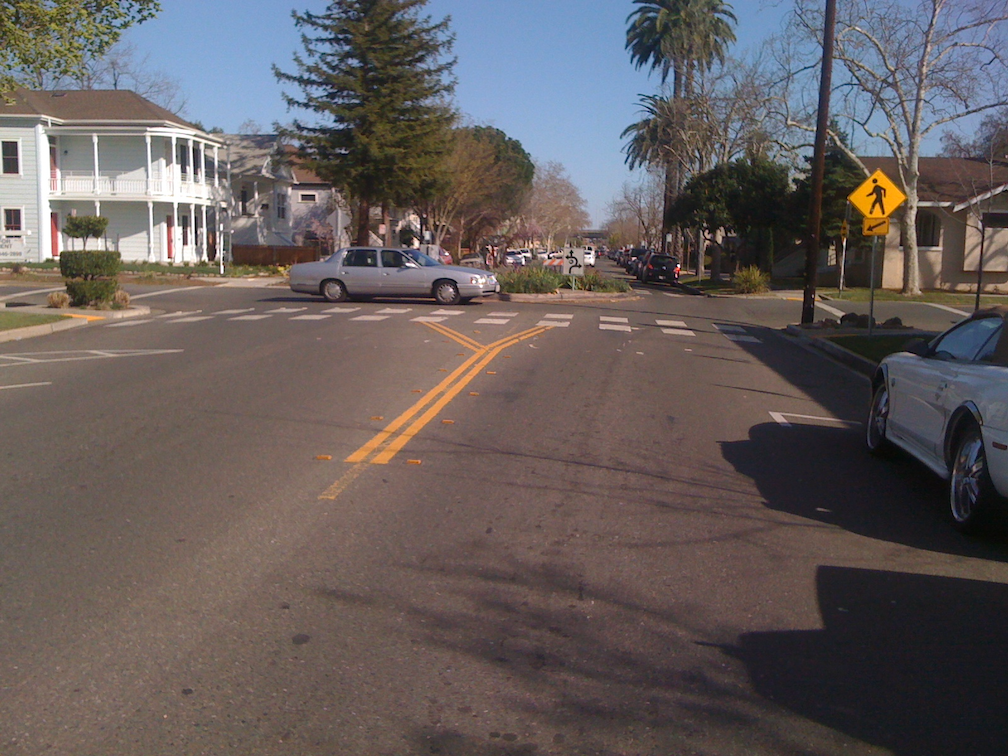
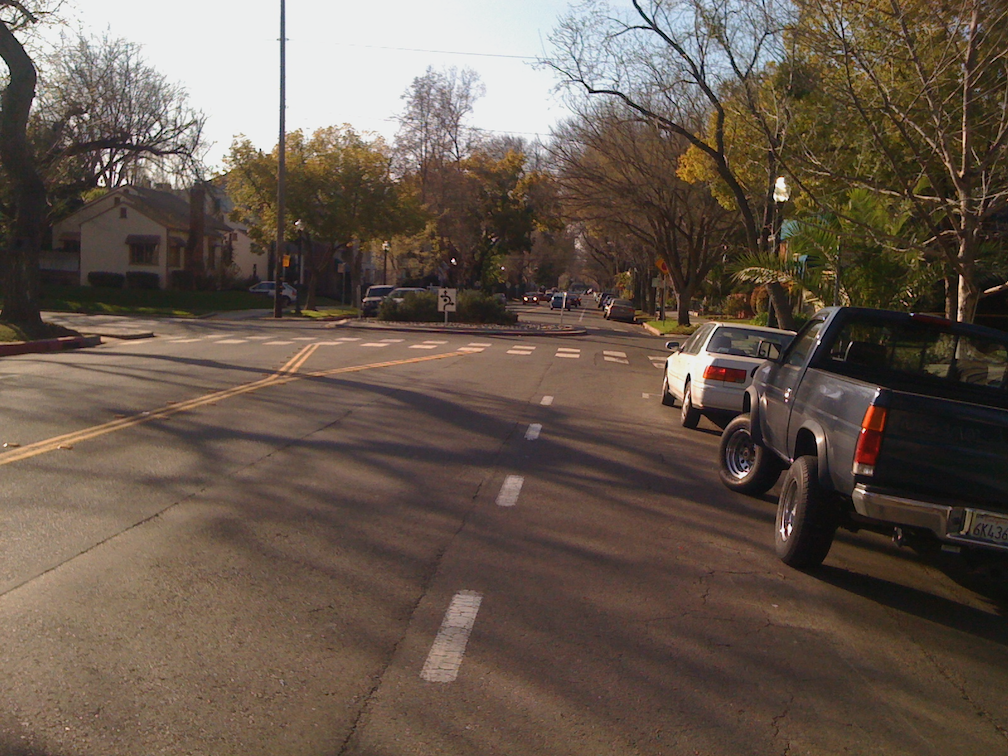
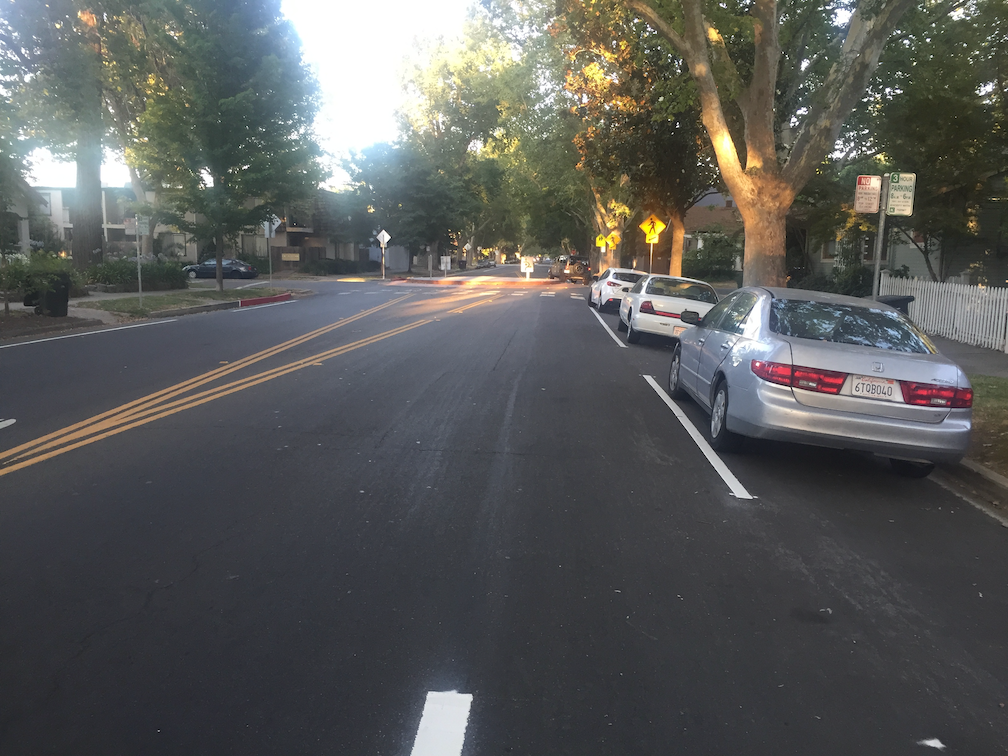
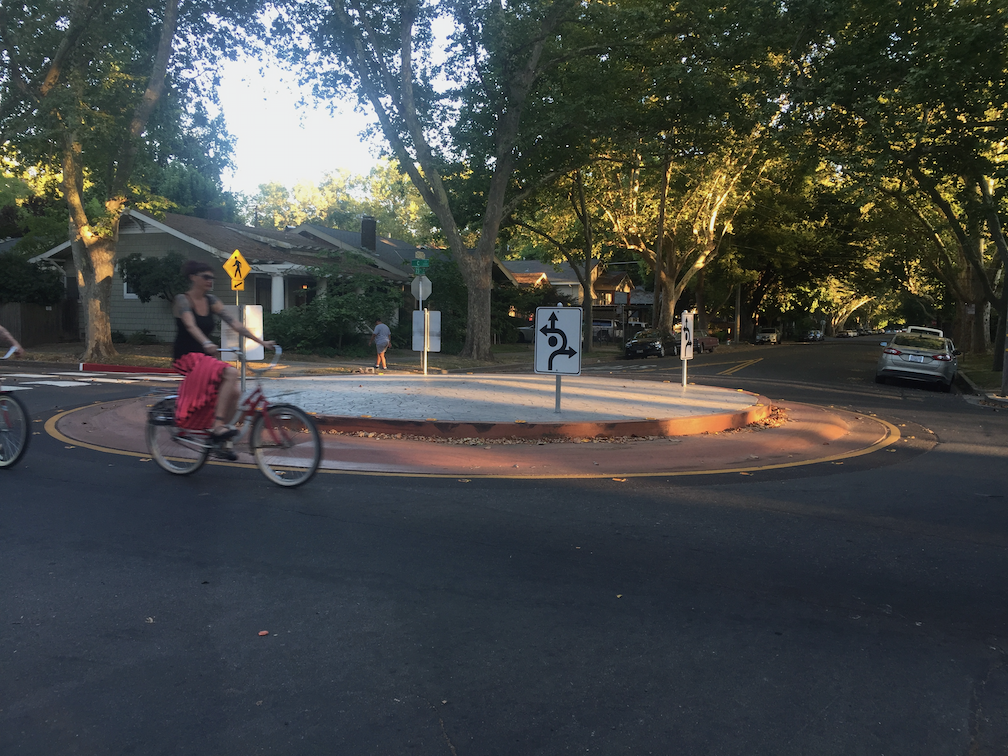
For National Roundabouts Week, here are sample of some traffic circles. True roundabouts have significant horizontal deflection to slow motor vehicles, and do not have any traffic control devices such as stop signs. I do not consider multi-lane roundabout-like structures to be roundabouts, but unfortunately have not come up with a term to distinguish them.

Traffic circles are not roundabouts, at least not as implemented here in the Sacramento region. They are sometimes called mini-roundabouts, which is OK, but they should never be called roundabouts without a modifier. The eight photos below of traffic circles in the Sacramento region, most in the northeast portion of the central city, show some of the settings, and the wide variation in diameter. If the traffic circle is large enough, occupying a significant portion of the intersection, they do cause significant horizontal deflection and therefore slow traffic. Some of the traffic circles are too small, and do not force horizontal deflection and slowing. All of these examples have stop signs on one of the cross streets, so they do not meet the criteria of a true roundabout.

The safety of these structures is somewhere between a true roundabout (high safety) and a regular perpendicular intersection (low safety). Regular intersections are the location of most crashes, whether they are controlled by 2-way stops, 4-way stops, or signals.

See traffic calming measures for additional information on roundabouts and other traffic calming devices.

I have many. fewer photos of true roundabouts, in part because there are many fewer in the region, but I will post on those shortly.

Strong SacTown Street Design: Active Street Typology

Active Street Typology is the seventh post by Strong SacTown to improve and promote the City of Sacramento update to its Street Design Standards. Other posts at tag: street design standards.

“Active Streets are similar to Local Streets, but with additional features to encourage and prioritize active transportation including biking, rolling, and walking. Well-planned Active Streets form a cohesive network of safe, convenient, and direct connections to local destinations and between neighborhoods. Low vehicle volumes and speeds are an essential characteristic of Active Streets, and the typology shares many facets of the bicycle boulevard or neighborhood greenway street types found in other jurisdictions.”

traffic calming measures

The Strong SacTown Street Design Standards Team has posted on Modal Filters, which are probably the most effective tool we have for calming and slowing traffic. But there are a number of others than can be used, sometimes more effective depending on the context of the street being redesigned. The traffic calming features below are listed in approximate order of effectiveness, following modal filters of course, but each street to be redesigned for traffic calming is unique, so the best solutions will vary.

The city has a parallel project, the Streets for People Active Transportation Plan. The Neighborhood Connections storymap Traffic Calming tab (scroll the menu bar right if you don’t see this tab) has great examples of many of the traffic calming features. I am using some of those in the recommendations below.

Note: A recently release study of traffic speed reductions engendered by complete streets elements in Minnesota identified roundabouts as the most effective as slowing drivers. Crossroads: Measuring the Effects of Road Features on Driving Speeds, 2024-09-11.

Marked Crosswalks

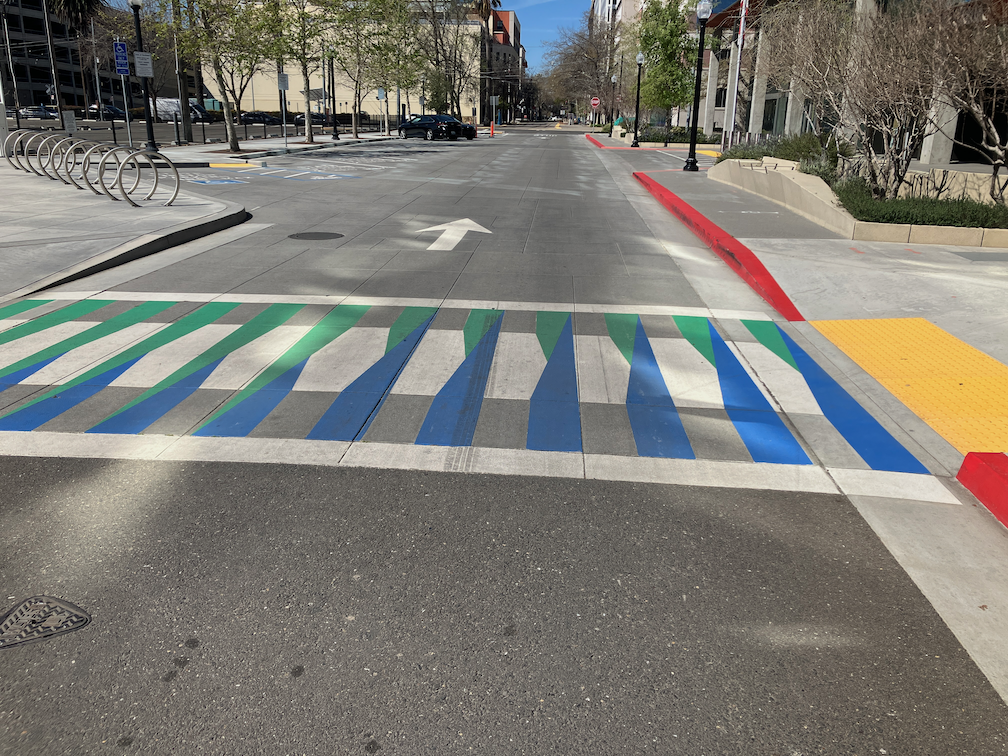
Though state law recognizes that there is a legal crosswalk on every side of every intersection, unless signed against, many drivers do not understand that they must yield to walkers crossing, whether the crosswalk is marked (painted) or not. The crosswalk at every side of every intersection should be painted, though low volume low speed streets may not require marked crosswalks. Decorative designs within the crosswalk further increase visibility.

photo of decorative crosswalk, O Street in Sacramento
decorative crosswalk, O Street in Sacramento
Read More »

street design and land use

Street design and land use are intimately connected. Street design should support surrounding land use (not land use somewhere else), and land use should take advantage of the best characteristics of streets. But in most of Sacramento, street design and land use do not support each other.

At the regional level, SACOG (Sacramento Area Council of Governments) has transportation authority but does not have land use authority. They must rely on encouragement of local governments to implement better land use, and is able to use transportation investments to a small degree to support better land use. But the City of Sacramento does have both transportation and land use authority, and could and should be planning the two in unison to accomplish a more sustainable and livable built environment.

Many of our streets are designed to allow people to pass through at high speed, not to stop for living. In some cases, this is an historical artifact because some of our major streets were at one time state highways. But other streets were designed in the same way in more recent times. The city has allowed and encouraged business development along these former highways, with more driveways, more parking, more intersections, more congestion that reduces transit effectiveness, and fewer safe crossings. At the same time, the city has widened roads and widened lanes, creating or maintaining high speed limits which are completely incompatible with the function of streets as places, or as Strong Towns puts it, places for building wealth.

The roadways which try to combine the functions of high speed and throughput with local productivity are called ‘stroads’, a street/road combination. These roadways fail at both. They must be healed by conversion to either streets or roads.

Stroad to Road

In order to bring street design and land use into alignment, the city must either redesign these stroads (a street/road hybrid) toward road function by:

  • Greatly reduce driveways and eliminate on-roadway parking
  • Eliminate signals that serve shopping centers, and replace major signalized intersections with roundabouts
  • Provide on-demand safe crossing at moderately frequent intervals for walkers and bicyclists
  • Discourage homes and businesses along these roadways

Stroad to Street

Or, redesign these stroads toward street function by:

  • Change roadway design to enforce motor vehicle speeds of 20 mph or less
  • Encourage homes and small businesses along streets
  • Create space for living in the public right-of-way by temporary or permanent closure of some streets, and street or sidewalk dining areas (with ADA-compliant routes).

In most cases it is more cost effective to change a stroad to a street, but both transformations are possible and necessary. We need fewer roads and more streets in our transportation system.

Land Use

An effective land use pattern offers the opportunities of daily life (jobs, businesses, dining, entertainment, groceries and shopping) within walking or bicycling distance of home. In Sacramento, the midtown section of the central city already offers this type of land use, because it was developed before the primitive concept of zoning pushed all uses further away. A few other places in Sacramento offer widely scattered examples of such land use.

Relatively few trips outside the neighborhood would be necessary if we had this type of mixed use and diverse land use. Though both land use and streets in midtown could be even better, it is an example which other neighborhoods could emulate. Of course streets must support this land use, with slow speeds which do not endanger people walking and bicycling, and where parking is sufficient but not in excess.

The city should support small businesses in every reasonable way. It need not prohibit larger businesses, but let them succeed or not on their own, without promotion or subsidy from the city.

Small parcels, often called fine-grained development, best support a diversity of housing types and businesses. The city should preserve small parcels, prohibiting consolidation except under compelling public interest, and where large parcels exist, consider purchase, division into small parcels, and sale to small scale infill developers.

Street and Land Use Supporting Each Other

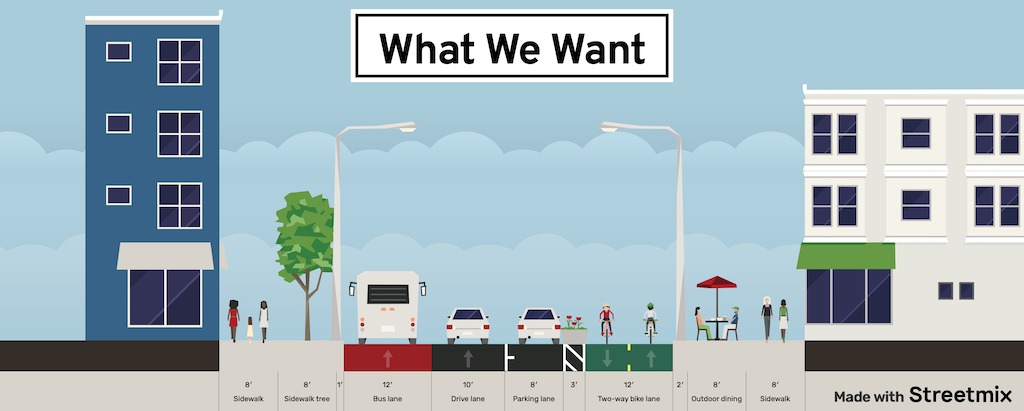
Below is a photo of K Street in midtown Sacramento. The street design, one lane each way, low volume and low speed, temporary curb extensions to calm traffic, painted crosswalks, some on-street parking but reduced to increase walker safety. Of course it could be even better. The land use, a mix of storefront retail and housing, in turn supports good road design. This is a street. This is a place where people want to spend time, and spend money, and feel welcome.

photo of street design and land use that support each other, K St, midtown Sacramento
street design and land use that support each other, K St, midtown Sacramento

Street and Land Use Working Against Each Other

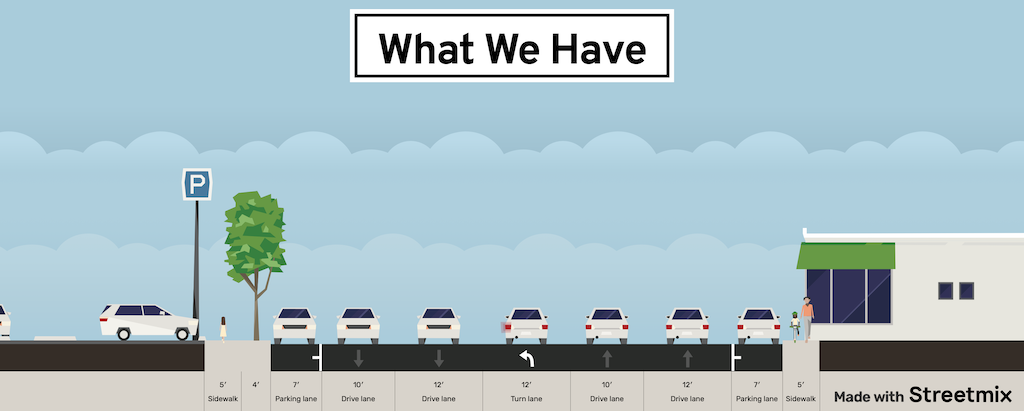
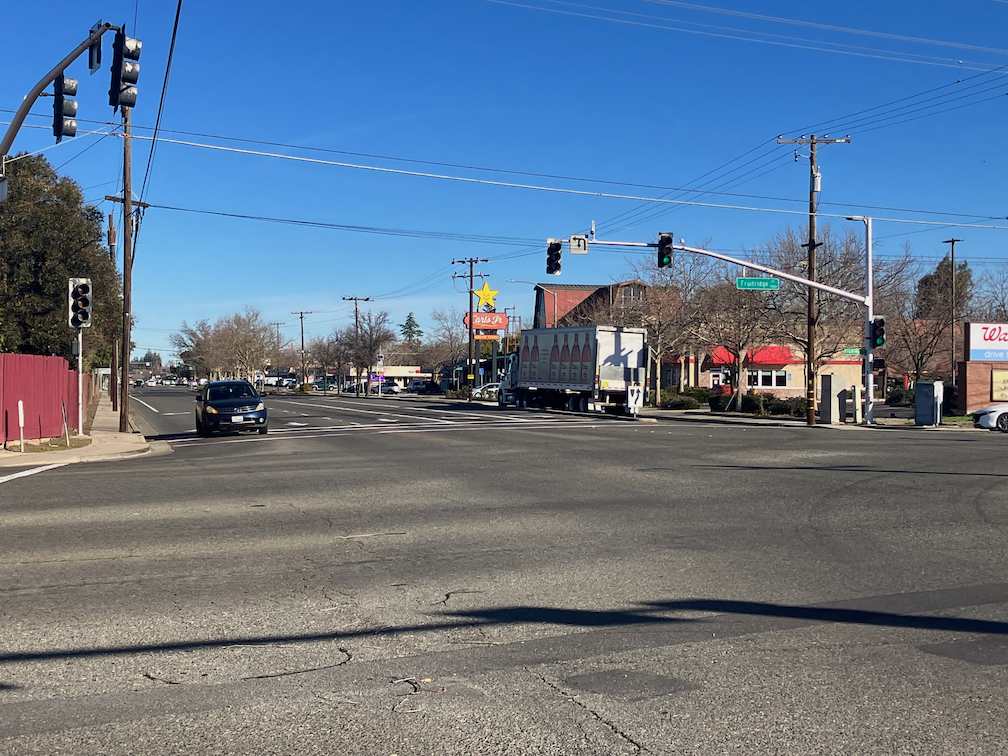
Below is a photo of Freeport Blvd at the intersection with Fruitridge Rd in south Sacramento. The street is designed for high speed travel, accommodating high volumes of motor vehicles. Bike lanes are present in some places, but dropped when necessary to promote motor vehicle flow. Dual left turn lanes endanger everyone on the road, and right turn lanes present a hazard to bicyclists. The crosswalk has faded to near invisibility. And the land use reflects those problems. Fast food businesses oriented to drivers and excluding walkers and bicyclists. A blank fence to try to isolate residences from the roadway, but of course it does not reduce exposure to noise and air pollution. Parking lots facing the street rather than storefronts. This is not a place where people feel welcome.

Freeport is NOT the worst stroad in town, by any means, but it is typical. Does the roadway encourage poor land use? Yes. Does the land use encourage the poorly designed roadway? Yes.

gateway treatments

Gateway treatments signal to drivers that they are entering a Local Street, from a higher speed or higher volume street or road. They are critical for signaling to drivers that they are entering a street dedicated to safety and placemaking, where motor vehicles are guests subservient to all other users, and walkers and bicyclists may be present at any time and any place. Drivers often continue their prior speed and behavior onto local streets where it is not appropriate, but gateway treatments strongly discourage such behavior.

gateway treatment diagram
gateway treatment diagram; credit: developed by Dan Allison, refined by Troy Sankey, Strong SacTown

Full gateway treatments include raised textured pavements, raised crosswalks, and curb extensions,  In combination they slow motor vehicle traffic.

If only some of the treatments are present, signing may also be appropriate. If the Local Street is designed for 15 mph, and/or shared space, the European woonerf sign, or slow streets signs from cities in the US may be appropriate.

neighborhood greenway sign, Eugene, OR

Cobblestones on Front Street in Old Sacramento Waterfront demonstrate the effective traffic calming benefit of rough streets at gateways, and they are often used in other cities for the purpose.

photo of cobblestones on Front Street, Sacramento
cobblestones on Front Street, Sacramento

The following photo shows a gateway treatment on Court Street in Cincinnati. The bollard is temporary for a special event, but the street is normally open to slow moving motor vehicles.

photo of brick texture treatment, Court St, Cincinnati
brick texture treatment, Court St, Cincinnati

Just yesterday, I noted a texture treatment used for crosswalks in the downtown area of Petaluma, California. Though these are not wide enough or rough enough to significantly slow drivers, they do serve well to visually mark crosswalks as being slower areas.

Note: The term gateway is also used to refer to the entry point of a redeveloped or new commercial and housing area that the city or developer wishes to highlight. There may be decorative elements signifying the special area.

References

Strong SacTown Street Design: Local Street Typology

Local Street Typology is the sixth post by Strong SacTown to improve and promote the City of Sacramento update to its Street Design Standards. Other posts at tag: street design standards.

“Local Streets are an extension of the adjacent land uses and provide space for people to socialize, play, and even loiter, and will be designed and managed as places primarily for people. People are likely to spend most of their time in or near Local Streets, since these are where to find most destinations. As such, it should feel natural and comfortable to dwell in or stroll through a Local Street. Parents should feel comfortable letting their kids play unsupervised, and noise levels are low enough to hold a conversation.”

Strong SacTown Street Design: Modal Filters

Modal Filters is the fifth post by Strong SacTown to improve and promote the City of Sacramento update to its Street Design Standards. Other posts at tag: street design standards.

“Also known as traffic diverters, or permeable filtersmodal filters hold the key to bringing back the pre-1920 sense that streets are for everybody and can be a shared space where all traffic can safely and slowly mix. They do this by reducing the number of cars on a given street or in a neighborhood via bollards or other physical barriers.”

diagram showing the improved safety of streets in the northeast quadrant of the central city

make streets rough again!

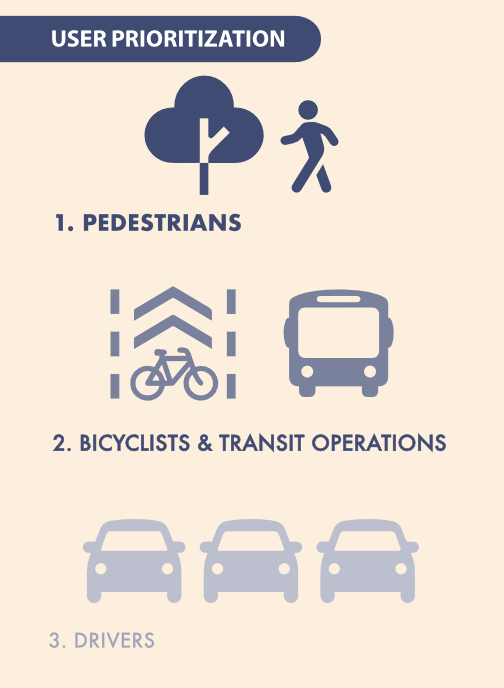
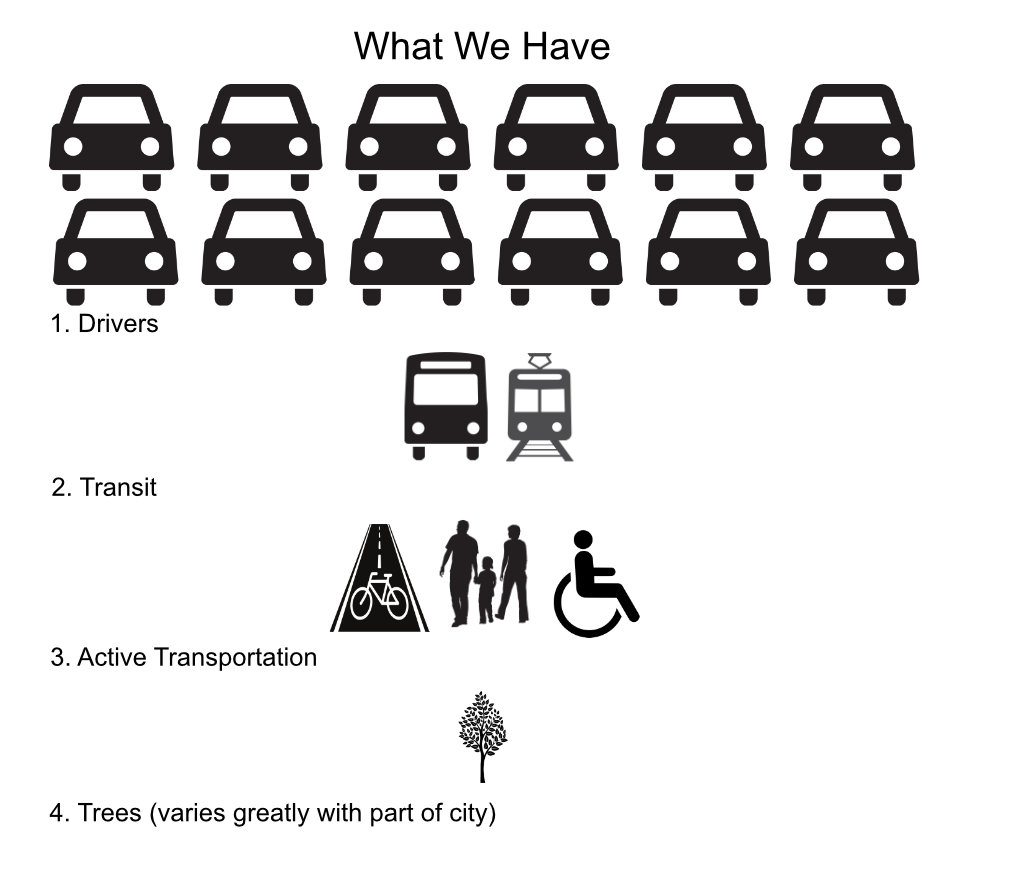
This is a follow-on to my 2016 post back to the old ways? Since that time I have watched several streets in downtown being torn up for utilities. Under the asphalt pavement on several of them are cobblestone and brick streets, covered over by asphalt to provide a smooth and fast ride for car drivers, and a less safe street for everyone. There are also a number of streetcar tracks that have similarly been buried beneath asphalt. Car drivers have won the battle for our streets, so far, but the trend is starting to reverse, even in Sacramento. The City of Sacramento, in its new general plan, has decided that walkers are more important than drivers!

The Strong SacTown street design standards team has identified four roadway typologies, Local Streets, Active Streets, Transit Streets, and Roads. Every redesign of Local Streets should consider installing rougher pavement to slow motor vehicles. Of course if a street is used by bicyclists, the pavement can be only moderately rough, not like the cobblestone pavement on Front Street in Old Sacramento Waterfront. Sidewalk level bike lanes, separated from the roadway and smooth, solve this for some kinds of streets, but local streets usually will not have bicycle facilities because they are low speed and low volume safer streets.

Rough pavement slows drivers, not just where there are traffic calming features such as curb extensions and chicanes, but for the entire block. Rough cobblestones like Front Street limit motor vehicle speeds to 10-15 mph, but a moderately rough street can enforce 20 mph or less, which is the goal for all local streets.

Brick streets do cost more to install than asphalt (the cheapest, in both senses of the word) and concrete streets. But they last much longer, according to The Planning Lady: It Pays to Save Your Brick Streets. “A concrete street will be replaced 3 times and asphalt 6 times over that time period.” Brick laying machines, originally invented in the Netherlands (of course), but now available from many companies, reduce the cost of creating brick streets considerably. I don’t know the range of brick roughness that can be laid by machine, but it should be sufficient for moderately rough streets. The roughness of historical cobblestone like Front Street might not be affordable today, with the material harder to source and labor more expensive, but many cities are using cobblestone for slow streets and gateway treatments.

Photos below of Clay Street in San Francisco cobblestone, Front Street in Sacramento cobblestone, and Liestal Alley in Sacramento brick.

San Francisco, Clay St, cobblestone pavement
Sacramento, Front St, cobblestone pavement
Sacramento, Liestal Alley, brick pavement

Strong SacTown Street Design: Street Typologies Overview

The fourth post by Strong SacTown to improve and promote the City of Sacramento update to its Street Design Standards. Other posts at tag: street design standards.

To help support the design or redesign of stroads into either streets or roads, and to enhance the comfort and safety for all road users, we recommend a new, simplified street typology:

In lieu of Sacramento’s current seven typologies, ours comprises only fourLocal StreetActive StreetTransit Street, and Road.

  1. Local streets are the core of our street network, serving a built environment with multiple uses where most of the home, work, commercial and social needs of people are within walking or short bicycling distance. Motor vehicles are guests, safety is primary, and economic and social vibrancy are promoted. Some local streets may have no private motor vehicles traffic at all, or such use be limited to certain times of day. A majority of roadways in the city should be local streets. Local streets will have a maximum design speed of 20 mph.
  2. Active streets have features that allow bicyclists and mobility device users to travel at somewhat higher speeds over somewhat longer distances. However, the local street function is not compromised. Active streets will have a maximum design speed of 20 mph.
  3. Transit Streets have features that allow effective transit use including higher frequency buses, streetcars and possibly light rail. However, the local street function is not compromised. Transit streets will have a maximum design speed of 20mph for streets with transit priority and 30 mph for exclusively transit.
  4. Roads are designed to allow longer distance travel at somewhat higher speeds, by transit and private motor vehicles. The safety of all users is still paramount. Roads should be a minor component of the transportation network, occurring at intervals of one to two miles. Roads will have a maximum design speed of 30 mph.

Strong SacTown Street Design: Lane Widths

The third post by Strong SacTown to improve and promote the City of Sacramento update to its Street Design Standards. Other posts at tag: street design standards.

Narrower lanes are generally correlated with slower speeds, reduced collisions, and safer streets. Our recommendations:Lane widths instituted as maximums (rather than minimums) Maximum 10 feet for any streets 30+ mph (except limited cases) Increased flexibility for streets designed for 25 mph or lowerOver 80% of the fatalities and serious injuries on Sacramento roadways happen on streets signed between 30 mph and 45 mph. Taking a serious approach to Vision Zero will mean addressing these higher-speed, higher-volume roads. Both a reclassification of these roads (discussed later) and redesign of the current geometry to appropriate speeds is crucial. 

Lane Widths – Strong SacTown