lower speed limits on complete streets in Sac

The eternal argument on speed limits has resurfaced on Twitter. The binary solution is: a) lower speed limits, or b) redesign roadways. This is a false dichotomy, to which I answer yes! Ultimately, the solution is to redesign roads (and motor vehicles) so as to physically enforce posted speed limits. But in the meanwhile, speed limits that are posted too high for urban areas (and with speeds that alway exceed that, because the road was designed for a higher speed than is posted) should be reduced.

There are two types of speed: posted speed, on the speed limit sign, and design speed, the speed that the road was designed for. Design speeds have traditionally been much higher than posted speeds, at least 10 mph higher, and often more, because the traffic engineer’s value system says that we must always protect drivers from their errors by providing a road that is safer at higher speeds. This is highway design thinking, applied to city streets, and is always inappropriate outside freeways and rural roads (and maybe even there). Protecting other users of the road (walkers and bicyclists) does not traditionally figure into this at all.

As a starting point, local or residential streets should be 20 mph maximum, collector streets 30 mph maximum, and arterial streets 40 mph maximum. These are maximums, more than is appropriate for many roads. 40 mph may never be appropriate in an urban area. Of course most arterial streets are stroads, roads designed for higher speeds but then knee-capped my multiple driveways and intersections. These roads should never have been built that way, or allowed to evolve that way, and must be radically changed.

Existing posted speed limits for the city are available.

It should be noted that most research indicates that the majority of fatality and severe injury crashes are caused by people egregiously exceeding speed limits, by 10 mph or more. It is not unusual for speed surveys, and the rare law enforcement, to record a few drivers exceeding freeways speeds on surface streets. Roadway design, along with lower speed limits, probably does little to change the behavior of egregious speeders, and those are better addressed through automated enforcement.

The City of Sacramento has a number of complete streets or road reconstruction projects underway or planned. Two significant ones are Northgate Blvd and Stockton Blvd. Stockton is on the city’s high injury corridor Vision Zero plan, Northgate is not.

Stockton Blvd

The city has been through several cycles of planning for Broadway and Stockton Blvd. The current plan is the Stockton Blvd Plan – Community Working Version. Though public concerns about motor vehicle speed have been a recurring theme, the city plans to address this by reducing travel lanes and planting trees. They do not intend to reduce the posted speed limit. In fact, speed limit is hardly mentioned in any of the documents. In fact, design speed is never mentioned. The city is pretending that posted speed limits have nothing to do with roadway design. The city is not willing to share with the public its intended design speeds.

The posted speed limits on Broadway and Stockton are 35 mph and, south of Lemon Hill, 40 mph. Broadway and Stockton are ‘other principal arterial’ in the state functional classification system, one step below freeway. And much of Stockton’s current design is very freeway-like. Given the intensity of uses along both Broadway and Stockton, posted speed limits of 30 mph would be appropriate. Instead, the city intends to maintain 35 mph and 40 mph for the redesigned road. This will ensure that they remain stroads rather than streets.

Northgate Blvd

Northgate Blvd is not on the city’s high injury corridor Vision Zero Plan, but was identified because it is a road with intensive local use in a disinvested community. The planning effort for Northgate is in an earlier stage. An existing conditions report, appendices, and initial community outreach are available. These reports document that posted speeds are mostly 40 mph, with a small section 45 mph. Recorded speeds are not that far off from posted speeds. but then again, the 40 mph speed is above what one would normally find in an urban area. Northgate is a ‘other principal arterial’, one step below a freeway. Parts of Northgate are have freeway-like designs, but most of it is more like a simple stroad.

Though public concerns about motor vehicle speed have been a recurring theme, the city plans to address this by narrowing travel lanes and planting trees. I participated in the initial workshop on Northgate, and I and others asked whether the posted speed limit would be reduced. The answer was no. But it is early enough in the planning process that this could be changed by public pressure. Another online workshop was scheduled for yesterday (I was unable to participate), and an in-person open house will be October 22 (Saturday, October 22 from 11:30am-1:30pm at Garden Valley Elementary School).

The city’s standard answer to questions about reducing speed limits is that they cannot be changed, because of the 85% rule (not a law, but guidance by Caltrans and courts), but this is incorrect. When a street is reconstructed, whether complete streets or other, the city can design for and set whatever speed limit it wants. It is as though a new street is being constructed. But the city doesn’t want to see it that way.

I think to redesign a road without seriously considering a reduction of the posted speed limit, as well as the design speed, is throwing money down the toilet. These projects will probably be in place for 30 years. 30 years of less than ideal design, 30 years of less than a fully functional and livable street, 30 years of failure to take climate change seriously, 30 years of unnecessarily high fatalities and severe injuries.

Background

Research on the effects of reducing posted speed limits are mixed. Some have indicated a significant impact, particularly at the higher end of the speed range (over 35 mph), and others indicating no significant change. Though even one life saved by a lower posted speed limit is worthwhile to me, it also points out that the ultimate solution to speeding is not just posted speed limits, or enforcement of those, but also roadway redesign. As I said, both!

Law enforcement of speed limits has been well documented as a tool of harassment and oppression of people of color and low income, so I am not in favor of in-person enforcement. Automated enforcement can easily manage speeds and particularly egregious speeders.

Streetsblog: Vision Zero Cities: How to Fix Our Most Dangerous Roads

Streetsblog: STUDY: 20 Is Plenty — But Signs Alone Don’t Always Get Drivers to Slow Down

Caltrans Setting Speed Limits

NACTO City Limits: Setting Safe Speed Limits on Urban Streets
What City of Sacramento ISN’T doing

The City of Sacramento, that bastion of doing the least amount possible, has failed to notice that progressive cities in the US and worldwide are making changes to their environment to make is safer for people who walk and bicycle, and more efficient and welcoming for people outside of cars.

What the city is NOT doing, that it could:

  • Accept responsibility for maintaining sidewalks, as an integral part of the transportation network. The city continues to shirk its responsibility, spending funds on motor vehicle infrastructure instead of maintaining walker infrastructure.
  • Installing leading pedestrian intervals (LPIs) at every traffic signal in the city. The same eleven have been in place for years; none have been added. The recent legislation, AB 2264, only applies to state highways; it is up to cities and counties to implement on other roadways.
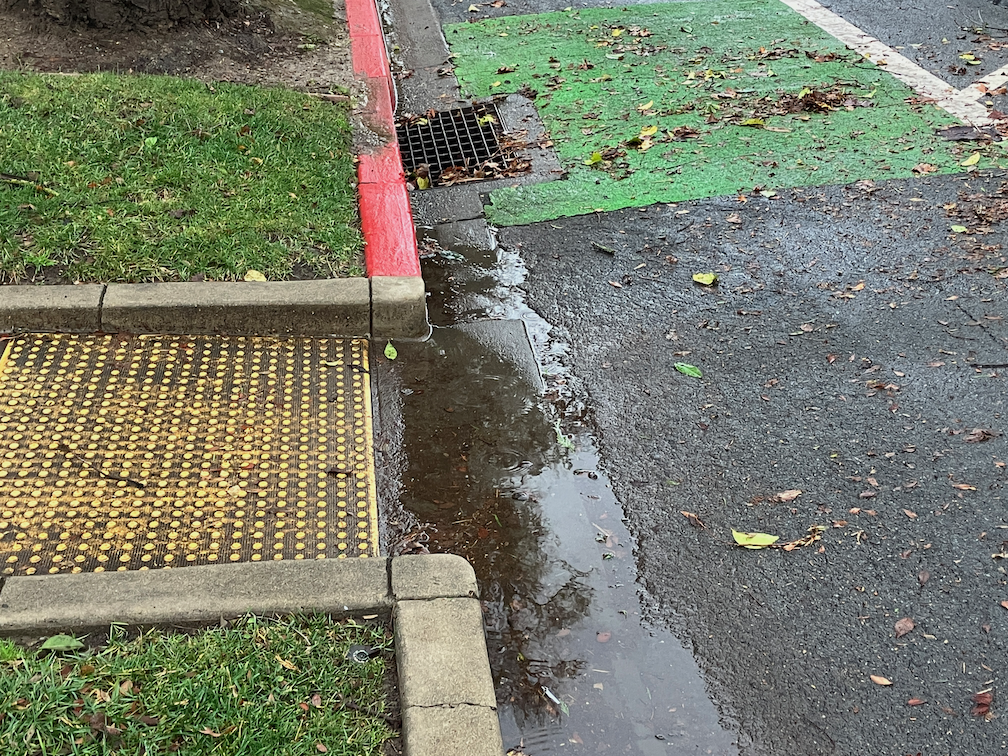
  • Daylighting intersections. This means removing parking from within 15-20 feet of the crosswalk or stop bar, either by painting and enforcing red curbs, or building curb extensions (bulb-outs) at every intersection. Upstream, approaching the intersection, is the big safety feature, downstream, leaving the intersection is much less important. There are interim solutions here, such as painting curb extensions and using soft-hit posts (vertical delineators).
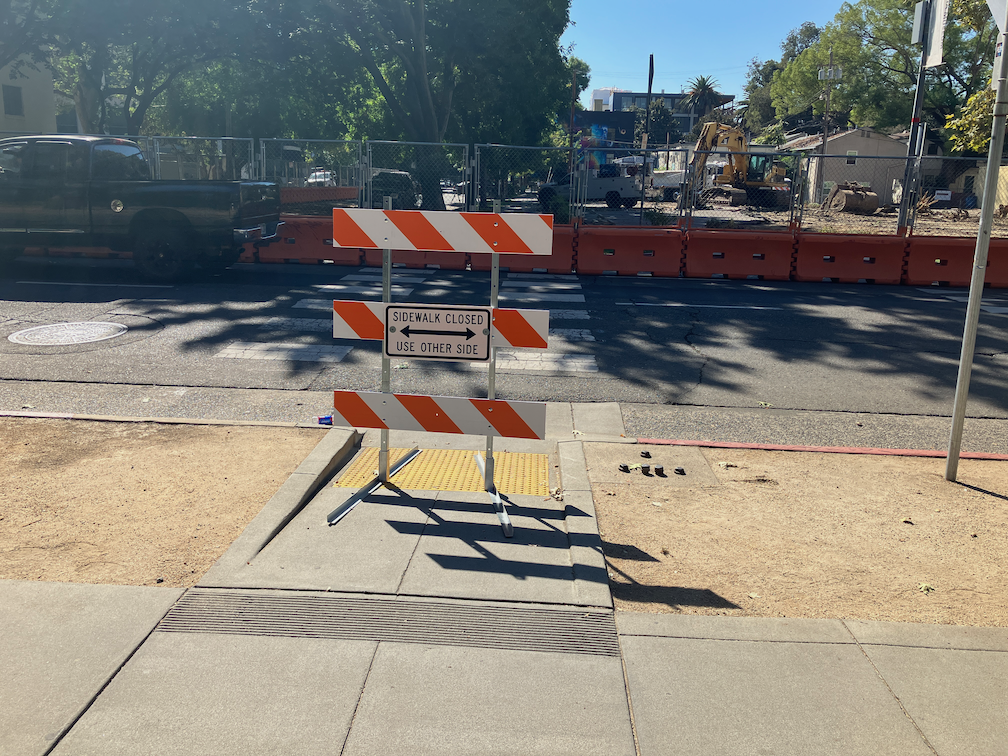
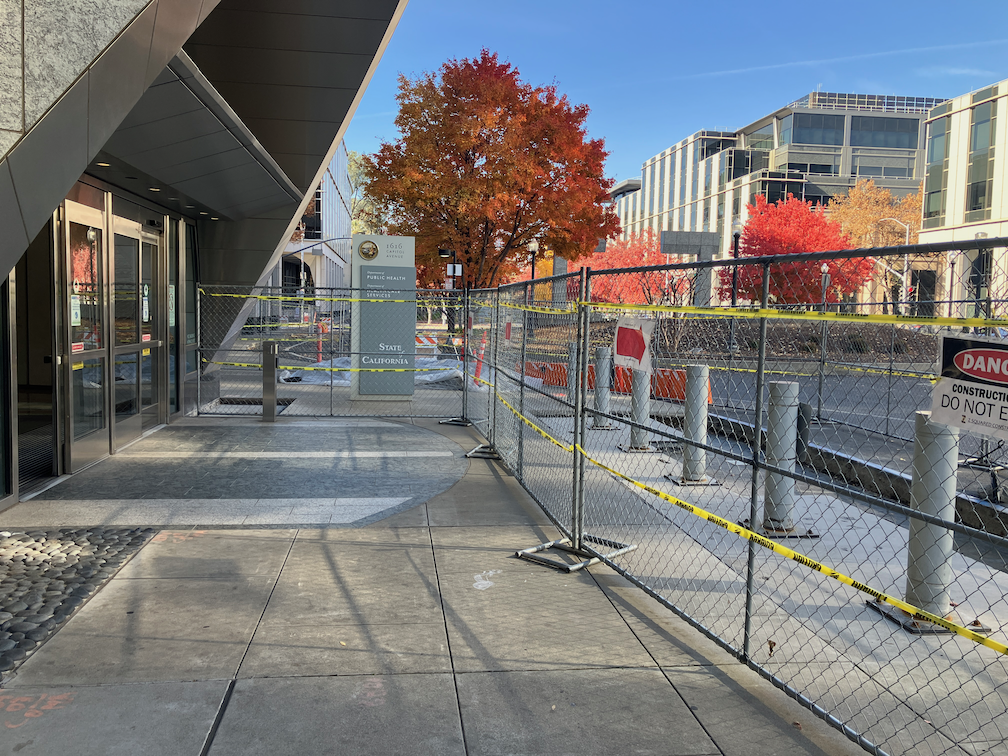
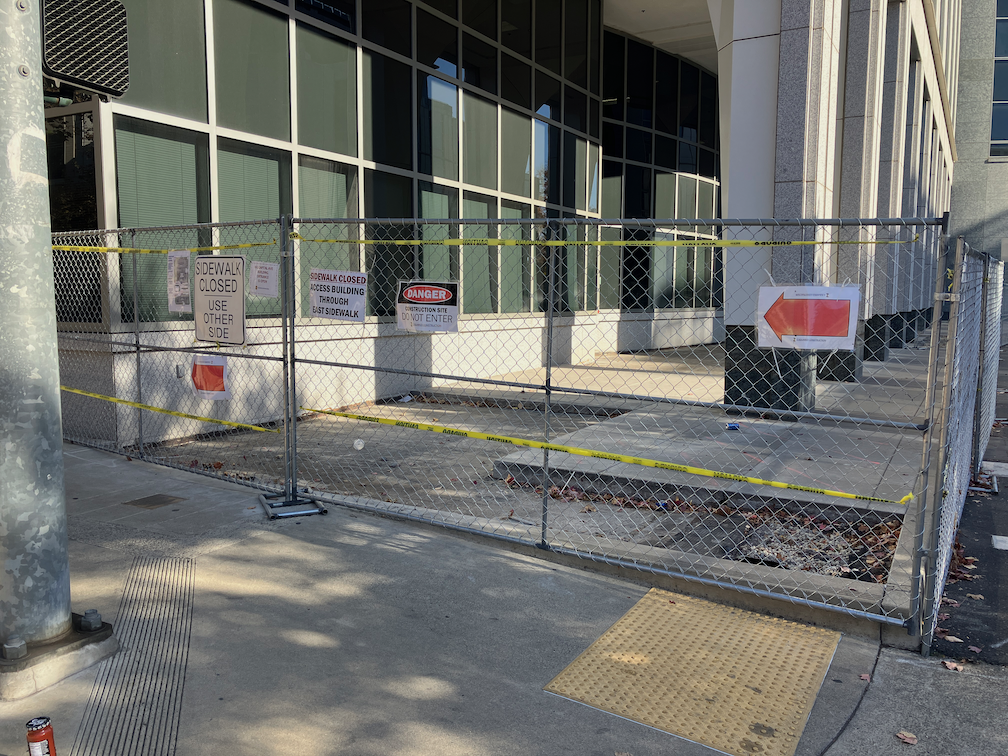
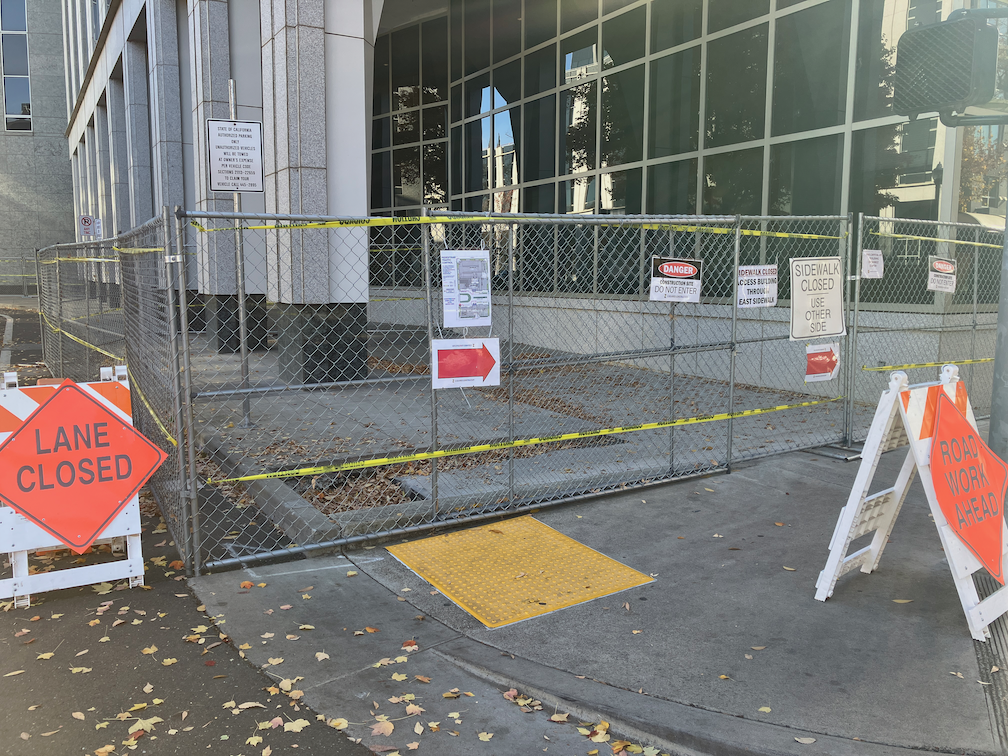
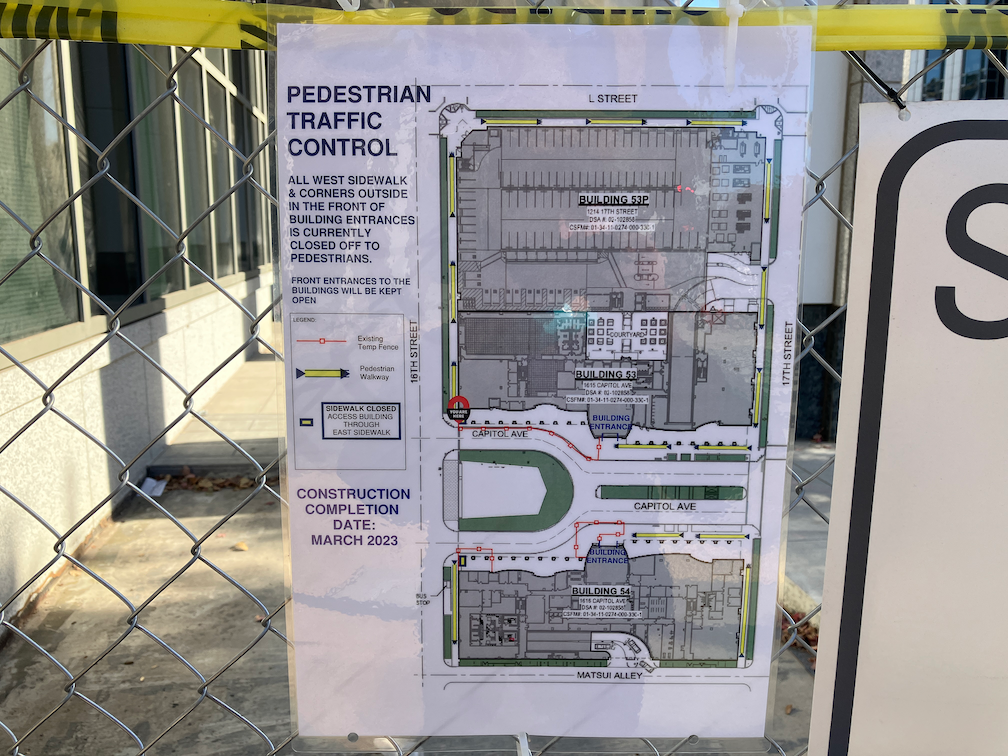
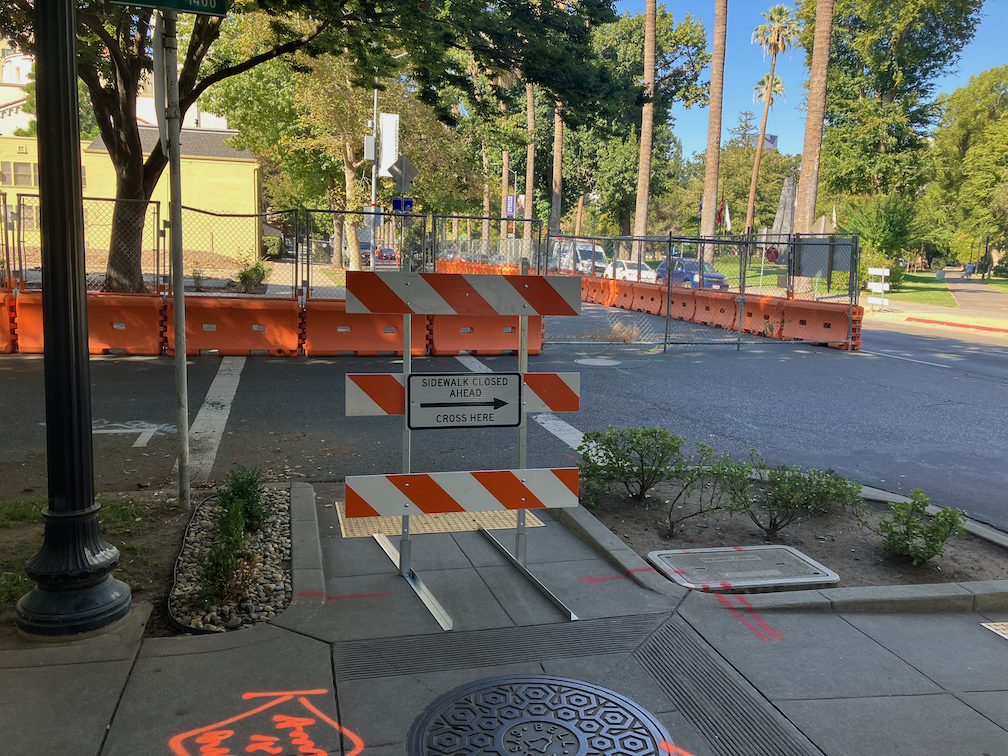
  • Implementing construction zone requirements that accommodate walkers and bicyclists. The current city policy is to provide safe bypasses only if it does not in any way inconvenience drivers. The public has asked that a policy be developed along the lines of the Oakland construction policy, but the city has stonewalled against that.
  • Making transportation improvements that benefit walkers and bicyclists, except with county, state or federal grants. The city simply will not spend any of its general funds on improving transportation safety.
  • Waiting until a roadway is completely repaved to reallocate roadway width to bicycle lanes or separated bikeways, or transit. Compounding this issue is that the city doesn’t share with the public the repaving projects that it intends to do, so the public has no chance to comment beforehand.
  • Lowering speed limits citywide. While it is true that spot reductions have little effect on travel speeds, there are a growing number of cities that have lowered speed limits citywide, with a significant reduction in speed.
  • Enforce traffic laws. The Sacramento Police Department has essentially stopped enforcing laws related to the safety of walkers and bicyclists. This of course is also true in many other places. Police don’t see traffic safety as an issue worthy of concern. Of course so much of law enforcement is used as pretext to oppress, and I’m not in favor of any of that, but if the police won’t even enforce failure to yield to people in the crosswalk, what use are they? We would all be much safer if traffic law enforcement were removed from the police, largely automated, and the money saved diverted to real community needs. Yes, defund the police.
  • Painting marked crosswalks at every intersection. Yes, I know that unmarked crosswalks are legal crossings, but most drivers either don’t know or don’t care, so marking crosswalks is critical.
  • Remove beg buttons. These buttons, which sometimes a walker must press to get a walk sign, and sometimes don’t need to press (this is called auto-recall) are a direct attempt to discriminate against people walking. The city, after much pressure from the public at the beginning of the pandemic, set five crossings to auto-recall, out of the thousands. Of course they didn’t change the signing, so people walking don’t know this. The city it being intentionally obstinate in its defense of this outmoded requirement.
  • Remove pedestrian prohibition signs unless that is a demonstrable safety reason for the prohibition. There are numerous signs all over the city that were placed solely to preference motor vehicle drivers over people walking. The default should be that every one is removed unless the city wishes to do a traffic study to justify them.
  • Install traffic diverters (mode filters) all over the city. These diverters, which allow bicyclists free travel but turn motor vehicle drivers aside, are the single most effective safety measure that city could implement. But the city has decided to take these off the menu of solutions, for no reason that it has ever been made public. The few that exist are in the central city, almost none in other neighborhoods. Another example of privileging the already privileged over lower income neighborhoods.
  • Charge for parking, eveCavrywhere. Residential neighborhoods, where there is usually open parking space, would be charged through permits for the cost of maintaining that portion of the street. Any place where parking is in short supply, market rates for parking should be charged. Giving away free parking is subsidizing drivers and throwing your tax money in the trash.

I could go on with this list for pages. In fact, I have: walking policies for SacCity, and many related posts. But the city is still not taking meaningful action on any of these items, so I will keep reposting. For as long as it takes. And it will probably take quite some while before the city gets over its culture of doing the least amount possible.

Caveat: The city has disinvested in lower income and high minority neighborhoods, probably for its entire history. The first steps should be taken in these neighborhoods, with input from the residents, of course, and not in higher income and non-minority neighborhoods which have always gotten more than their share.

why are bike lane gaps so important?

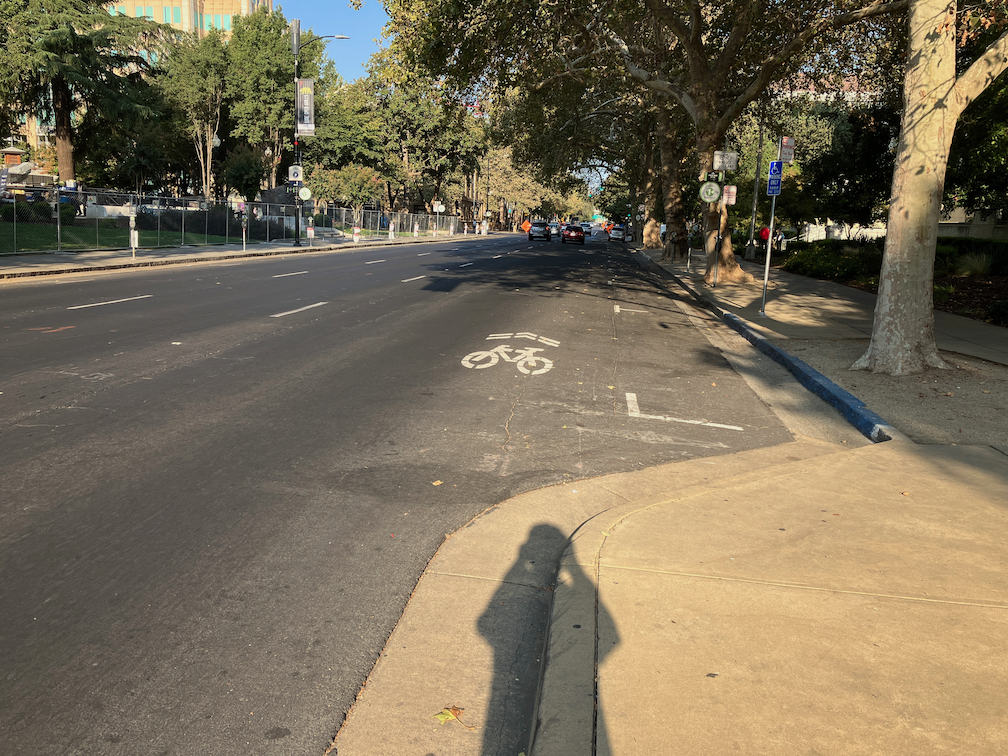
My last three posts have been about locations where sharrows replace bike lanes for one-block sections in the Sacramento central city: Sacramento’s worst possible place for sharrows; Sac kill those sharrows on I St; Sac kill those sharrows on H St. There may well be other such locations that did not come to mind. If so, please let me know so I can document and post on them. I’m not asking about locations that should have bike lanes, or where bike lanes should be upgraded to separated (protected) bikeways. There are simply too many of those locations for me to deal with.

So, why are bike lane gaps so important? Bike lanes are basically a promise to bicyclists that the city is providing a safe place to ride your bike. Yes, I know traditional bike lanes have serious safety issues (they are called door zone bike lanes, or DZBLs), but for the average rider, they are safer than no bike lane. But this promise is broken when there is a gap. For these gap sections, bicyclists who felt comfortable riding in a bike lane are suddenly left to deal with motor vehicle traffic in a location where neither the bicyclist nor drivers are sure how to behave. What does the average bicyclist then do? Decide never to ride on that street again. And if they have a scary experience, they may even decide not to ride again at all.

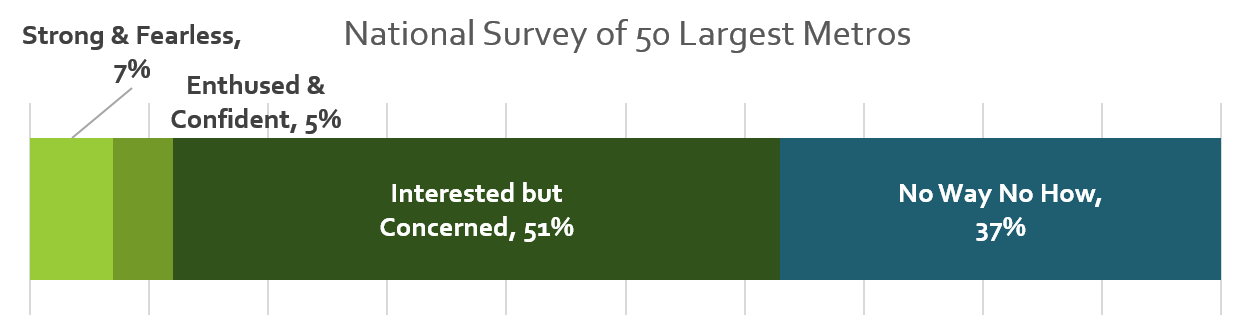
I’m a bicyclist with strong vehicular bicycling skills. I know where the safest place to ride is on every street, and I ride there no matter what motor vehicle drivers or law enforcement happens to think about it. But I am far, far from a typical Sacramento bicyclist. I am ‘strong and fearless’, though as I get older, I’m tending towards ‘enthused and confident’. The four types of bicyclists, or levels of comfort, developed in Portland but applicable to Sacramento, are shown in the graphic:

four types of bicyclists and levels of comfort diagram

The city should be designing bicycle facilities that work for all three categories of people who will bicycle. When there is a gap in a bike lane, the city has designed bicycle facilities that serve the ‘strong and fearless’, only 7% of potential bike riders. This is discriminatory. It is wrong. I suspect that with the resurgence of bicycling and the availability of e-bikes, the ‘no way, no how’ category has shrunk a bit.

The city must close bike lane gaps. Not off in the future when the street is repaved, or when a grant is obtained, but NOW. To do otherwise is to intentionally discourage bicycling and to risk people’s lives.

Sacramento’s worst possible place for sharrows

The third place where sharrows need to be eliminated in the central city Sacramento is I Street at the county jail. In the phot below, the right hand lane is a parking lane most of the time, except for commute rush hour, 4:00-6:00PM on weekdays (note the time sign in the ‘bikes may use full lane’ photo following), when it is a general purpose lane. When it is a parking lane, there are sharrows nearly covered up by parking, as you can see in the second photo. This is not a bike lane in any sense of the word, but drivers assume that it is and close pass anyone using that area to ride in. When it is a general purpose lane, there is high speed traffic approaching the Interstate 5 onramps, absolutely not an appropriate location for sharrows. The current trend in use of sharrows is 1) don’t use them at all; 2) if they are used, they should absolutely never be used over 35 mph, and rarely used over 25 mph. Though the posted speed limit of I Street is 25 mph (though it isn’t really posted anywhere), regular traffic speeds are over 35 mph, and during commute hours is over 45 mph except when congestion prevents that. So this is not any appropriate location for sharrows.

Of all the places where bicyclists are at risk of getting doored, this is the place. Everyone parking here has a family member or friend who is in jail. They are upset, they are depressed, they are often angry, they are not thinking about bicyclists and looking before they open their door. There is also a lot of turn-over here, so a lot of door opening. When I ride this area, I ride in the exact middle of the next lane over, taking the lane. But that is something that the average bicyclist will not do. So the sharrows leave them vulnerable to both close passing and dooring.

The city has placed a ‘bikes may use full lane’ sign (MUTCD R4-11), but is is up high against the background of a tree, where it would not likely be noticed by drivers or bicyclists. Of course bicyclists may use the full lane, with or without the sign, but again, most bicyclists will not do that. If signing is to have any meaning at all, the sign must be much bigger than it is, closer to 7th Street, and the message should also be marked on the pavement.

I Street west of 7th Street, part-time lane with sharrows
I St west of 7th St, part-time parking and general purpose lane with sharrows, Sacramento
I St west of 7th St, sharrows and parking in a part-time general purpose lane, Sacramento
I St west of 7th St, bikes may use full lane sign

I am not sure what the best solution is here. It is not to get rid of the parking; this is one location where on-street parking is justified. The right hand lane should be a parking only lane, however. There is no justification of traffic volume requiring another general purpose lane during commute times. That just encourages more driving and higher speeds, as drivers race each other for the on-ramps.

This is also a location where bicyclists separate into two destinations. Riders heading towards Sacramento Valley Station stay on the right so they can turn on 5th Street toward the station. Riders heading to Old Sacramento must move to the left hand side to avoid the high speed on-ramps. The left side bike lane, however, doesn’t even start until just before 5th Street, leaving no refuge for bicyclists trying to merge across traffic to the left side between 7th Street and 5th Street. I think there needs to be an intentional location for bicyclist to shift, at 7th Street or 6th Street or 5th Street. There would be a green bicycle box for waiting, and a signal with exclusive bicycle phase for bicyclists to safety transition from the right side to the left side. A bike lane would be present from that crossing point on I Street, without gaps.

Of course I Street needs to be reallocated so that it serves all users, and is not just a traffic sewer for drivers going to the freeway. It should be no more than two lanes at any location. Fewer lanes would slow traffic, as the prudent driver sets the speed rather than the egregious speeder. There should be a separated (protected) bikeway on either the left or right side, with a safe transition from one side to the other at some point.

Caveat: I post about issues in the central city because I live here, and see the problems every time I am out walking or bicycling. However, I strongly believe that the city should be focused on solving issues in lower income, disinvested neighborhoods, of which there are ample throughout the city. The central city has received more than its share of bike facilities.

Sac kill those sharrows on I St

Next sharrows location to address is I Street between 10th Street and 9th Street. The bike lane present to the east disappears in this block, with Cesar Chavez Plaza on the south and Old City Hall on the north, before picking up again west of 9th Street. Not having my tape measure out (and I’d have to measure late night when there is no traffic), it isn’t clear why this one block does not have a bike lane. It may be that the curb extension is too wide, or it may be that the general purpose (car) lanes are not configured correctly. If lanes, then it is an easy problem to fix, just re-stripe the lanes and add a bike lane. If the curb extension, then that would require a bit of infrastructure work. I fully support curb extensions, nearly all intersections should have them, but in some places the city has installed them incorrectly and caused issues for bicycle facilities. This is not, as many places are, a case for removing parking, but for designing the street correctly. Of course ultimately there should be no three-lane one-way traffic sewers in the city, and right of way should be reallocated to a separated (protected) bikeway and wider sidewalks.

I St westbound at 10th St, sharrows, Sacramento
I St westbound at 10th St, Sacramento

Caveat: I post about issues in the central city because I live here, and see the problems every time I am out walking or bicycling. However, I strongly believe that the city should be focused on solving issues in lower income, disinvested neighborhoods, of which there are ample throughout the city. The central city has received more than its share of bike facilities.

Sac kill those sharrows on H St

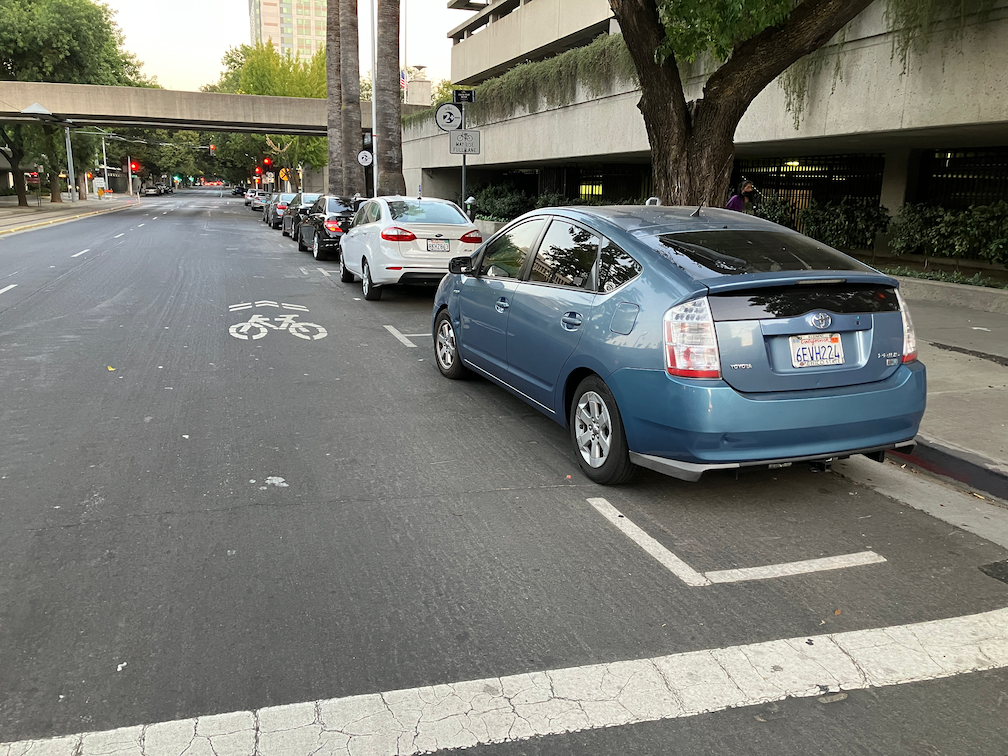
The block of H Street between 7th Street and 8th Street in downtown Sacramento has shadows instead of a bike lane. There is a bike lane in the preceding block, and in the block past, but not this block. Why? Because on-street parking has been preserved on this block in preference to bicycle facilities. The right lane lane is marked with a sharrow. Not a properly placed sharrow, but one in the door zone of the parking lane. When shadows are used, they should be placed in the center of the travel lane. But rare is the situation in which they should be used at all. Research indicates that sharrows are less safe than no markings are all, less safe than marked bike lanes.

So why is this parking here at all? No reason whatsoever. On the north side of this block is a County of Sacramento parking garage. There is even a pedestrian bridge between the parking garage and the Sacramento County administrative building on the south side of H Street, as seen in the photo.

I am certain that all of these cars belong to county employees or contractors. They should be parking in the garage, and this parking should be removed so that at least a marked bike lane can be placed in this block. Of course H Street should have a separated bikeway from 6th Street, Sacramento Valley Station, to 16th Street, where it becomes two-way. But a Continous painted bike lane is at least a first step.

There are a number of locations in the central city where bike lanes are dropped for a block in favor of parking and travel lanes. Every single one of these should be fixed either by the removal of parking or a general purpose lane.

Caveat: I post about issues in the central city because I live here, and see the problems every time I am out walking or bicycling. However, I strongly believe that the city should be focused on solving issues in lower income, disinvested neighborhoods, of which there are ample throughout the city. The central city has received more than its share of bike facilities.

whither Sacramento Vision Zero?

The City of Sacramento adopted Vision Zero in 2017, and developed a Vision Zero Action Plan in 2018. The plan identified five high injury corridors for projects to slow traffic and increase safety for walkers and bicyclists. The city then developed a plan for these five corridors in 2021. The city has obtained grants for some of these corridors, and will apply for more. The city lowered speed limits in a number of schools zones (though street design, drop-off/pick-up procedures, and motorist behavior are the issues in most school zones, not speeding). The city also developed a public outreach education program, though there is no evidence of such programs having any effect on driver behavior (NHTSA and California OTS have thousands of programs with no demonstrated success). So far, so good.

But…

  • The city has intentionally ignored high injury intersections, unless they are on one of these corridors. No grant applications have been made to fix intersections, though intersections are where most fatalities and severe injuries occur. No non-grant actions have been taken to fix high injury intersections.
  • The city has failed to set up a crash investigation team to determine causes and solutions for every fatality. The police department (or CHP if the crash occurs on a state highway) will do an investigation, and sometimes involve traffic engineers, but never involves planners, never involves experts in nonprofit organizations (who have as much if not more expertise than city staff), and never involves citizens who walk and bike.
  • The Vision Zero Task Force, which met in 2016 and 2017, has never met since. That means there is no community guidance for the Vision Zero program. City staff is making all the decisions on Vision Zero.
  • The city has ignored all the low cost options for reducing motor vehicle crashes. As just one example, the city has been asked to remove pedestrian beg buttons and create leading pedestrian intervals (LPIs) at all signalized intersections, but did only a small beg button set to auto-recall on five crosswalks, and have not increased the number of LPIs in years.

Solutions?

  • The city should create an effective crash investigation team, composed of law enforcement, city traffic engineers, city planners, nonprofit experts, and citizens who walk and bike, and perhaps a representative of the neighborhood association in which the crash occurred. The team should never be led by law enforcement, which has an anti-walker and anti-bicyclist windshield bias. It has been suggested that streets where fatalities have occurred be shut down until the investigation and resulting fixes are in place, which is an idea worth considering.
  • The city should identify the top five high injury intersections, and commit to significant changes to eliminate crashes at those intersections, within three years. And then move on to the next five. The corridor projects and intersection projects should be considered co-equal in city funded projects or grant applications.
  • The city Active Transportation Commission should take on a strong leadership role in advising the council on the Vision Zero program. It may also be appropriate to re-convene the task force to provide more detailed guidance to staff.
  • The city should implement a Vision Zero project to change all traffic signals in the entire city to auto-recall (with removal of the physical beg buttons as staffing allows) and leading pedestrian intervals.
  • The city should undertake a review of peer cities that have reduced speed limits city-wide, to determine whether to implement this change and how to learn from the experiences of other cities. If the review indicates that speeds can be reduced by as little as 3 mph by a reduction from 25 mph to 20 mph, the city should implement it city-wide. Similarly for higher speed streets.

Sac CAAP: council update

The City of Sacramento preliminary draft Climate Action and Adaptation Plan (CAAP) was on the agenda of the 2022-08-16 city council agenda, with a workshop on carbon neutrality. The council had asked staff for a status report, and to bring ideas for accelerating reaching carbon neutrality sooner than the original target date of 2045.

The staff presentation presented a few things that had happened before completion of the plan. Staff focused, as does the plan, on buildings and EVs. Ryan Moore of Public Works talked about transportation projects, but did not mention policy. Jennifer Venema presented several acceleration ideas, but they were vague. One was the build-out of the bicycle master plan, as though it was that, or everything else. The slides used by the staff presentation have not been made available to the public.

Almost everyone who spoke on the agenda items, on Zoom and in person (this was the first in-the-room council meeting), spoke in support of achieving neutrality sooner, and taking serious actions rather than the mild actions suggested by the plan. I am really proud of the citizens and organizations that took the time to formulate thoughtful statements and to wait for their turn.

Some of the council members spoke. Katie Valenzuela was the only one with a substatiative idea (see below), the others just offered platitudes. Darrell Steinberg unfortunately went off on a long rant in support of the transportation sales tax measures, including the lie that it had been amended. The side agreement between SACOG and SacTA has not been approved, and the language of the ballot measure has not changed at all – it is still bad news for the climate.

Katie Valenzuela’s slide

I made the following statement:


“Transportation is 57% of carbon emissions in Sacramento. Equitable transportation is what we should be talking about.

Transportation priorities, carried over from Mayors Commission on Climate Change:

  1. Active transportation
  2. Transit
  3. Electrification of remaining motor vehicles

The CAAP seems to invert that priority, and is strongly focused on EVs, which would retain the motor vehicle dominance of our transportation system.

Active transportation should be first and foremost in the CAAP.

Why is active transportation so important to transit? Because that is how people get to and from transit. Both are important to an effective response.

$510M for a full buildout of the bicycle master plan is a fraction of what is already being spent on motor vehicle capacity expansion. For example, the Fix 50 projects is estimated at $433M, but will probably come in much higher.

Deb Banks mentioned that the bicycle master plan needs an update. The pedestrian plan, however, dates from 2006, and is completely out of date. Yet the CAAP does not even mention updating those documents nor combining them into an active transportation plan.”

Read More »

Sac CAAP: more carbon-intense transportation and land use

The City of Sacramento (and the county, and the region, and the state) have created a very carbon-intensive transportation system, focusing on moving motor vehicles (more and faster) over all other uses of the public right-of-way. It has also created a carbon-intensive land use pattern, by allowing and encouraging sprawling development that places everything further away, and makes motor vehicle travel the only reasonable option for many people to get from one place to another. Sprawl not only makes transportation less efficient, but uses more water and more electricity, reduces agricultural lands, and isolates people. Freeways and the arterial street network that supports them are far more expensive than other roadways, so most of our transportation budget goes to those two types. There is little left over for streets, and little left over for maintenance. But you know all that.

If the city is serious about reducing greenhouse gas emissions (GHGs), it would focus most of the Climate Action and Adaptation Plan on these issues. Transportation and land use, and housing in particular, cannot be separated from each other. They should not be separated in the plan. If we change our transportation system without changing land use and housing, we fail. If we change land use and housing without changing the transportation system, we fail. They must both be changed, healed from the harms of past city action or neglect, together. What the draft plan proposes to do is make minor changes to housing and minor changes to transportation, but sets low goals for both. And it uses enough vague language that it is not even clear that those low goals will be achieved. Most importantly, it does not commit the city to spending any money to fix problems and do better. What it is basically doing is kicking the can down the road, in case future versions of the city government happen to be more committed to change and innovation.

I encourage you to take a look at the plan (yes, it is long and hard to read), and then contact your city council member to express your concerns. I’ll likely be gone by 2045, so won’t see the outcome, but for many of you and your children, the meek action and underfunding that the plan proposes will make your world unlivable. Time for leadership is now!

Sac CAAP: affordable housing near transit


The City of Sacramento’s Climate Action and Adaptation Plan (CAAP), preliminary draft, sets a goal, in the Measure E-5: Support Infill Growth section to “Enable the development of 8,700 new affordable by design units by 2040 within 0.25 mile of public transit…”. Sound good, but.

This is a low goal. The city already has a deficit of affordable housing, and has no plan for raising the necessary funds to build this affordable housing (it killed inclusionary zoning, and replaced it with a completely insufficient development impact fee, and the $100 Measure U contribution to the housing fund is on hold). The city’s Housing Element, required by RHNA, specifies that 16,769 units of ‘Extremely Low- and Very Low-Income, and Low Income’ housing are needed. While it it true that some affordable projects have been, and will be, developed without any city help, setting a goal of only half what is already needed is meek.

Location within 0.25 miles of transit is a mixed bag. While it is clearly a good that affordable housing is accessible to transit (otherwise it is not truly affordable under the housing+transportation analysis), past practice has been to locate affordable housing projects on arterial roadways, those sources of pollution and noise and traffic violence that families living in affordable housing should be protected against rather than exposed to. Unless the city is making a real commitment to redesigning these roadways to reduce VMT, reduce traffic violence, reduce air pollution, and emphasize active transportation and transit, it would be better to place affordable housing elsewhere. I don’t think that CAAP is making that commitment. A strong argument made by many housing advocates is that we should be encouraging affordable housing everywhere, not just along arterial roadways (also known as stroads).